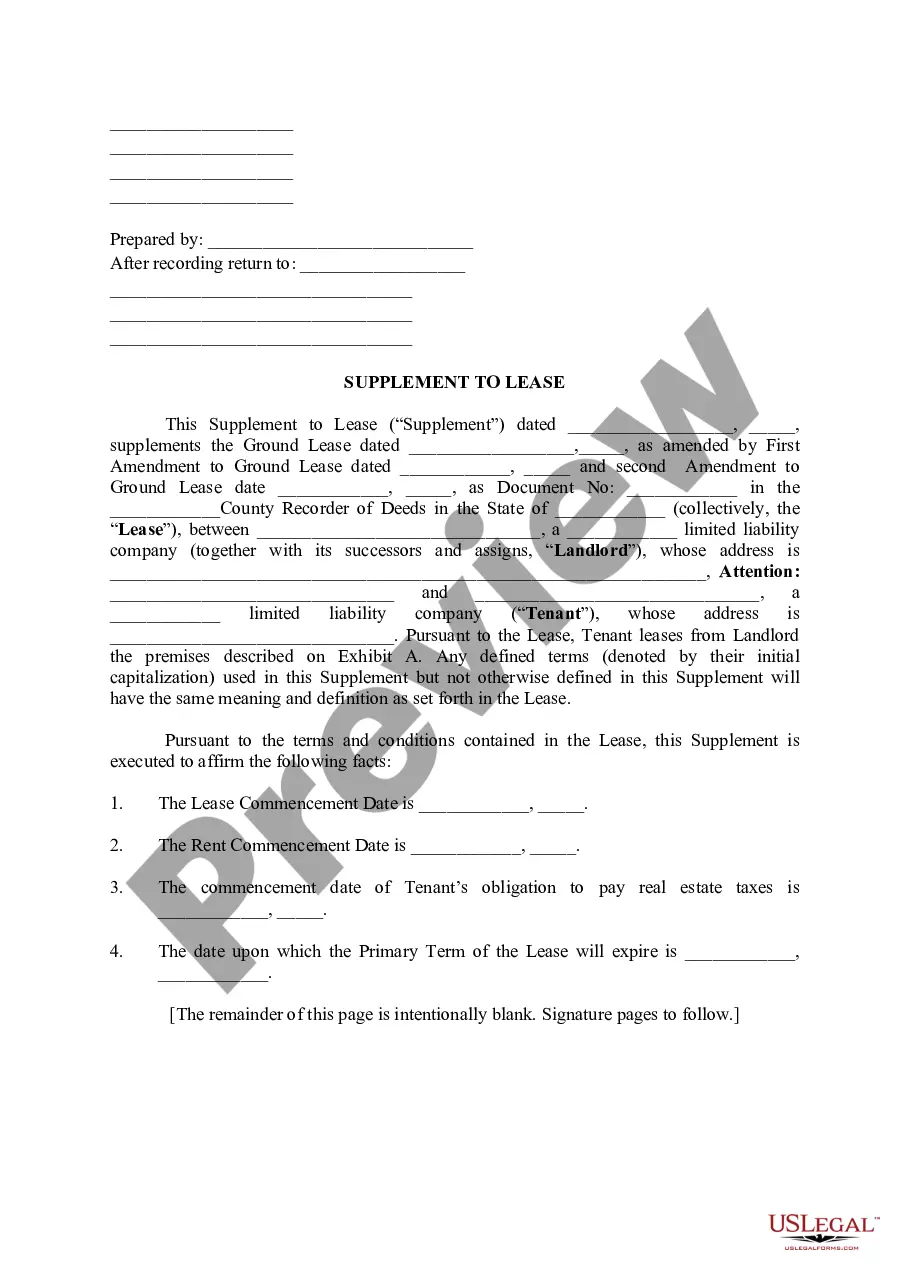
West Virginia Renunciation And Disclaimer of Real Property Interest
Overview of this form
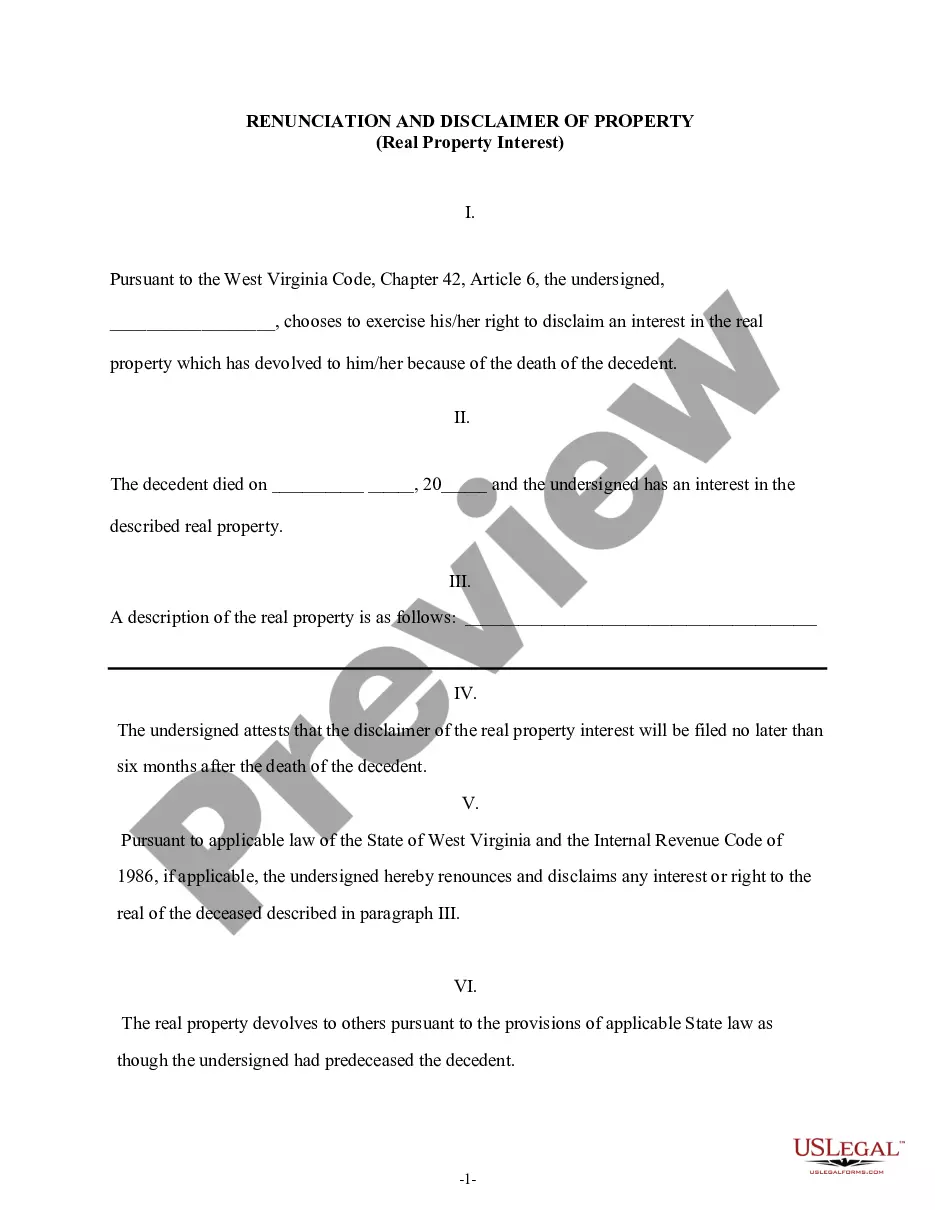
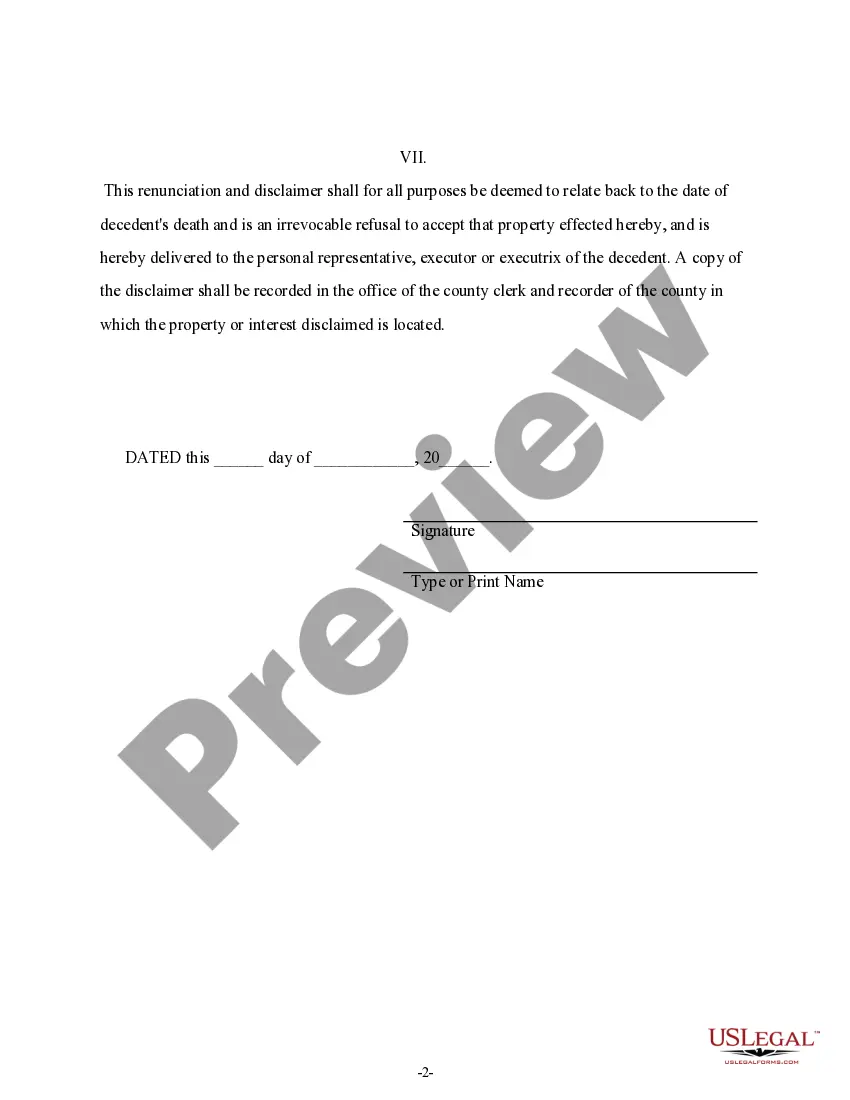
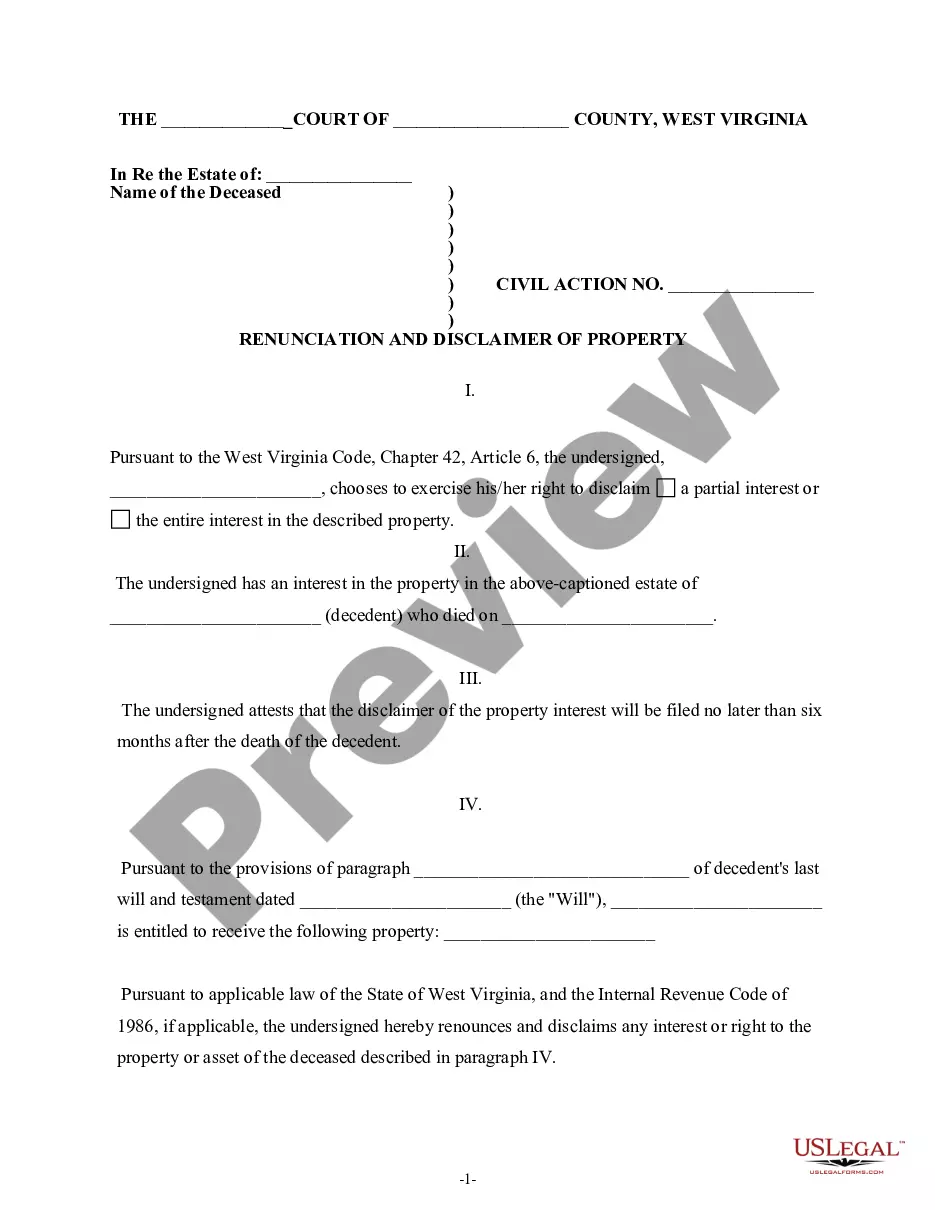
The Renunciation and Disclaimer of Real Property Interest form allows an individual who inherits a property interest following a decedent's death to formally renounce that interest. This legal document, governed by the West Virginia Code, Chapter 42, Article 6, ensures that the beneficiary can waive their rights to the property without confusion. By executing this form, the beneficiary affirms that they will file the disclaimer within six months to maintain its legal validity. This distinguishes it from similar forms that may not have specific deadlines or requirements related to disclaiming inherited properties.
Main sections of this form
- Personal information of the beneficiary, including name and date.
- Details about the decedent, including the date of death.
- A description of the real property that is being disclaimed.
- Statement affirming the filing of the disclaimer within six months.
- Citation of applicable laws governing the renunciation.
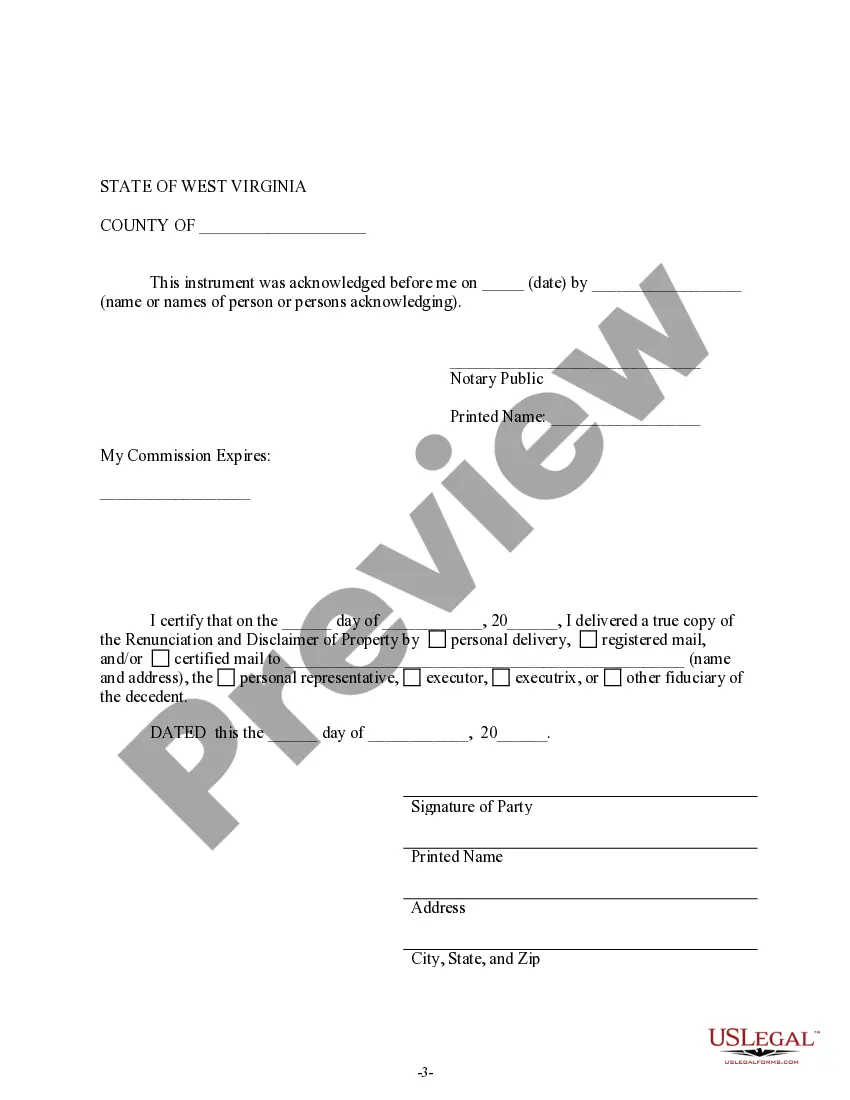
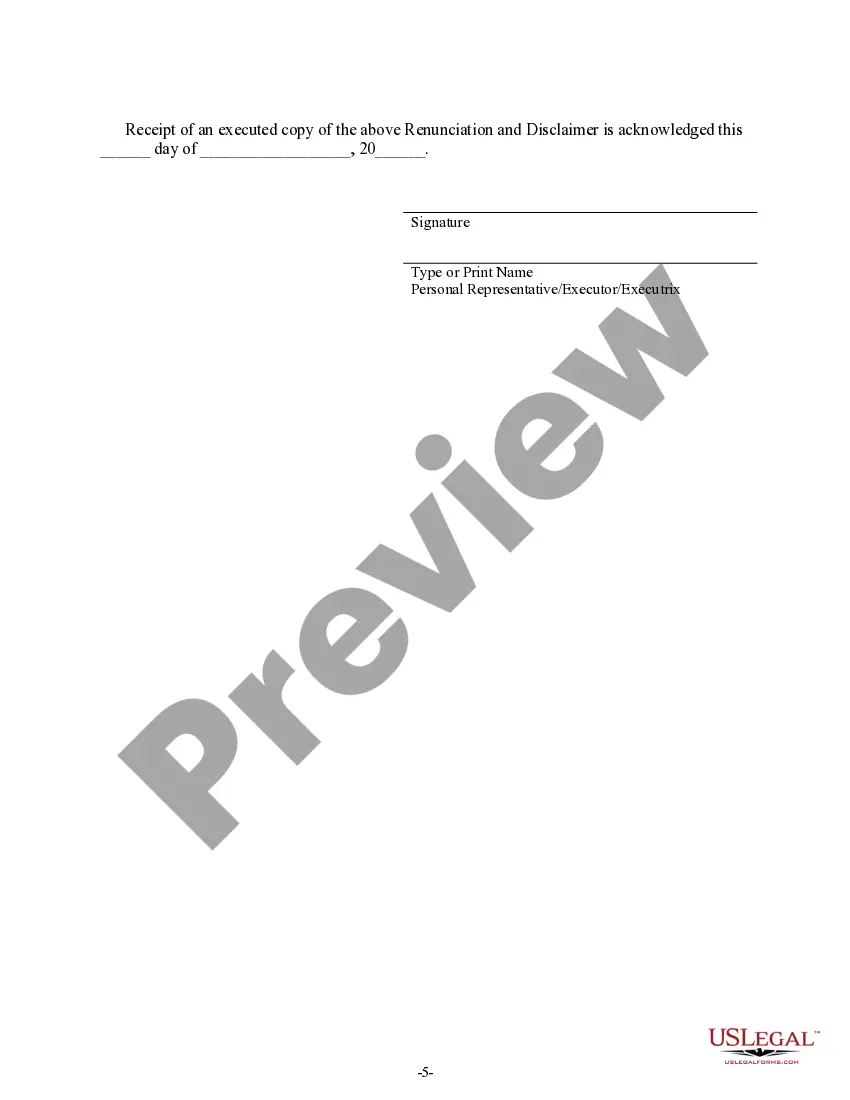
- Acknowledgment section for notarization and confirmation of delivery.
When this form is needed
This form is used when a beneficiary inherits real property following the death of an individual but decides to waive their interest in that property. It is applicable in instances where the beneficiary wishes to prevent any potential tax liabilities or complications that may arise from accepting the inheritance. Using this form helps clarify that the property will pass to other heirs as if the disclaiming beneficiary had predeceased the decedent.
Intended users of this form
This form is intended for:
- Beneficiaries who inherit real property in West Virginia.
- Individuals seeking to renounce their property interests to simplify estate distribution.
- Heirs who wish to avoid complications or liabilities associated with the inherited property.
How to complete this form
- Enter the name of the beneficiary renouncing the property.
- Specify the date of the decedent's death.
- Clearly describe the real property being disclaimed.
- Ensure to state the intention to file the disclaimer within six months.
- Have the form notarized to validate the renunciation.
- Deliver a copy of the completed form to the appropriate representative of the decedent's estate.
Notarization requirements for this form
Notarization is required for this form to take effect. Our online notarization service, powered by Notarize, lets you verify and sign documents remotely through an encrypted video session, available 24/7.
Get your form ready online
Our built-in tools help you complete, sign, share, and store your documents in one place.
Make edits, fill in missing information, and update formatting in US Legal Forms—just like you would in MS Word.
Download a copy, print it, send it by email, or mail it via USPS—whatever works best for your next step.
Sign and collect signatures with our SignNow integration. Send to multiple recipients, set reminders, and more. Go Premium to unlock E-Sign.
If this form requires notarization, complete it online through a secure video call—no need to meet a notary in person or wait for an appointment.
We protect your documents and personal data by following strict security and privacy standards.

Make edits, fill in missing information, and update formatting in US Legal Forms—just like you would in MS Word.

Download a copy, print it, send it by email, or mail it via USPS—whatever works best for your next step.

Sign and collect signatures with our SignNow integration. Send to multiple recipients, set reminders, and more. Go Premium to unlock E-Sign.

If this form requires notarization, complete it online through a secure video call—no need to meet a notary in person or wait for an appointment.

We protect your documents and personal data by following strict security and privacy standards.
Common mistakes to avoid
- Failing to file the disclaimer within the six-month timeframe.
- Not providing a complete description of the real property.
- Neglecting to have the form notarized before submission.
- Not delivering the original disclaimer to the estate's personal representative.
Benefits of using this form online
- Easy access to professionally drafted legal documents.
- Ability to fill out and customize the form at your convenience.
- Reduction of errors through guided form completion.
- Instant downloading and printing options for immediate use.
Quick recap
- The form allows beneficiaries to renounce an inherited real property interest.
- It must be filed within six months of the decedent's death to ensure validity.
- Each completed form must be notarized and properly delivered to relevant parties.
- This document is specific to West Virginia law and must adhere to local legal requirements.
Looking for another form?
Form popularity
FAQ
Put the disclaimer in writing. Deliver the disclaimer to the person in control of the estate usually the executor or trustee. Complete the disclaimer within nine months of the death of the person leaving the property. Do not accept any benefit from the property you're disclaiming.
Any disclaimer of an interest in a trust by a trust beneficiary must be made to the trustee of that trust. For a disclaimer to be valid, it must be supported by some evidence that the beneficiary is disclaiming their interest. Silence or otherwise passive behaviour will not suffice.
In your disclaimer, cover any and all liabilities for the product or service that you provide. You should warn consumers of any dangers or hazards posed by your product. You should list specific risks while at the same time acknowledging that the list is not exhaustive. For example, you could write, NOTICE OF RISK.
The disclaimer must be in writing: A signed letter by the person doing the disclaiming, identifying the decedent, describing the asset to be disclaimed, and the extent and amount, percentage or dollar amount, to be disclaimed, must be delivered to the person in control of the estate or asset, such as an executor,
These documents can include the will, death certificate, transfer of ownership forms and letters from the estate executor or probate court.If you received the inheritance in the form of cash, request a copy of the bank statement that reflects the deposit.
Jointly owned property is treated as consisting of a both present and a future interest in the jointly owned property. Thus, a surviving spouse may disclaim the future interest in jointly owned property on the death of their spouse, including assets that were held by the spouses as tenants by the entirety.
When you relinquish property, you don't get any say in who inherits in your place. If you want to control who gets the inheritance, you must accept it and give it to that person. If you relinquish the property and the deceased didn't name a back-up heir, the court will apply state law to decide who inherits.
Disclaimer of interest, in the law of inheritance, wills and trusts, is a term that describes an attempt by a person to renounce their legal right to benefit from an inheritance (either under a will or through intestacy) or through a trust. A disclaimer of interest is irrevocable.
Disclaim, in a legal sense, refers to the renunciation of an interest in, or an acceptance of, inherited assets, such as property, by way of a legal instrument. A person disclaiming an interest, right, or obligation is known as a disclaimant.