Utah Affidavit of Garnishee as to Continuing Garnishment - Wages
About this form
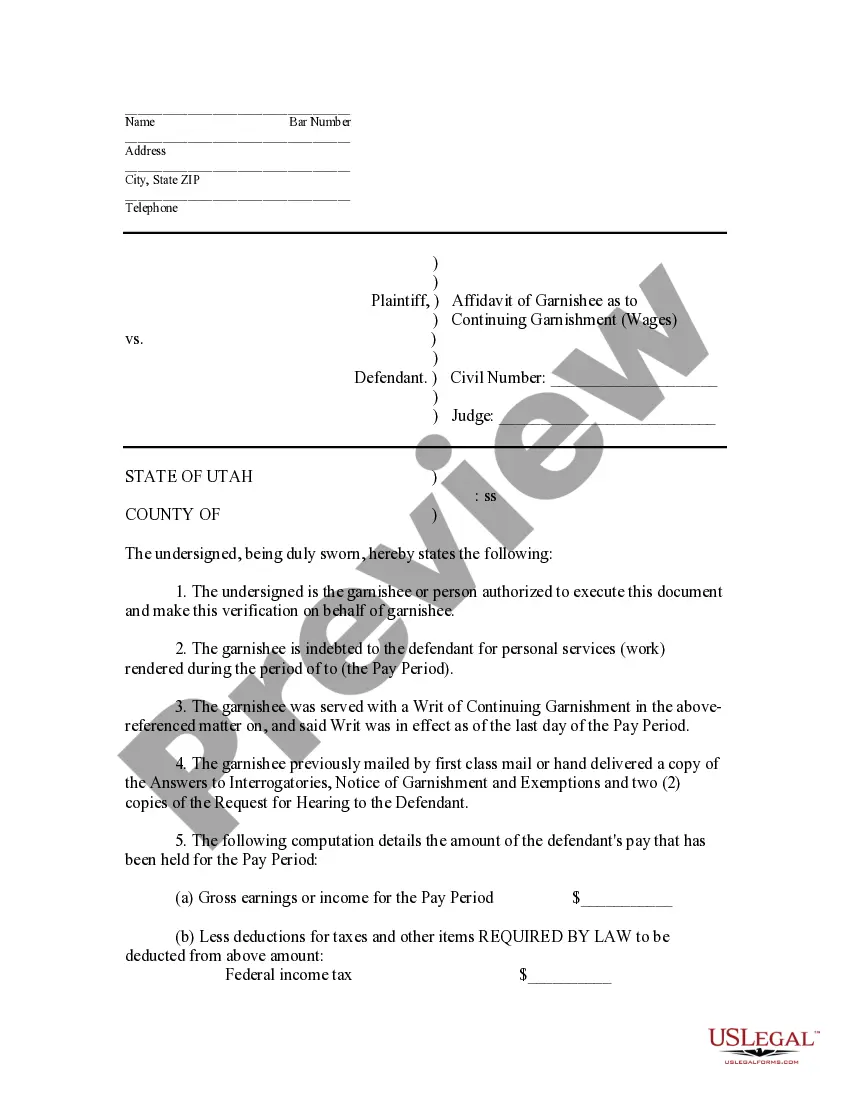
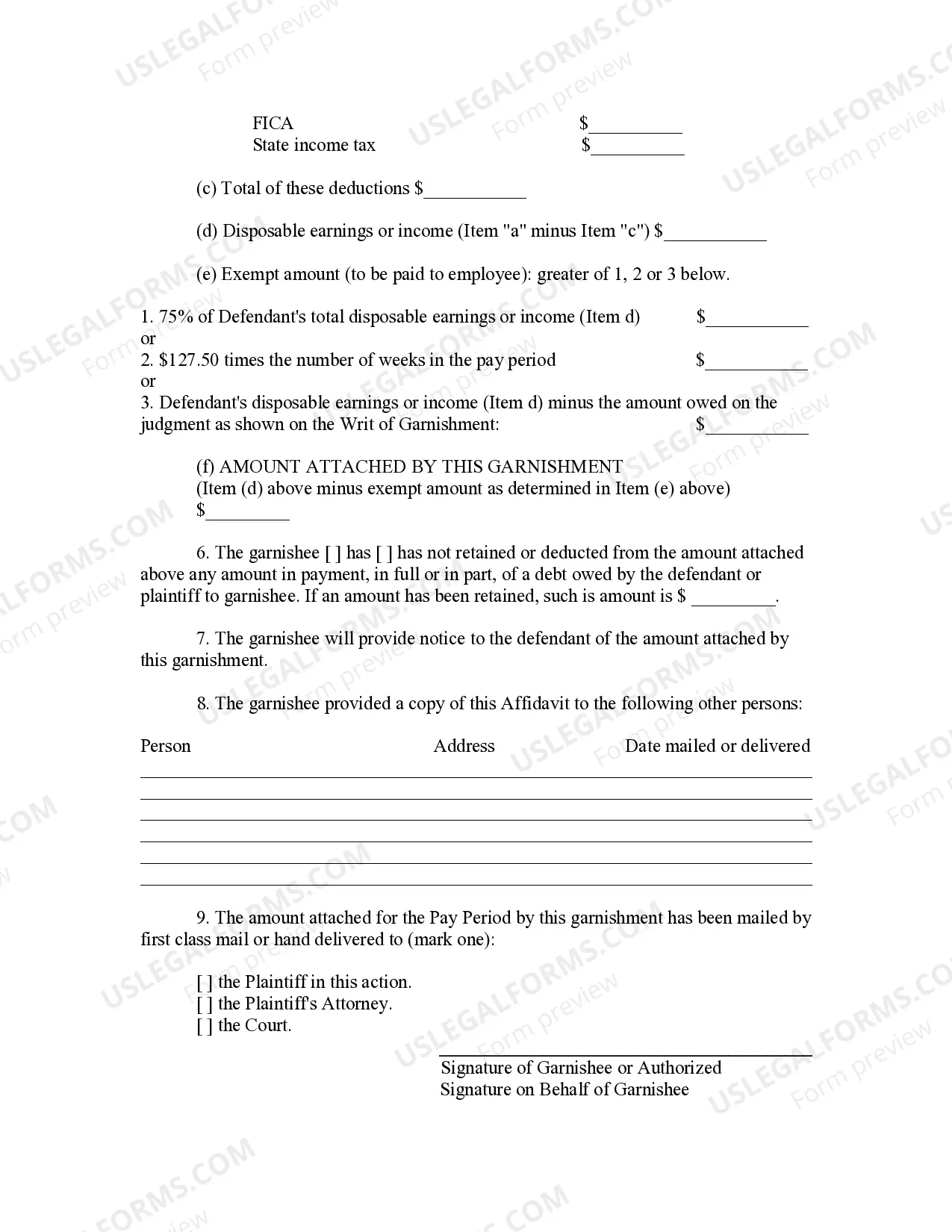
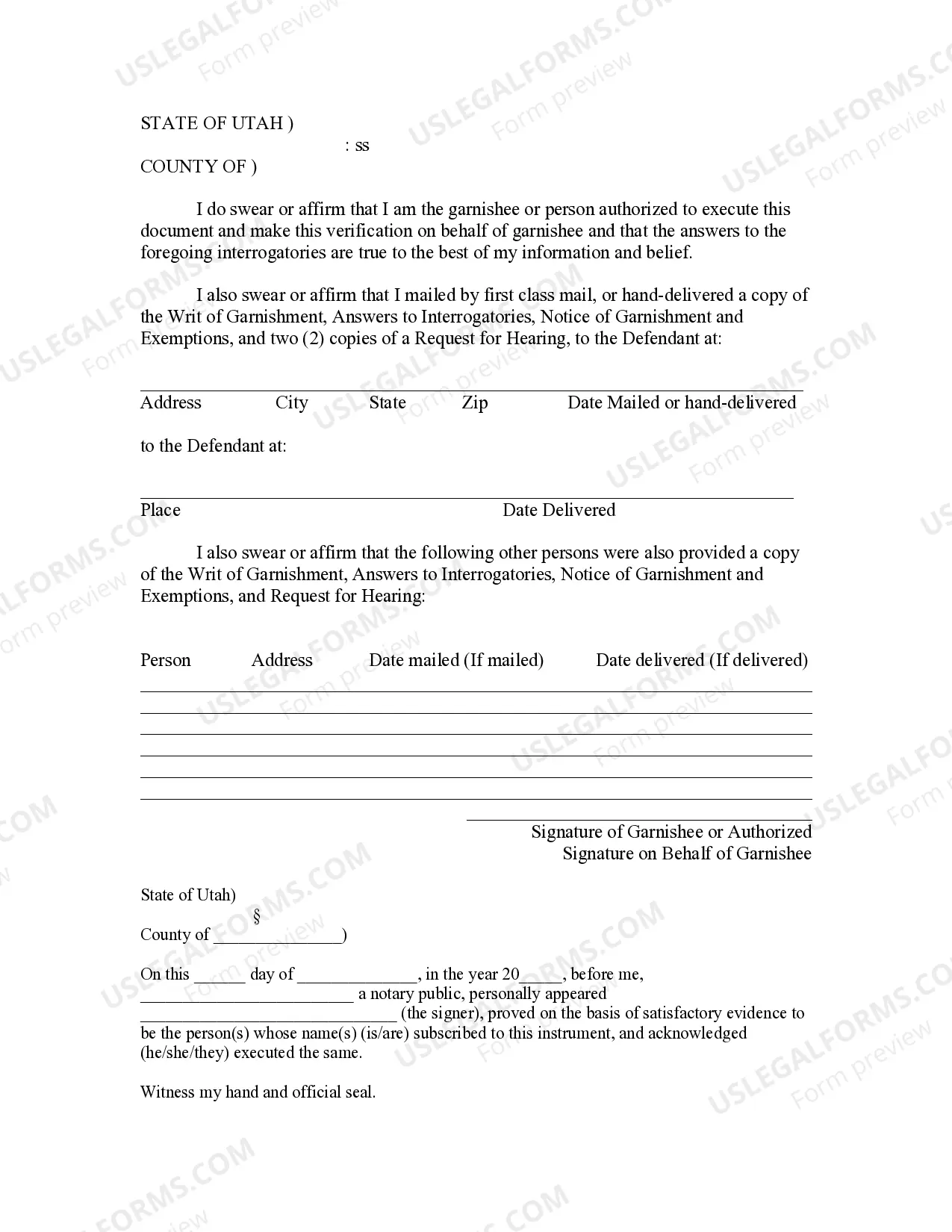
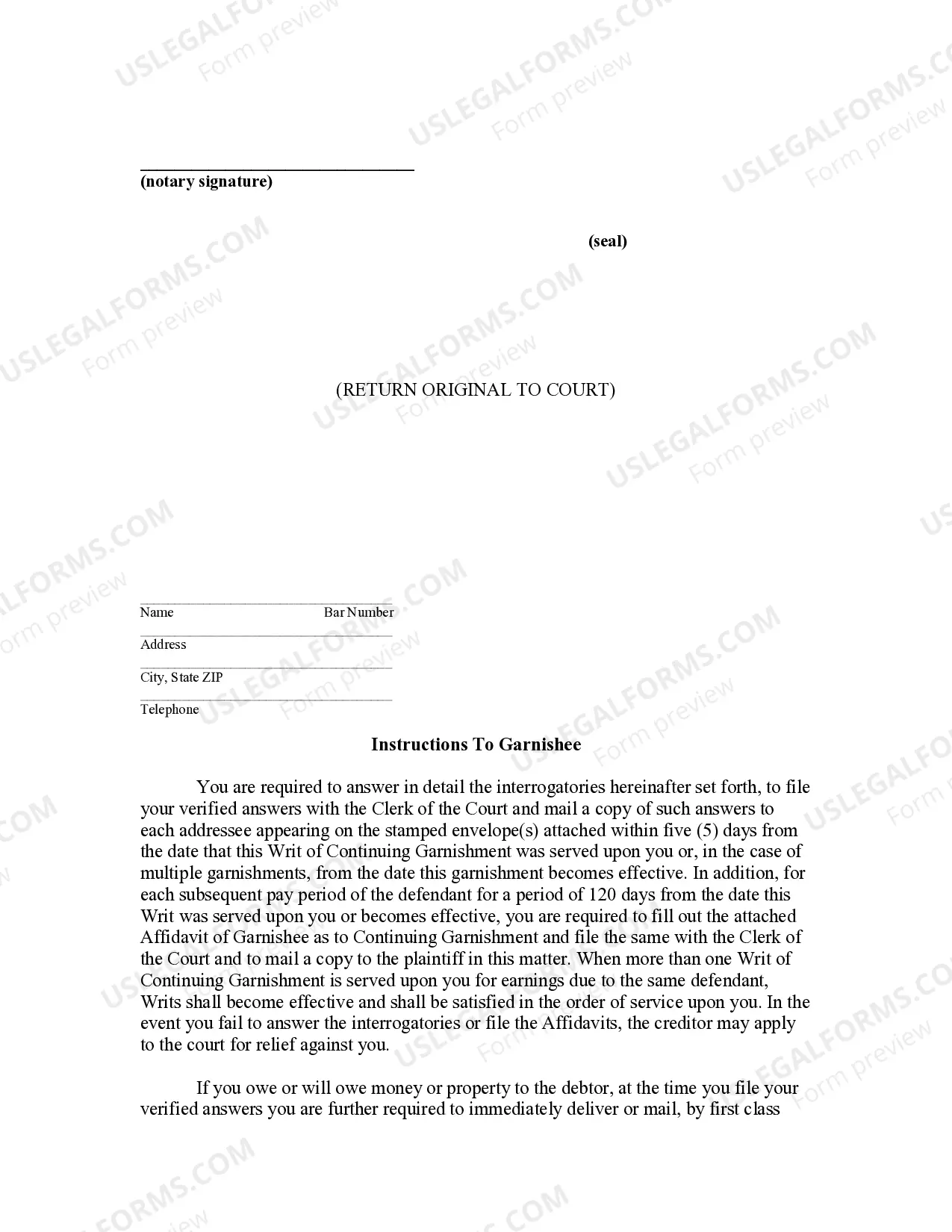
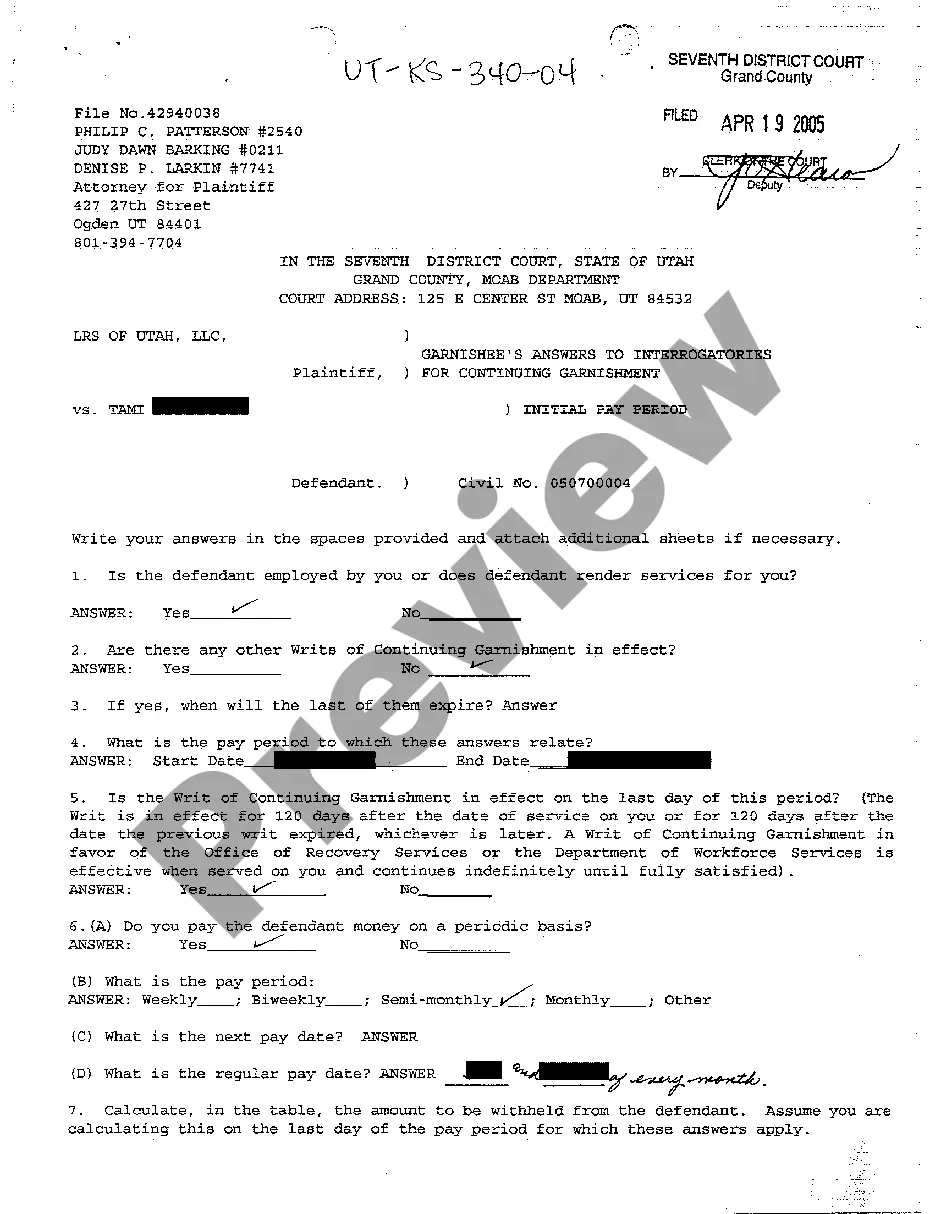
The Affidavit of Garnishee as to Continuing Garnishment - Wages is a legal document used in Utah court for garnishment cases. This form is specifically designed for defendants' wages, allowing employers (garnishees) to report the amount owed to a creditor through garnishment. This form distinguishes itself from similar documents by being focused solely on wage garnishments and involves specific calculations regarding disposable income and exemptions.
Main sections of this form
- Identification of the garnishee, including name, address, and contact information.
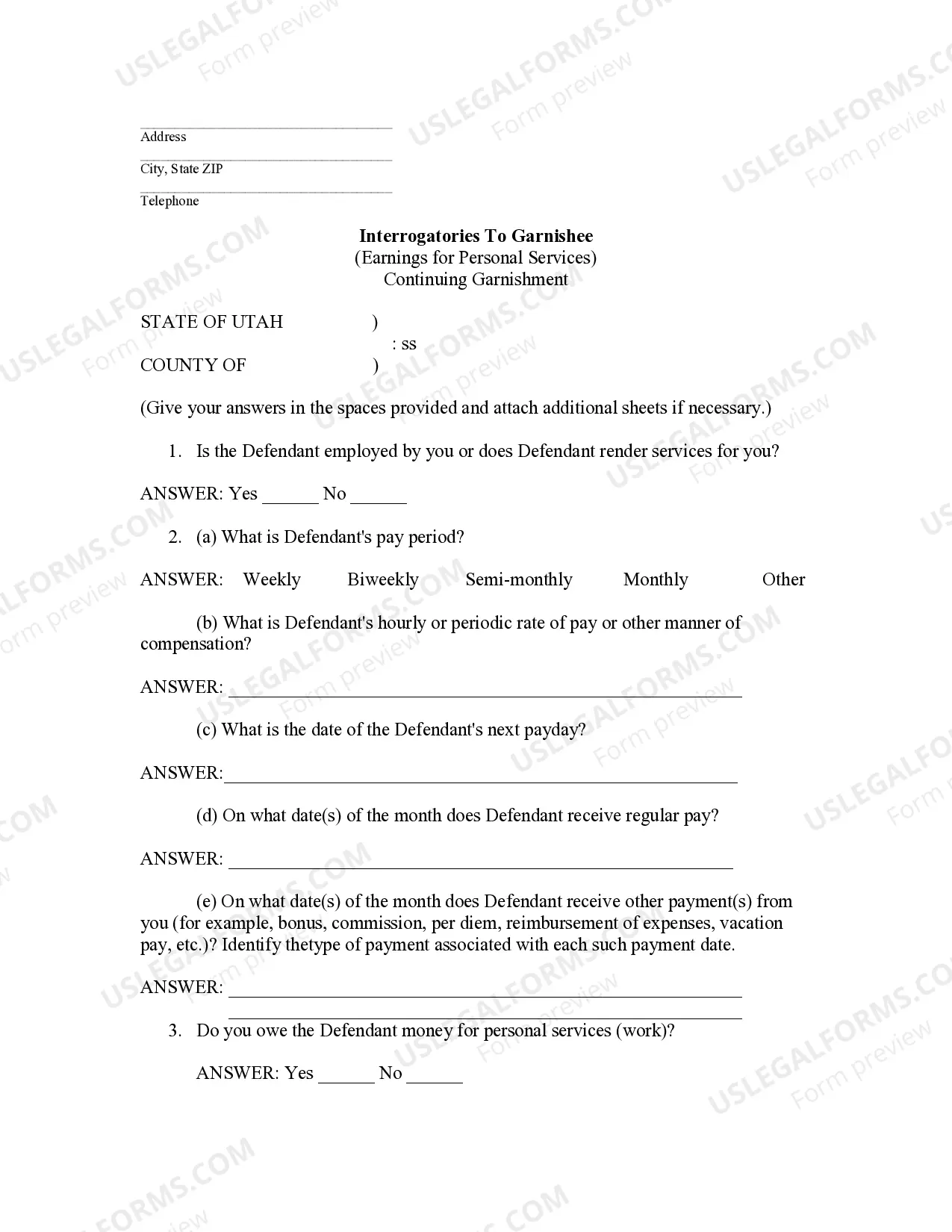
- Details of the defendant's pay and periods of service.
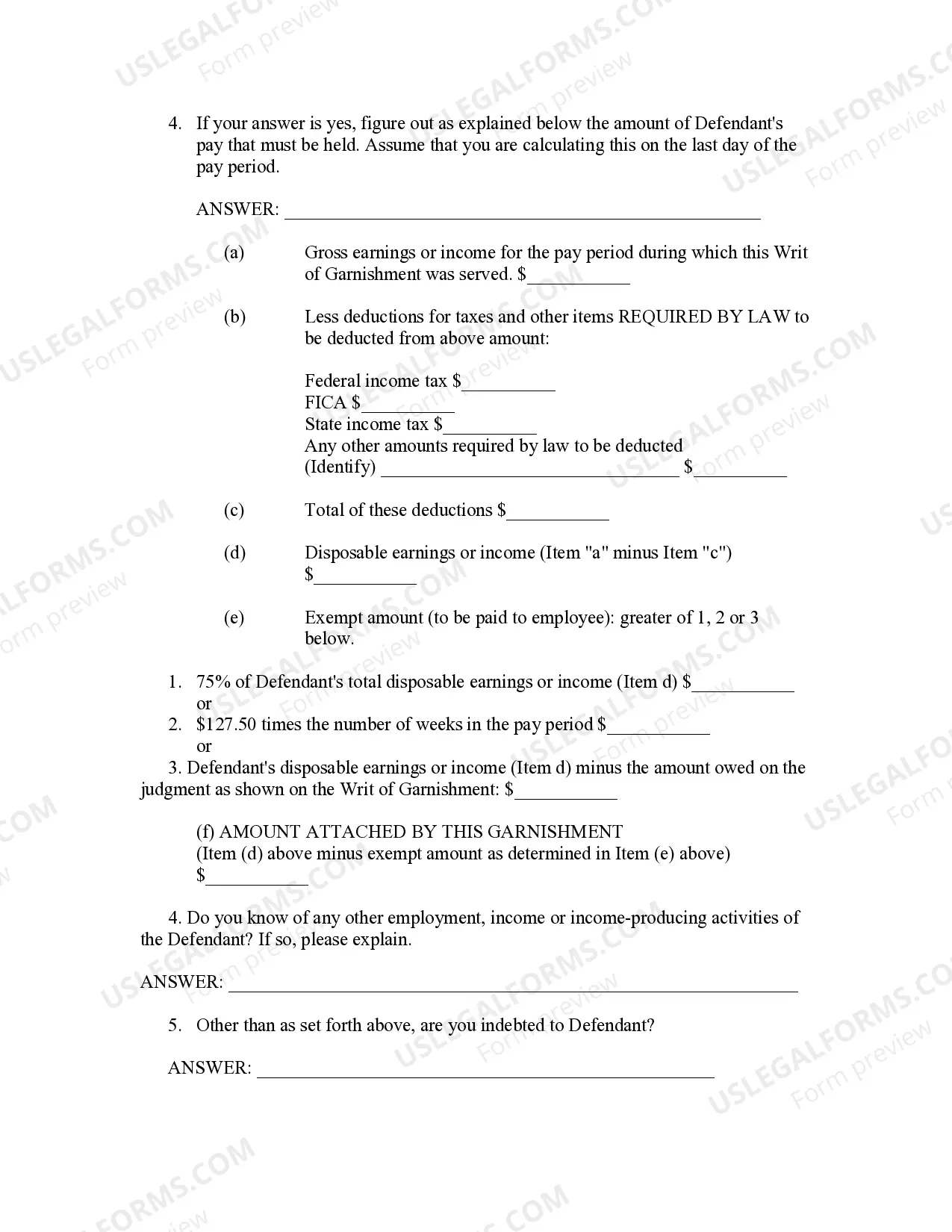
- Calculation of gross earnings, deductions, and disposable earnings.
- Exemption amounts based on Utah law.
- Informing the court and the defendant about the garnishment and amounts withheld.
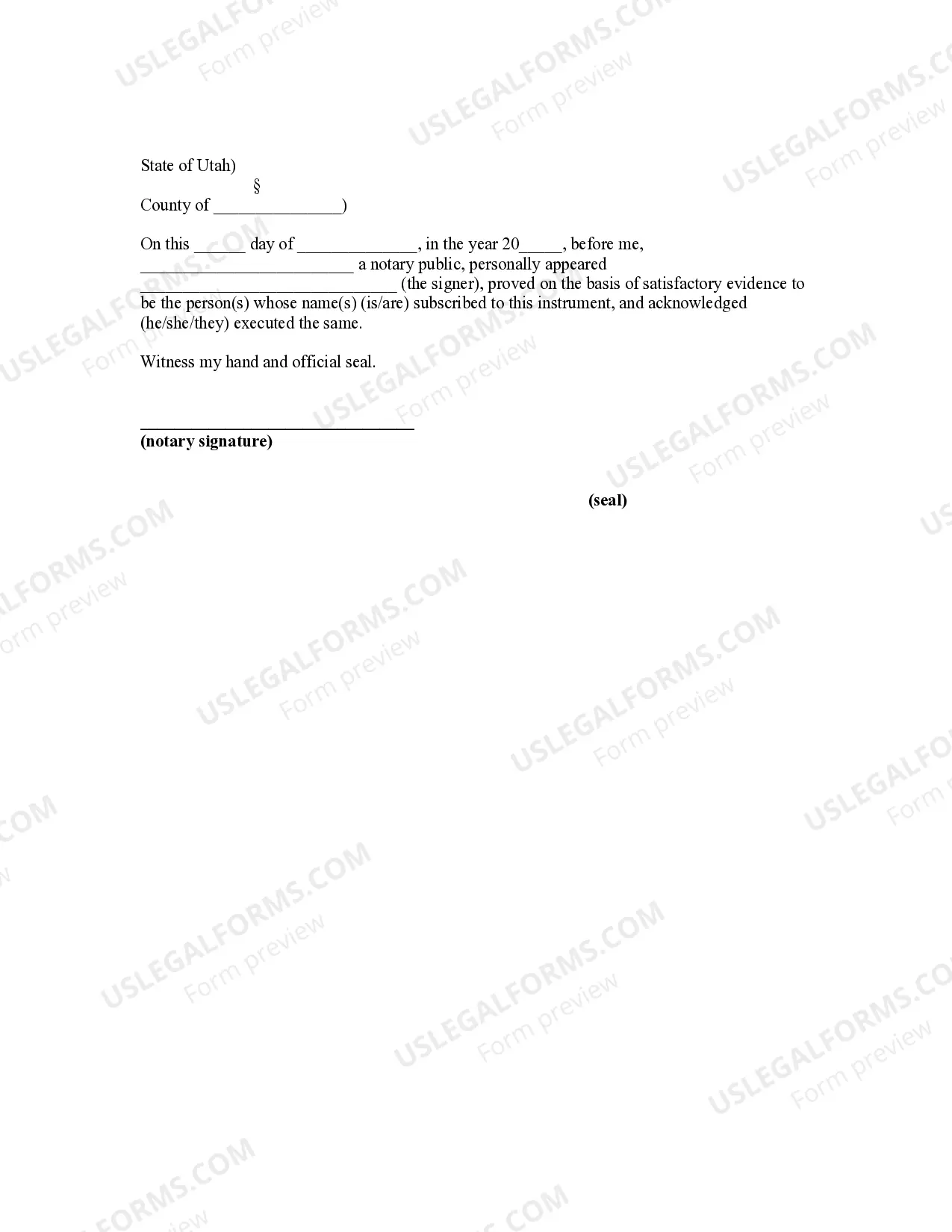
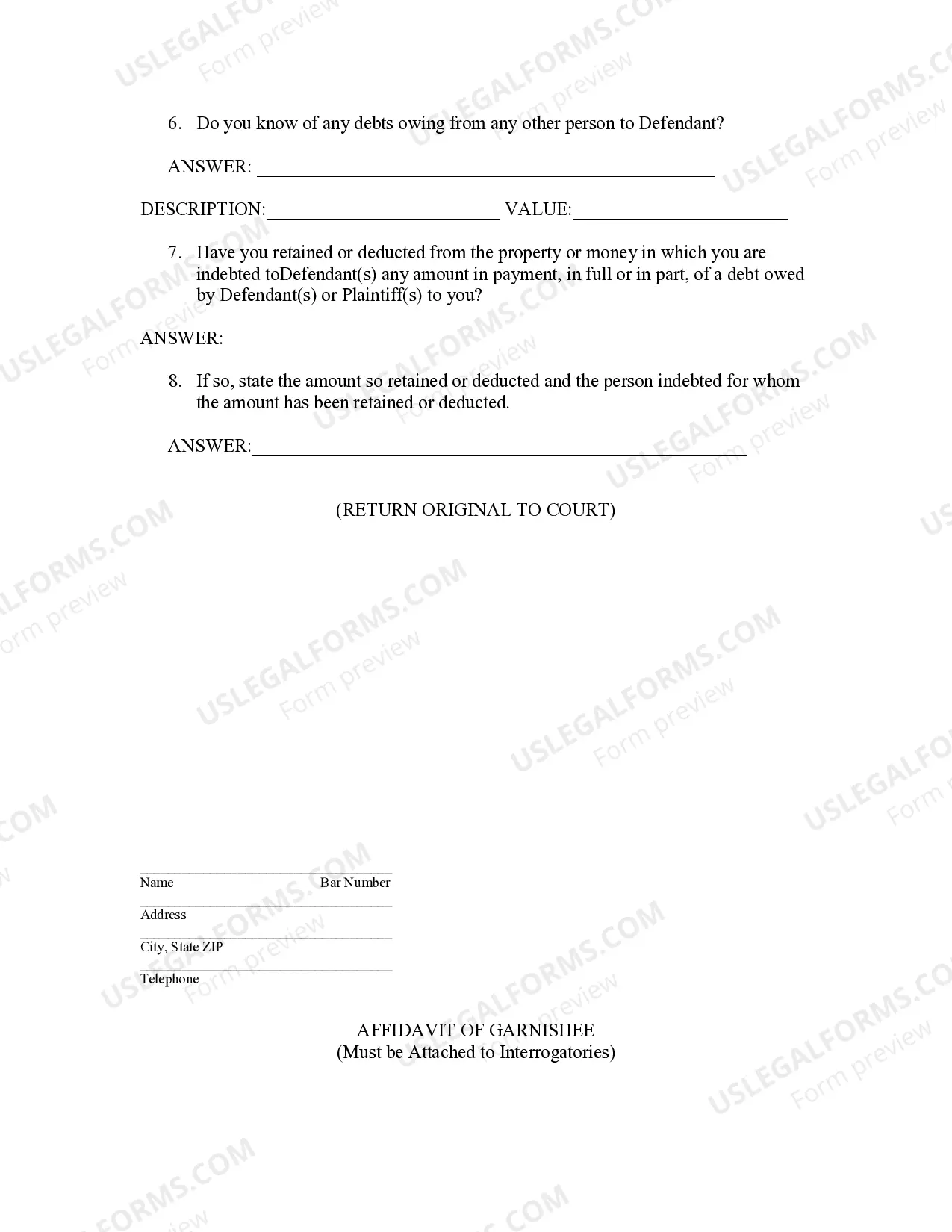
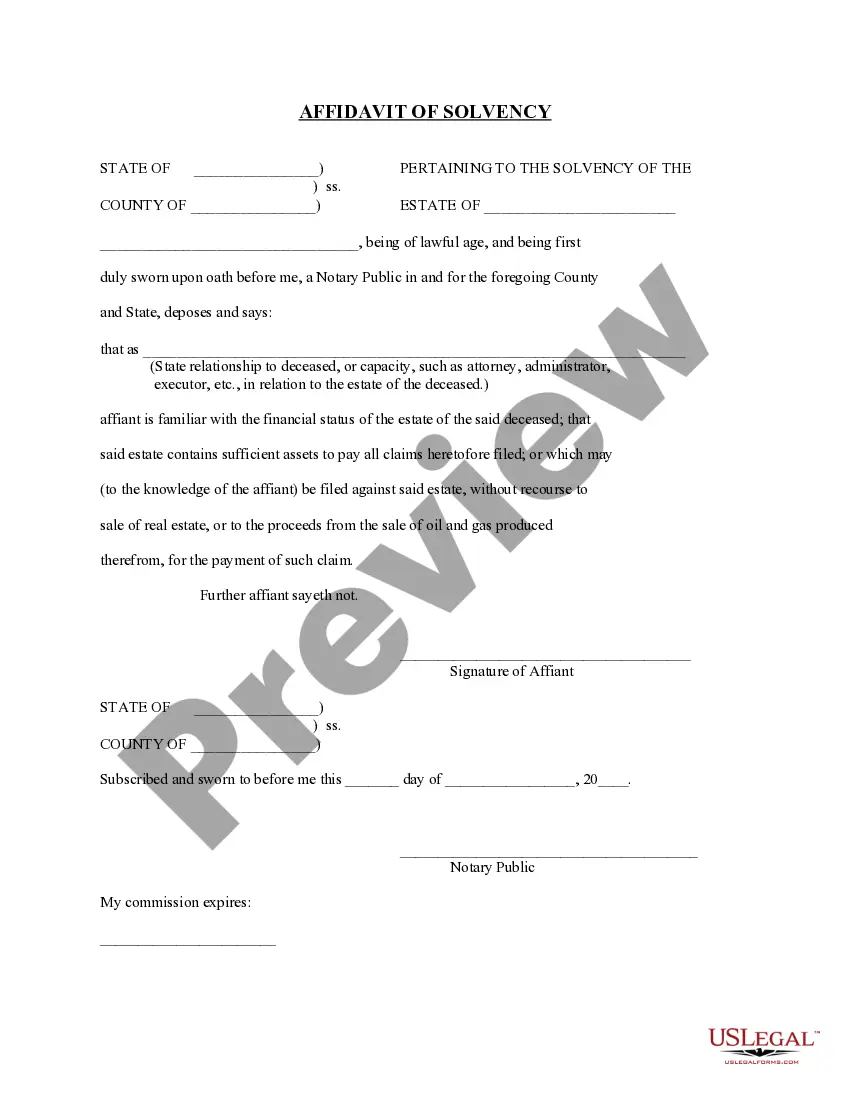
- Notarization section for legal validity.

When to use this form
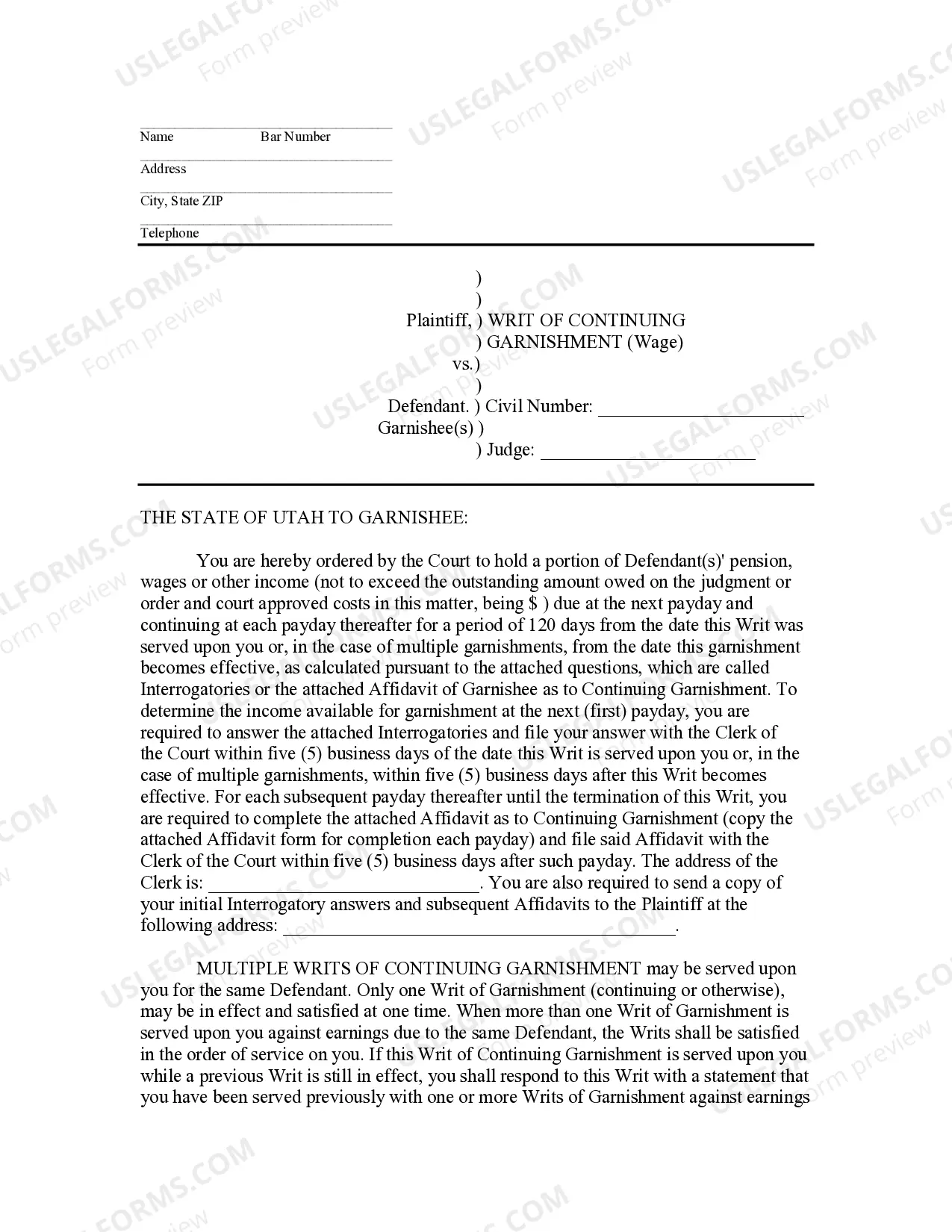
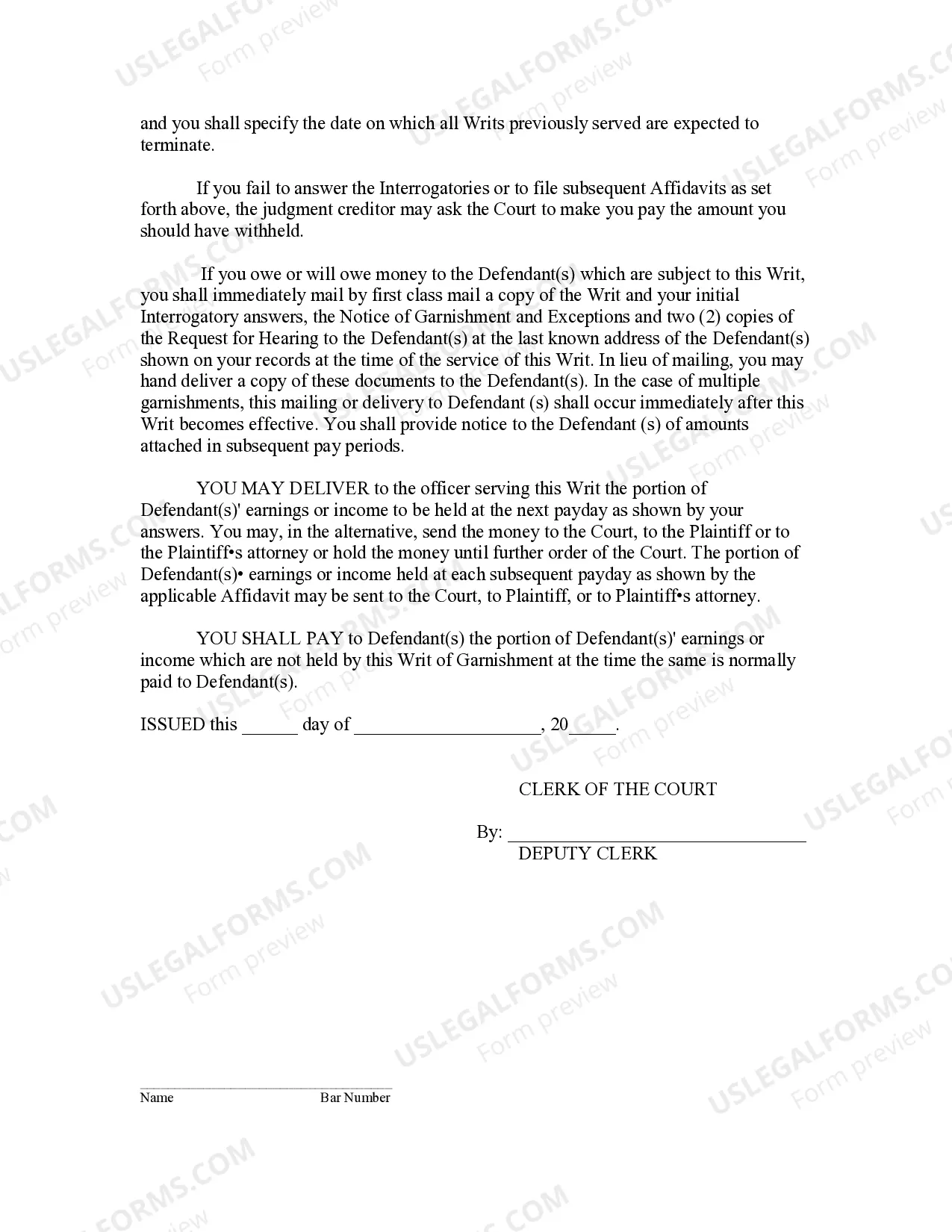
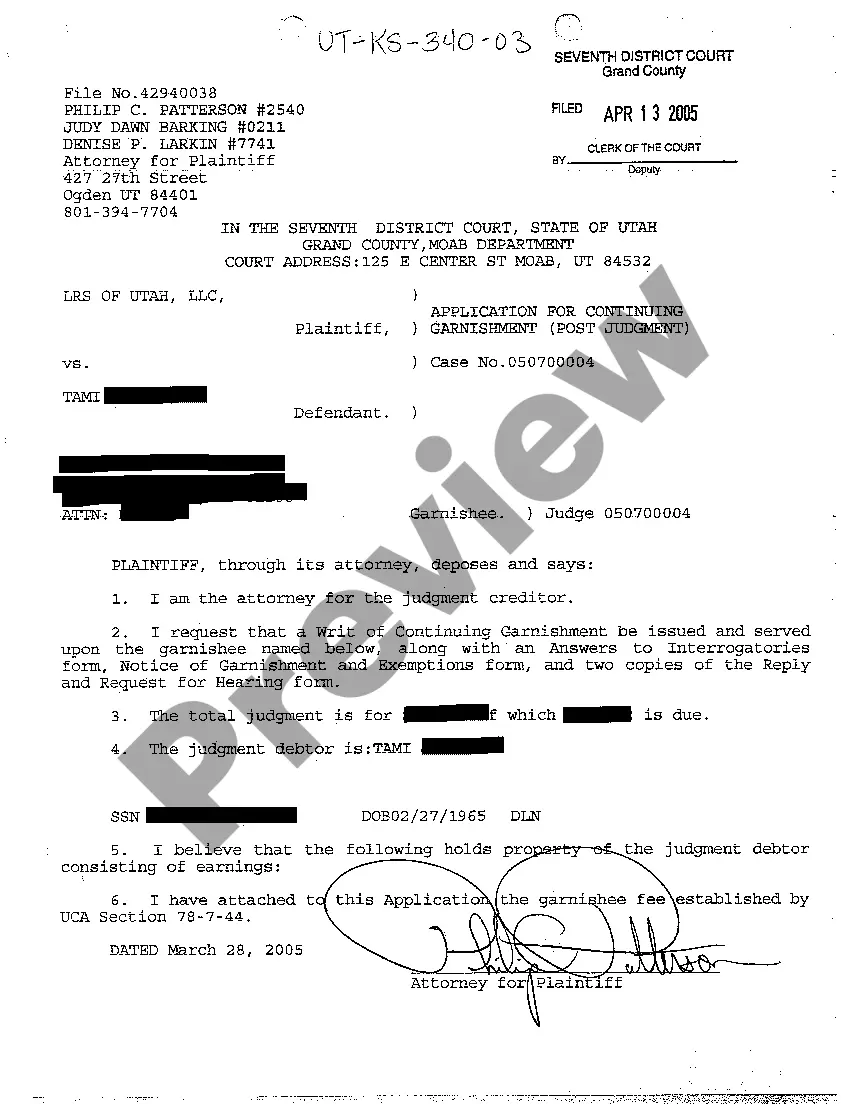
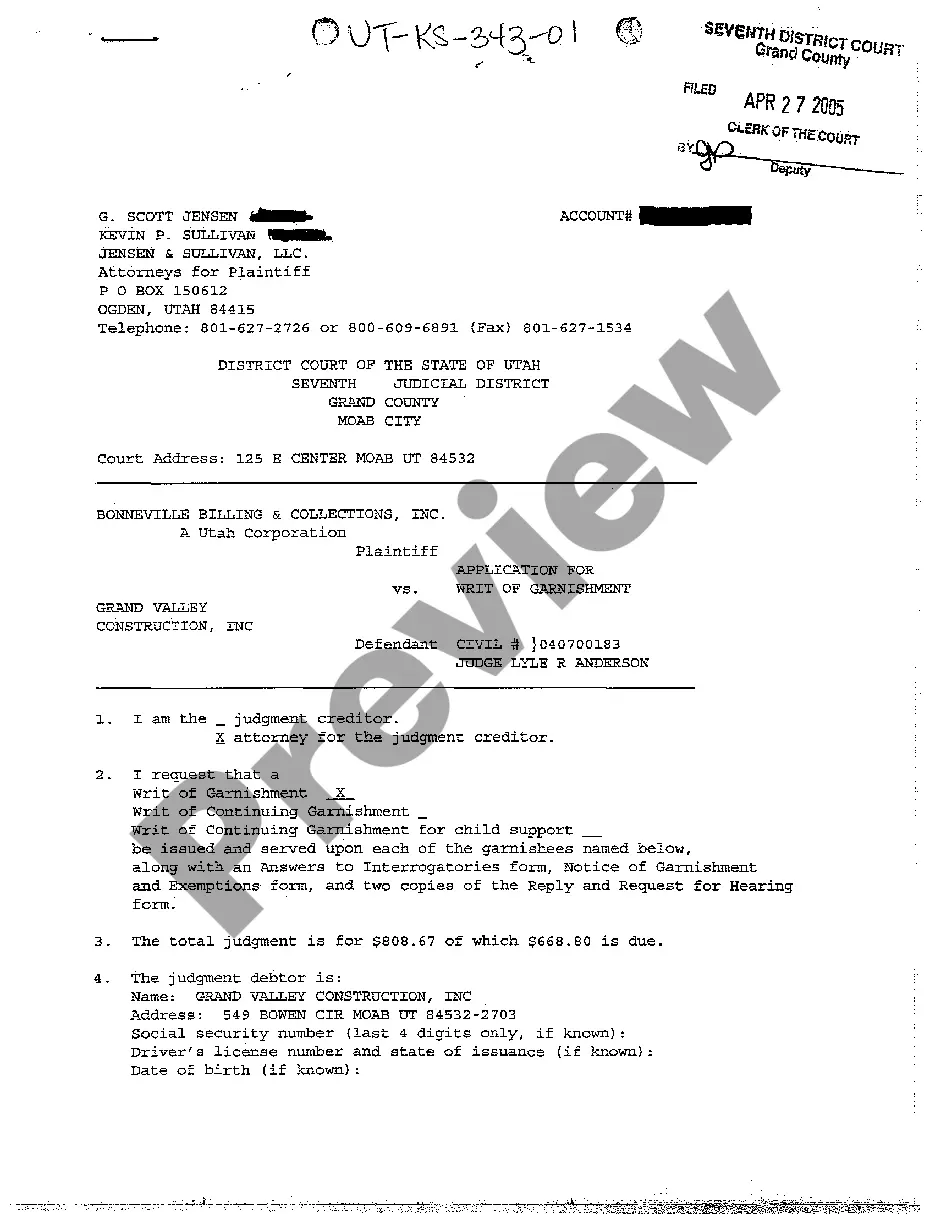
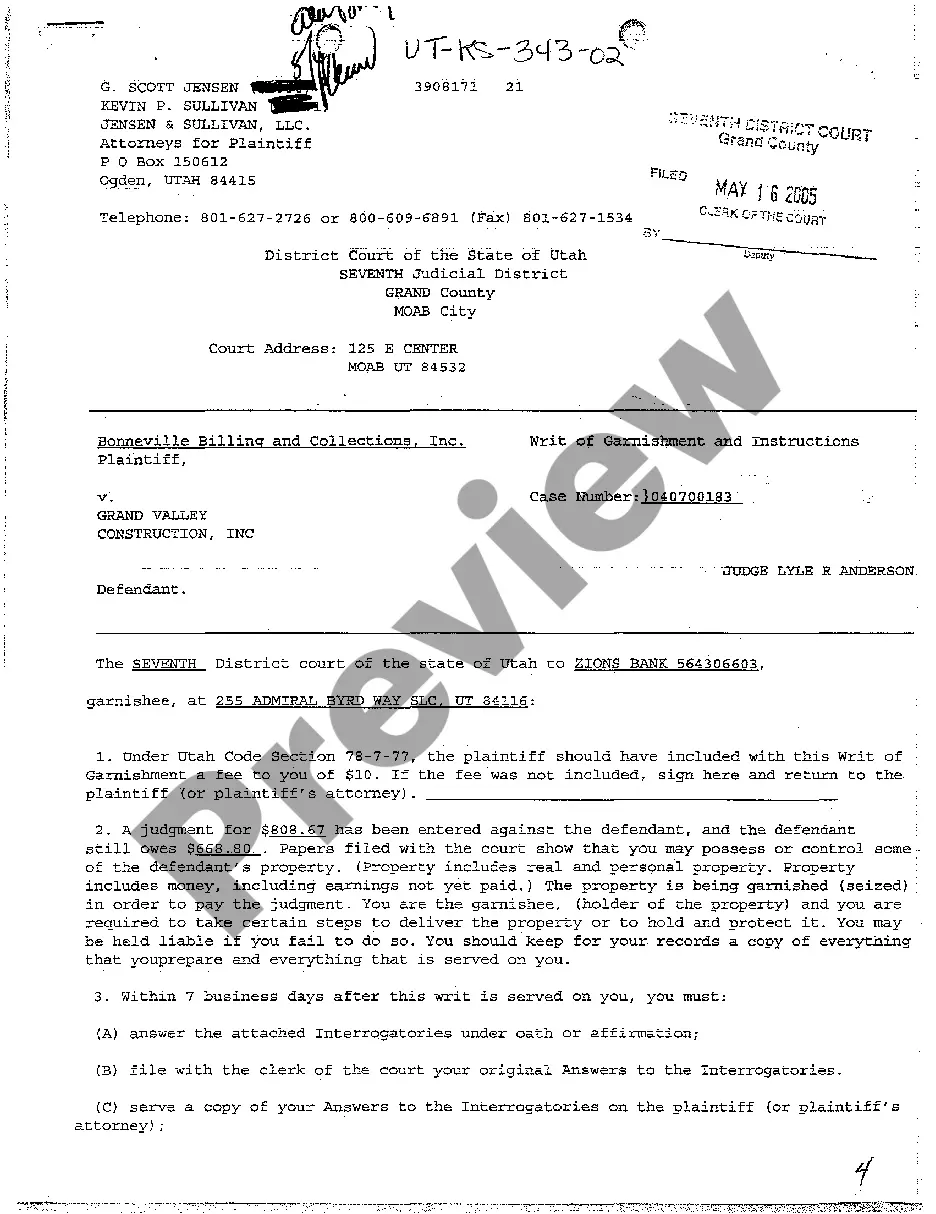
This form is necessary when an employer garnishee is required by a court to withhold a portion of a defendant's wages to pay off a creditor's judgment. It is specifically used in the context of a continuing garnishment for wages, which means it must be filed for each pay period until the garnishment order expires or is resolved. If you are an employer who has received a writ of garnishment, you will use this form to comply with the court's instructions.
Intended users of this form
- Employers or organizations serving as garnishees in a Utah court garnishment case.
- Individuals responsible for payroll processing who need to comply with wage garnishment orders.
- Legal representatives acting on behalf of garnishees to ensure compliance with court orders.
How to prepare this document
- Fill out the garnishee's details, including name, address, and contact information.
- Specify the pay period during which payment is being calculated.
- Complete the earnings and deductions calculations, including gross income and all mandatory deductions.
- Determine the exempt amount based on Utah's guidelines and enter it onto the form.
- Sign the form in front of a notary public to validate the affidavit.
Is notarization required?
Yes, this form must be notarized to be legally valid. A notary public will verify the identity of the person signing the affidavit, ensuring the integrity of the document. US Legal Forms provides integrated online notarization, allowing you to have your document notarized securely and conveniently through a video call, with legal equivalence.
Get your form ready online
Our built-in tools help you complete, sign, share, and store your documents in one place.
Make edits, fill in missing information, and update formatting in US Legal Forms—just like you would in MS Word.
Download a copy, print it, send it by email, or mail it via USPS—whatever works best for your next step.
Sign and collect signatures with our SignNow integration. Send to multiple recipients, set reminders, and more. Go Premium to unlock E-Sign.
If this form requires notarization, complete it online through a secure video call—no need to meet a notary in person or wait for an appointment.
We protect your documents and personal data by following strict security and privacy standards.

Make edits, fill in missing information, and update formatting in US Legal Forms—just like you would in MS Word.

Download a copy, print it, send it by email, or mail it via USPS—whatever works best for your next step.

Sign and collect signatures with our SignNow integration. Send to multiple recipients, set reminders, and more. Go Premium to unlock E-Sign.

If this form requires notarization, complete it online through a secure video call—no need to meet a notary in person or wait for an appointment.

We protect your documents and personal data by following strict security and privacy standards.
Typical mistakes to avoid
- Failing to complete all sections of the form, leading to possible rejection by the court.
- Incorrectly calculating deductions or disposable income, which can affect the garnishment amount.
- Not providing timely notice to the defendant regarding the garnished amount.
- Neglecting to have the affidavit notarized, which is crucial for its legal validity.
Advantages of online completion
- Immediate access to correctly formatted documents tailored to Utah law.
- Easy download in Word format that can be filled out and edited as needed.
- Guidance provided through each section for accurate completion.
What to keep in mind
- The Affidavit of Garnishee as to Continuing Garnishment - Wages is an essential legal form for employers in Utah dealing with wage garnishments.
- Accurate completion of the form is vital to ensure compliance with court orders and avoidance of penalties.
- Notarization is a required step to validate this form officially.
Looking for another form?
Form popularity
FAQ
If it's already started, you can try to challenge the judgment or negotiate with the creditor. But, they're in the driver's seat, and if they don't allow you to stop a garnishment by agreeing to make voluntary payments, you can't really force them to. You can, however, stop the garnishment by filing a bankruptcy case.
Federal Wage Garnishment Limits for Judgment Creditorsthe amount that your income exceeds 30 times the federal minimum wage, whichever is less.
Federal and state law limits the amount that can be taken from your paycheck to pay debts. Judgment creditorsthose who've filed a lawsuit against you and wonand creditors with a statutory right to collect back taxes, child support, and student loans can garnish or "take" money directly out of your paycheck.
The Maximum Amount that Can Be Garnished Employment income above these amounts can be garnisheed in its entirety.In Alberta, for instance, you keep the first $800 of your monthly net income, then creditors can garnish 50% of your monthly net income between $800 and $2400, and 100% of any net income above $2400.
3 attorney answersIf you owe them the money, they do not have to accept anything less than full payment. The creditor, after it has a judgment, can proceed to garnishment if your state allows it.
Continuous writ of garnishment could refer to a garnishment order granting a third party to attach money or property of a defendant on a continuing basis for so long as the court may decide or until otherwise ordered by the court having competent jurisdiction.
A writ of continuing garnishment serves as a lien and continuing levy against the nonexempt earnings of the judgment debtor, until such time earnings are no longer due; the underlying judgment is vacated, modified or satisfied in full; or the writ is dismissed.
Respond to the Creditor's Demand Letter. Seek State-Specific Remedies. Get Debt Counseling. Object to the Garnishment. Attend the Objection Hearing (and Negotiate if Necessary) Challenge the Underlying Judgment. Continue Negotiating.
Filing a bankruptcy case in Utah is an effective way to stop garnishments and all other creditor collection actions. This is due to an injunction called the automatic stay, which goes into effect immediately when you file a Chapter 7 or Chapter 13 bankruptcy case.