South Carolina 20 Day Notice to Terminate Tenant of Will for Nonresidential from Landlord to Tenant
Understanding this form
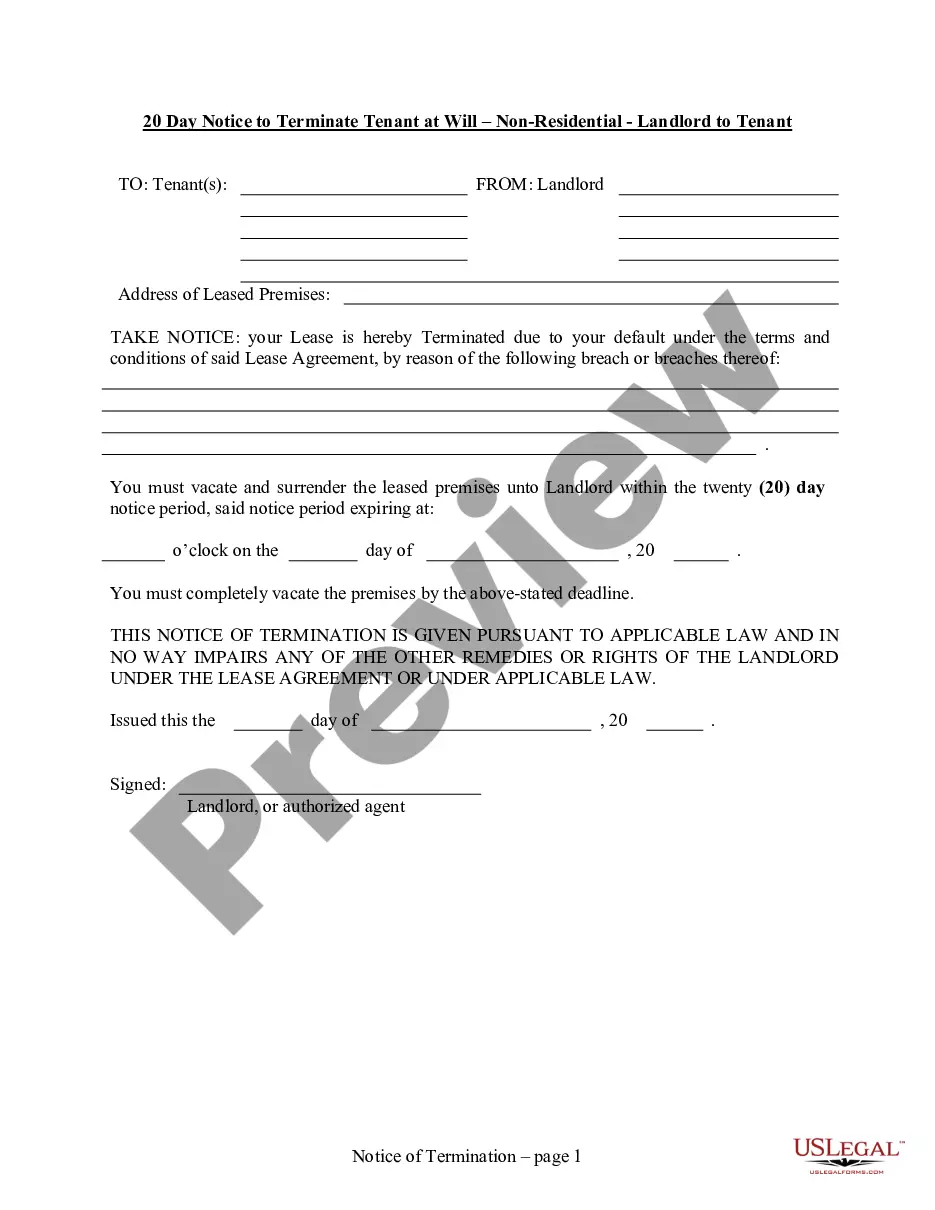
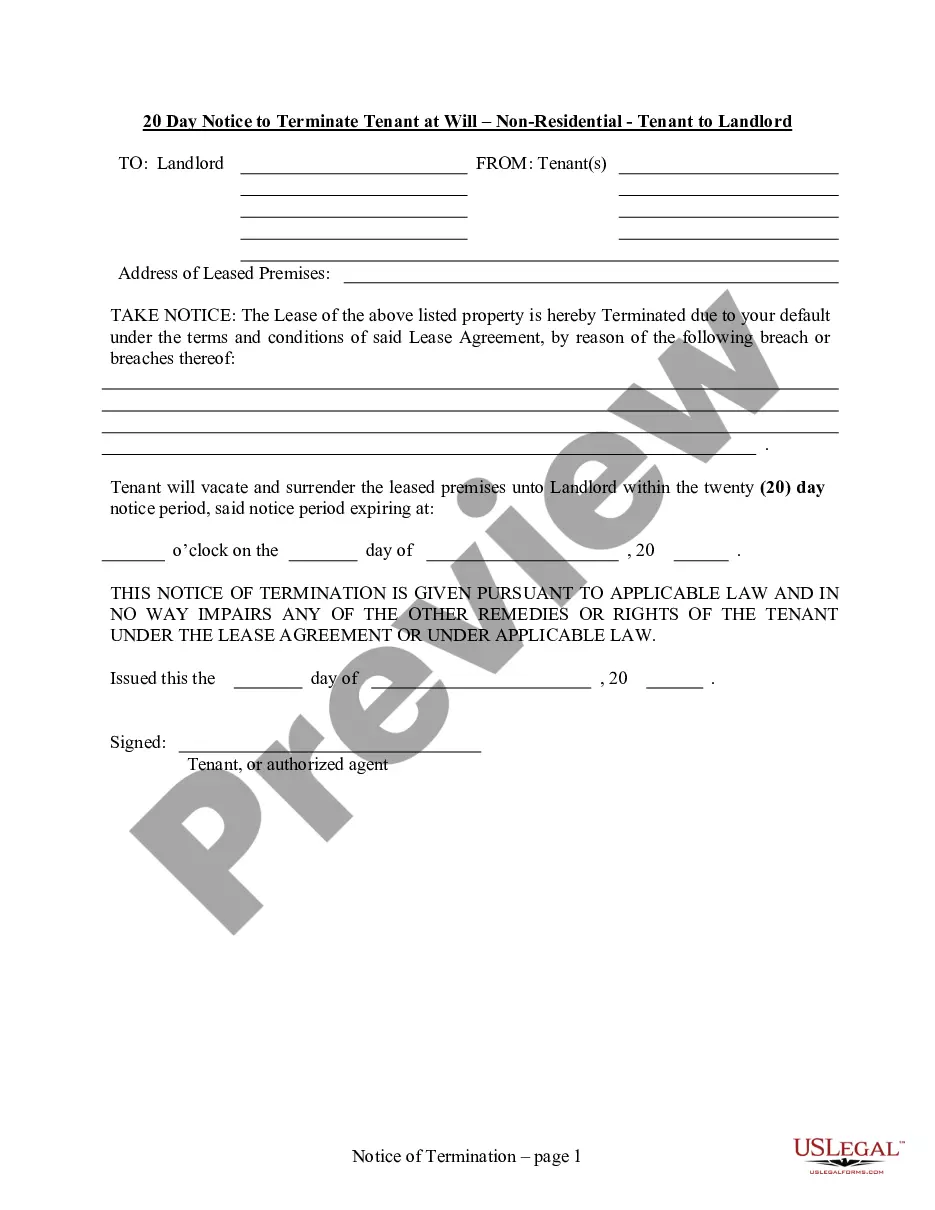
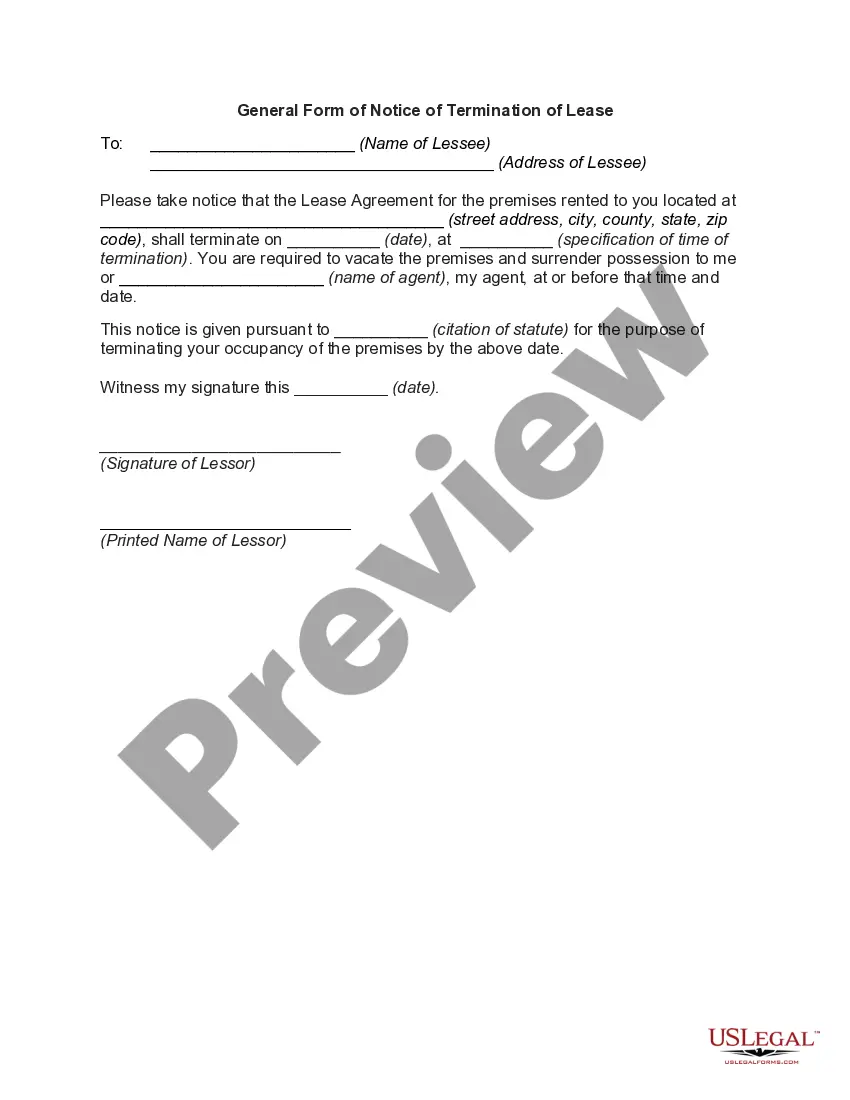
The 20 Day Notice to Terminate Tenant of Will for Nonresidential is a legal document used by a landlord to officially terminate an at-will lease agreement with a tenant. This form serves to notify the tenant that they must vacate the rental property within twenty days. Unlike other lease termination notices, this specific form is used for nonresidential properties. An at-will lease allows either party to end the agreement at any time, making this notice an essential tool for landlords wanting to regain possession of their property.
Form components explained
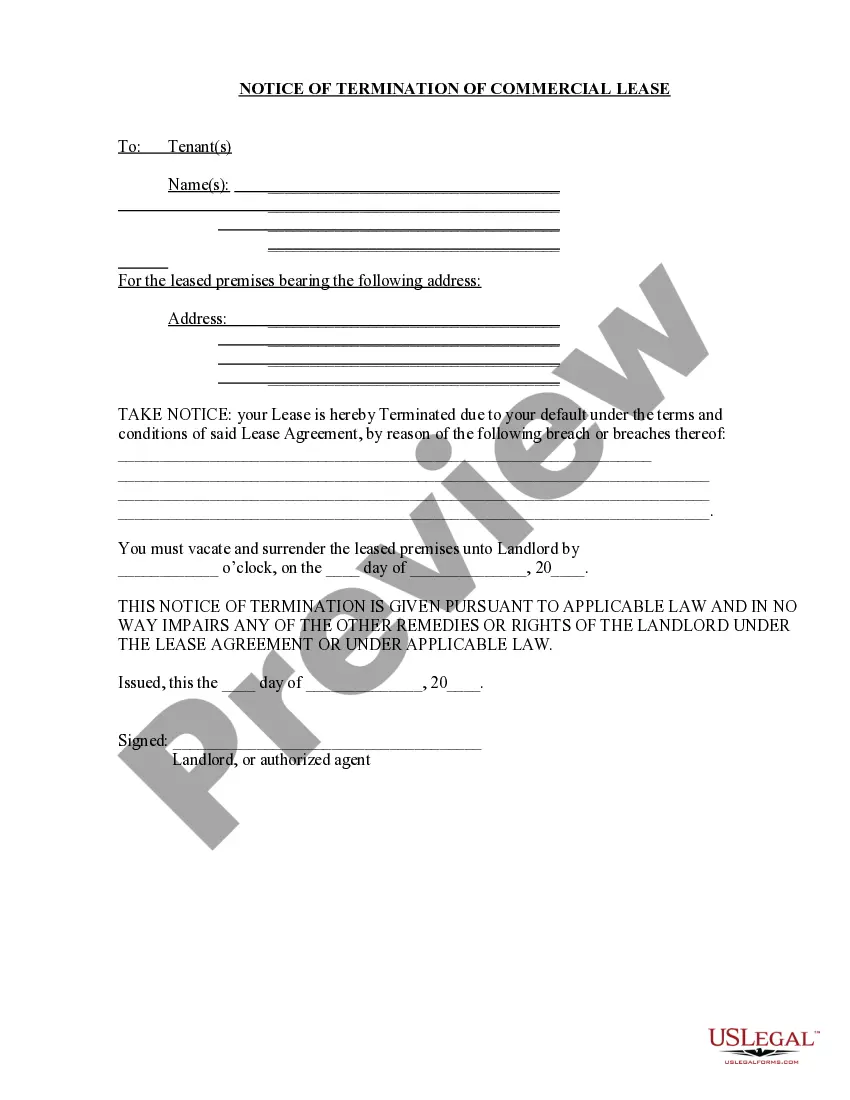
- Identification of parties: Names and addresses of the landlord and tenant.
- Property description: Address of the leased premises.
- Termination statement: Notice that the lease is being terminated due to a breach.
- Deadline for vacating: Specific date by which the tenant must leave the premises.
- Signature block: Space for the landlord or authorized agent's signature and date of issuance.
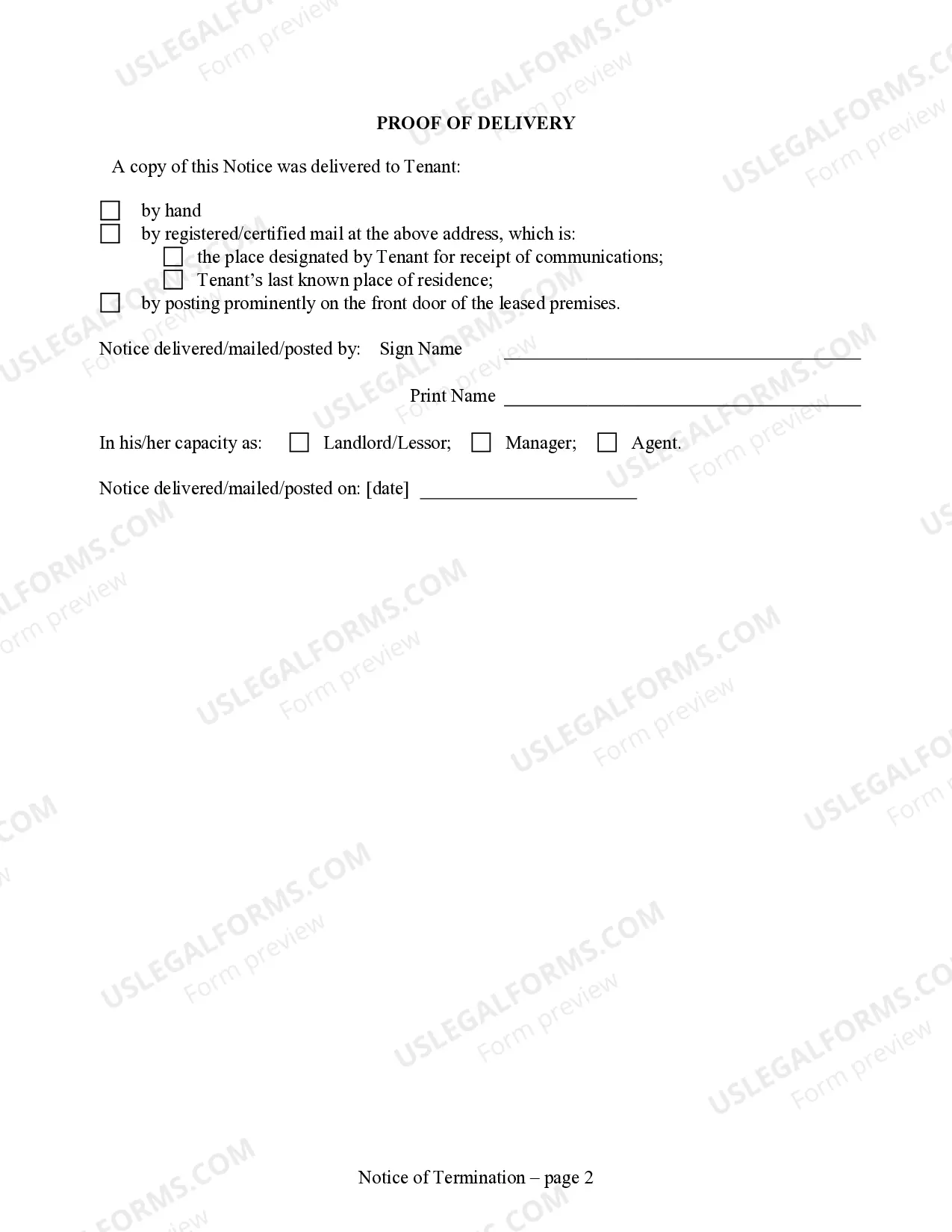
- Proof of delivery: Options for how the notice was delivered to the tenant.

When this form is needed
This form is necessary when a landlord needs to terminate an at-will nonresidential lease agreement due to the tenant's default or breach of lease terms. It is typically used in situations where the landlord wants to end the lease for reasons such as nonpayment of rent, violation of lease conditions, or other defaults that justify termination. Landlords must ensure they provide proper notice according to applicable laws.
Who this form is for
- Landlords who are managing nonresidential properties and have tenants on an at-will basis.
- Property managers acting on behalf of the landlord to communicate lease terminations.
- Real estate professionals who need a standard notice template for lease terminations.
Completing this form step by step
- Identify the landlord and tenant: Enter the full names and contact information for both parties.
- Specify the leased property: Clearly state the address of the property in question.
- Document the breach: Indicate the specific reason for terminating the lease, if applicable.
- Enter the termination date: Fill in the exact date by which the tenant must vacate the premises.
- Sign and date: The landlord or authorized agent must sign and date the notice.
- Provide delivery proof: Note the method of delivery to ensure proper evidence of notice.
Does this form need to be notarized?
Notarization is not commonly needed for this form. However, certain documents or local rules may make it necessary. Our notarization service, powered by Notarize, allows you to finalize it securely online anytime, day or night.
Get your form ready online
Our built-in tools help you complete, sign, share, and store your documents in one place.
Make edits, fill in missing information, and update formatting in US Legal Forms—just like you would in MS Word.
Download a copy, print it, send it by email, or mail it via USPS—whatever works best for your next step.
Sign and collect signatures with our SignNow integration. Send to multiple recipients, set reminders, and more. Go Premium to unlock E-Sign.
If this form requires notarization, complete it online through a secure video call—no need to meet a notary in person or wait for an appointment.
We protect your documents and personal data by following strict security and privacy standards.

Make edits, fill in missing information, and update formatting in US Legal Forms—just like you would in MS Word.

Download a copy, print it, send it by email, or mail it via USPS—whatever works best for your next step.

Sign and collect signatures with our SignNow integration. Send to multiple recipients, set reminders, and more. Go Premium to unlock E-Sign.

If this form requires notarization, complete it online through a secure video call—no need to meet a notary in person or wait for an appointment.

We protect your documents and personal data by following strict security and privacy standards.
Common mistakes
- Failing to specify the reason for termination, if required by law.
- Not providing sufficient notice time based on state regulations.
- Omitting signatures or dates from the notice.
- Incorrectly identifying the property or parties involved.
- Not documenting how the notice was delivered to the tenant.
Why use this form online
- Convenience: Easily download and customize your template for quick use.
- Editability: Adjust the form as needed to fit specific situations without hassle.
- Legal reliability: Forms are drafted by licensed attorneys, ensuring compliance with legal standards.
- Time-saving: Avoid lengthy processes by utilizing ready-to-use templates.
Looking for another form?
Form popularity
FAQ
The magistrate must determine whether a landlord-tenant relationship exists and what rent, if any, is due. The magistrate should, upon making a determination that rent is due, issue a written rule requiring the tenant to vacate the premises or to show cause within ten days why he should not be ejected.
Eviction is the legal method of removing a tenant. A tenant is someone who is paying rent and/or who has a lease. Ejectment is the legal method of removing someone who is not a tenant, in other words, usually someone who is staying without a...
A Writ of Ejectment is a legal paper that says you must move or the sheriff will remove you and your belongings from the property. A constable or deputy sheriff will give the Writ to you, or post a copy on the door if the premises are abandoned.
In South Carolina, the Writ of Ejectment allows the county sheriff to remove the renter forcibly. Once issued, the renter will have five days to vacate the premises. Once evicted, you may find that the tenant has left behind some personal belongings.
Ejectment is a legal action to recover possession of real property wrongfully withheld from the plaintiff.Thus, a plaintiff who acquires possession under the judgment in an ejectment action does not acquire any better or different title and goes into possession under whatever title he or she previously held.
With an unconditional quit notice in South Carolina, you can file an eviction lawsuit against the tenant immediately. You can also evict a tenant without them necessarily violating the lease or rental agreement. In such a case, you'll need to wait until the lease expires.
The South Carolina Five (5) Day Notice to Quit (Non-Payment) is a legal notice requiring a tenant to pay past-due rent within 5 days or ejectment proceedings will be brought against them by the landlord.
To begin the eviction lawsuit in South Carolina, also called an ejectment action, the landlord must file an affidavit with the court. An affidavit is a sworn statement by the landlord that provides details on the reasons the tenant should be evicted. Once filed, the court will then issue an order to show cause.
Tenants have the right to an eviction hearing in South Carolina.This means the landlord must give written notice of a lease violation and a certain time period for the tenant to fix the problem before they can file an eviction action. For non-payment of rent, the time period to cure the non-payment is five days.