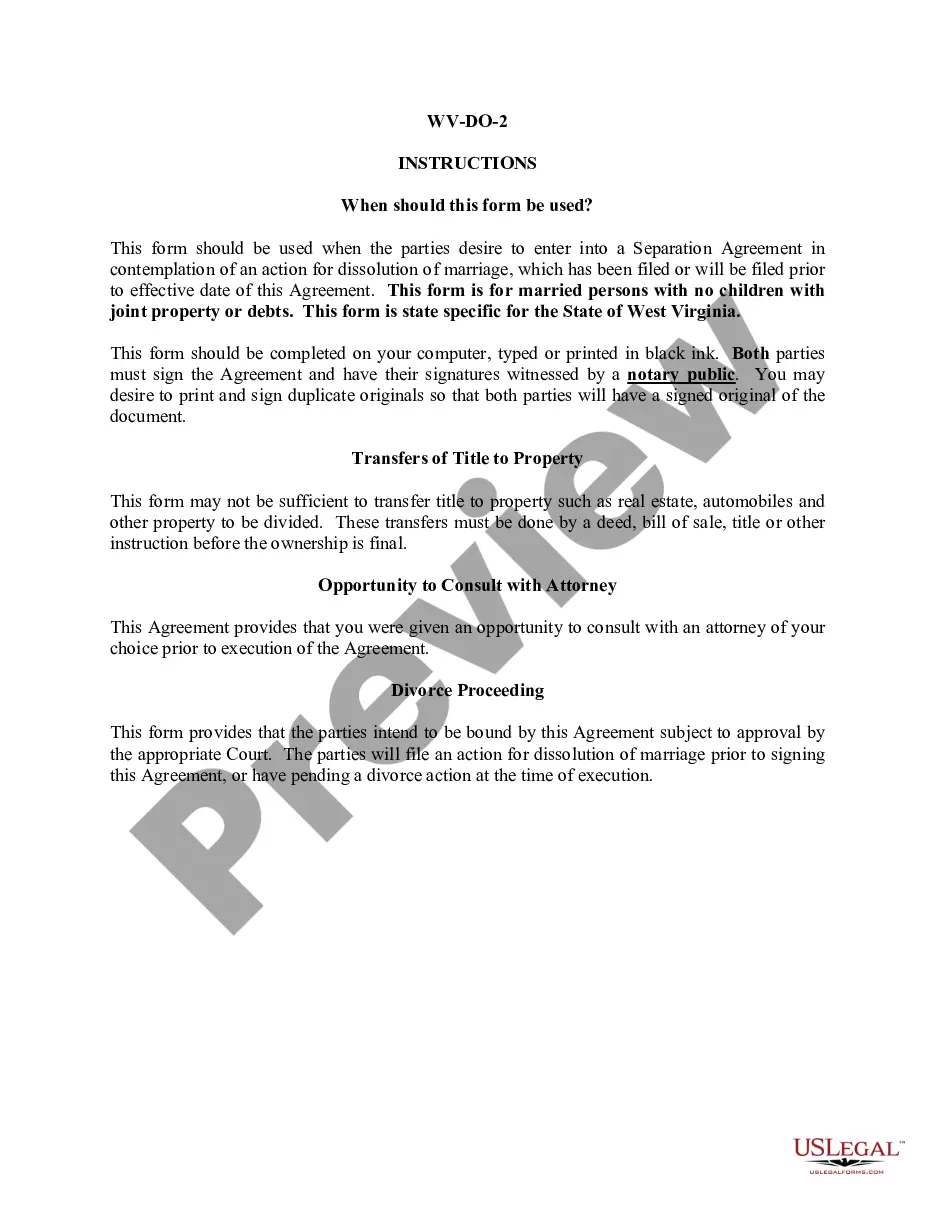
Rhode Island Renunciation And Disclaimer of Joint Tenant or Tenancy Interest
About this form
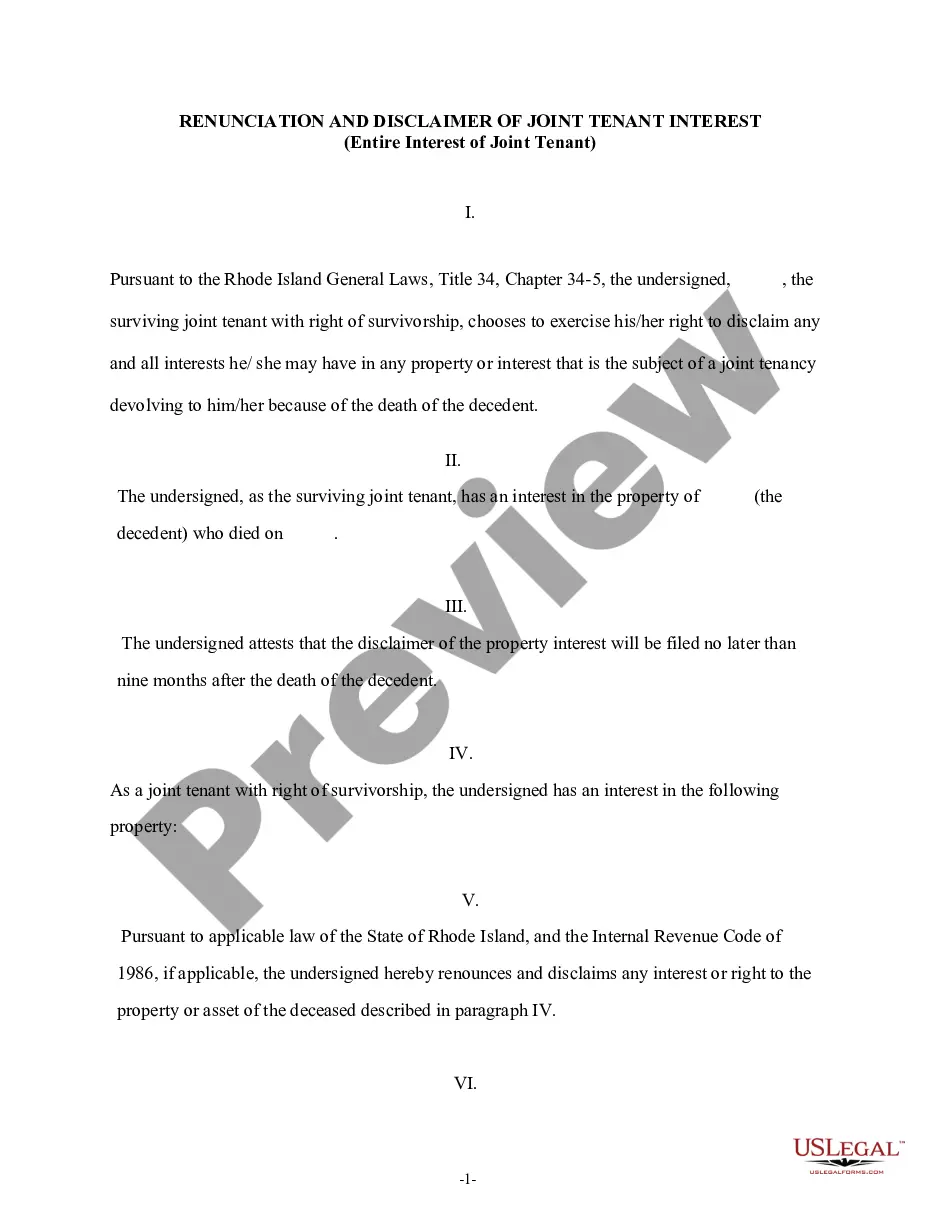
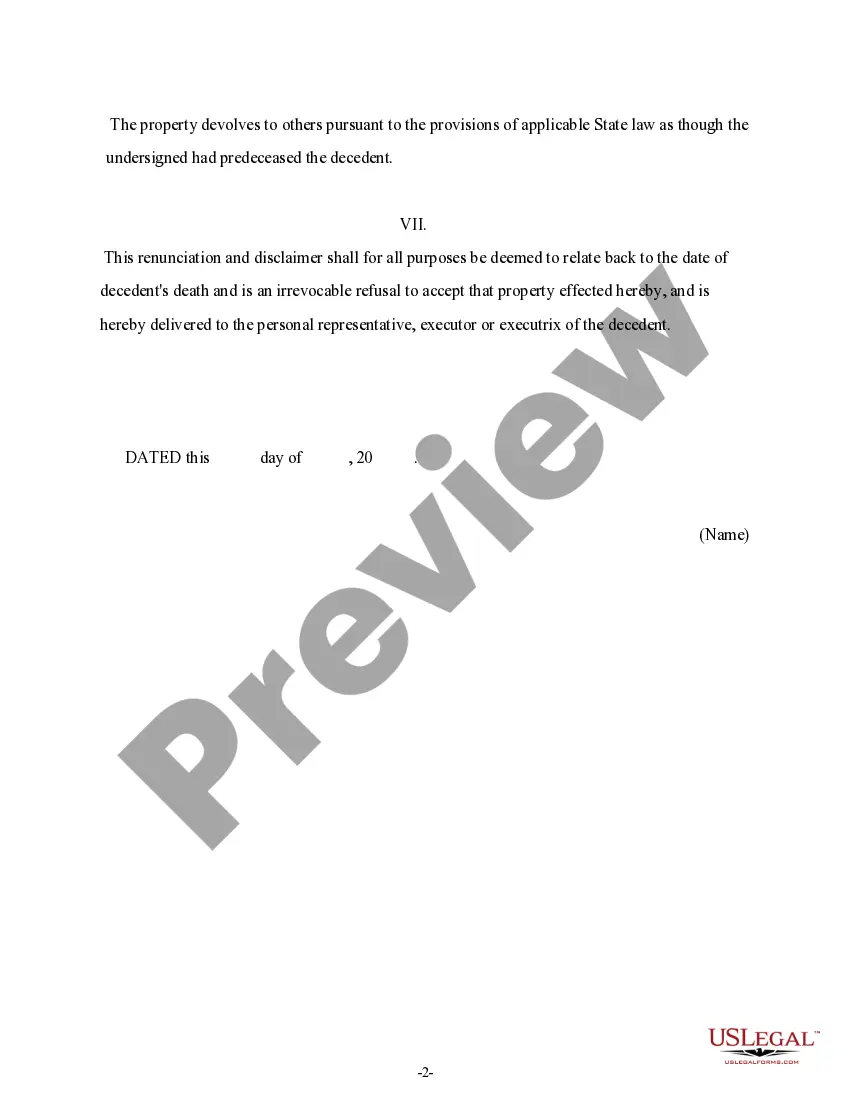
The Renunciation and Disclaimer of Joint Tenant or Tenancy Interest is a legal document that allows a surviving joint tenant to formally decline their interest in property after the death of another joint tenant. This form ensures that the property will pass to other beneficiaries as though the disclaiming tenant had predeceased the deceased. Unlike similar forms, this document specifically addresses joint tenancy situations under Rhode Island law, providing clear guidelines for renunciation.
Form components explained
- Identification of the joint tenant disclaiming their interest.
- Details of the deceased joint tenant and property involved.
- Legal statement indicating the total renunciation of interest.
- Reference to applicable state laws governing the disclaimer.
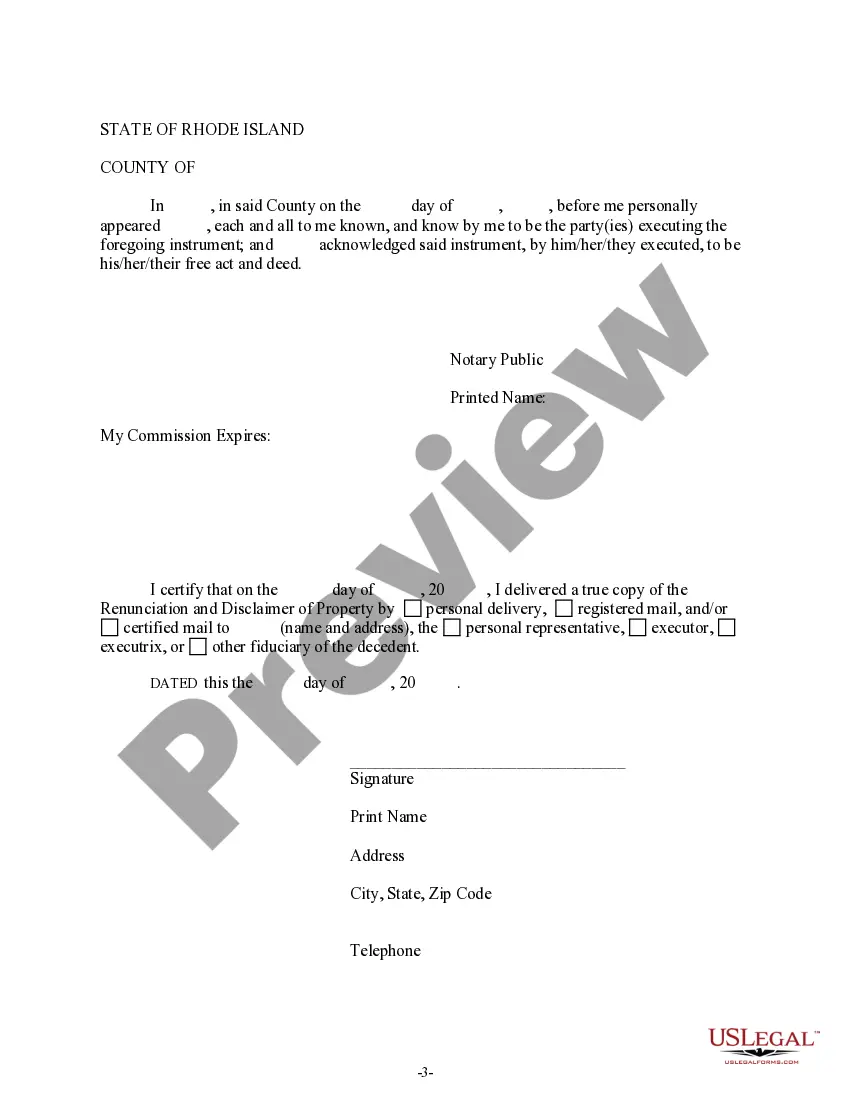
- State-specific acknowledgment of the disclaiming tenant's decision.
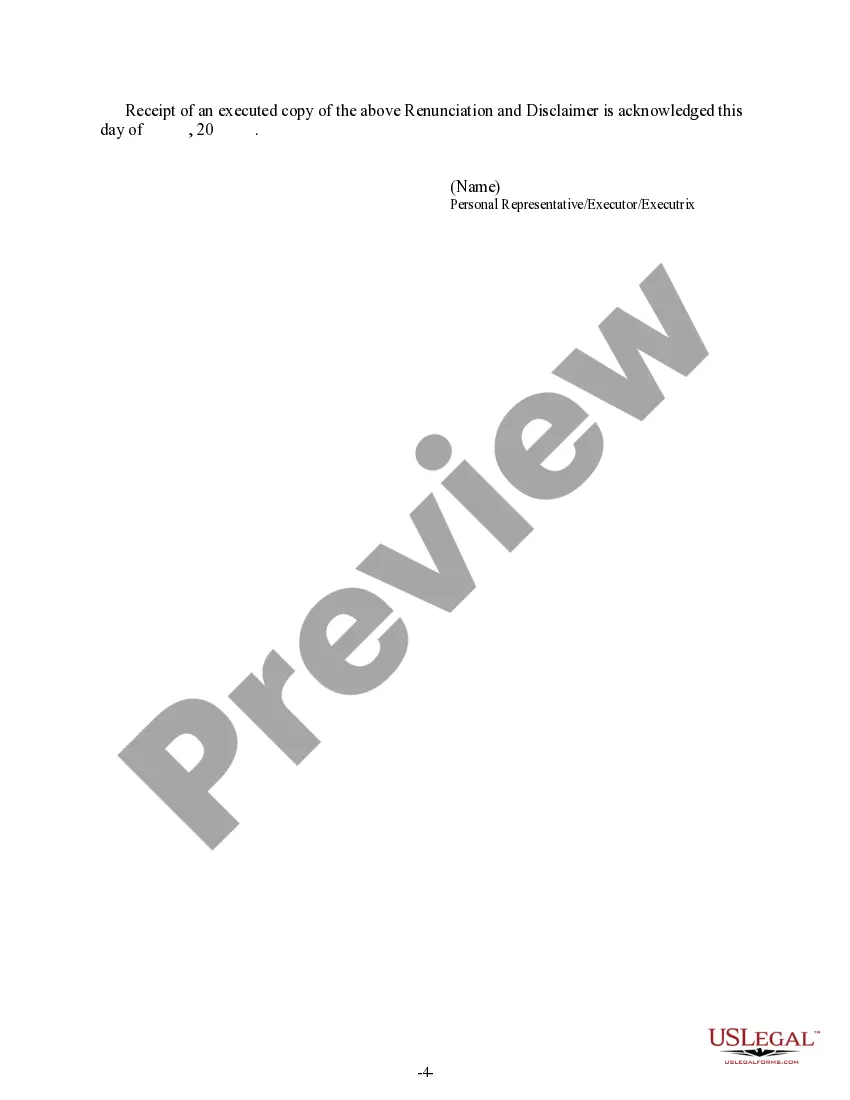
- Certificate verifying delivery of the document.
Common use cases
This form is needed when a joint tenant wishes to refuse their ownership rights over a property after the death of another joint tenant. It is particularly relevant in estate planning or when the surviving joint tenant does not wish to inherit the property, perhaps due to personal circumstances or in favor of other heirs. Using this form ensures that the property's ownership is clearly documented and legally recognized.
Who needs this form
- Surviving joint tenants wishing to disclaim their interest in inherited property.
- Individuals involved in estate planning and asset distribution.
- Heirs seeking clarity regarding property ownership and rights.
- Legal representatives assisting clients with property and estate matters.
How to prepare this document
- Identify the parties involved, including the deceased joint tenant and the disclaiming joint tenant.
- Specify the property that is the subject of the disclaimer.
- Complete the declaration stating the intention to renounce joint tenancy interest.
- Include the required state-specific acknowledgment and sign the form.
- Verify the delivery of the document with the included certificate.
Is notarization required?
This form does not typically require notarization unless specified by local law. However, it is advisable to consult local regulations to ensure compliance.
Get your form ready online
Our built-in tools help you complete, sign, share, and store your documents in one place.
Make edits, fill in missing information, and update formatting in US Legal Forms—just like you would in MS Word.
Download a copy, print it, send it by email, or mail it via USPS—whatever works best for your next step.
Sign and collect signatures with our SignNow integration. Send to multiple recipients, set reminders, and more. Go Premium to unlock E-Sign.
If this form requires notarization, complete it online through a secure video call—no need to meet a notary in person or wait for an appointment.
We protect your documents and personal data by following strict security and privacy standards.

Make edits, fill in missing information, and update formatting in US Legal Forms—just like you would in MS Word.

Download a copy, print it, send it by email, or mail it via USPS—whatever works best for your next step.

Sign and collect signatures with our SignNow integration. Send to multiple recipients, set reminders, and more. Go Premium to unlock E-Sign.

If this form requires notarization, complete it online through a secure video call—no need to meet a notary in person or wait for an appointment.

We protect your documents and personal data by following strict security and privacy standards.
Common mistakes to avoid
- Failing to include all required details of the property and parties involved.
- Not signing the document in the presence of a witness or notary when required.
- Neglecting to keep a copy of the completed form for personal records.
Benefits of completing this form online
- Convenient access to legal forms 24/7 from any location.
- Easy to download and complete at your own pace.
- Forms are prepared by licensed attorneys to ensure accuracy and compliance with state law.
- This form provides legal evidence of the renunciation for estate distribution purposes.
- It must be filled out correctly to be enforceable under Rhode Island law.
- The disclaimer should be filed in accordance with any applicable probate requirements in your jurisdiction.
Key takeaways
- The Renunciation and Disclaimer of Joint Tenant or Tenancy Interest allows a surviving joint tenant to renounce their property interest.
- Understanding state-specific requirements is crucial for effective legal compliance.
- Completing the form correctly helps prevent potential disputes among beneficiaries.
- The form provides a pathway for property transfer that aligns with the decedent's intentions.
Looking for another form?
Form popularity
FAQ
Joint tenancy with right of survivorship. Property owned in joint tenancy automatically passes, without probate, to the surviving owner(s) when one owner dies. Tenancy by the entirety. Community property with right of survivorship.
The surviving spouse can serve as the sole trustee, but cannot have any power to direct the beneficial enjoyment of the disclaimed property unless the power is limited by an "ascertainable standard." This is necessary both to qualify the disclaimer and to avoid any taxable general power of appointment.
In short, if the spouses owned an asset jointly, on the death of one spouse, the survivor can disclaim his/her future interest in the jointly owned property, and still enjoy the disclaimed asset.
Disclaiming means that you give up your rights to receive the inheritance. If you choose to do so, whatever assets you were meant to receive would be passed along to the next beneficiary in line.
Yes, a fiduciary can disclaim an interest in property if the will, trust or power of attorney gives the fiduciary that authority or if the appropriate probate court authorizes the disclaimer.The primary reason an executor or trustee might disclaim property passing to an estate or trust is to save death taxes.
If you die without a will in Rhode Island, your children will receive an intestate share of your property.For children to inherit from you under the laws of intestacy, the state of Rhode Island must consider them your children, legally. For many families, this is not a confusing issue.
In Rhode Island, you can make a living trust to avoid probate for virtually any asset you ownreal estate, bank accounts, vehicles, and so on. You need to create a trust document (it's similar to a will), naming someone to take over as trustee after your death (called a successor trustee).
It must be in writing. It must be made within 9 months of the date of death of the decedent. The disclaimant cannot receive any benefits from the assets.
Write a Living Trust. The most straightforward way to avoid probate is simply to create a living trust. Name Beneficiaries on Your Retirement and Bank Accounts. For some, a last will is often a better fit than a trust because it is a more straightforward estate planning document. Hold Property Jointly.