Oregon Partial Release of Property From Deed of Trust for Corporation
About this form
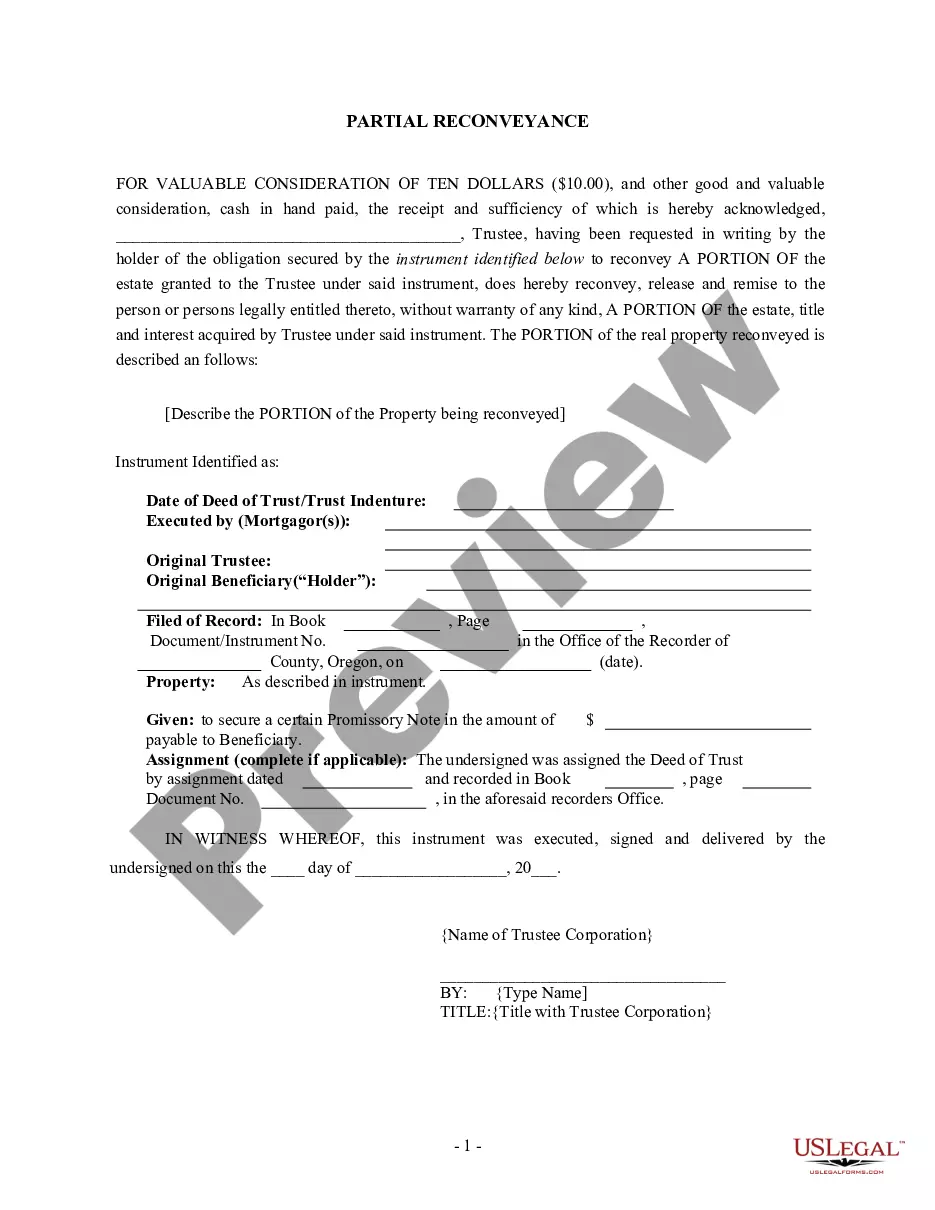
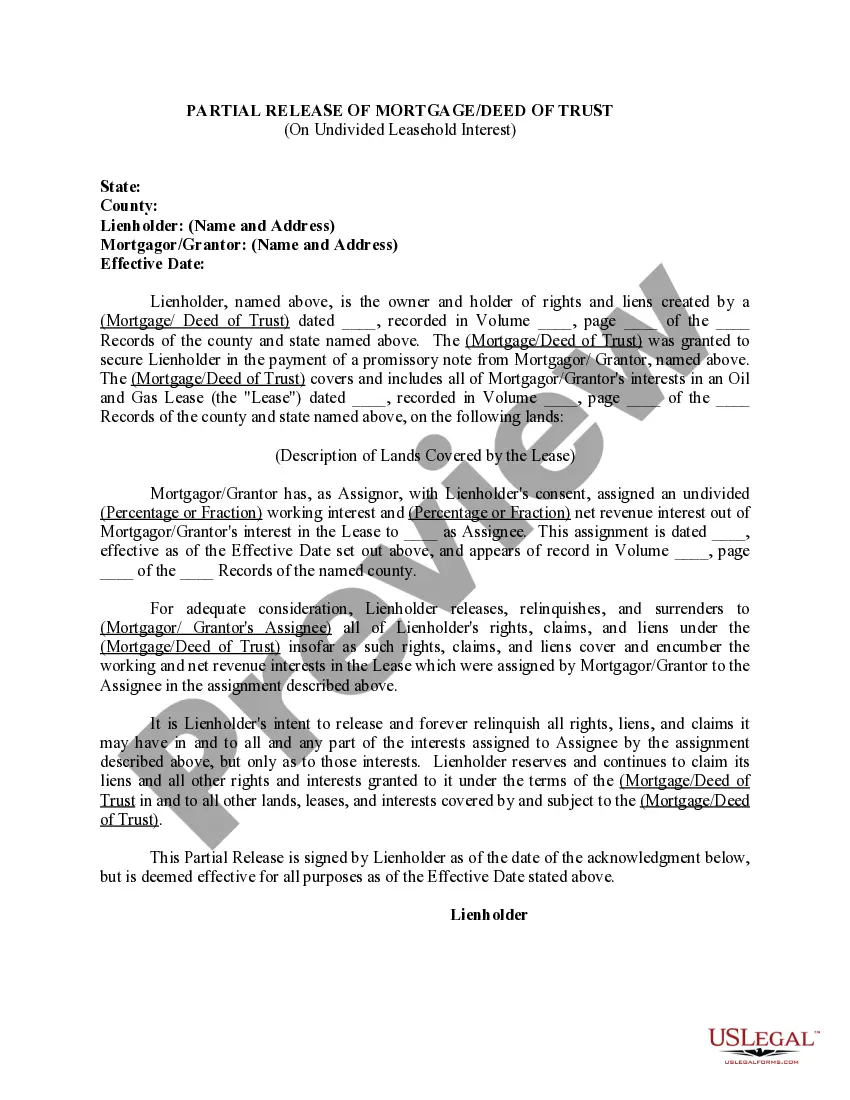
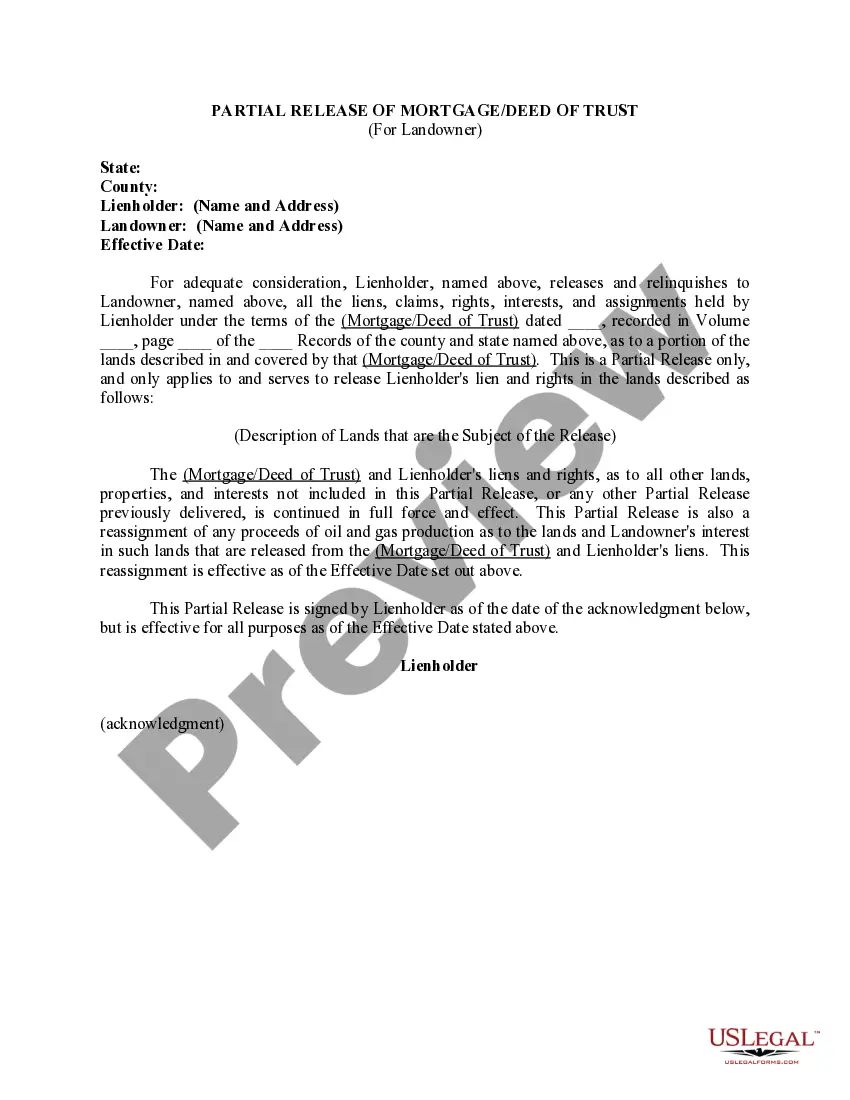
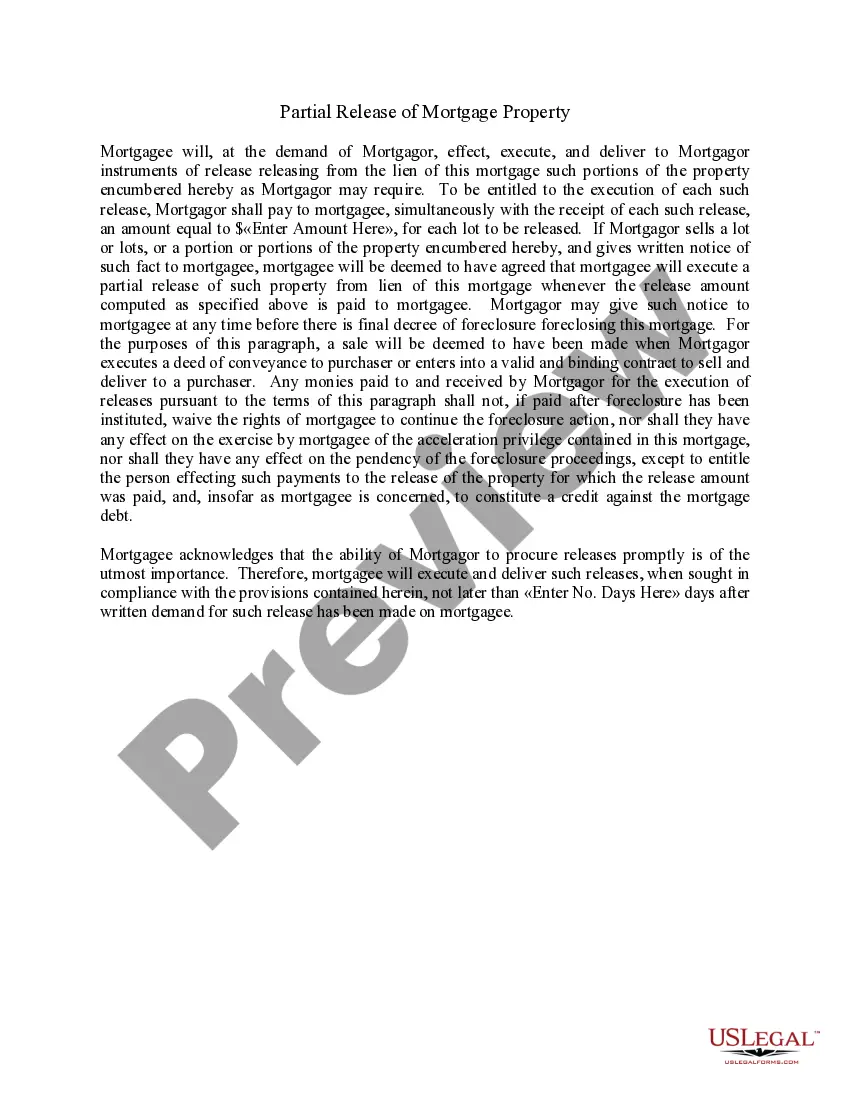
The Partial Release of Property From Deed of Trust for Corporation is a legal document used to release a portion of a property from a deed of trust or mortgage. This form is specifically designed for situations where a corporation holds the deed of trust. Unlike a full reconveyance, this form allows for the release of only part of the collateral securing the loan, making it an important tool in real estate transactions and financing adjustments.
Key components of this form
- Identification of the trustee and the corporation holding the deed of trust.
- Description of the portion of property being reconveyed.
- Details of the original deed of trust including date, mortgagor, original beneficiary, and recording information.
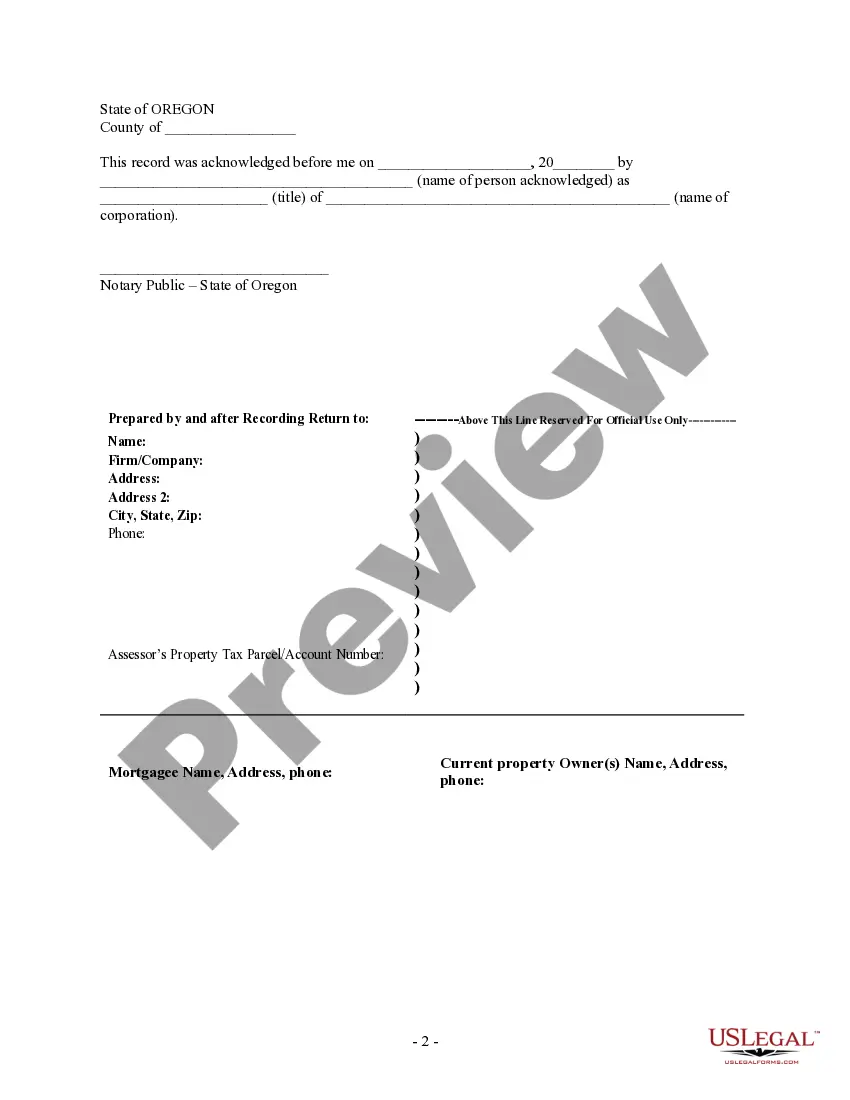
- Acknowledgment section for notarization by a notary public.
- Signature lines for the trustee and declaration of execution date.

Situations where this form applies
This form is used when a corporation that holds a deed of trust or mortgage wishes to release a specific portion of the property that was originally collateralized. Common scenarios include partial loan repayments, restructuring loans, or selling a part of the property while retaining some rights under the original mortgage agreement.
Who needs this form
- Corporations that hold a deed of trust and need to release part of the property.
- Trustees acting on behalf of corporations in real estate or financing transactions.
- Real estate professionals handling transactions involving corporate properties.
Completing this form step by step
- Identify the parties involved, including the trustee and the corporation.
- Clearly describe the portion of the property being reconveyed.
- Fill in the details of the original deed of trust including dates and recording information.
- Ensure the document is signed by the trustee and include the date of signing.
- Have the form notarized for legal validity.
Notarization requirements for this form
This form needs to be notarized to ensure legal validity. US Legal Forms provides secure online notarization powered by Notarize, allowing you to complete the process through a verified video call, available anytime.
Get your form ready online
Our built-in tools help you complete, sign, share, and store your documents in one place.
Make edits, fill in missing information, and update formatting in US Legal Forms—just like you would in MS Word.
Download a copy, print it, send it by email, or mail it via USPS—whatever works best for your next step.
Sign and collect signatures with our SignNow integration. Send to multiple recipients, set reminders, and more. Go Premium to unlock E-Sign.
If this form requires notarization, complete it online through a secure video call—no need to meet a notary in person or wait for an appointment.
We protect your documents and personal data by following strict security and privacy standards.
Make edits, fill in missing information, and update formatting in US Legal Forms—just like you would in MS Word.
Download a copy, print it, send it by email, or mail it via USPS—whatever works best for your next step.
Sign and collect signatures with our SignNow integration. Send to multiple recipients, set reminders, and more. Go Premium to unlock E-Sign.

If this form requires notarization, complete it online through a secure video call—no need to meet a notary in person or wait for an appointment.
We protect your documents and personal data by following strict security and privacy standards.
Common mistakes to avoid
- Failing to provide an accurate description of the property being released.
- Not having the form notarized, which may render it invalid.
- Leaving out important details about the original deed of trust.
- Inaccurately identifying the parties involved in the transaction.
Benefits of using this form online
- Convenience of downloading and completing the form at any time.
- Editable fields allow for personalized information input.
- Access to forms drafted by licensed attorneys ensures reliability.
Main things to remember
- The form allows corporations to release portions of property from deeds of trust.
- It requires accurate descriptions and notarization for legal validity.
- This form is essential for various real estate transactions and financial adjustments.
Looking for another form?
Form popularity
FAQ
To access the unclaimed property database by telephone, contact the State Controller's Customer Service Unit. California residents can call toll-free, at 800-992-4647 between the hours of AM and PM, Monday through Friday (except holidays). Those outside California may call (916) 323-2827.
The executor or administrator must complete the claim. If there's more than one executor or administrator, all must be part of the claim. Search online for the unclaimed money. Lodge a claim online for the unclaimed money.
Relatives are entitled to unclaimed money belonging to a deceased family member.A substantial amount of this unclaimed money belongs to people who have died. Unclaimed money can legally be claimed by relatives of a deceased person.
An heir is a person who is legally entitled to collect an inheritance, when a deceased person did not formalize a last will and testament. Generally speaking, heirs who inherit the property are children, descendants or other close relatives of the decedent.
The basis of property inherited from a decedent is generally one of the following: The fair market value (FMV) of the property on the date of the decedent's death (whether or not the executor of the estate files an estate tax return (Form 706, United States Estate (and Generation-Skipping Transfer) Tax Return)).
Go to the clerks office in whatever town/city you are looking to target. There should be public computers you can use to access public data. Ask one of the workers there to help you find certificates of Devise/Probates. These certificates would show you who just inherited any property.
Hi, No, ancestral property be cannot be sold without consent of successors in case of major and in in case of minority you might have to take permission from the court. And if property disposed without consent can be reclaimed.
If you decide that you do not want to keep an inherited home, your best choice is to sell it with the help of an experienced realtor. This is an opportunity to sell an unwanted property for cash, but you need the help of a professional to secure a good deal.
This will usually be more than the prior owner's basis. The bottom line is that if you inherit property and later sell it, you pay capital gains tax based only on the value of the property as of the date of death.