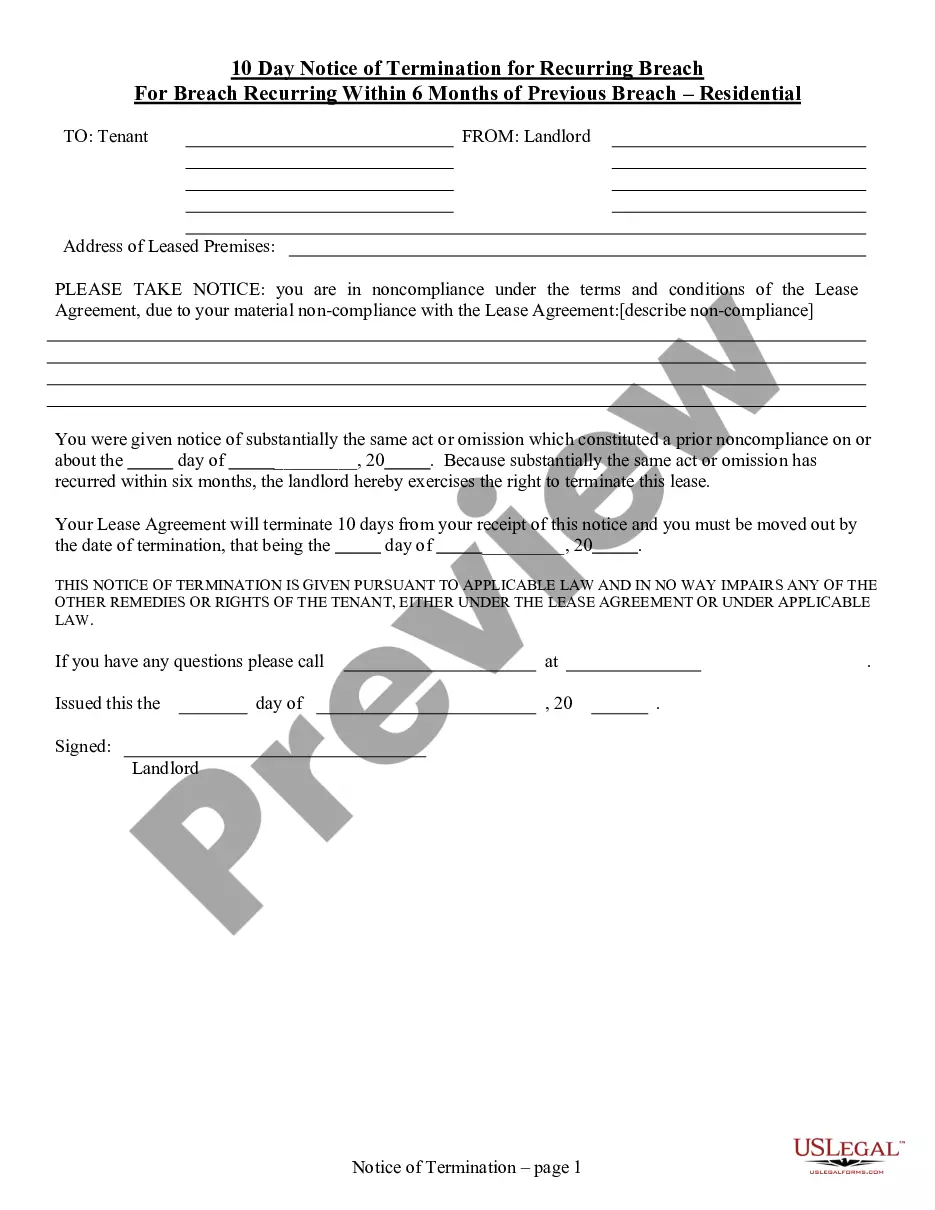
Oregon 10 Day Notice to Remedy Reoccurring Breach - Other than Nonpayment of Rent - Residential
What is this form?
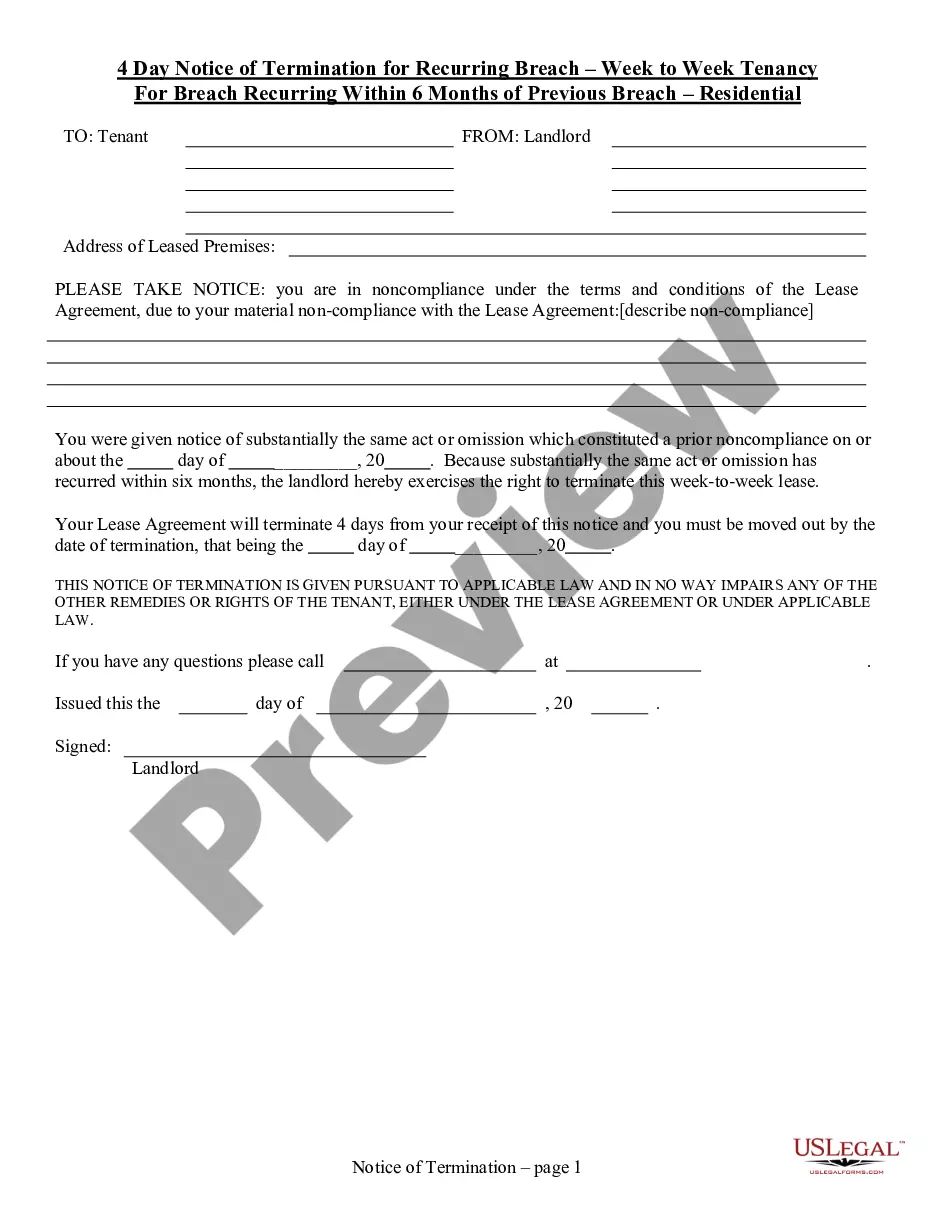
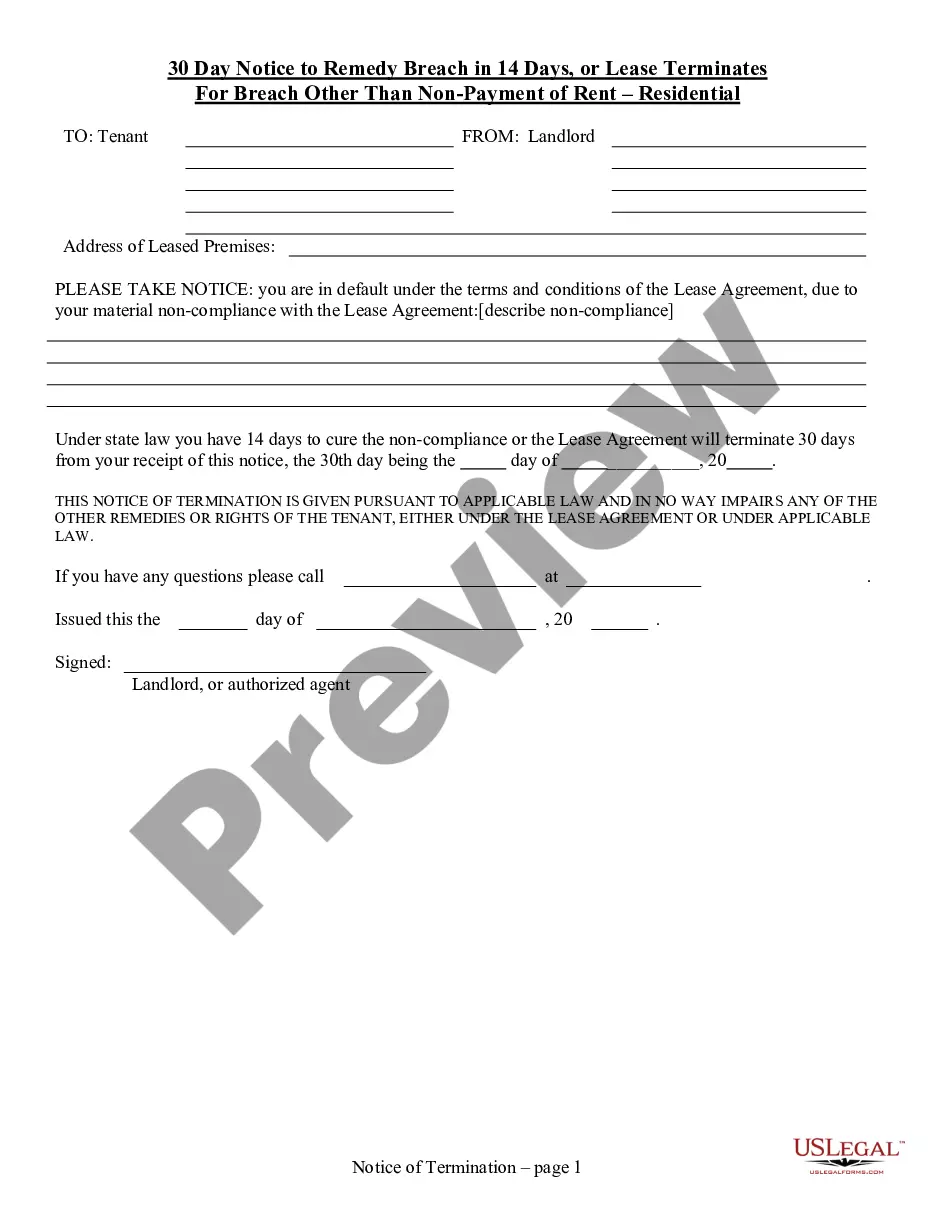
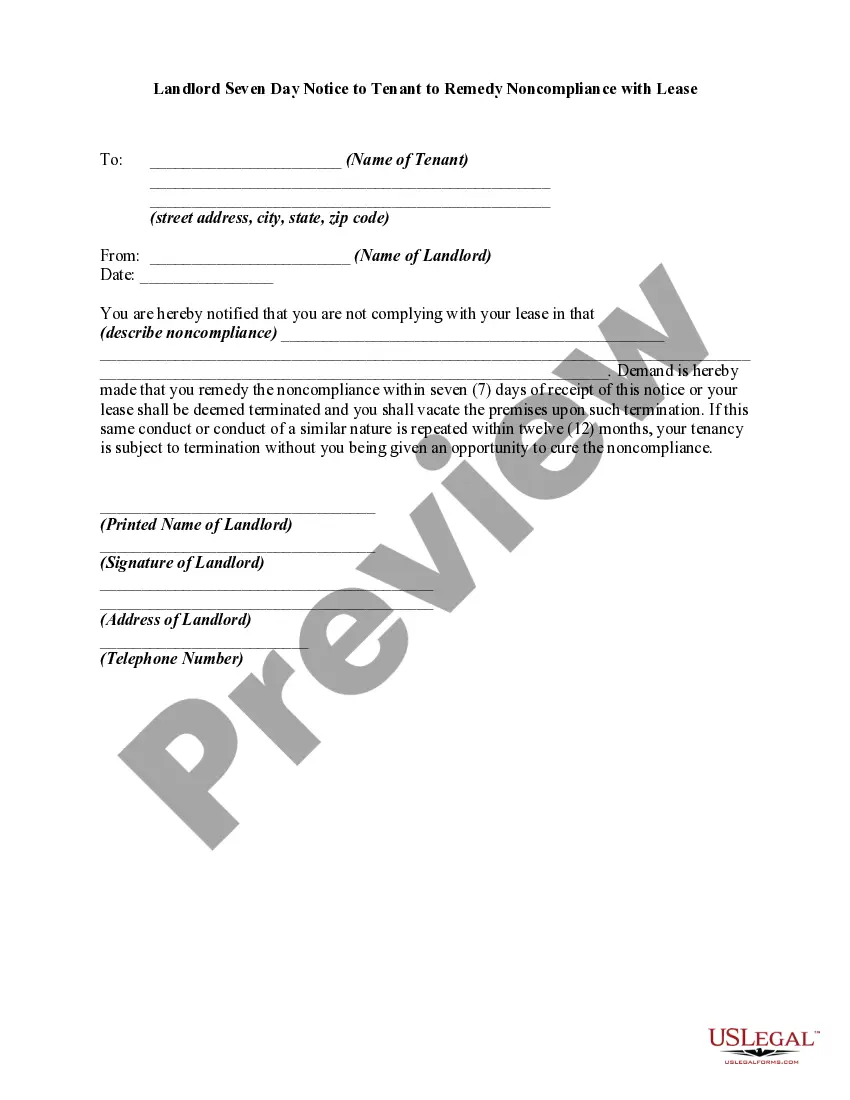
The 10 Day Notice to Remedy Reoccurring Breach - Other than Nonpayment of Rent - Residential is a legal document used by landlords to inform tenants that their lease is being terminated due to a repeat breach of the rental agreement. This form is crucial because it explicitly states there is no opportunity for the tenant to cure the breach, differing from other notices that may allow for remediation.
Key parts of this document
- Identification of the parties involved, including landlord and tenant.
- Details of the breach occurring within six months of a similar violation.
- A clear statement of termination of the lease.
- Consequence of no opportunity to remedy the breach.
- Effective date of the notice.


Situations where this form applies
This form should be used when a tenant has repeatedly violated terms of the lease agreement, except for nonpayment of rent, within a six-month period. It is applicable in situations where the landlord wishes to terminate the lease swiftly due to ongoing noncompliance of the tenant.
Who needs this form
- Landlords managing residential rental properties.
- Property managers acting on behalf of landlords.
- Real estate professionals advising landlords on lease enforcement.
Steps to complete this form
- Identify all parties involved in the tenancy, including names and addresses.
- Specify the details of the breach and the dates of previous similar breaches.
- Clearly state that the lease is being terminated without the option to cure.
- Enter the effective date of the notice.
- Sign the form and keep a copy for your records.
Is notarization required?
This form does not typically require notarization unless specified by local law.
Get your form ready online
Our built-in tools help you complete, sign, share, and store your documents in one place.
Make edits, fill in missing information, and update formatting in US Legal Forms—just like you would in MS Word.
Download a copy, print it, send it by email, or mail it via USPS—whatever works best for your next step.
Sign and collect signatures with our SignNow integration. Send to multiple recipients, set reminders, and more. Go Premium to unlock E-Sign.
If this form requires notarization, complete it online through a secure video call—no need to meet a notary in person or wait for an appointment.
We protect your documents and personal data by following strict security and privacy standards.

Make edits, fill in missing information, and update formatting in US Legal Forms—just like you would in MS Word.

Download a copy, print it, send it by email, or mail it via USPS—whatever works best for your next step.

Sign and collect signatures with our SignNow integration. Send to multiple recipients, set reminders, and more. Go Premium to unlock E-Sign.

If this form requires notarization, complete it online through a secure video call—no need to meet a notary in person or wait for an appointment.

We protect your documents and personal data by following strict security and privacy standards.
Avoid these common issues
- Failing to include specific details about the breach.
- Not providing correct identification of the parties involved.
- Missing signature and date on the notice.
Advantages of online completion
- Convenient access and instant downloading options.
- Editability allows you to fill in details tailored to your specific needs.
- Reliability, as forms are drafted by licensed attorneys ensuring legal compliance.
Legal use & context
- This form provides a formal method for landlords to terminate a lease based on repeated breaches.
- It serves as documentation to support potential eviction proceedings if necessary.
- Understanding the context of tenant rights and local laws is essential to effectively use this form.
What to keep in mind
- The 10 Day Notice is used for specific breaches not involving rent payment.
- No opportunity to remedy is offered for repeated violations.
- Ensure compliance with local regulations when serving the notice.
Looking for another form?
Form popularity
FAQ
File for eviction with your local courthouse. Gather evidence. Come to the court hearing to prove your case. Win a writ of possession and have the tenant removed by the sheriff.
Tell Them The Problem & Consequences. Explain the reason that you want the tenant to go. Offer Them a Way Out. Let the tenant know that you are willing to give them a lump sum of cash in agreement for leaving the property. The Release.
If a tenant breaches a tenancy agreement it is possible that their landlord will try and evict them from the property. The sort of breaches of tenancy which result in a landlord seeking a court order for possession include:Damage to the property (eg broken windows)
If the tenant does not pay rent, then the landlord can go to court and file an eviction lawsuit against the tenant. 144 Hours' Notice to Pay Rent: On the fifth day after rent is due and owing, the landlord can instead give the tenant 144 hours' written notice to pay rent.
Approach The Court Of Law You will have to send a legal notice to your tenant asking him/her to pay the arrears of rent or else to vacate within a month. The tenant has to pay rent in the court once it is assessed by the court and in case he/she fails, it invites immediate eviction.
No, a landlord cannot just kick you out. They need to follow the formal eviction process provided in your state. If a landlord uses illegal self-help measures, such as changing the locks or throwing out your belongings, you should be able to hold the landlord accountable and remain on the property.
If the tenant does not leave by the date and time given in the notice, then the landlord must apply for a court order within 10 days to end the tenancy. If the landlord does not apply within 10 days, the tenancy stays in place and the tenant can continue living in the property.
Using County Court bailiffs (or sometimes High Court Sheriffs) acting under a court order for possession is the ONLY legal way you can physically evict tenants from a property if they refuse to go voluntarily.Sometimes tenants will try to get you to delay and they can be very persuasive.
If a tenant breaches a tenancy agreement it is possible that their landlord will try and evict them from the property. The sort of breaches of tenancy which result in a landlord seeking a court order for possession include:Damage to the property (eg broken windows)