Nevada Partial Release of Property From Deed of Trust for Corporation
What this document covers
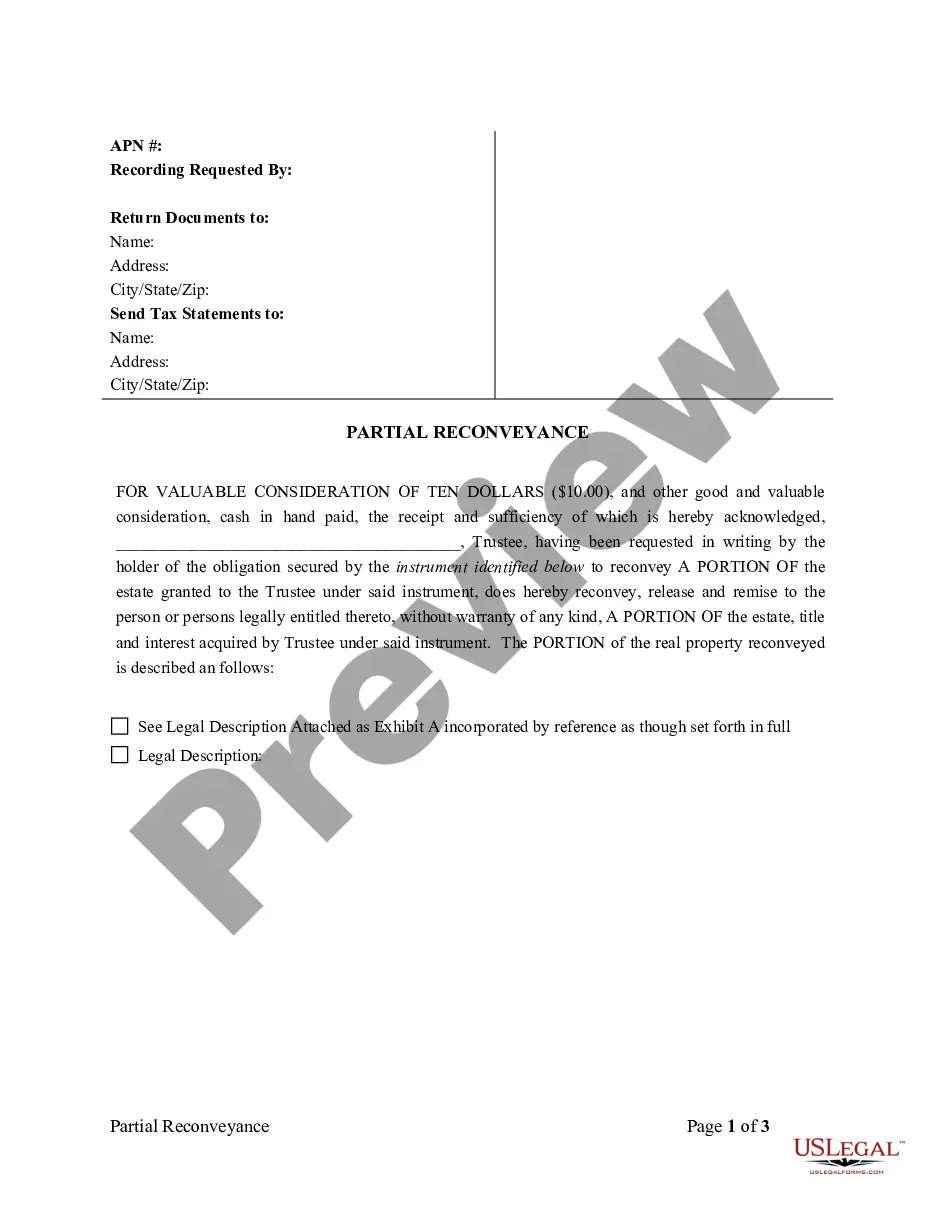
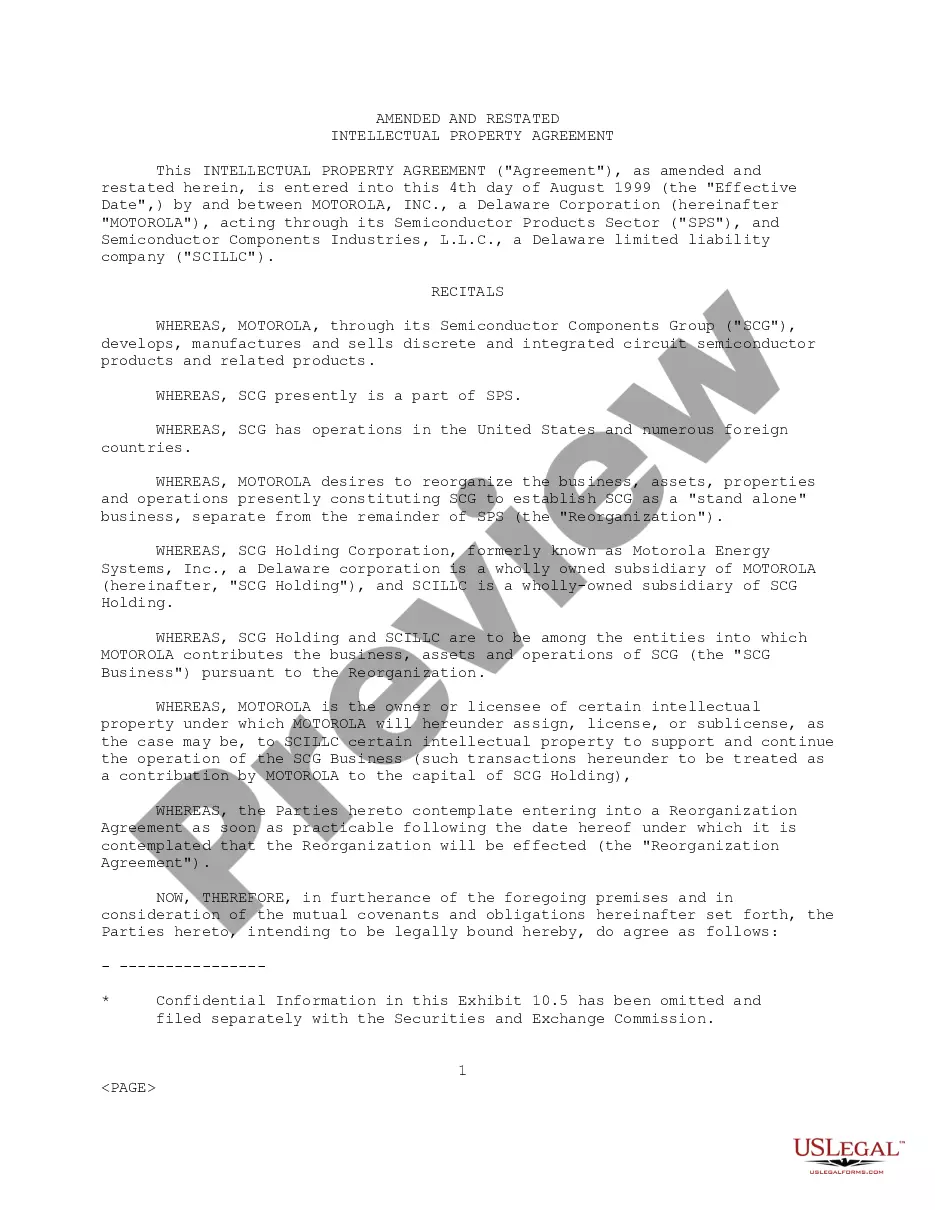
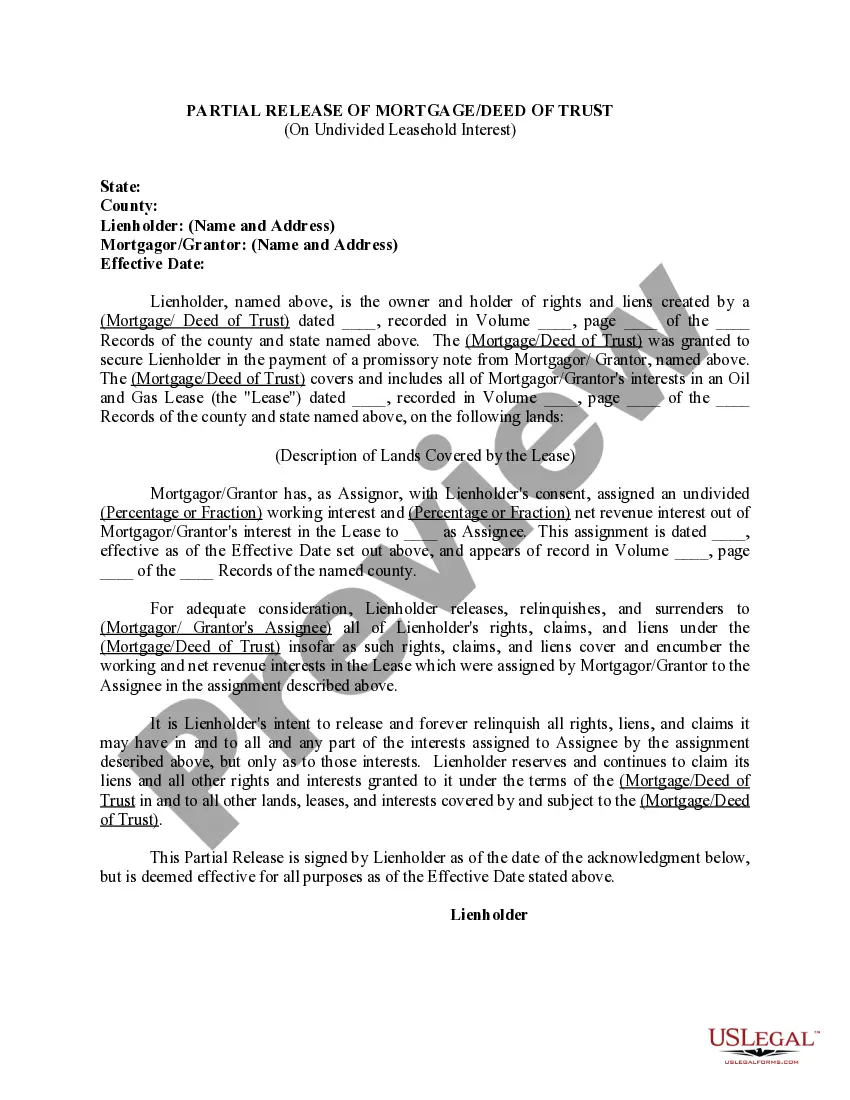
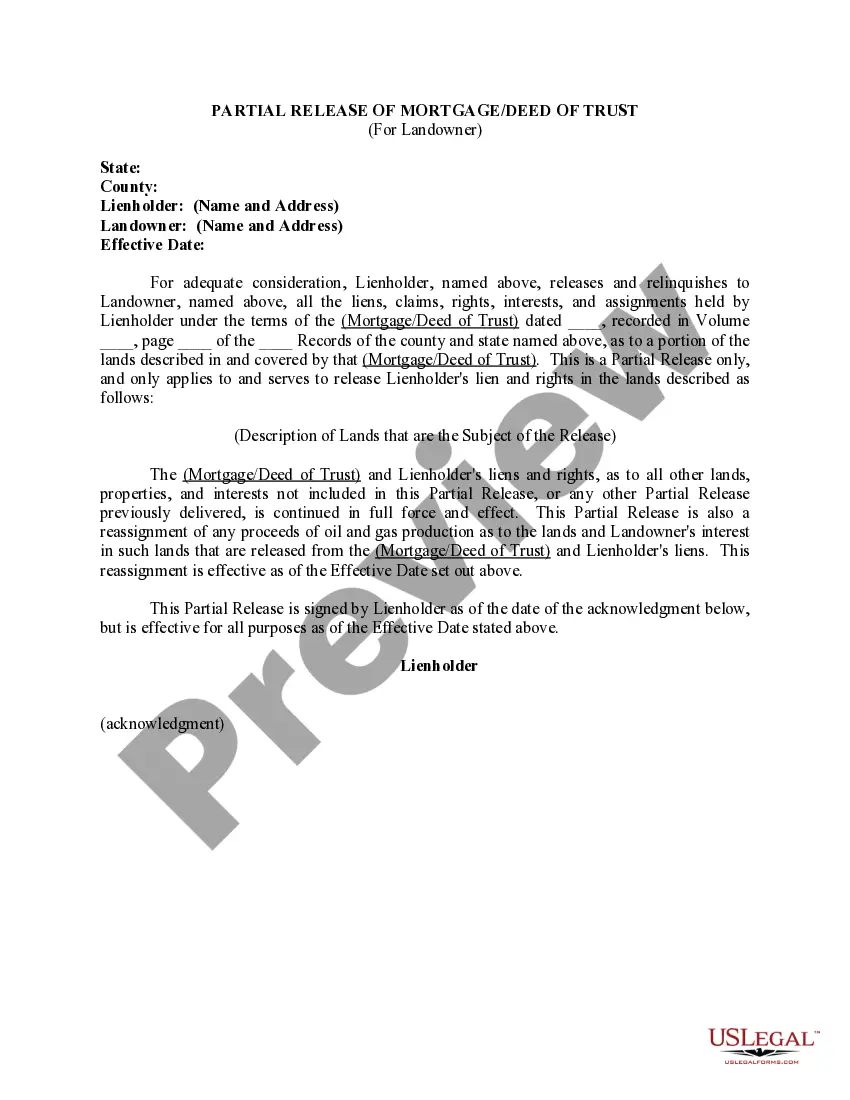
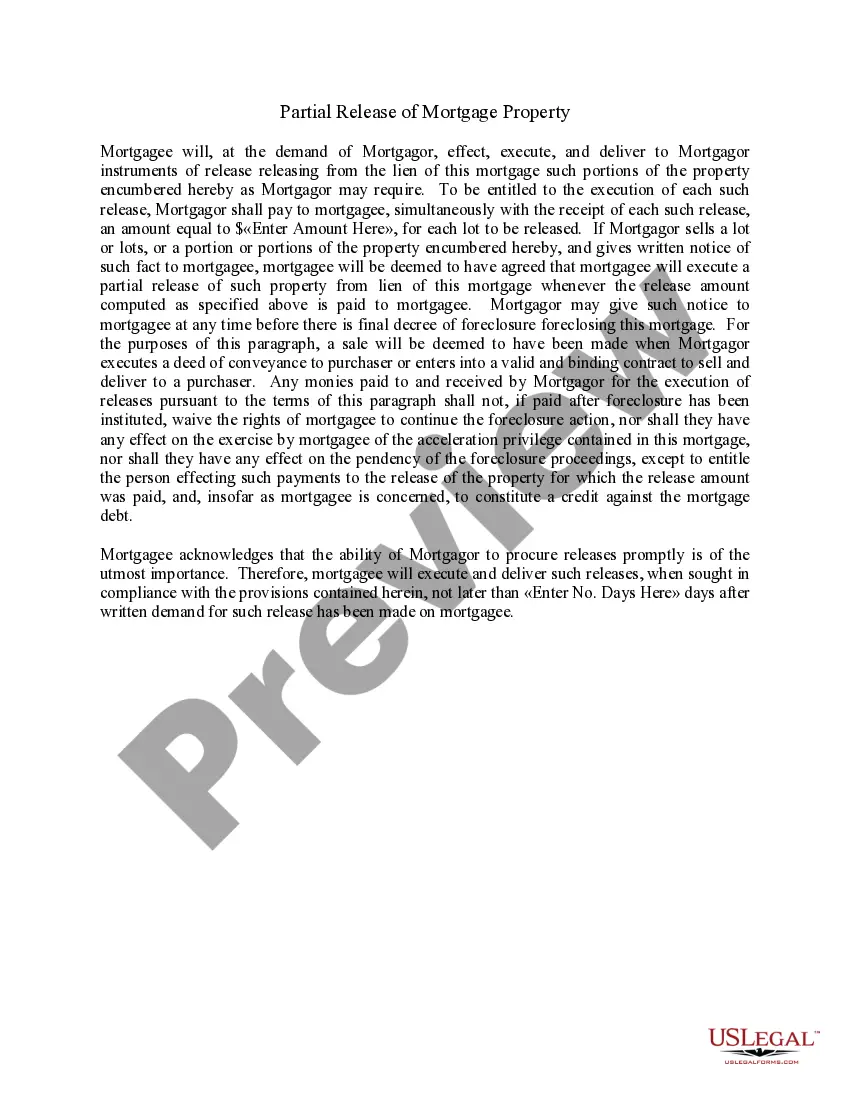
The Partial Release of Property From Deed of Trust for Corporation is a legal document that allows a corporation that holds a deed of trust or mortgage to convey its interest in a specific property to a third party. This form is essential when a corporation needs to release part of the collateral securing a loan while maintaining the remaining interests. It differs from other deeds of trust assignments by focusing on a partial transfer rather than an entire assignment.
Main sections of this form
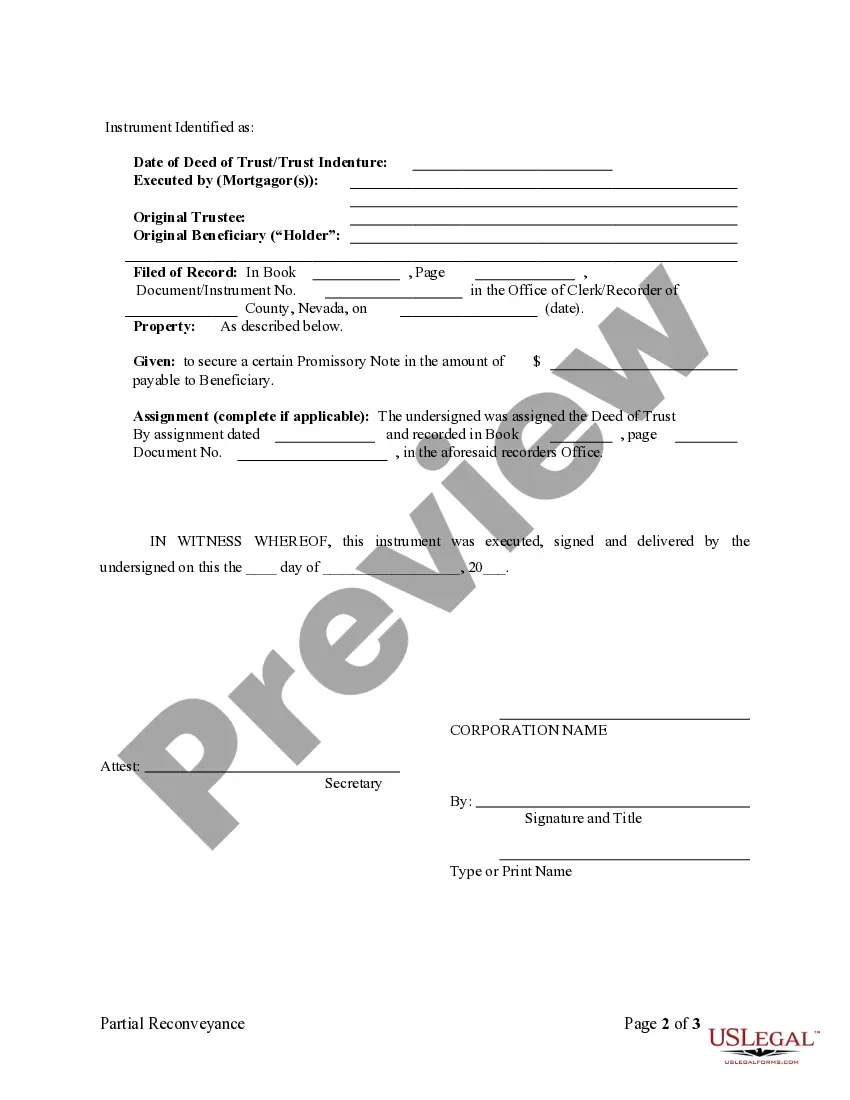
- Identification of the parties involved, including the corporation and the third party.
- Description of the property being released from the deed of trust.
- Details of the deed of trust being partially released.
- Signatures of the authorized representatives from the corporation.
- Date of the release to formalize the transaction.


When this form is needed
This form is applicable in situations where a corporation holds a deed of trust and wishes to release a portion of the property securing a loan. Common scenarios include refinancing a mortgage, selling part of the property, or settling obligations with creditors without relinquishing the entire claim on the property.
Who should use this form
- Corporations that hold a deed of trust on a property.
- Authorized representatives within the corporation seeking to release specific property.
- Third parties acquiring an interest in the property being released.
Completing this form step by step
- Identify the parties involved, including the corporation and the third party.
- Clearly describe the property that is being partially released.
- Specify details regarding the existing deed of trust.
- Gather signatures from authorized representatives of the corporation.
- Enter the date of the transaction for proper record-keeping.
Does this document require notarization?
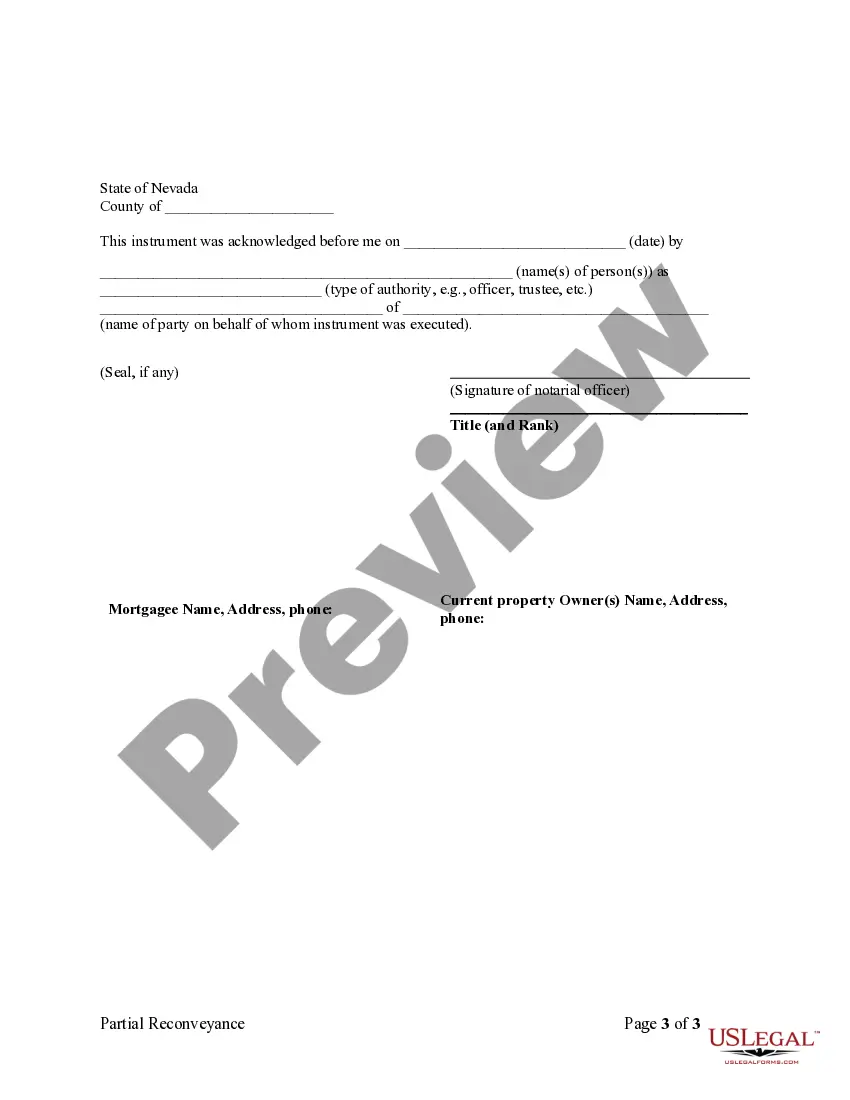
This form must be notarized to be legally valid. US Legal Forms provides secure online notarization powered by Notarize, allowing you to complete the process through a verified video call.
Get your form ready online
Our built-in tools help you complete, sign, share, and store your documents in one place.
Make edits, fill in missing information, and update formatting in US Legal Forms—just like you would in MS Word.
Download a copy, print it, send it by email, or mail it via USPS—whatever works best for your next step.
Sign and collect signatures with our SignNow integration. Send to multiple recipients, set reminders, and more. Go Premium to unlock E-Sign.
If this form requires notarization, complete it online through a secure video call—no need to meet a notary in person or wait for an appointment.
We protect your documents and personal data by following strict security and privacy standards.

Make edits, fill in missing information, and update formatting in US Legal Forms—just like you would in MS Word.

Download a copy, print it, send it by email, or mail it via USPS—whatever works best for your next step.

Sign and collect signatures with our SignNow integration. Send to multiple recipients, set reminders, and more. Go Premium to unlock E-Sign.

If this form requires notarization, complete it online through a secure video call—no need to meet a notary in person or wait for an appointment.

We protect your documents and personal data by following strict security and privacy standards.
Mistakes to watch out for
- Using incorrect property descriptions, leading to potential legal issues.
- Failing to obtain proper signatures from corporate representatives.
- Not including all necessary parties in the document.
- Neglecting to date the form, which can affect its enforceability.
Benefits of using this form online
- Convenience of accessing the form anytime and anywhere.
- Editability allows for customization to fit specific situations.
- Reliability, as the forms are drafted by licensed attorneys to ensure legal compliance.
Legal use & context
- The form serves as a legal document to formally release part of the property from a deed of trust.
- Properly completing and filing the form aids in preventing disputes about property ownership.
- It is enforceable as long as it complies with both state and federal laws regarding deeds of trust.
Quick recap
- The Partial Release of Property From Deed of Trust for Corporation allows corporations to partially release property from a deed of trust.
- Correct completion and compliance with state laws are crucial for the document's validity.
- Common errors can have significant legal impacts, so careful attention is needed when filling out the form.
Looking for another form?
Form popularity
FAQ
A deed of trust involves three parties: a lender, a borrower, and a trustee. The lender gives the borrower money. In exchange, the borrower gives the lender one or more promissory notes. As security for the promissory notes, the borrower transfers a real property interest to a third-party trustee.
A deed of trust is a method of securing a real estate transaction that includes three parties: a lender, borrower and a third-party trustee.
Only until the debt is paid off by the borrower can a deed of reconveyance then be used to clear the deed of trust from the title to the property. The document is signed by the trustee, whose signature must be notarized.
A deed of release literally releases the parties to a deal from previous obligations, such as payments under the term of a mortgage because the loan has been paid off. The lender holds the title to real property until the mortgage's terms have been satisfied when a deed of release is commonly entered into.
The deed must be signed by the party or parties making the conveyance or grant; and 7.
A mortgage holder issues a deed of reconveyance to indicate that the borrower has been released from the mortgage debt. The deed transfers the property title from the lender, also called the beneficiary, to the borrower. This document is most commonly used when a mortgage has been paid in full.
A deed of release or release deed is a legal document that removes the claim of a person from an immovable property and transfers his/her share to the co-owner. The release deed procedure is executed in the sub-registrars office and both the parties are required to be present for signing it.
Yes, there are key differences between the two. With a deed, you transfer the ownership of the property to one party. In contrast, a deed of trust does not mean the holder owns the property. In an arrangement involving a deed of trust, the borrower signs a contract with the lender with details regarding the loan.
In order to clear the Deed of Trust from the title to the property, a Deed of Reconveyance must be recorded with the Country Recorder or Recorder of Deeds. If the Trustee/Beneficiary fails to record a satisfaction within the set time limits, the Trustee/Beneficiary may be responsible for damages as set out by statute.