New Hampshire 7 Day Notice to Pay Rent or Lease Terminates - Nonresidential or Commercial
What is this form?
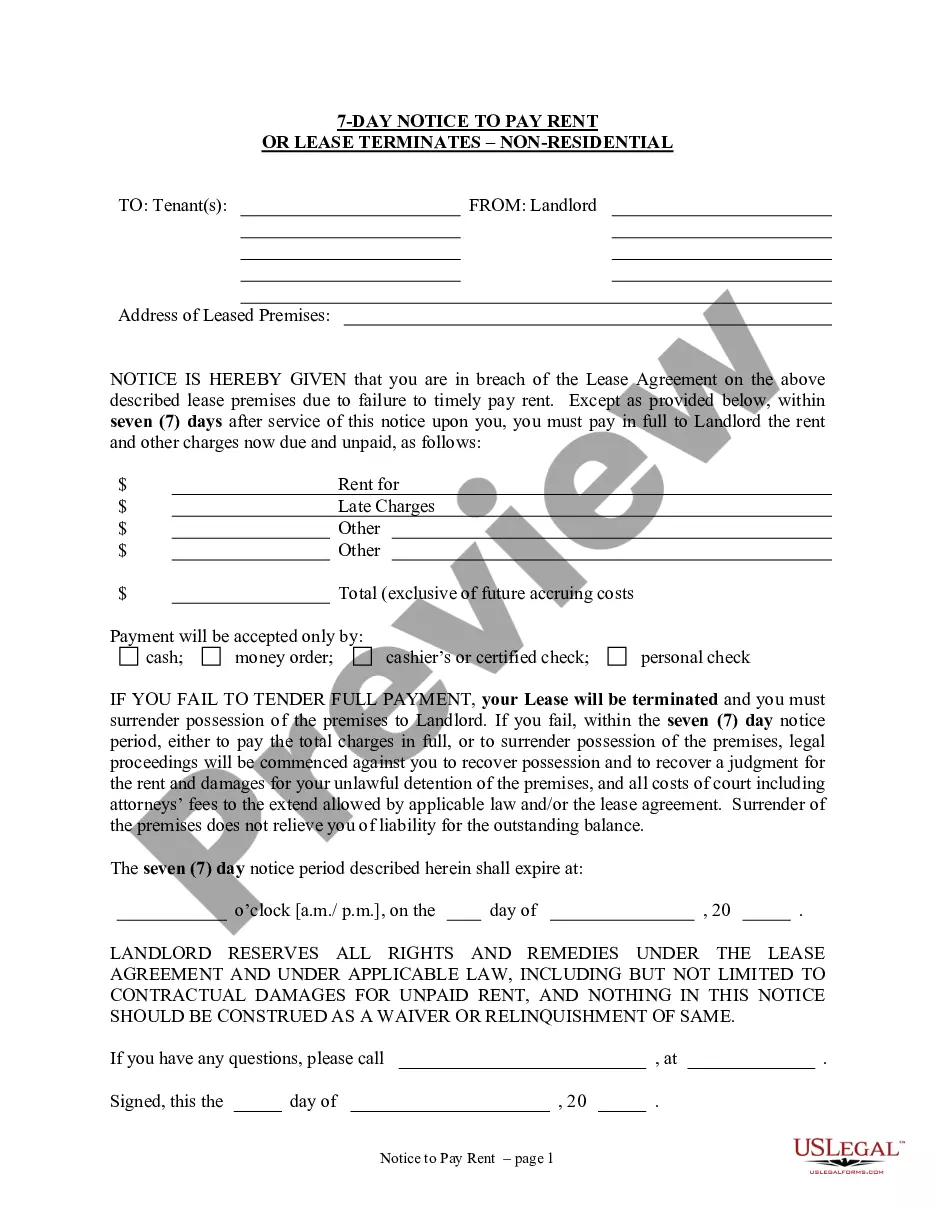
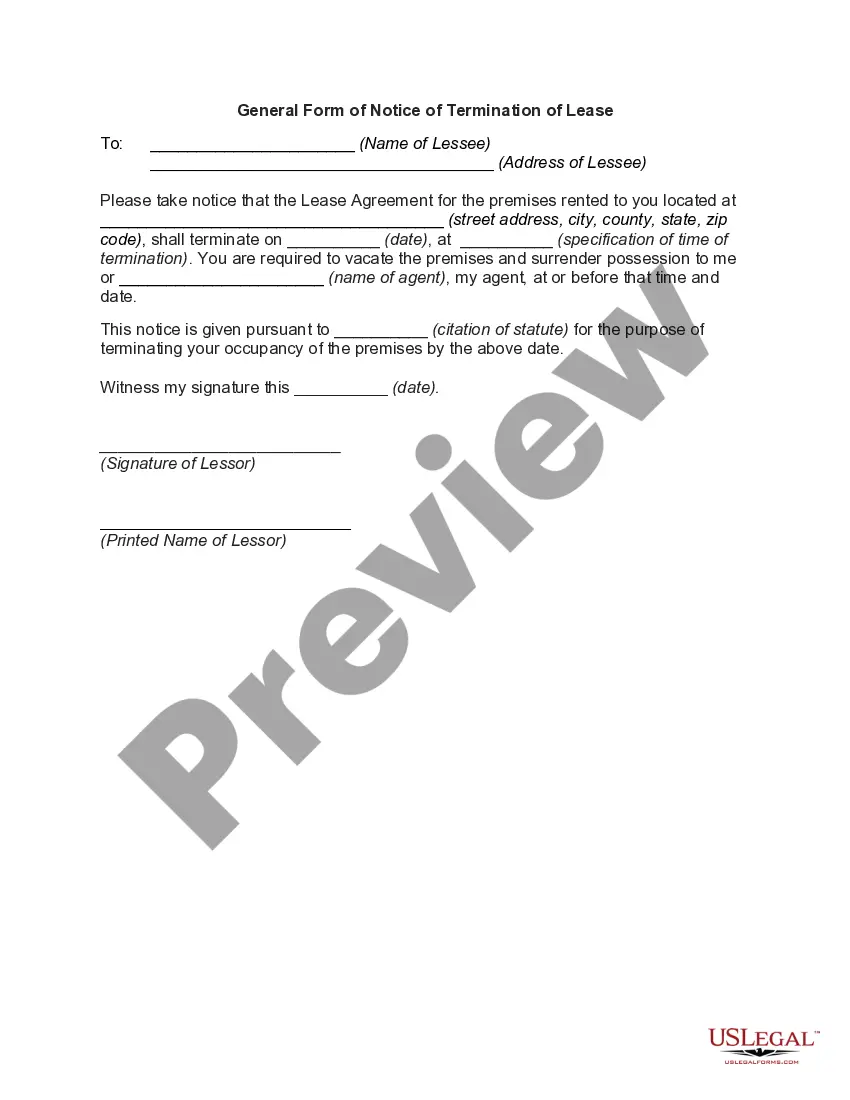
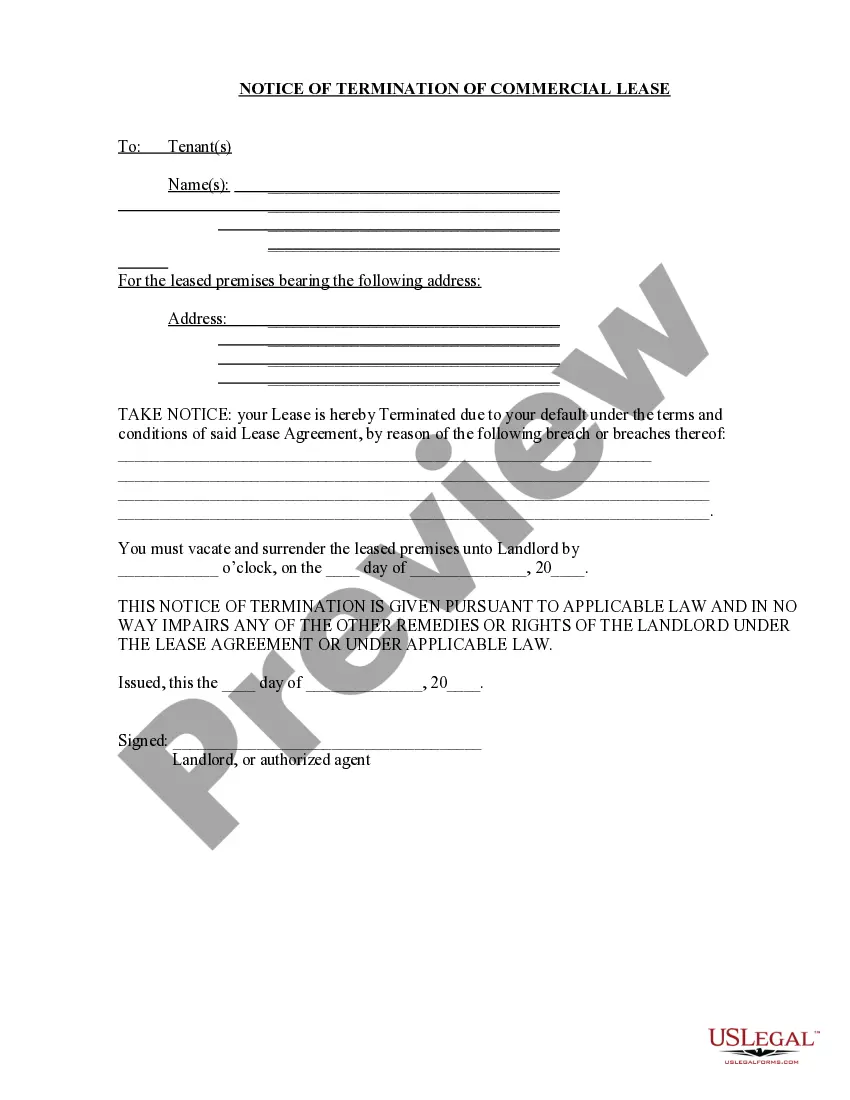
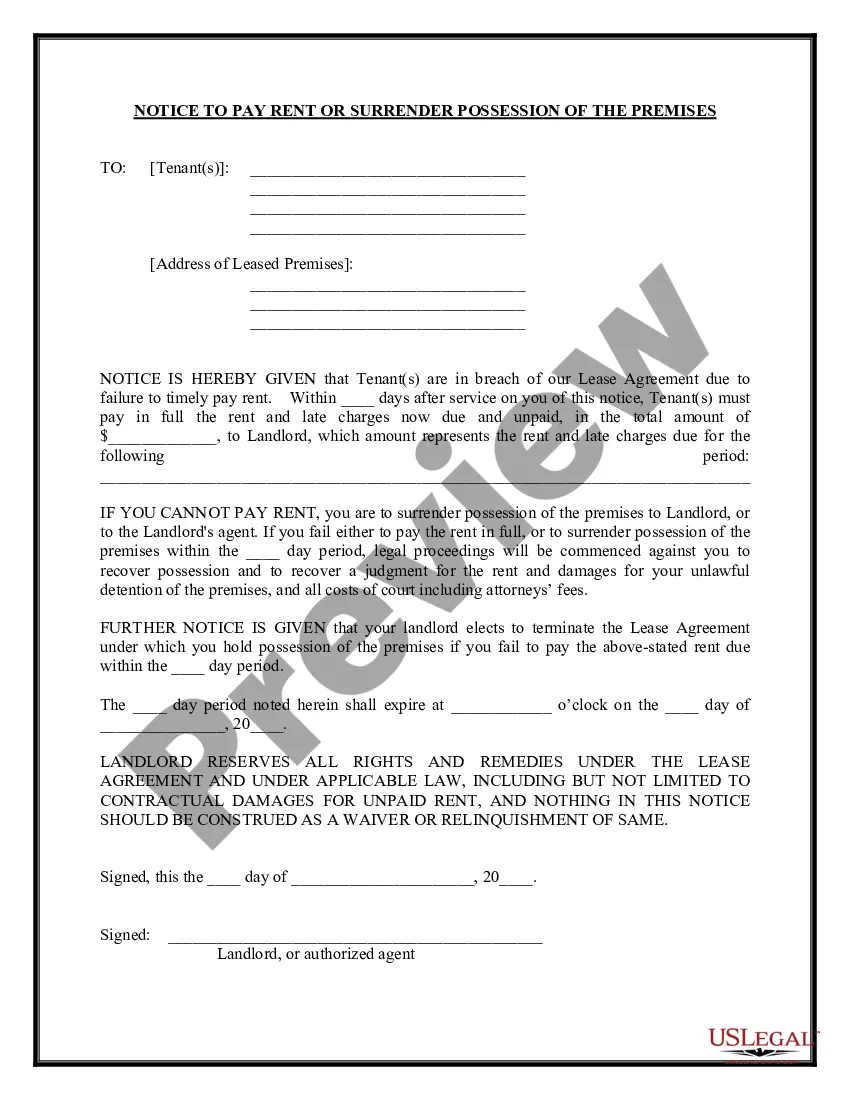
The 7 Day Notice to Pay Rent or Lease Terminates - Nonresidential or Commercial is a legal document used by landlords to formally demand overdue rent from a non-residential tenant. This notice informs tenants that they have seven days to pay their overdue rent, as required by state law. If the tenant does not pay within this timeframe, the landlord may terminate the lease agreement and initiate eviction proceedings. This form is specifically designed for non-residential properties, which includes commercial and industrial spaces, distinguishing it from residential rental forms.
Key parts of this document
- Identification of the landlord and tenant.
- Address of the leased premises.
- Details of unpaid rent, including amounts and due dates.
- Notice period of seven days to remedy the breach.
- Consequences of failing to pay within the specified timeframe.
- Instructions for payment methods accepted by the landlord.
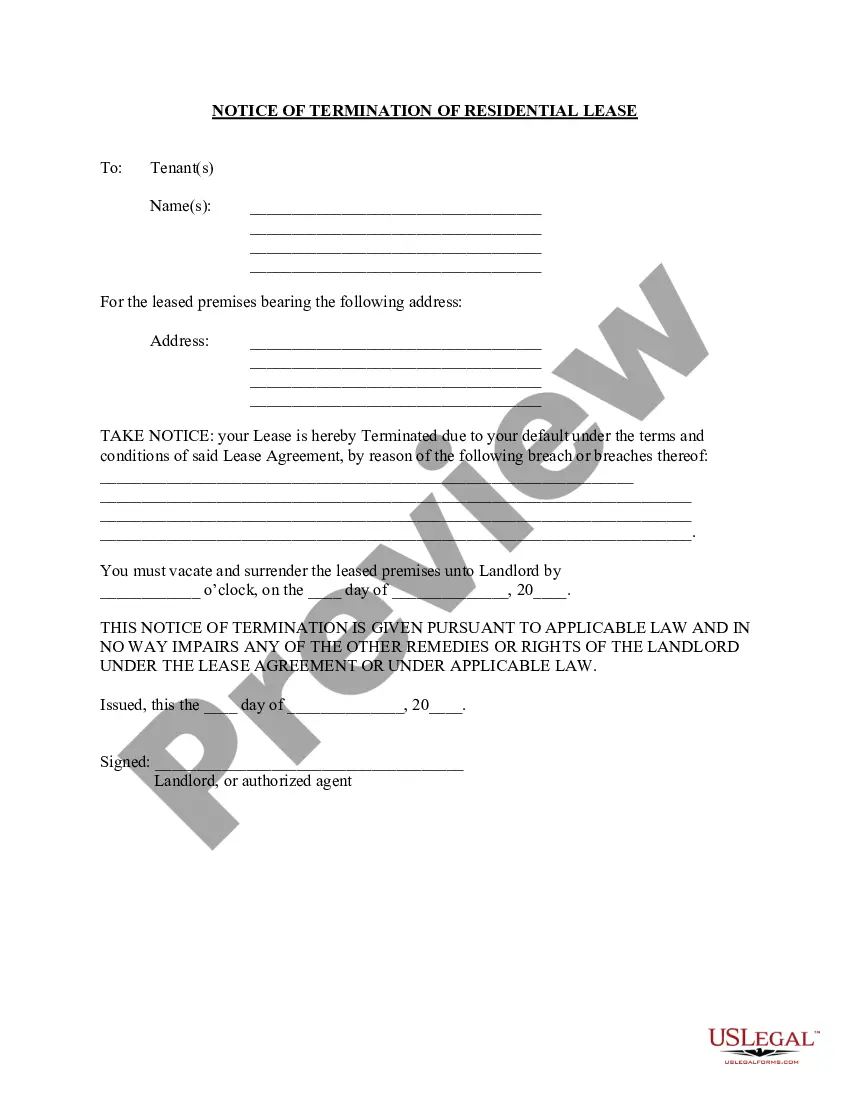
When to use this document
This form should be used when a landlord needs to inform a non-residential tenant about overdue rent. If a tenant falls behind on payments, issuing this notice provides them with an opportunity to pay their outstanding balance before the landlord can proceed with lease termination or eviction. It is a crucial step in ensuring compliance with lease agreements and state laws regarding landlord-tenant relations.
Who should use this form
- Landlords of non-residential properties seeking to collect overdue rent.
- Property managers responsible for maintaining lease agreements with commercial tenants.
- Real estate professionals advising landlords and property owners on rent collection processes.
Steps to complete this form
- Identify the parties involved: fill in the names of the landlord and tenant.
- Specify the address of the leased premises where the tenant resides.
- Enter the total amount of rent due and other applicable charges.
- Indicate the method of payment accepted by the landlord.
- Complete the notice date and expiration of the notice period.
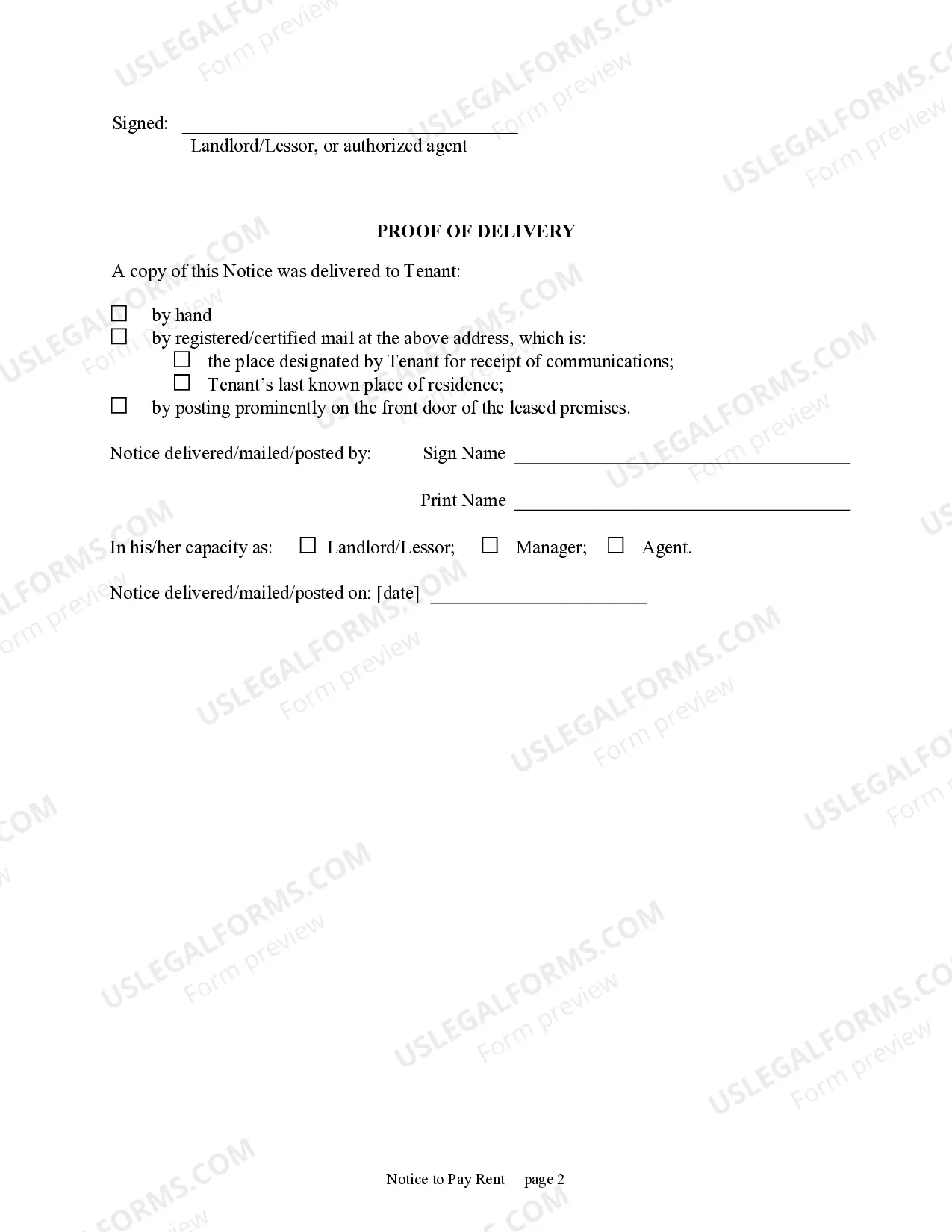
- Have the landlord or authorized agent sign and date the notice.
Notarization guidance
In most cases, this form does not require notarization. However, some jurisdictions or signing circumstances might. US Legal Forms offers online notarization powered by Notarize, accessible 24/7 for a quick, remote process.
Get your form ready online
Our built-in tools help you complete, sign, share, and store your documents in one place.
Make edits, fill in missing information, and update formatting in US Legal Forms—just like you would in MS Word.
Download a copy, print it, send it by email, or mail it via USPS—whatever works best for your next step.
Sign and collect signatures with our SignNow integration. Send to multiple recipients, set reminders, and more. Go Premium to unlock E-Sign.
If this form requires notarization, complete it online through a secure video call—no need to meet a notary in person or wait for an appointment.
We protect your documents and personal data by following strict security and privacy standards.

Make edits, fill in missing information, and update formatting in US Legal Forms—just like you would in MS Word.

Download a copy, print it, send it by email, or mail it via USPS—whatever works best for your next step.

Sign and collect signatures with our SignNow integration. Send to multiple recipients, set reminders, and more. Go Premium to unlock E-Sign.

If this form requires notarization, complete it online through a secure video call—no need to meet a notary in person or wait for an appointment.

We protect your documents and personal data by following strict security and privacy standards.
Common mistakes to avoid
- Failing to provide accurate payment details or amounts due.
- Not serving the notice within the correct time frame required by law.
- Omitting the signature of the landlord or authorized agent.
- Using incorrect or outdated legal language.
Why use this form online
- Immediate access to professionally drafted legal forms.
- Convenient download options to print or save for future use.
- Editability allows for customization to your specific needs.
- Time-saving compared to working with an attorney for standard forms.
Legal use & context
- This form serves as a legal communication tool to notify tenants of overdue balances.
- Notice completion and delivery method affect potential legal actions if further disputes arise.
- This notice must align with any lease agreements or local laws to be enforceable.
Main things to remember
- The 7 Day Notice to Pay Rent or Lease Terminates is critical in enforcing rent payments from non-residential tenants.
- Landlords must follow proper procedures to maintain legal standing for eviction if necessary.
- Ensure all information is accurate and delivered according to guidelines to avoid complications.
Looking for another form?
Form popularity
FAQ
In some circumstances, a tenant can break a fixed-term agreement early without penalty. A tenant can give 14 days' written notice to end an agreement early without penalty if: they have accepted an offer of social housing (e.g. from DCJ Housing)
Can I break my lease? You are always able to break a lease; there is little a landlord can do to actually stop you from leaving before the full term specified in the lease. You are violating no law by vacating early, but you are violating the terms of the contract between you and the landlord.
California law generally allows the owner to terminate a month-to month tenancy on 30 or 60 days notice, depending on how long the residents have lived there. By contrast, a fixed-term lease can only be terminated by the owner on three days' notice for cause.
How Breaking a Lease Can Hurt Your Credit. If you pay all outstanding charges before moving, including any back rent and fees, breaking a lease won't hurt your credit score. However, breaking a lease can damage your credit if it results in unpaid debt.
If the tenant breaches the tenancy agreement by not paying rent, the landlord can give a termination notice. The notice must state that it is for the non-payment of rent.Landlords should use the standard form termination notice supplied by the NSW Fair Trading.
The best approach is to try to come to an agreement with your landlord; if your landlord agrees, then you have mutually terminated the lease, and you should have no further obligation to pay rent. You should try to get any such agreement in writing.
Unless such a condition is explicitly stated in the lease or there is a rare jurisdictional law that requires a cooling period, your lease is binding the second you sign your name. The landlord has the right to decide whether to mutually agree to terminate the lease or to hold you to the terms.
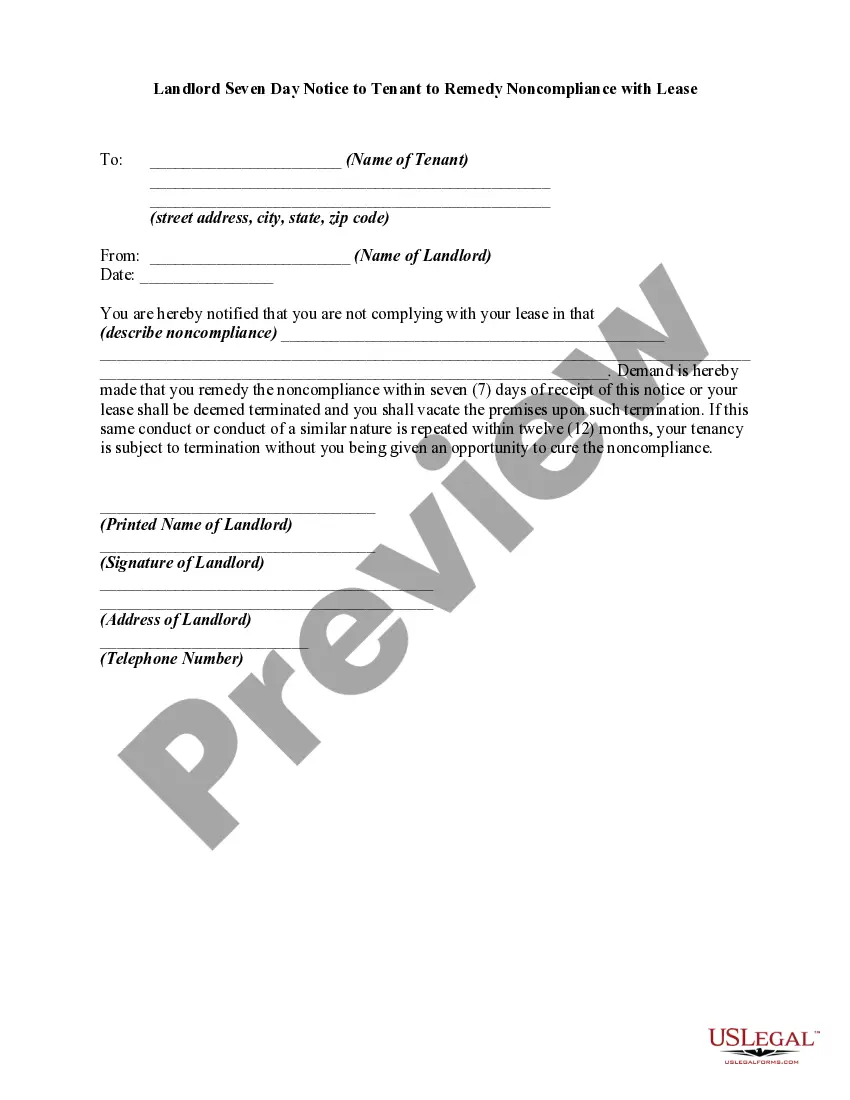
A landlord can legally evict a tenant only by sending a written notice to the tenant. This written notice must be in the form of a "written notice to quit or leave" which is a legal document. Eviction for not paying rent, damages to the property or danger to the health or safety of others require seven days' notice.
CALGARY -- The province says commercial landlords will no longer be allowed to evict business tenants without first applying for rental relief from the government.