Mississippi Partial Release of Property From Deed of Trust for Corporation
Understanding this form
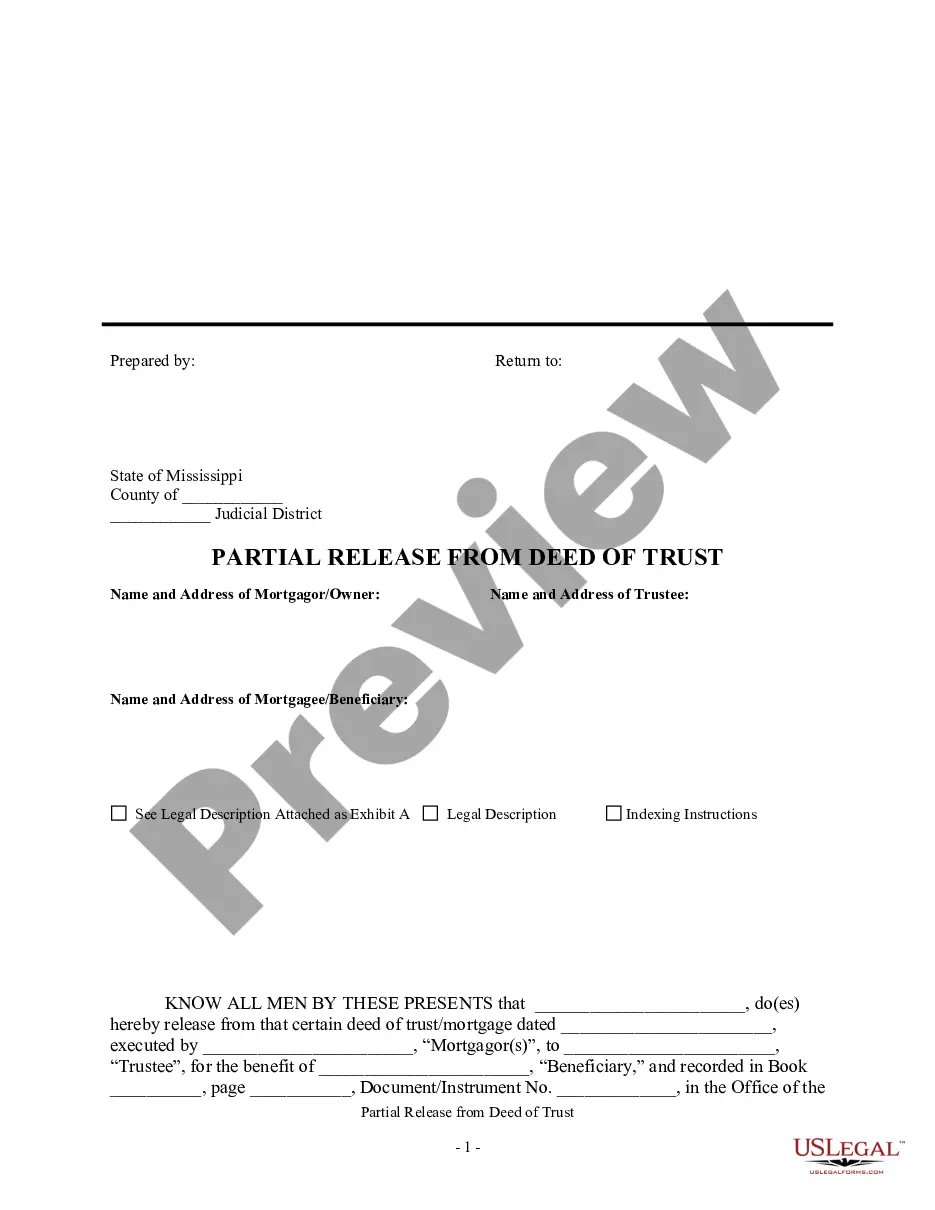
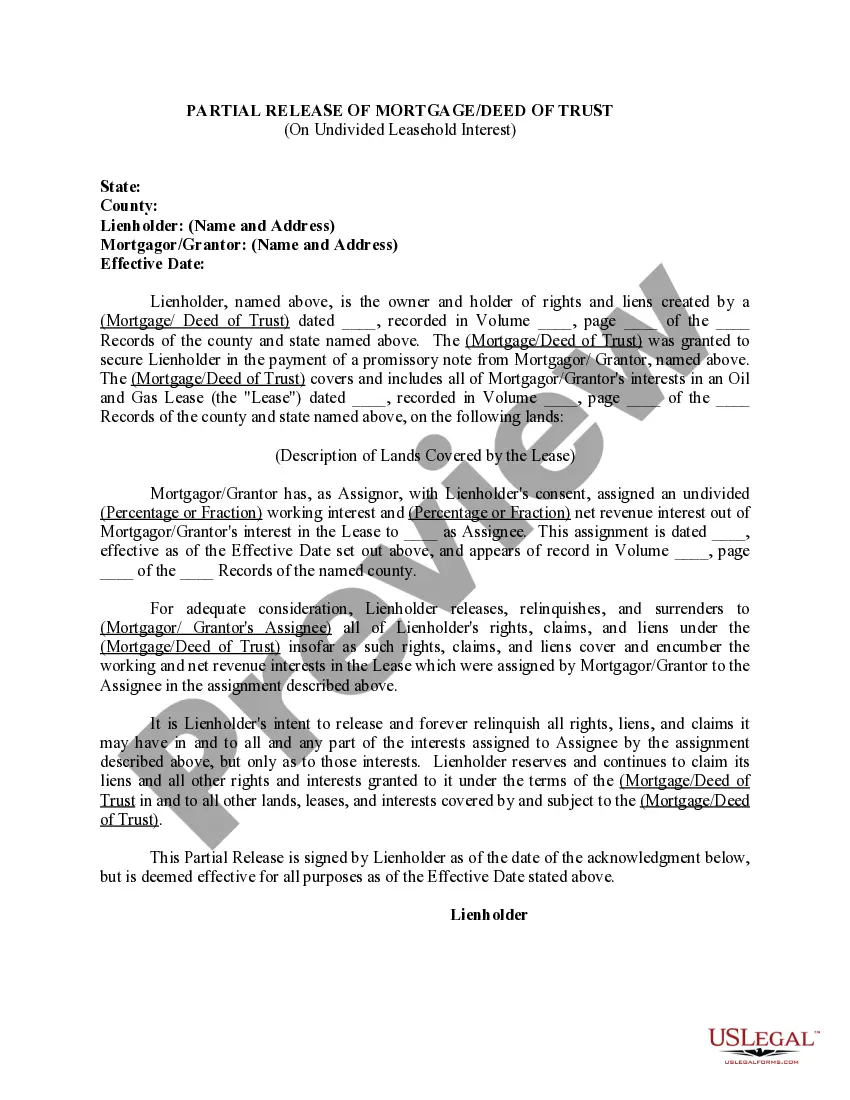
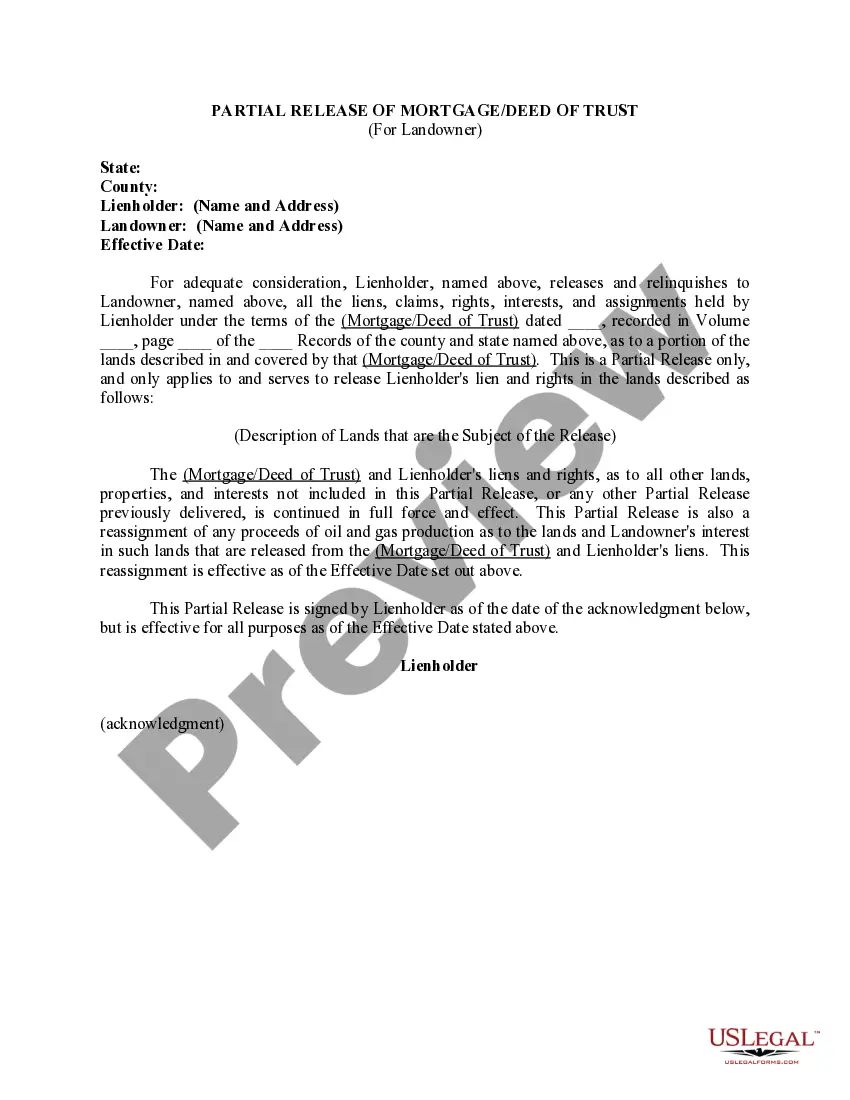
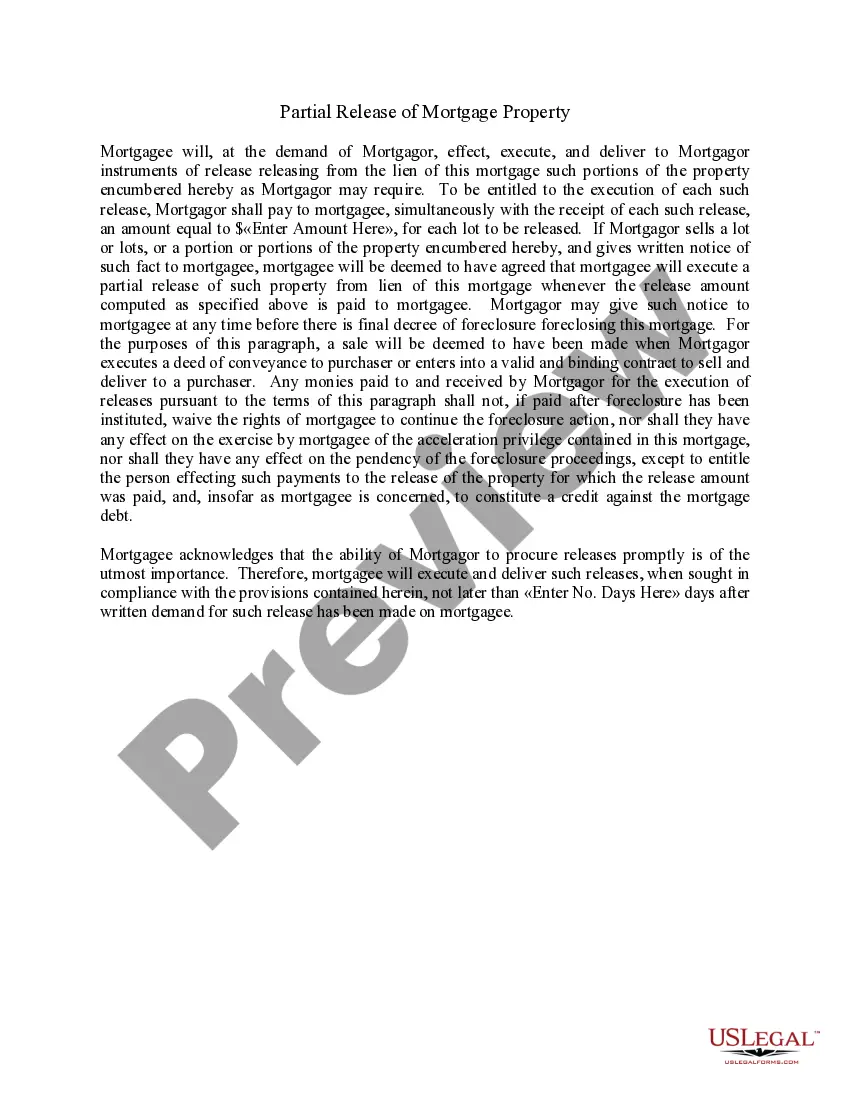
The Partial Release of Property From Deed of Trust for Corporation is a legal document used when a corporation that holds a deed of trust (or mortgage) wants to release a portion of the property covered by that deed. This form allows the corporation to convey its interest in a specified portion of the property to a third party, distinguishing it from a full release which would eliminate the entire obligation. It is essential for facilitating transactions involving partial interests in real estate assets.
Key components of this form
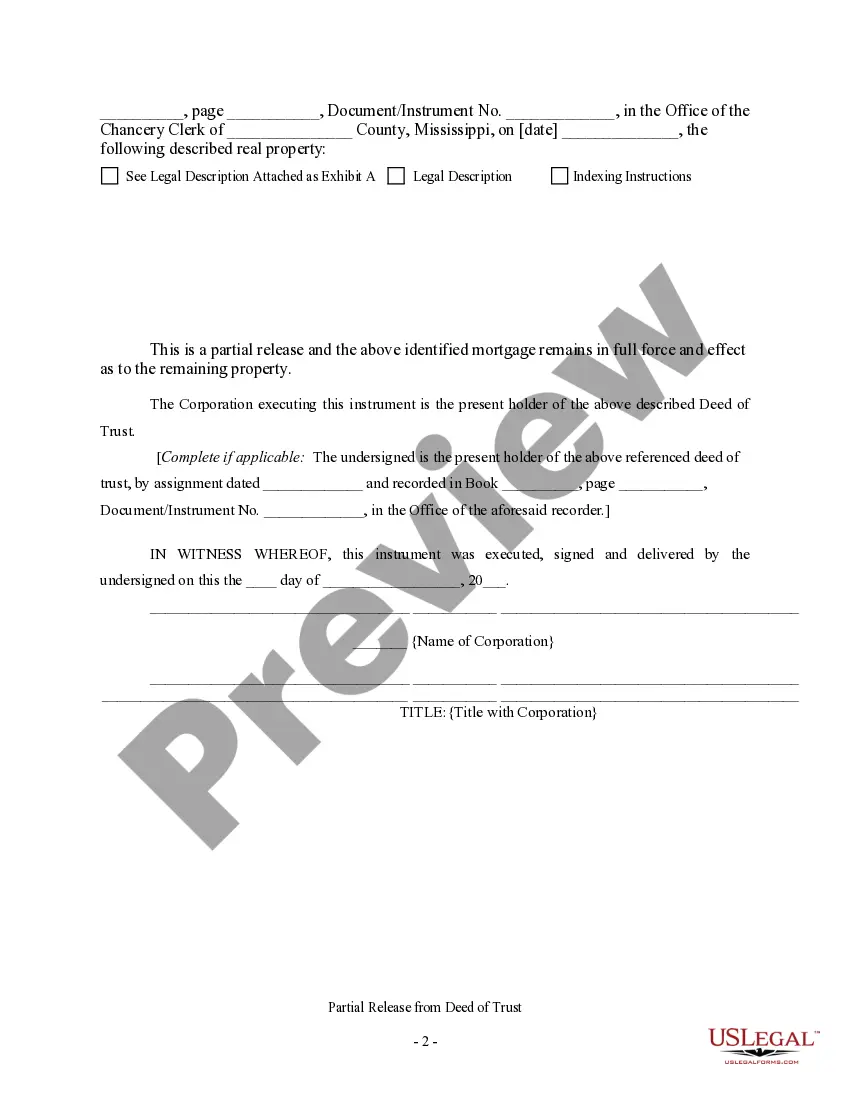
- Identification of the current holder of the deed of trust, typically the corporation.
- Details about the original deed of trust, including assignment dates and recording information.
- Signature line for the corporate representative along with their title.
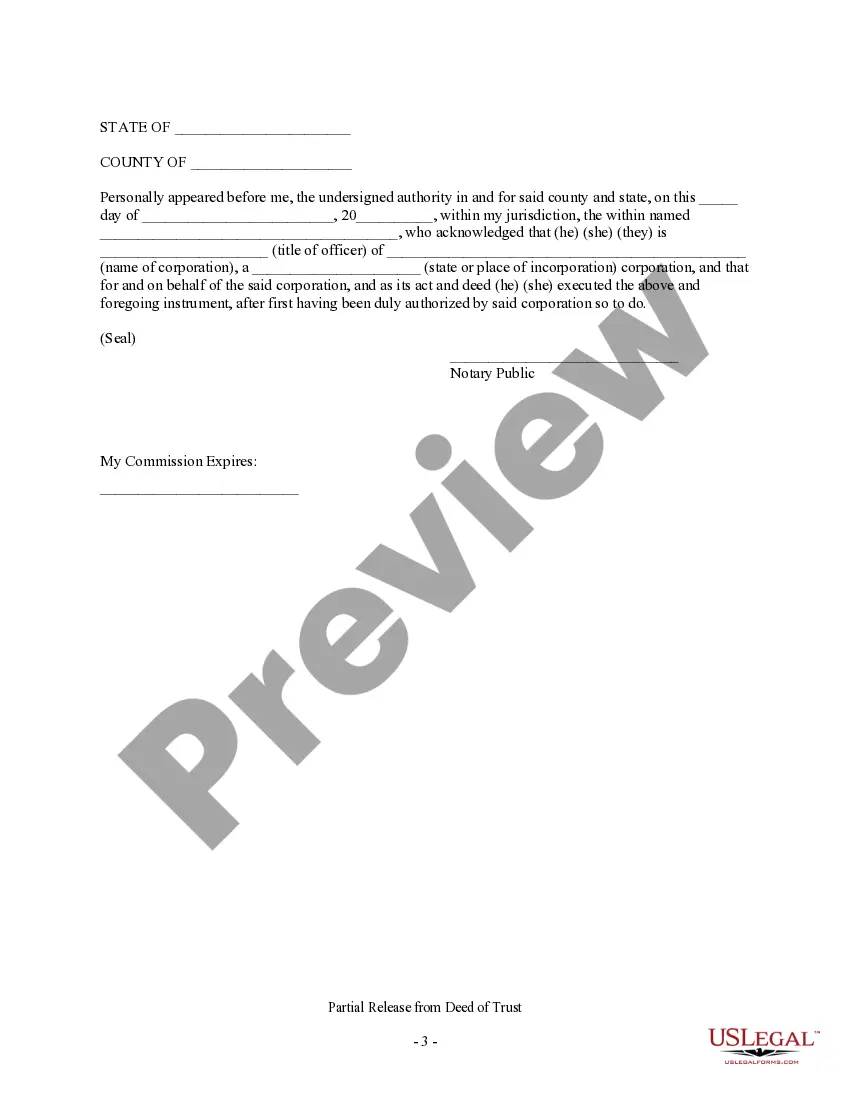
- Space for notarization, if required.
- Date of execution of the document.

When this form is needed
This form should be used in situations where a corporation that holds a deed of trust aims to release part of the property from the obligations of the mortgage. Common scenarios include selling or transferring specific portions of a property while retaining rights to the remainder, refinancing specific parts of the property, or settling claims involving only part of the collateral originally pledged.
Who should use this form
This form is intended for:
- Corporations that are current holders of a deed of trust.
- Entities involved in real estate transactions requiring a partial release from a mortgage.
- Legal professionals representing corporations in property-related matters.
Steps to complete this form
- Identify the parties involved: confirm the name of the corporation and the third party receiving the partial release.
- Specify the property: include a clear description of the property being partially released.
- Fill in the details of the original deed of trust, including the assignment date and recording details.
- Have the appropriate corporate representative sign the form, ensuring they include their title.
- Arrange for the document to be notarized if required by state law.
Notarization guidance
This form does not typically require notarization unless specified by local law. However, check your specific stateâs regulations to ensure compliance.
Get your form ready online
Our built-in tools help you complete, sign, share, and store your documents in one place.
Make edits, fill in missing information, and update formatting in US Legal Forms—just like you would in MS Word.
Download a copy, print it, send it by email, or mail it via USPS—whatever works best for your next step.
Sign and collect signatures with our SignNow integration. Send to multiple recipients, set reminders, and more. Go Premium to unlock E-Sign.
If this form requires notarization, complete it online through a secure video call—no need to meet a notary in person or wait for an appointment.
We protect your documents and personal data by following strict security and privacy standards.

Make edits, fill in missing information, and update formatting in US Legal Forms—just like you would in MS Word.

Download a copy, print it, send it by email, or mail it via USPS—whatever works best for your next step.

Sign and collect signatures with our SignNow integration. Send to multiple recipients, set reminders, and more. Go Premium to unlock E-Sign.

If this form requires notarization, complete it online through a secure video call—no need to meet a notary in person or wait for an appointment.

We protect your documents and personal data by following strict security and privacy standards.
Avoid these common issues
- Failing to include the necessary property description, leading to ambiguity in the release.
- Not properly signing or dating the document, which may render it invalid.
- Omitting the assignment details, which are crucial for validating the release.
- Neglecting to check if notarization is necessary in your jurisdiction.
Why complete this form online
- Convenience of accessing and completing the form from any location.
- Easy editing options to ensure all necessary information is accurately provided.
- Reliability of professionally drafted templates that adhere to legal standards.
Key takeaways
- The Partial Release of Property From Deed of Trust for Corporation is essential for documenting the release of property from a deed.
- Accurate completion of the form is critical for legal effectiveness.
- Notarization is necessary to validate the formâs execution.
- Using an online service simplifies the process and ensures compliance with legal standards.
Looking for another form?
Form popularity
FAQ
The deed can be re-written to reflect changes, but it needs the consent of both parties. If you want to make substantial changes to the deed, it's typically best to get a new one written. If changes are only minor, you can enter a deed of variation.
In order to clear the Deed of Trust from the title to the property, a Deed of Reconveyance must be recorded with the Country Recorder or Recorder of Deeds. If the Trustee/Beneficiary fails to record a satisfaction within the set time limits, the Trustee/Beneficiary may be responsible for damages as set out by statute.
Yes, you can challenge the release deed/ relinquishment deed after the death of the person. but to challenge it you need to have solid grounds and proof stating that the deed was made fraudulently. if you dont have any proof then their is no point challenging it as the case may not sustain merit in the court.
A deed of release literally releases the parties to a deal from previous obligations, such as payments under the term of a mortgage because the loan has been paid off. The lender holds the title to real property until the mortgage's terms have been satisfied when a deed of release is commonly entered into.
...the trust deed and vide clauses 18 and 19, the trustees have been given power to amend, alter, change or modify the provisions of the trust deed with a condition mentioned therein.
Giving the wrong legal address for the property or the wrong amount of the debt can render the deed unenforceable. In some cases, the error is easy to fix, and the court will rule the deed is enforceable.
A deed of release or release deed is a legal document that removes the claim of a person from an immovable property and transfers his/her share to the co-owner. The release deed procedure is executed in the sub-registrars office and both the parties are required to be present for signing it.
Parties need a deed of release to bring a dispute or agreement to an end.Alternatively, if you are an employer, you may want a departing employee to sign a deed of release to agree that they won't make any employment claims against you once they have gone.