Mississippi Renunciation and Disclaimer of Real Property Interest
Overview of this form
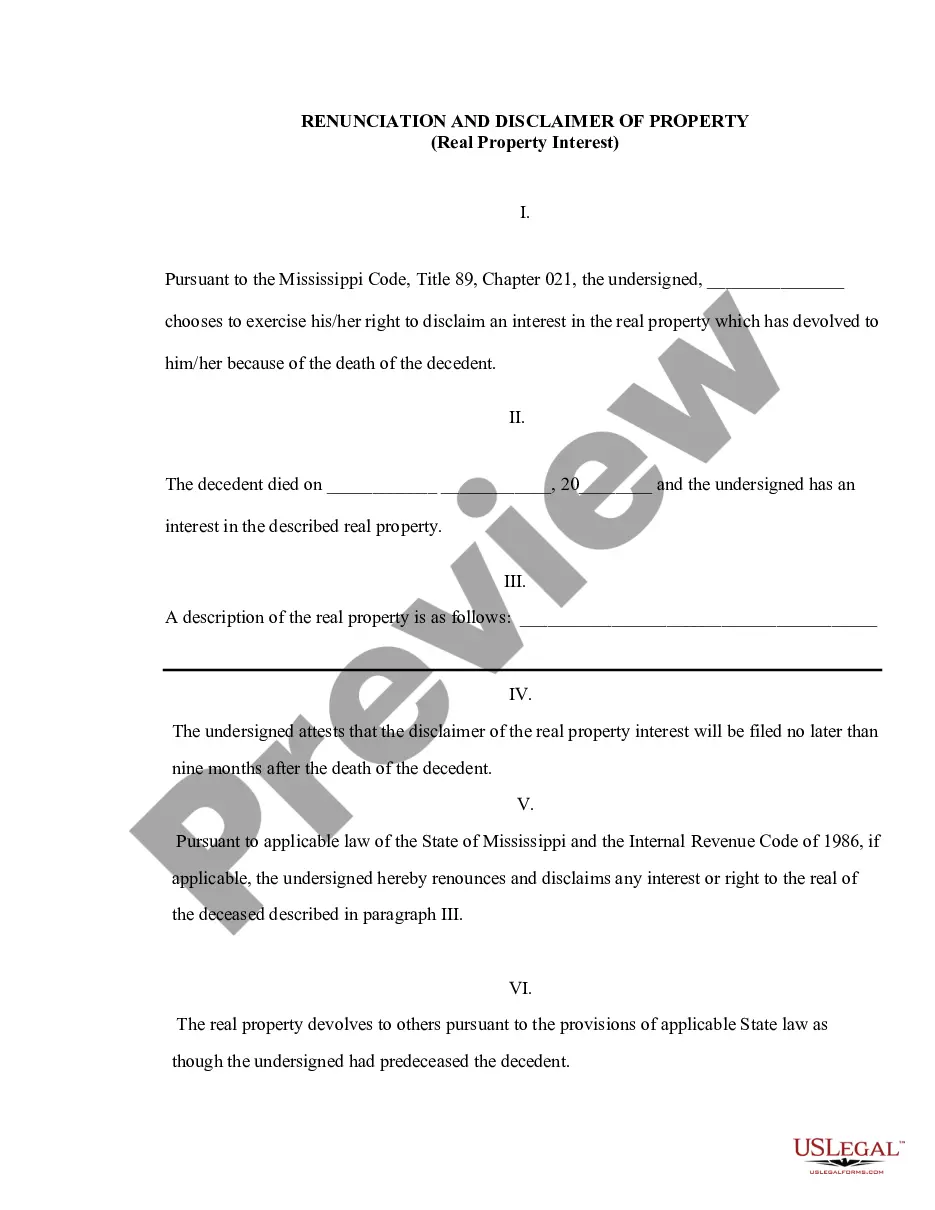
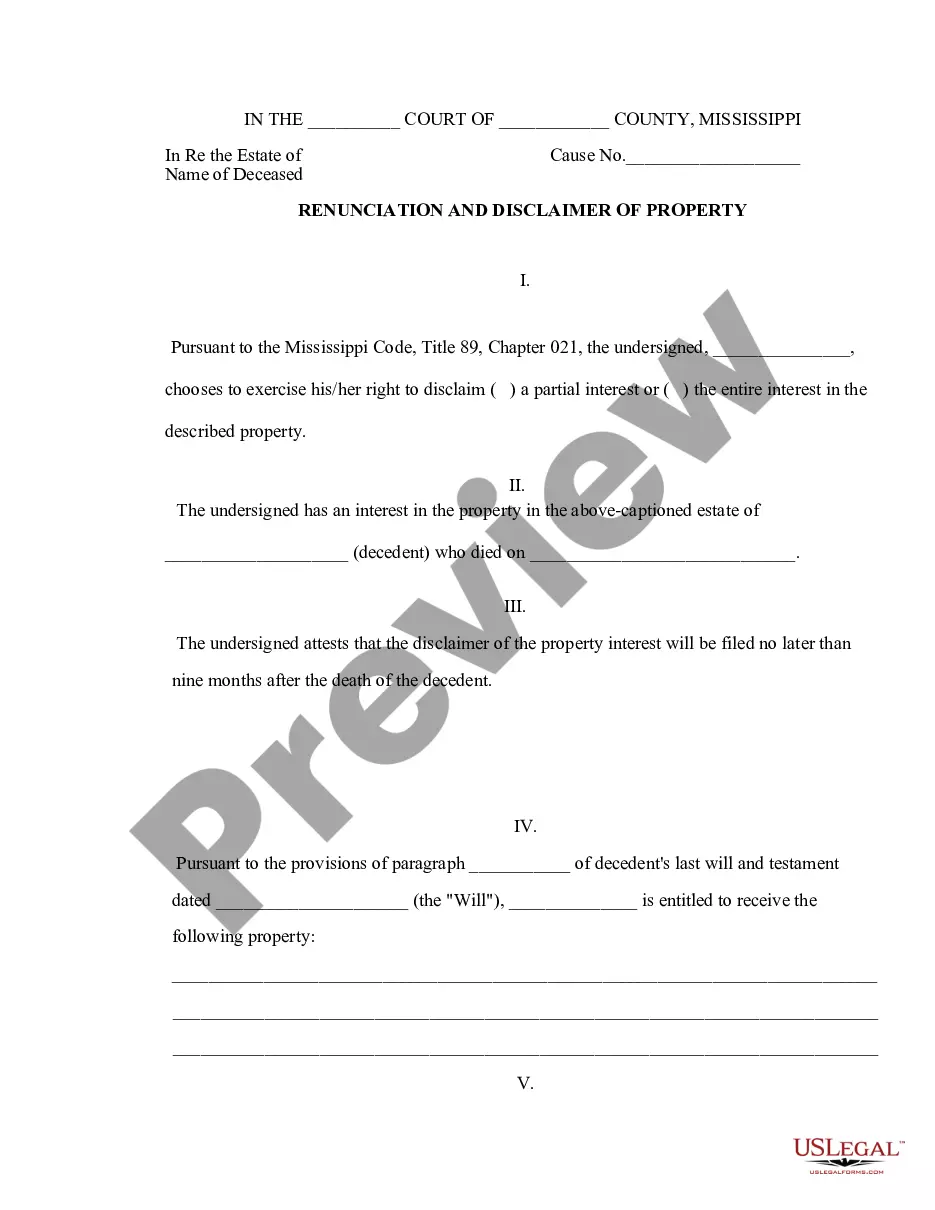
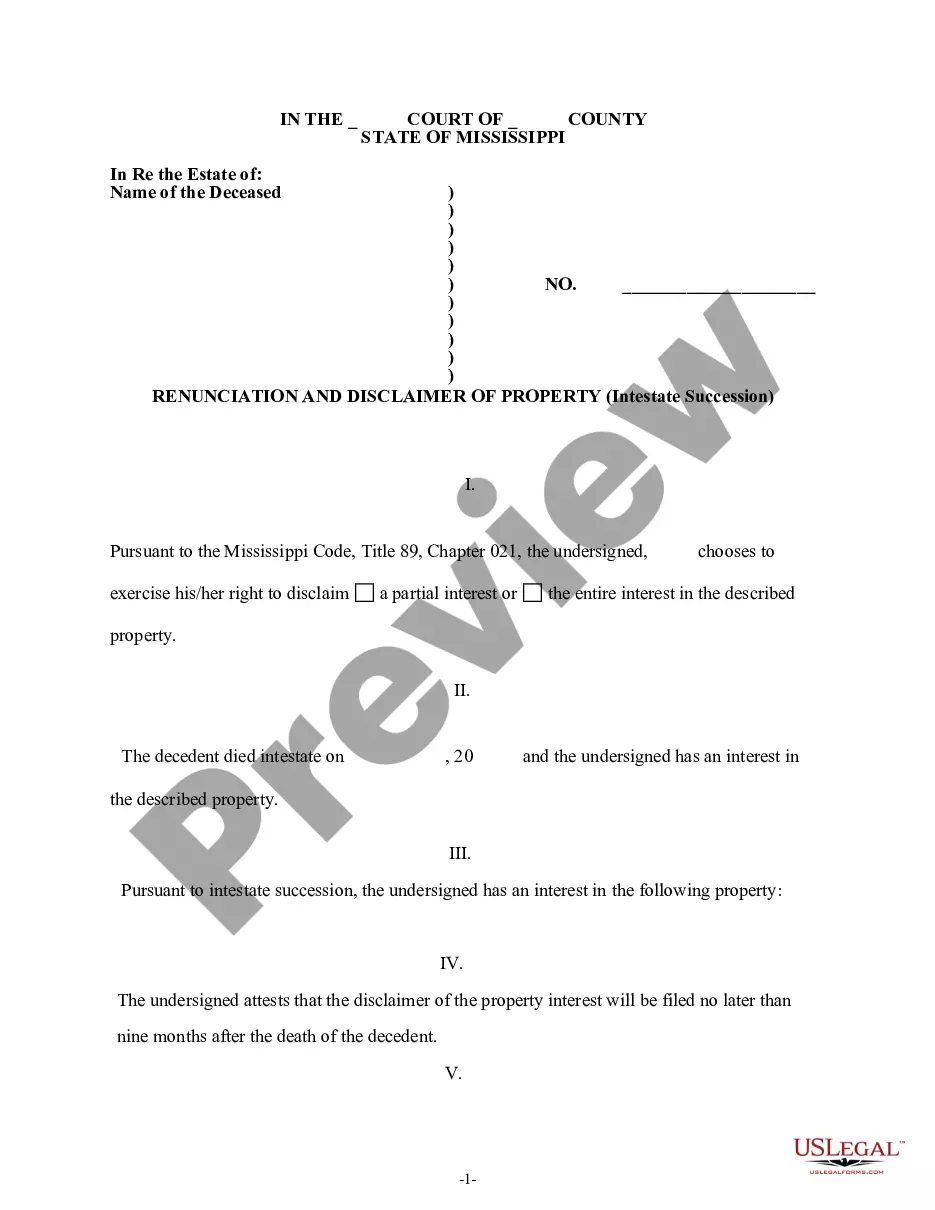
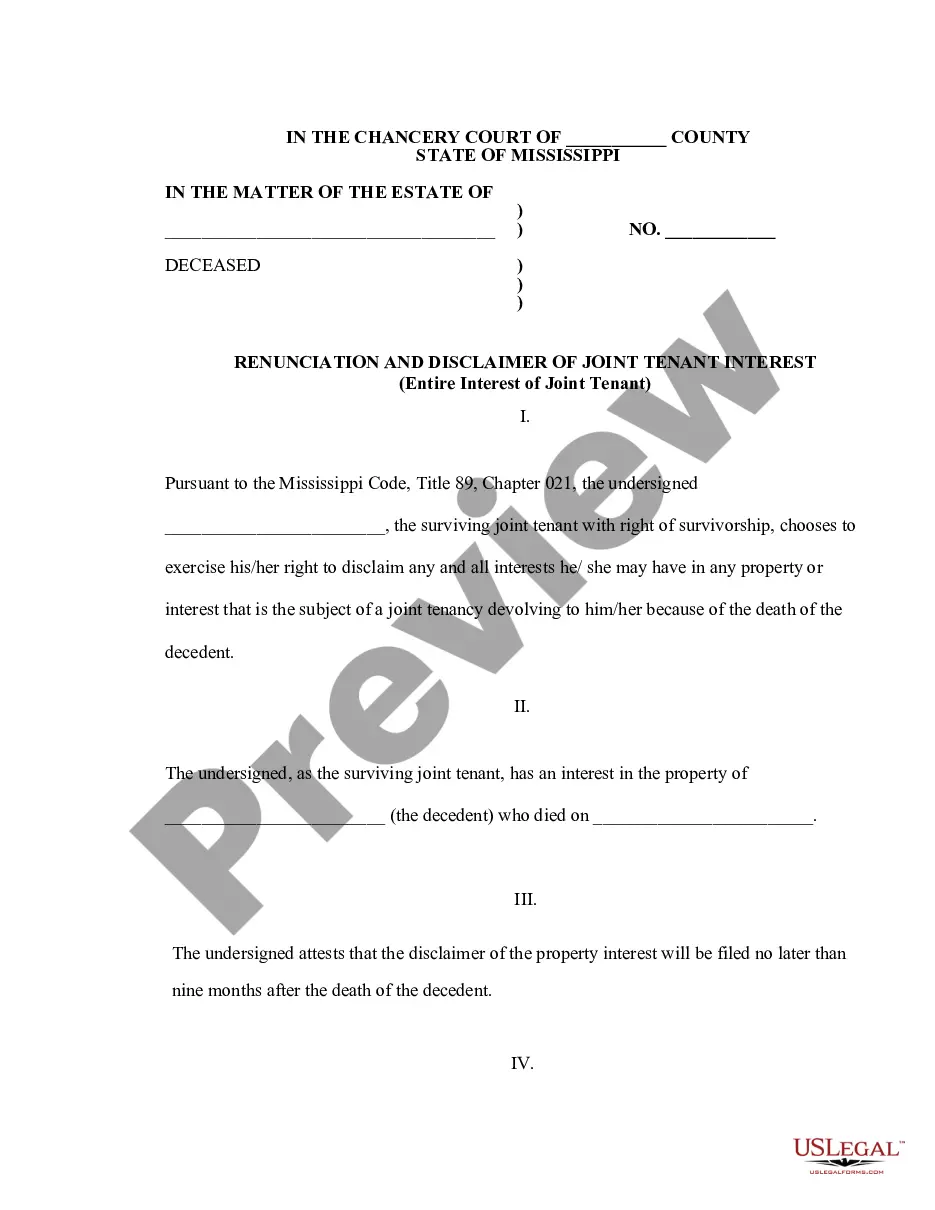
The Mississippi Renunciation and Disclaimer of Real Property Interest is a legal document that allows a beneficiary to refuse an interest in real property inherited from a deceased individual. By completing this form, the beneficiary effectively disclaims their inherited property rights, causing the property to pass to other heirs as if the beneficiary had predeceased the decedent. This form is specific to Mississippi law and is essential for ensuring lawful distribution of property in accordance with state regulations.
Form components explained
- Identification of the beneficiary who is disclaiming the property interest.
- Date of the decedent's death and a description of the property in question.
- Statement of intent to file the disclaimer within nine months of the decedent's death.
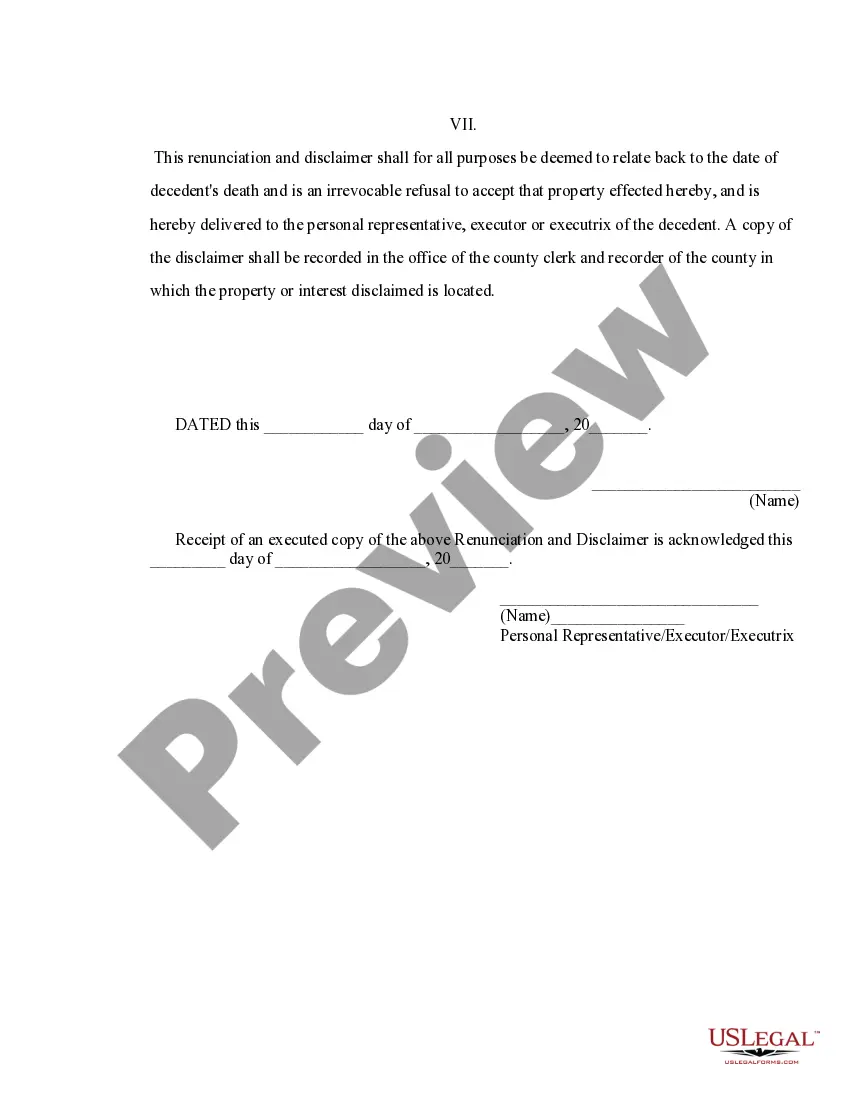
- Legal declaration renouncing and disclaiming all rights to the property.
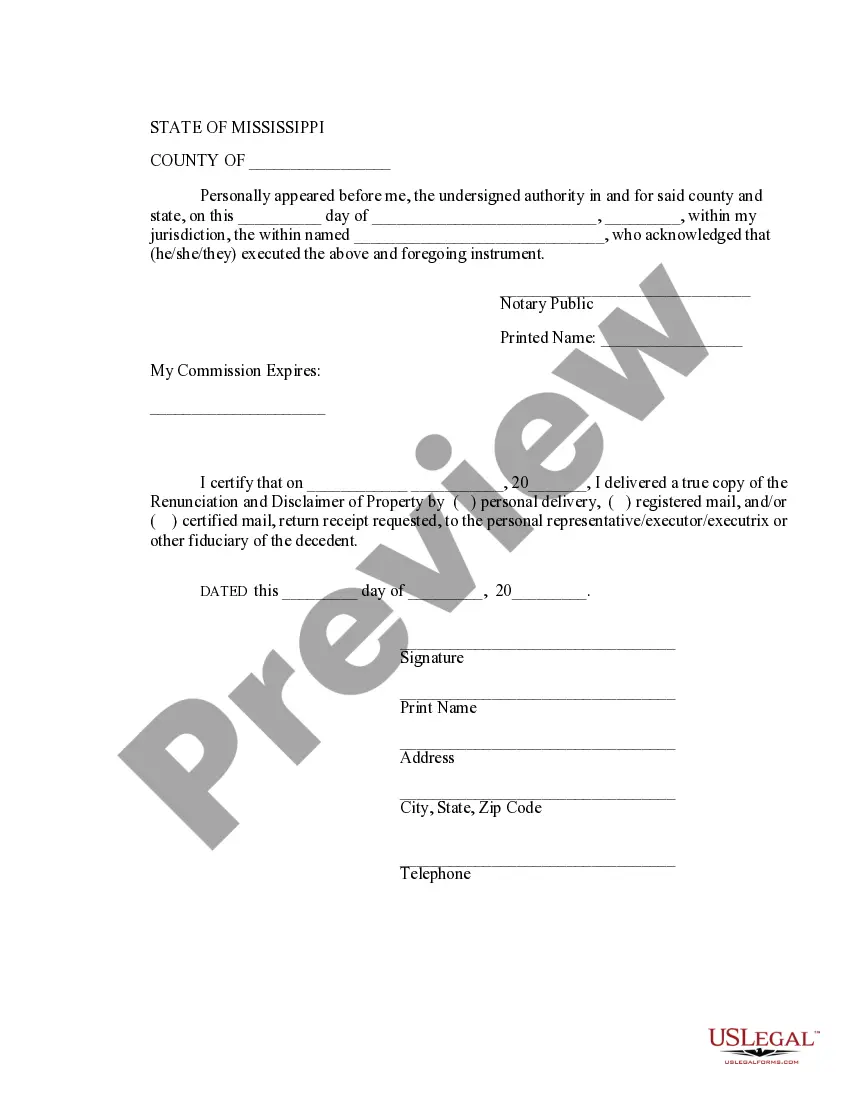
- Notarization and acknowledgment details for validity.
- Proof of delivery to the personal representative or executor of the estate.
Common use cases
You should use the Mississippi Renunciation and Disclaimer of Real Property Interest form when you inherit real estate from someone who has passed away but do not wish to accept the inheritance. This may be due to various reasons, such as financial obligations tied to the property, personal preferences, or allowing the property to transfer directly to other beneficiaries. It is crucial to file this form within nine months of the decedent's death to ensure proper legal standing.
Who needs this form
This form is intended for:
- Beneficiaries who inherit real property under the laws of Mississippi.
- Individuals who prefer not to accept property that may come with liabilities.
- Heirs looking to redirect inherited property rights to other beneficiaries.
Instructions for completing this form
- Identify yourself as the beneficiary and provide your name in the designated area.
- Enter the date of the decedent's death.
- Provide a detailed description of the real property you are disclaiming.
- Fill in the date you are completing the form and your signature.
- Have the form notarized by a qualified notary public.
- Deliver a copy of the executed form to the personal representative or executor of the estate.
Notarization guidance
Yes, this form must be notarized to be legally valid. Notarization ensures that your identity is verified and confirms that you have willingly signed the document. US Legal Forms provides integrated online notarization options that are available 24/7 through secure video calls, enabling you to complete the process without the need for travel.
Get your form ready online
Our built-in tools help you complete, sign, share, and store your documents in one place.
Make edits, fill in missing information, and update formatting in US Legal Forms—just like you would in MS Word.
Download a copy, print it, send it by email, or mail it via USPS—whatever works best for your next step.
Sign and collect signatures with our SignNow integration. Send to multiple recipients, set reminders, and more. Go Premium to unlock E-Sign.
If this form requires notarization, complete it online through a secure video call—no need to meet a notary in person or wait for an appointment.
We protect your documents and personal data by following strict security and privacy standards.

Make edits, fill in missing information, and update formatting in US Legal Forms—just like you would in MS Word.

Download a copy, print it, send it by email, or mail it via USPS—whatever works best for your next step.

Sign and collect signatures with our SignNow integration. Send to multiple recipients, set reminders, and more. Go Premium to unlock E-Sign.

If this form requires notarization, complete it online through a secure video call—no need to meet a notary in person or wait for an appointment.

We protect your documents and personal data by following strict security and privacy standards.
Common mistakes to avoid
- Failing to file the disclaimer within the nine-month deadline.
- Not providing a complete description of the property in question.
- Overlooking the notarization requirement, which can invalidate the form.
- Not delivering the form to the appropriate person or office, which can cause delays.
Why use this form online
- Convenience of instant access and downloadable format.
- Editability allows customization to fit the specific situation.
- Reliability from templates drafted by licensed attorneys.
Quick recap
- The form allows you to disclaim inherited real property in Mississippi.
- Timely filing and proper completion are essential for enforceability.
- Notarization is required for the disclaimer to be valid.
Looking for another form?
Form popularity
FAQ
In law, a disclaimer is a statement denying responsibility intended to prevent civil liability arising for particular acts or omissions. Disclaimers are frequently made to escape the effects of the torts of negligence and of occupiers' liability towards visitors.
Disclaimer of interest, in the law of inheritance, wills and trusts, is a term that describes an attempt by a person to renounce their legal right to benefit from an inheritance (either under a will or through intestacy) or through a trust. A disclaimer of interest is irrevocable.
It must be in writing. It must be made within 9 months of the date of death of the decedent. The disclaimant cannot receive any benefits from the assets.
What is a Deed of Disclaimer? A Deed of Disclaimer is a document that you can execute if you wish to Disclaim an inheritance due via the Rules of Intestacy and you are not applying for probate. A typical example of this is if a spouse of a deceased would prefer the estate passes to the children.
Yes, a fiduciary can disclaim an interest in property if the will, trust or power of attorney gives the fiduciary that authority or if the appropriate probate court authorizes the disclaimer.The primary reason an executor or trustee might disclaim property passing to an estate or trust is to save death taxes.
Property owned in joint tenancy automatically passes, without probate, to the surviving owner(s) when one owner dies. Setting up a joint tenancy is easy, and it doesn't cost a penny.
Jointly owned property is treated as consisting of a both present and a future interest in the jointly owned property. Thus, a surviving spouse may disclaim the future interest in jointly owned property on the death of their spouse, including assets that were held by the spouses as tenants by the entirety.
Disclaim, in a legal sense, refers to the renunciation of an interest in, or an acceptance of, inherited assets, such as property, by way of a legal instrument. A person disclaiming an interest, right, or obligation is known as a disclaimant.