Missouri Partial Release of Property From Deed of Trust for Corporation
About this form
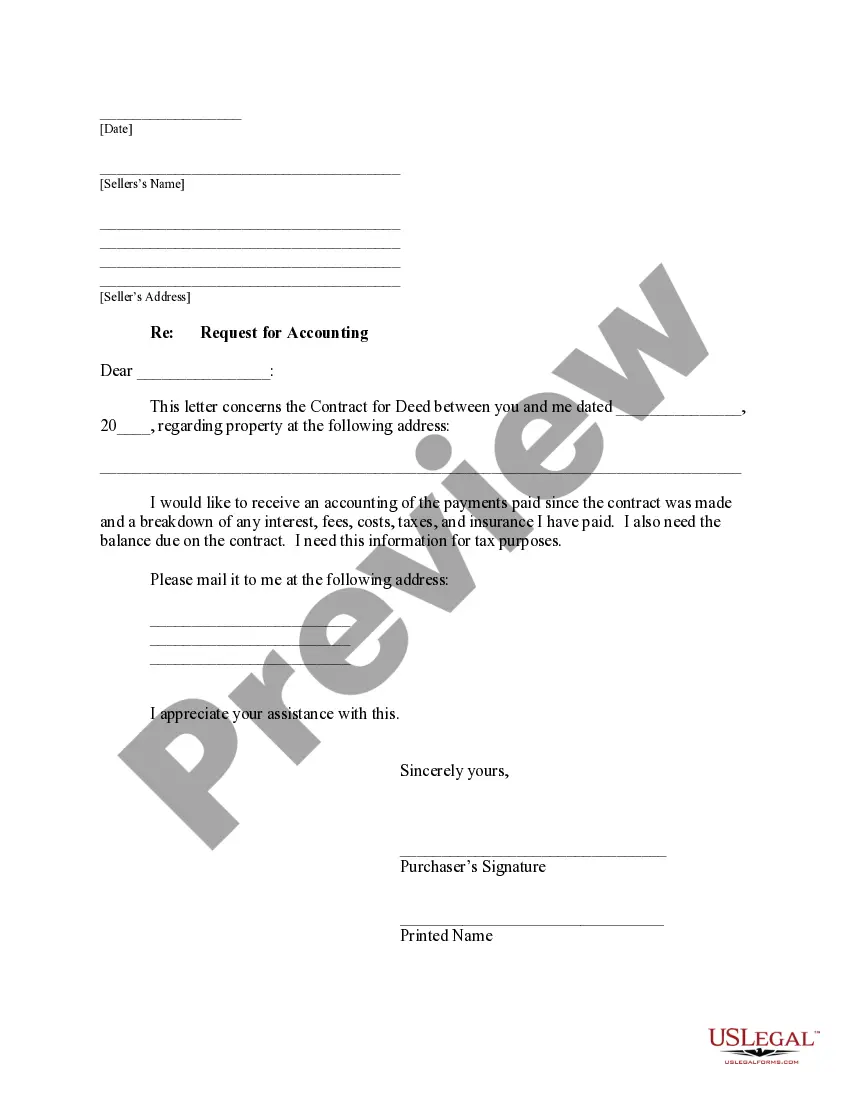
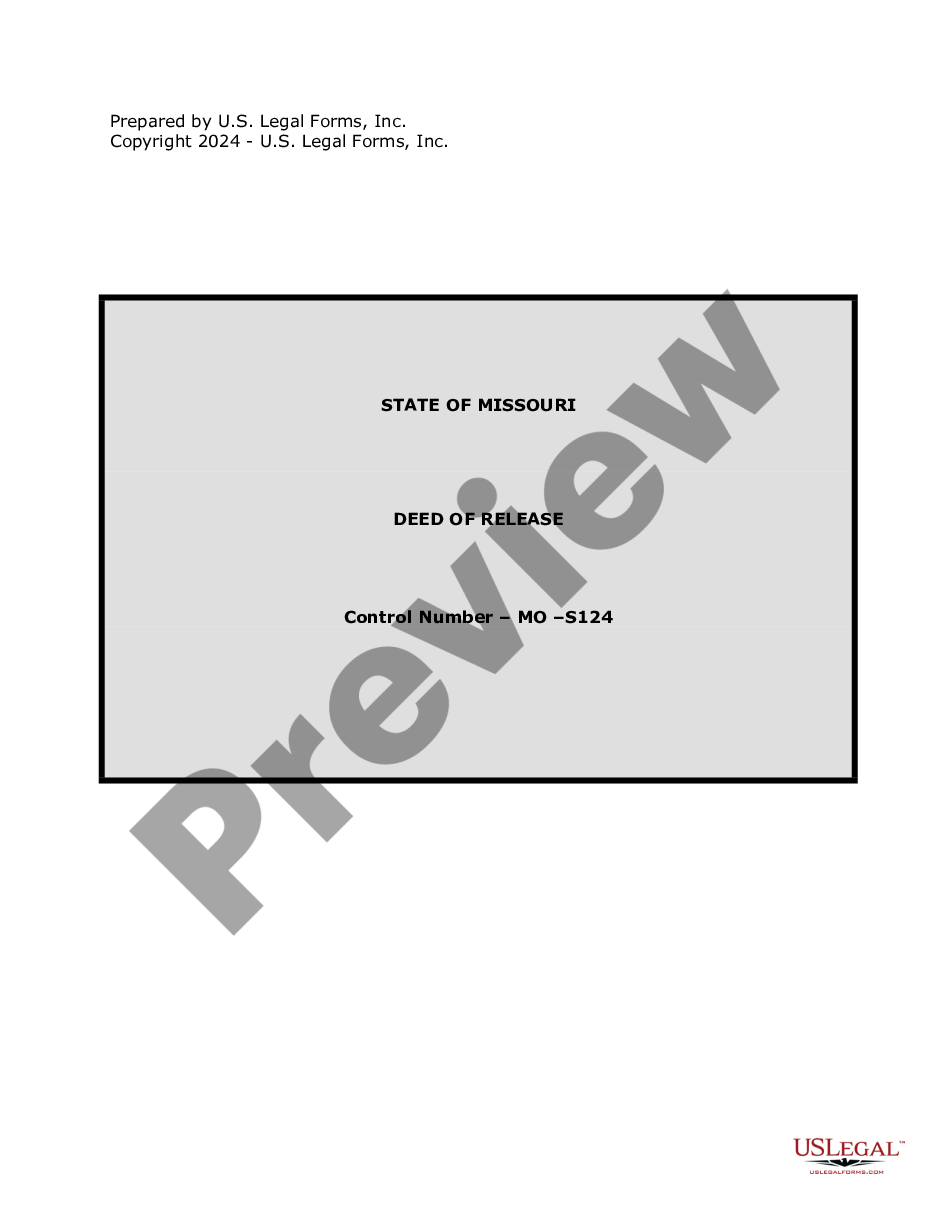
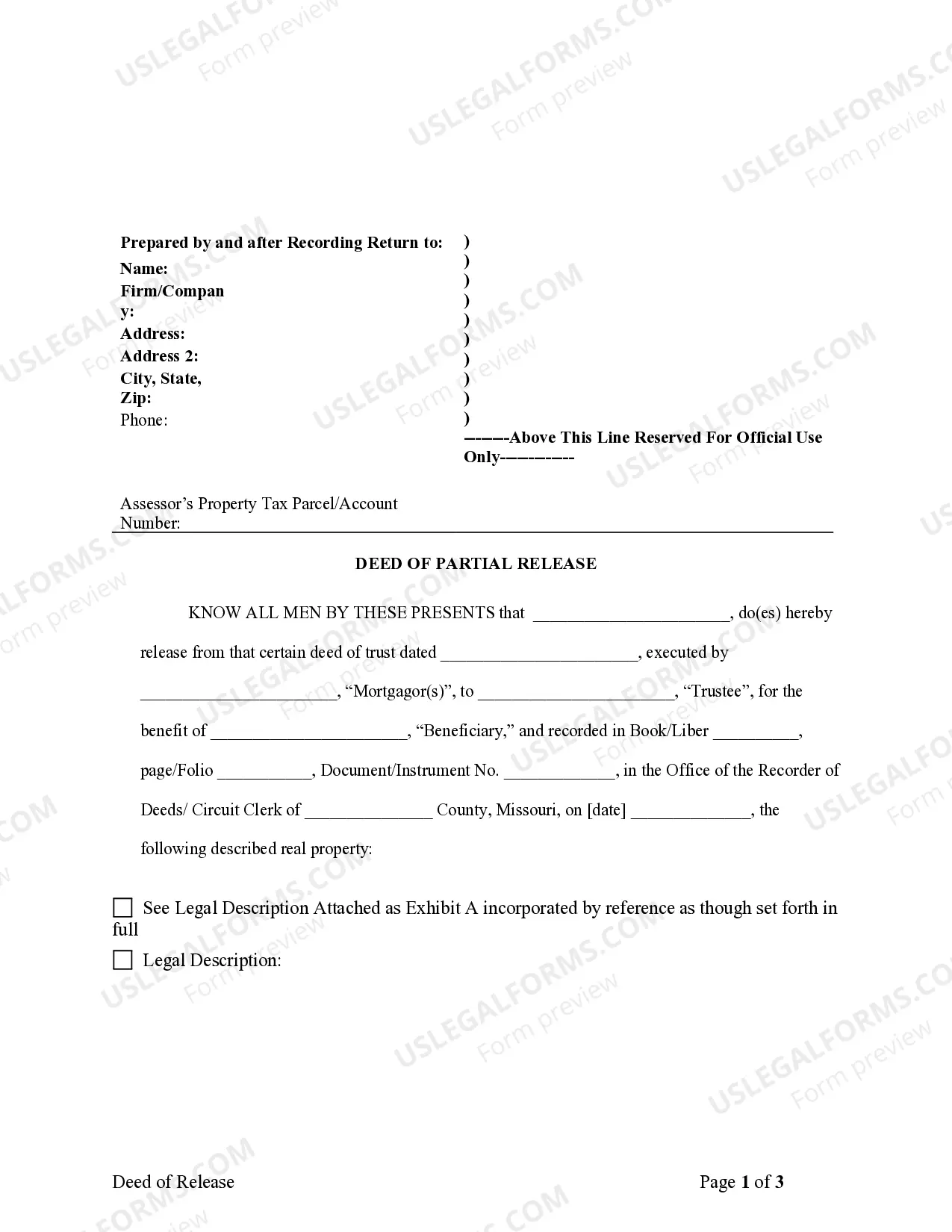
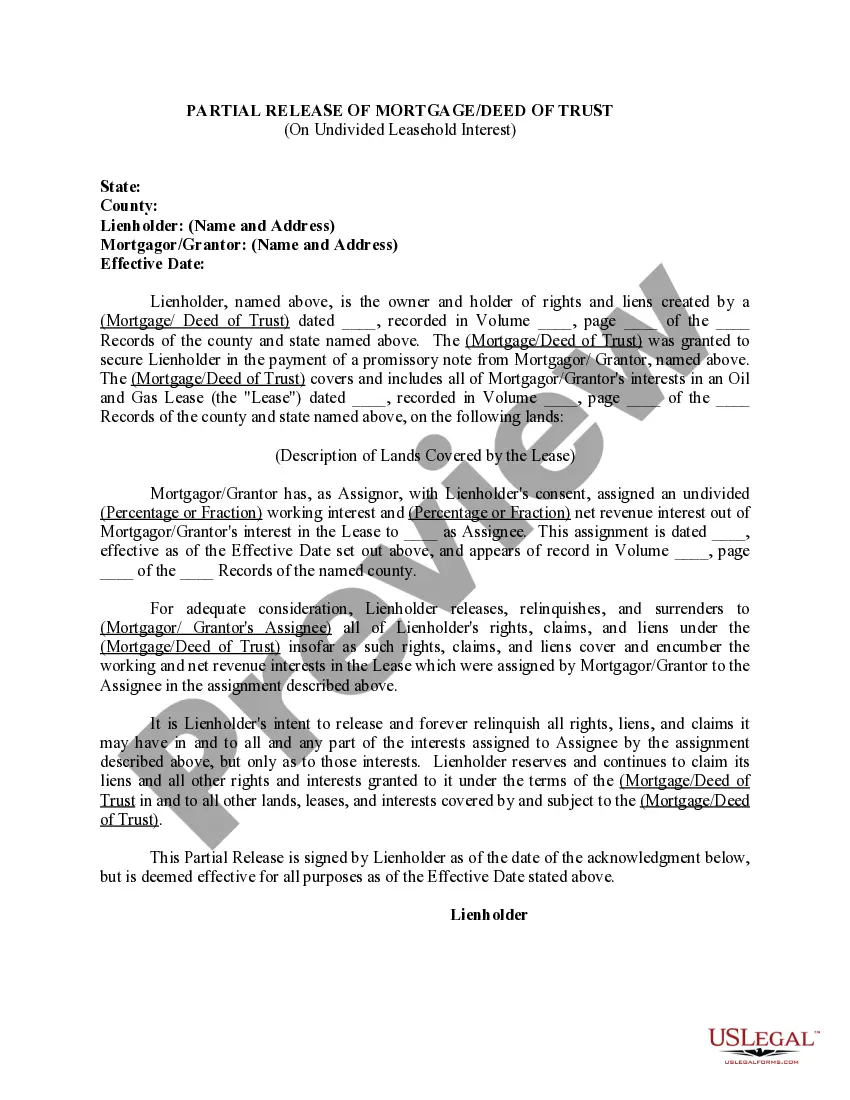
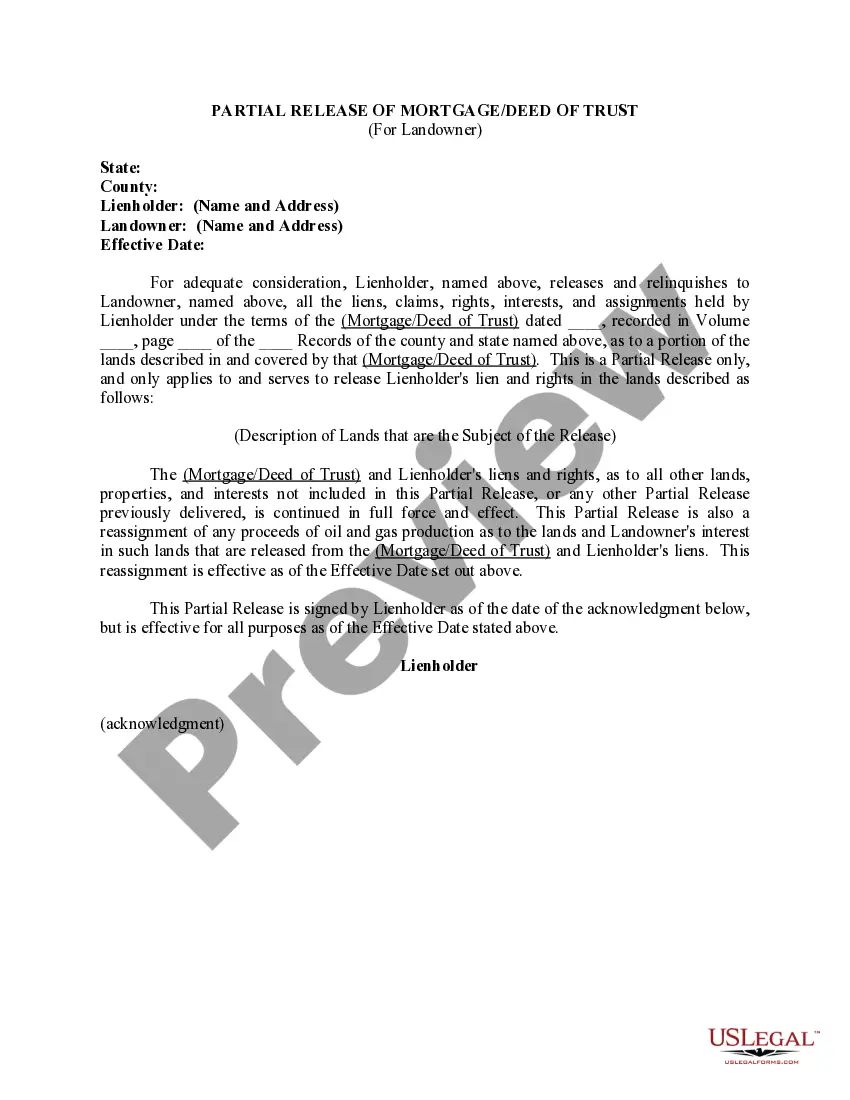
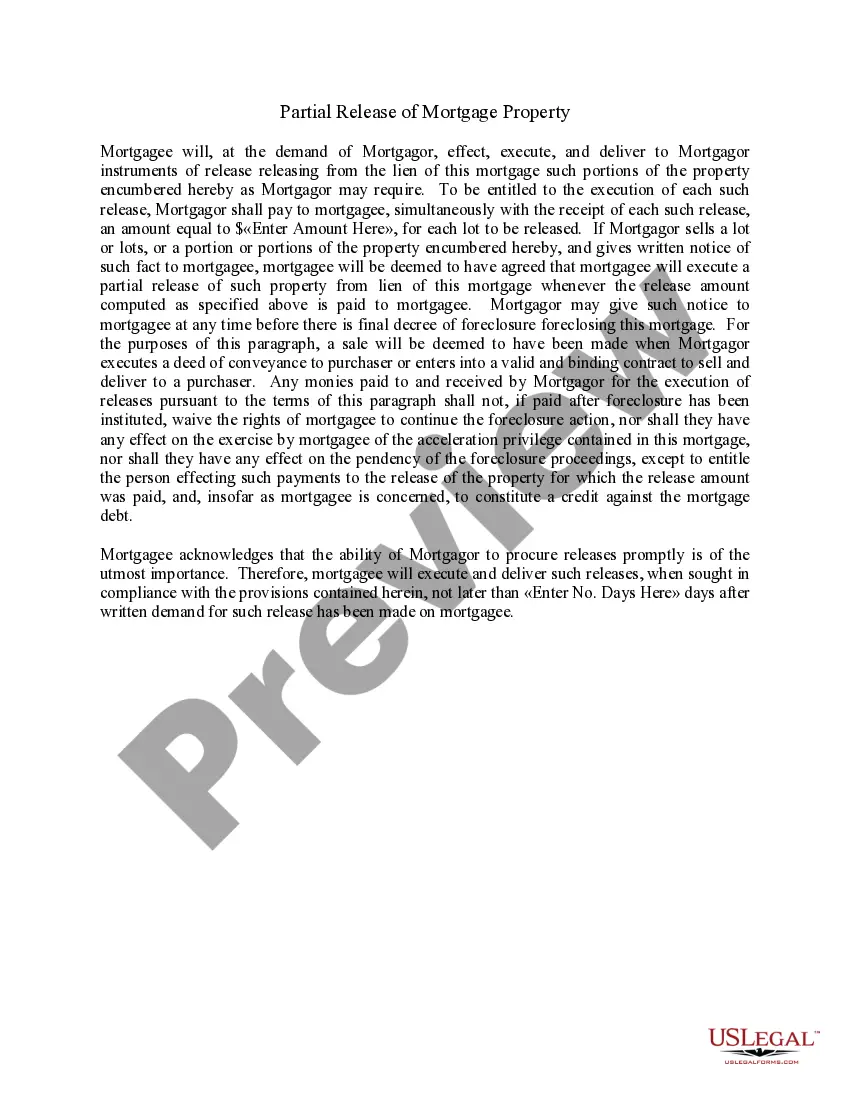
The Partial Release of Property From Deed of Trust for Corporation is a legal document that allows a corporation to release its interest in a portion of a property secured by a deed of trust. This form is different from a full release of deed of trust, as it specifically applies to the release of part of the property rather than the entire property. It serves to clarify ownership and encumbrances on the property in question.
Key parts of this document
- Identification of the parties involved, including the corporation, trustee, and mortgagor(s).
- Details of the original deed of trust including date, recording information, and involved parties.
- A description of the property being released from the deed of trust.
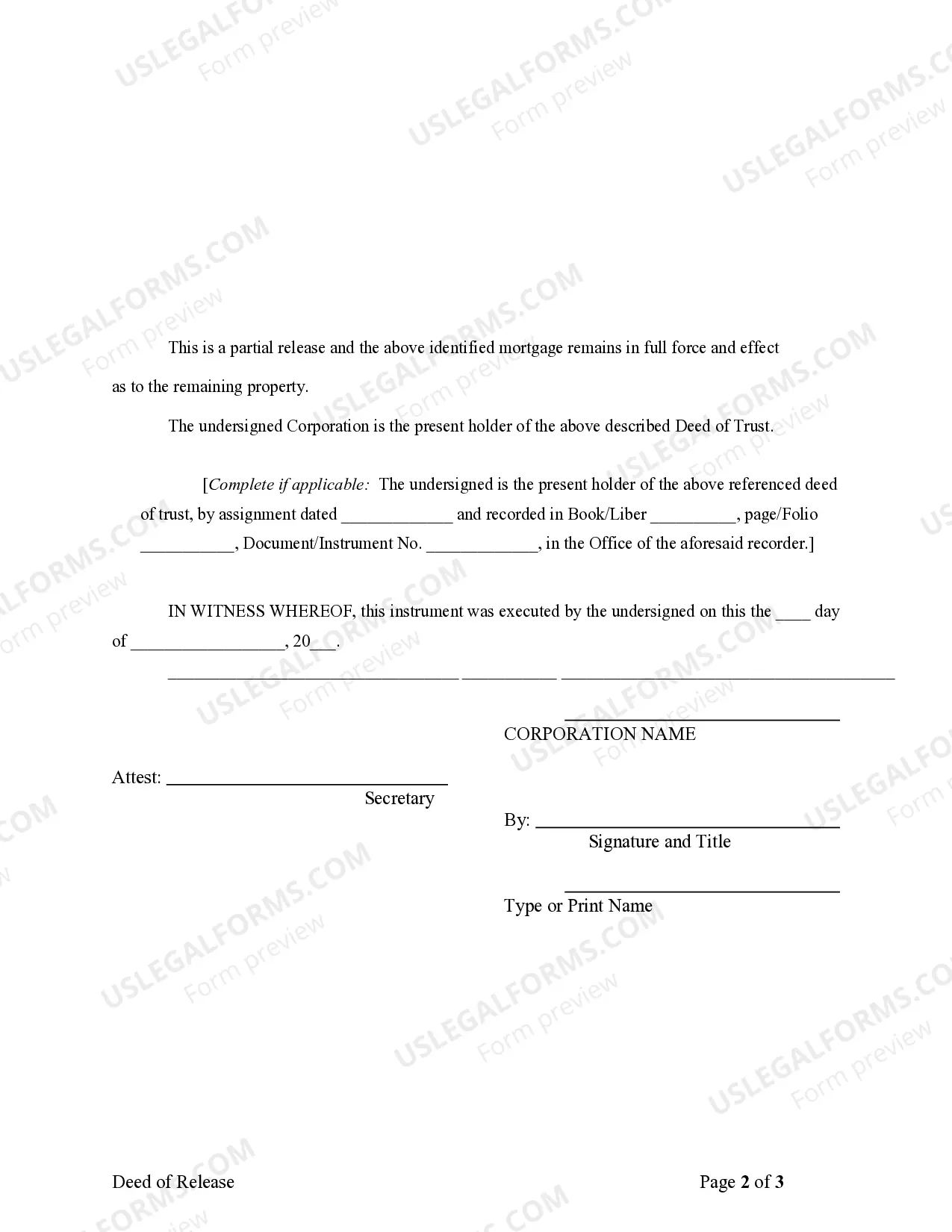
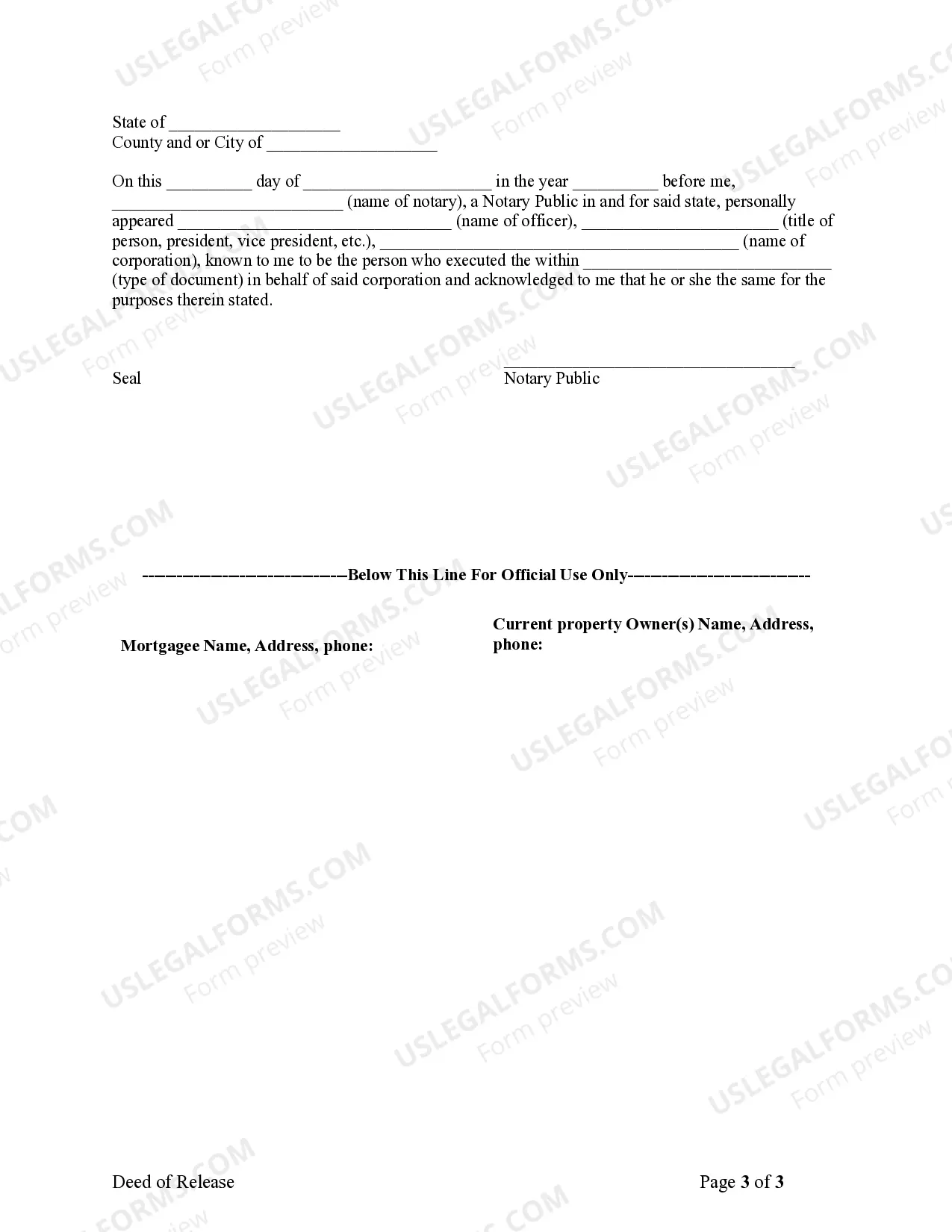
- Signature lines for all parties to confirm the release.
- Official use section for the mortgagee's name and contact information.


Common use cases
This form should be used when a corporation needs to release a specific portion of property from a mortgage or deed of trust. This situation may arise in various scenarios, such as selling part of an asset, restructuring property interests, or simplifying property management. It's important to ensure that the deed of trust is accurately reflected according to the corporation's business decisions.
Who can use this document
- Corporations holding a deed of trust on real estate.
- Trustees managing property interests.
- Mortgagors seeking to release specific portions of their property from a deed of trust.
How to complete this form
- Identify all parties involved, including the corporation, trustee, and mortgagor(s).
- Provide the original deed of trust's details, including the effective date and recording information.
- Clearly describe the property that is being released from the deed of trust.
- Have all parties sign and date the form.
- Attach any additional documentation, such as a legal description of the property, if necessary.
Notarization guidance
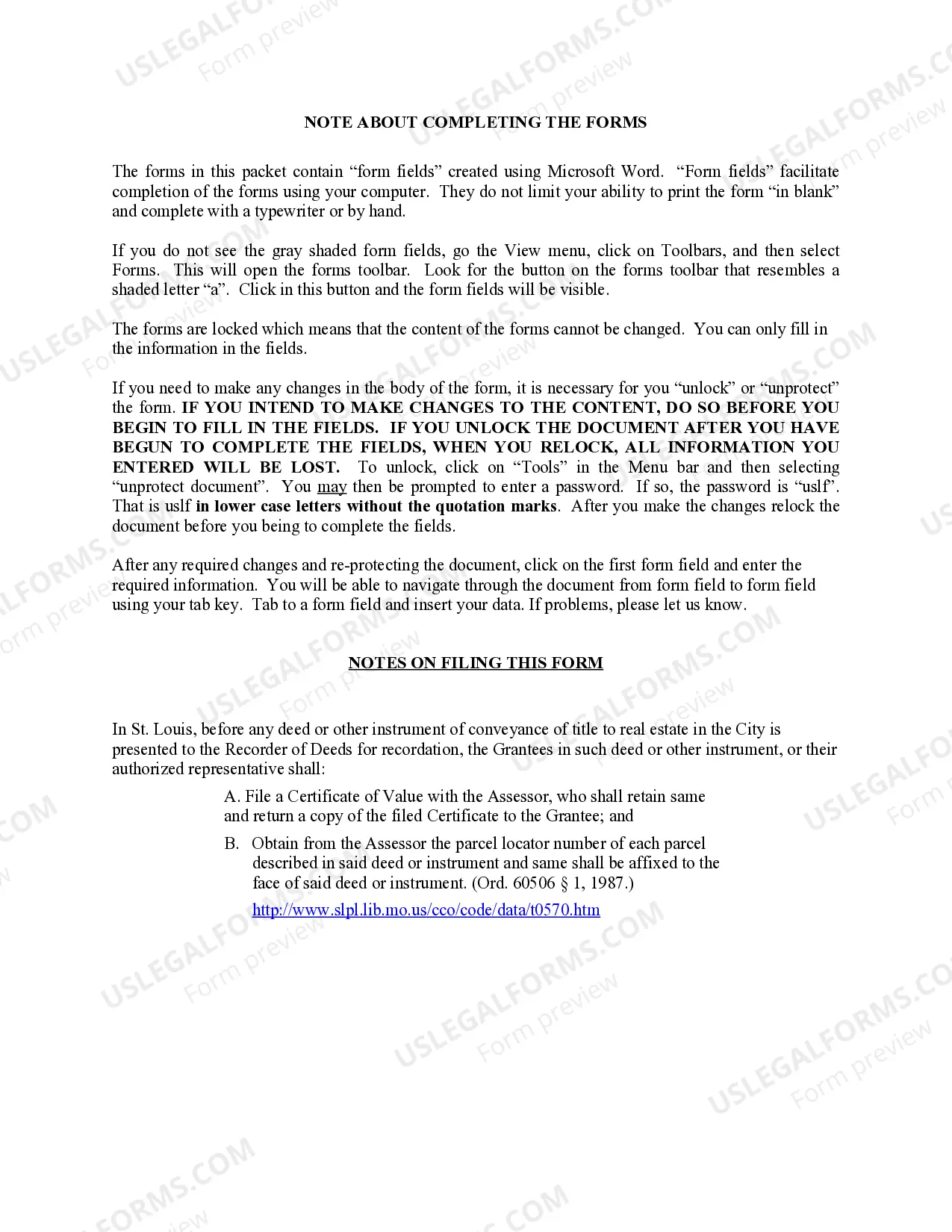
To make this form legally binding, it must be notarized. Our online notarization service, powered by Notarize, lets you verify and sign documents remotely through an encrypted video session.
Get your form ready online
Our built-in tools help you complete, sign, share, and store your documents in one place.
Make edits, fill in missing information, and update formatting in US Legal Forms—just like you would in MS Word.
Download a copy, print it, send it by email, or mail it via USPS—whatever works best for your next step.
Sign and collect signatures with our SignNow integration. Send to multiple recipients, set reminders, and more. Go Premium to unlock E-Sign.
If this form requires notarization, complete it online through a secure video call—no need to meet a notary in person or wait for an appointment.
We protect your documents and personal data by following strict security and privacy standards.

Make edits, fill in missing information, and update formatting in US Legal Forms—just like you would in MS Word.

Download a copy, print it, send it by email, or mail it via USPS—whatever works best for your next step.

Sign and collect signatures with our SignNow integration. Send to multiple recipients, set reminders, and more. Go Premium to unlock E-Sign.

If this form requires notarization, complete it online through a secure video call—no need to meet a notary in person or wait for an appointment.

We protect your documents and personal data by following strict security and privacy standards.
Mistakes to watch out for
- Failing to provide accurate property descriptions, leading to ambiguity.
- Not including all necessary signatures, which could invalidate the release.
- Leaving out critical information about the original deed of trust.
Why complete this form online
- Convenient and accessible, allowing for immediate downloads and completion.
- Editability through word processing software simplifies the form-filling process.
- Reliable forms created by licensed attorneys ensure compliance with legal standards.
Looking for another form?
Form popularity
FAQ
The decanting statute in Missouri permits trustees to modify the terms of a trust, similar to pouring one trust into another. This statute can provide corporations with flexibility in managing their trust assets and adapting to changing circumstances. When combined with a Missouri Partial Release of Property From Deed of Trust for Corporation, decanting can enhance your overall estate planning strategy, ensuring your assets remain aligned with your goals.
The Tod rule, or Transfer on Death deed rule, in Missouri allows property owners to designate beneficiaries who will receive their property upon their death, bypassing probate. This rule can be beneficial for corporations seeking to streamline asset transfer without the complexities of traditional inheritance. Understanding the Tod rule can complement your strategy when considering a Missouri Partial Release of Property From Deed of Trust for Corporation.
The release of a Deed of Trust occurs when the borrower successfully pays off the debt secured by the trust, thereby eliminating the lender's claim on the property. This process is essential for corporations that want to retain full ownership and control over their properties. Utilizing a Missouri Partial Release of Property From Deed of Trust for Corporation streamlines this process, ensuring that the release is executed correctly and efficiently.
Deed of Trust A deed of trust is the recorded document by which a lender takes a security interest in a property. It gives the lender the right to foreclose on the property if the borrower does not make payments on the loan.
A deed of release or release deed is a legal document that removes the claim of a person from an immovable property and transfers his/her share to the co-owner. The release deed procedure is executed in the sub-registrars office and both the parties are required to be present for signing it.
Parties need a deed of release to bring a dispute or agreement to an end.Alternatively, if you are an employer, you may want a departing employee to sign a deed of release to agree that they won't make any employment claims against you once they have gone.
In order to clear the Deed of Trust from the title to the property, a Deed of Reconveyance must be recorded with the Country Recorder or Recorder of Deeds. If the Trustee/Beneficiary fails to record a satisfaction within the set time limits, the Trustee/Beneficiary may be responsible for damages as set out by statute.
Deeds of trust are the most common instrument used in the financing of real estate purchases in Alaska, Arizona, California, Colorado, the District of Columbia, Idaho, Maryland, Mississippi, Missouri, Montana, Nebraska, Nevada, North Carolina, Oregon, Tennessee, Texas, Utah, Virginia, Washington, and West Virginia,
Missouri is accurately categorized as a deed of trust state, where this document is used in lieu of a mortgage. In practice, a deed of trust is essentially a mortgage, granting a security interest in certain real estate to the lender.
A deed of release literally releases the parties to a deal from previous obligations, such as payments under the term of a mortgage because the loan has been paid off. The lender holds the title to real property until the mortgage's terms have been satisfied when a deed of release is commonly entered into.