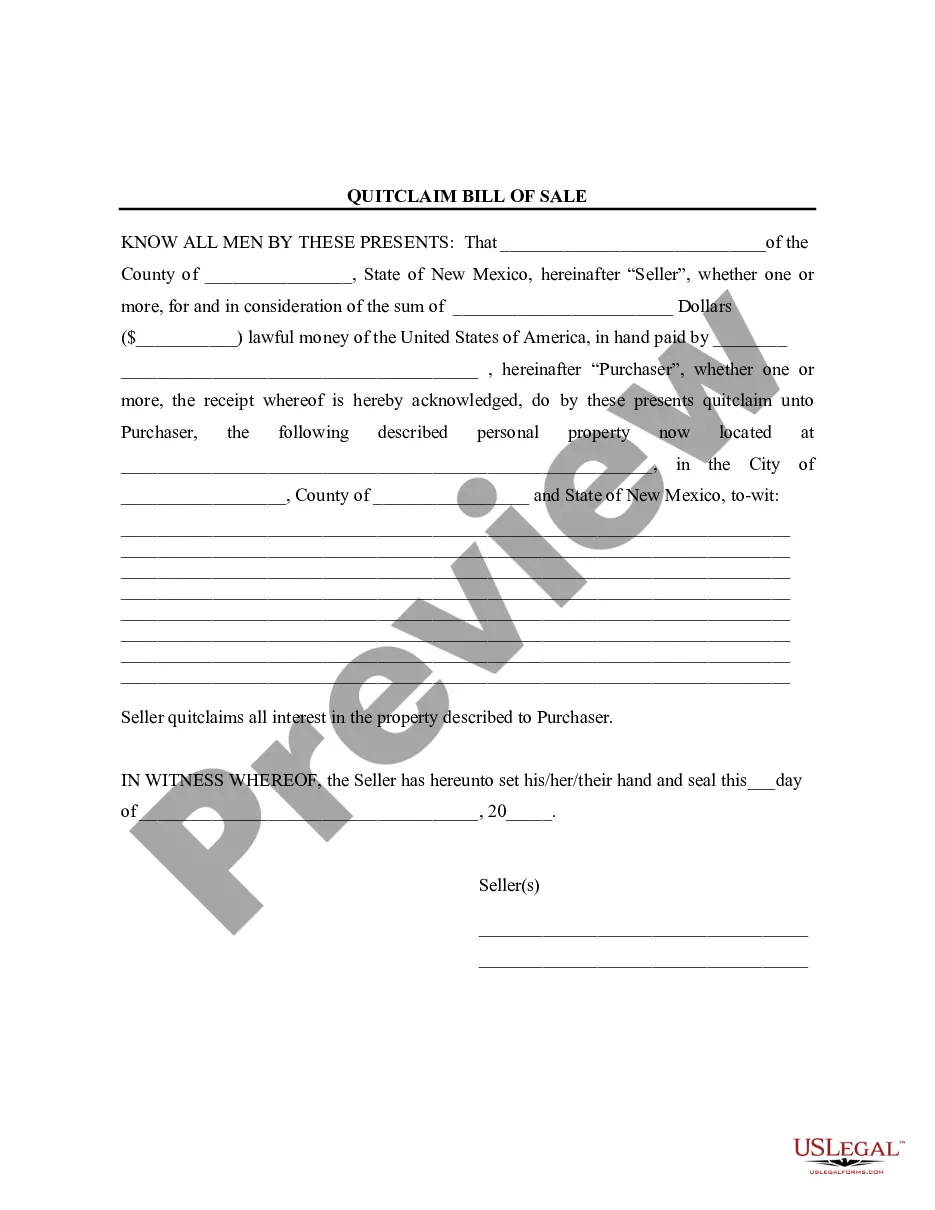
Maryland Agreed Written Termination of Lease by Landlord and Tenant
What is this form?
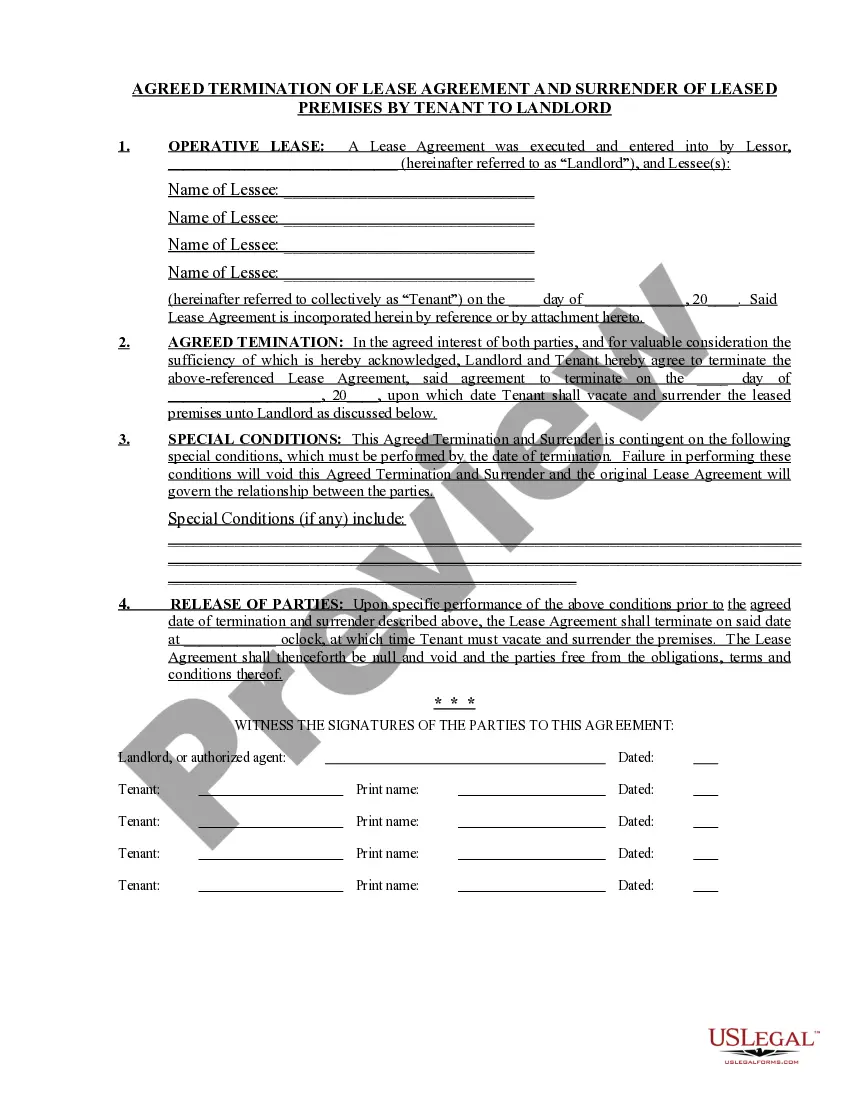
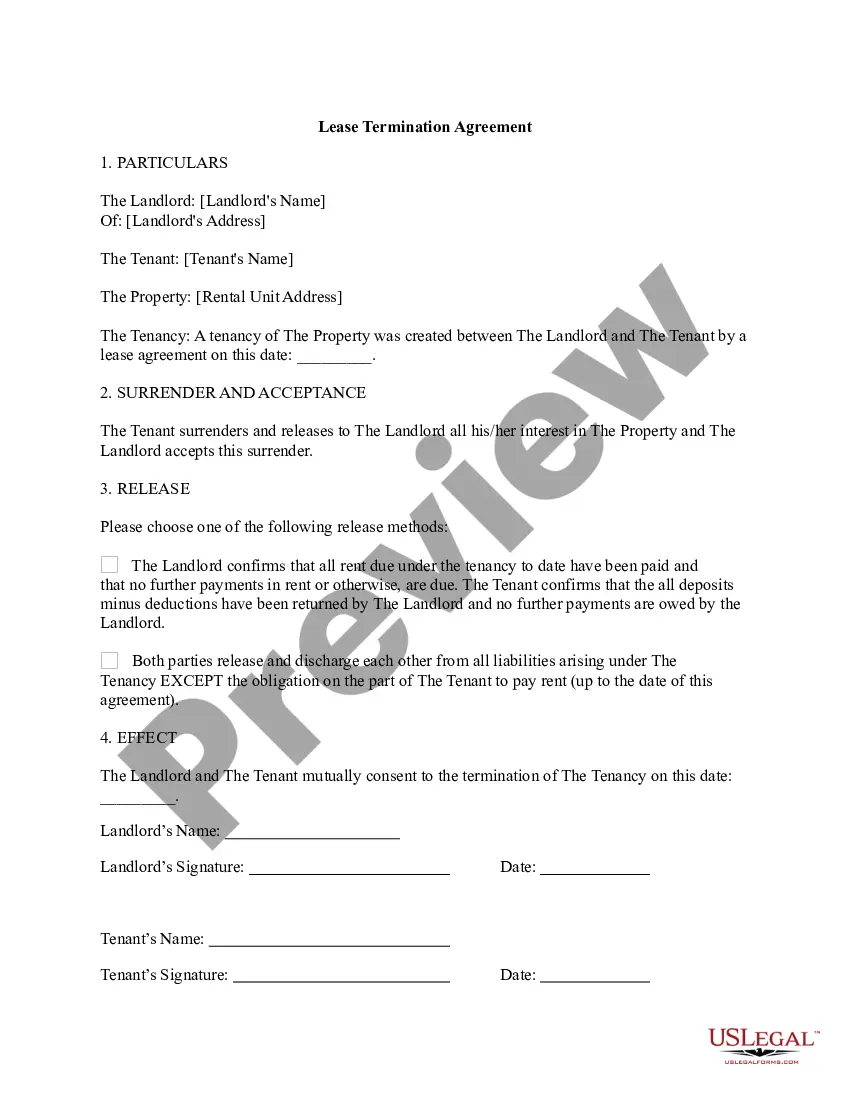
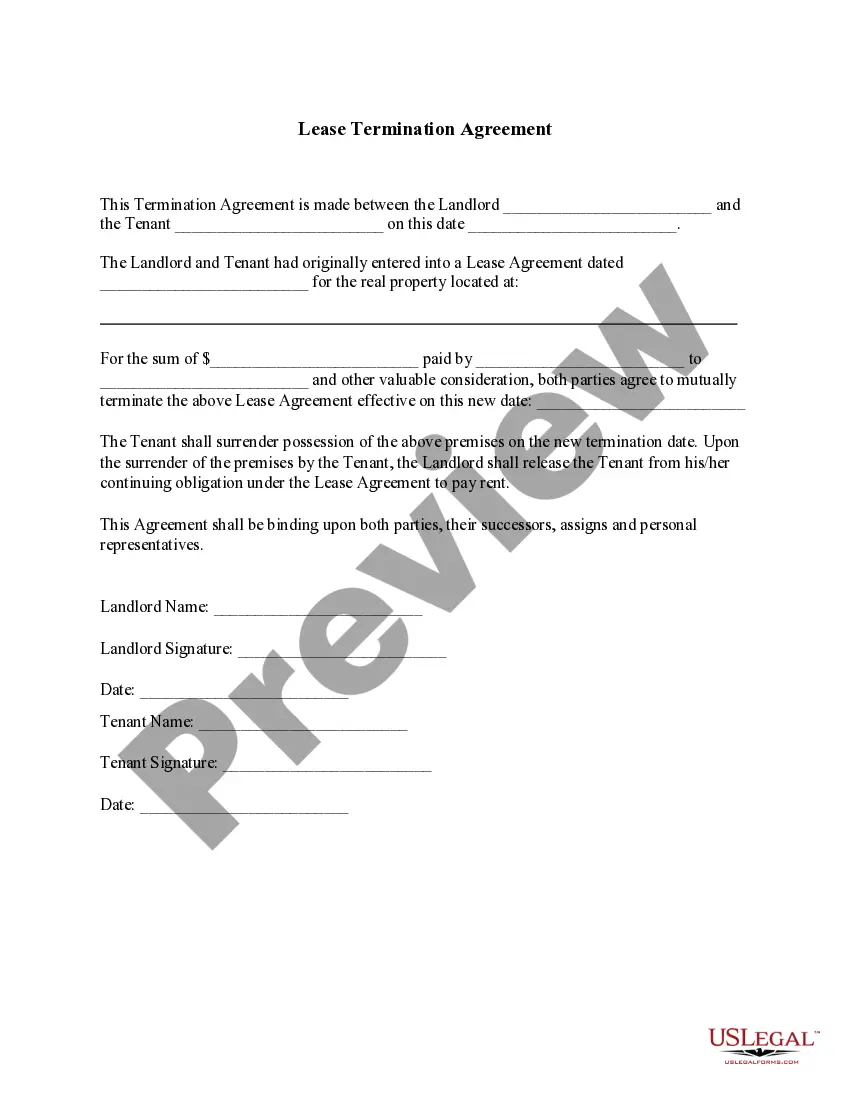
The Agreed Written Termination of Lease by Landlord and Tenant is a legal document that supports a mutually agreed-upon ending of a lease agreement. This form allows both the landlord and tenant to formally terminate their lease, ensuring that all parties are released from future liabilities. It is specifically designed to provide clarity and structure to the termination process, distinguishing it from other lease termination forms that may not require mutual consent.
Key parts of this document
- Parties involved: Identification of the landlord and tenant.
- Lease reference: Details of the original lease agreement.
- Termination agreement: A clear statement on the agreed termination date.
- Special conditions: Any specific terms that must be fulfilled before termination.
- Release clause: Confirmation that both parties will be released from obligations upon termination.
- Signature blocks: Spaces designated for landlord and tenant signatures and dates.

When to use this document
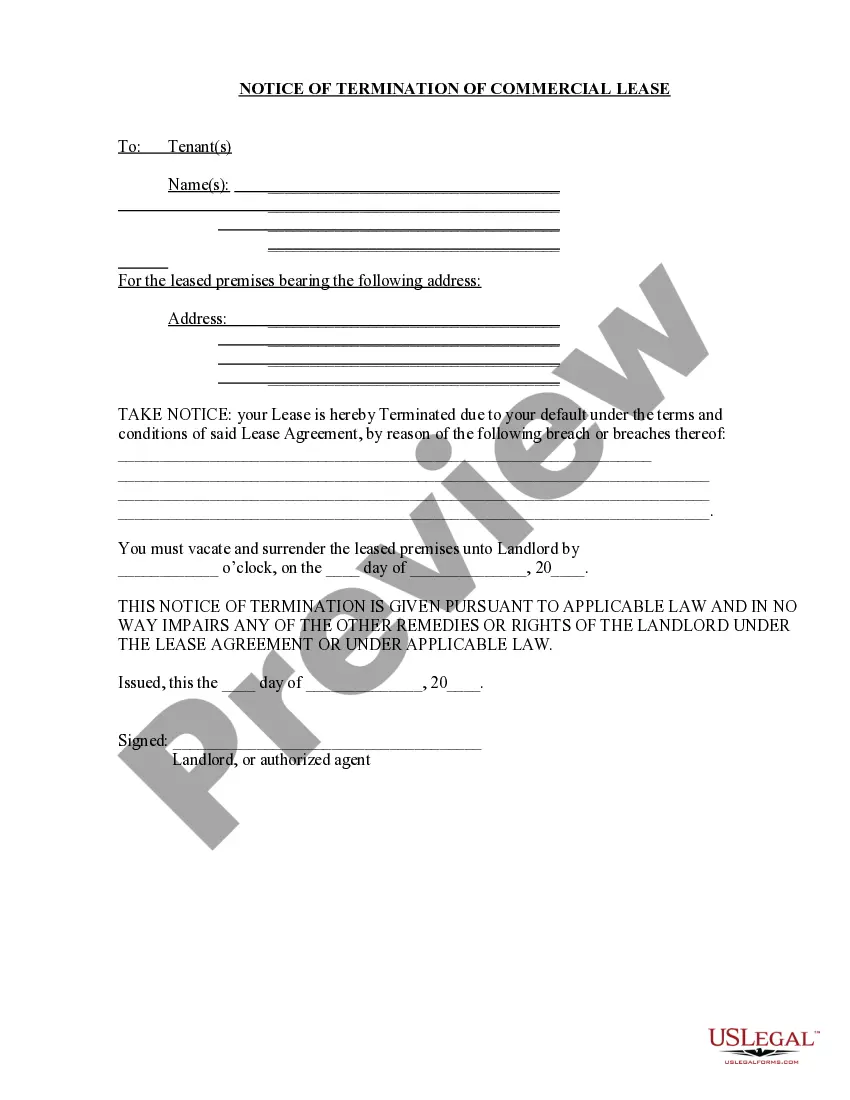
This form should be used when both the landlord and tenant have agreed to terminate their lease early. It is ideal for situations where either party wants to end the rental relationship amicably, ensuring that both parties understand their rights and responsibilities. Examples include mutual decisions due to personal circumstances, changes in financial situations, or property condition issues. Using this form formalizes the agreement and protects both parties legally.
Who this form is for
- Landlords seeking to officially end a lease with a tenant.
- Tenants wishing to resign from a rental agreement that both parties agree to terminate.
- Legal representatives of landlords or tenants involved in lease termination discussions.
- Anyone needing a clear, legal documentation of lease termination that specifies the terms agreed upon by both parties.
Completing this form step by step
- Identify the parties: Provide the full names of the landlord and tenant.
- Specify the property: Clearly identify the leased premises being surrendered.
- Enter lease details: Record the date of the original lease agreement.
- Fill in termination date: Specify the agreed date when termination takes effect.
- List special conditions: Outline any specific conditions that need to be met for the termination to be valid.
- Obtain signatures: Both parties must sign and date the form to finalize the agreement.
Notarization requirements for this form
Notarization is not commonly needed for this form. However, certain documents or local rules may make it necessary. Our notarization service, powered by Notarize, allows you to finalize it securely online anytime, day or night.
Get your form ready online
Our built-in tools help you complete, sign, share, and store your documents in one place.
Make edits, fill in missing information, and update formatting in US Legal Forms—just like you would in MS Word.
Download a copy, print it, send it by email, or mail it via USPS—whatever works best for your next step.
Sign and collect signatures with our SignNow integration. Send to multiple recipients, set reminders, and more. Go Premium to unlock E-Sign.
If this form requires notarization, complete it online through a secure video call—no need to meet a notary in person or wait for an appointment.
We protect your documents and personal data by following strict security and privacy standards.

Make edits, fill in missing information, and update formatting in US Legal Forms—just like you would in MS Word.

Download a copy, print it, send it by email, or mail it via USPS—whatever works best for your next step.

Sign and collect signatures with our SignNow integration. Send to multiple recipients, set reminders, and more. Go Premium to unlock E-Sign.

If this form requires notarization, complete it online through a secure video call—no need to meet a notary in person or wait for an appointment.

We protect your documents and personal data by following strict security and privacy standards.
Avoid these common issues
- Failing to include all required parties on the form.
- Not specifying the termination date clearly.
- Overlooking special conditions that must be fulfilled prior to termination.
- Neglecting to obtain signatures from all parties involved.
- Assuming the form is effective without verifying local legal requirements.
Why complete this form online
- Convenience: Download and complete the form at your own pace from anywhere.
- Editability: Easily fill in or modify the required fields to suit your needs.
- Reliability: Ensures that the form has been drafted by licensed attorneys for legal accuracy.
- Instant access: Quick availability without the need for in-person meetings or appointments.
Looking for another form?

Form popularity
FAQ
Your name, and the landlord's name and address. The date you're writing the letter. Informing the landlord you're breaking your lease early. The reason why you're breaking your lease. The building and apartment you're vacating. The date by which you're vacating.
While some jurisdictions may have provisions that allow consumers to change their minds with no consequences, generally there is no cooling-off period for leasing real property. Once the landlord and tenant sign a lease and a copy is delivered to the both parties, it becomes a valid contract.
Early Termination Clause. Some modern lease agreements may provide specific terms that would allow a tenant to terminate a lease early in exchange for a penalty fee. Active Military Duty. Unit is Uninhabitable. Landlord Harassment or Privacy Violation. Domestic Violence.
Under Maryland law, tenants have a right to freedom from housing discrimination, a right to certain security deposit protections, the right to freedom from landlord retaliation, and the right to be protected after domestic violence.
When you sign an auto lease, you may notice a sign in the finance manager's office stating, "There is no cooling off period." Unlike a mortgage or other loan, a car lease contract is final, and there is no three-day right to rescind your contract. You cannot turn in your keys and change your mind.
Gives the landlord 30 days' written notice either hand-delivered or by first-class mail prior to ending the lease, along with a copy of the court order.
Tenants sometimes want or need to break a lease. Breaking a lease means to end a lease before its termination date.Maryland law requires that a lease limit late fees to 5% of a monthly rental payment, but in areas where the law does not impose limits, the landlord and tenant are free to negotiate their own agreement.
You can help the situation a lot by providing as much notice as possible and writing a sincere letter to your landlord explaining why you need to leave early. Ideally you can offer your landlord a qualified replacement tenant, someone with good credit and excellent references, to sign a new lease with your landlord.