Maryland 30 Day Notice to Terminate for Breach of Lease - Nonresidential - Cure or Lease Terminates from Landlord to Tenant
About this form
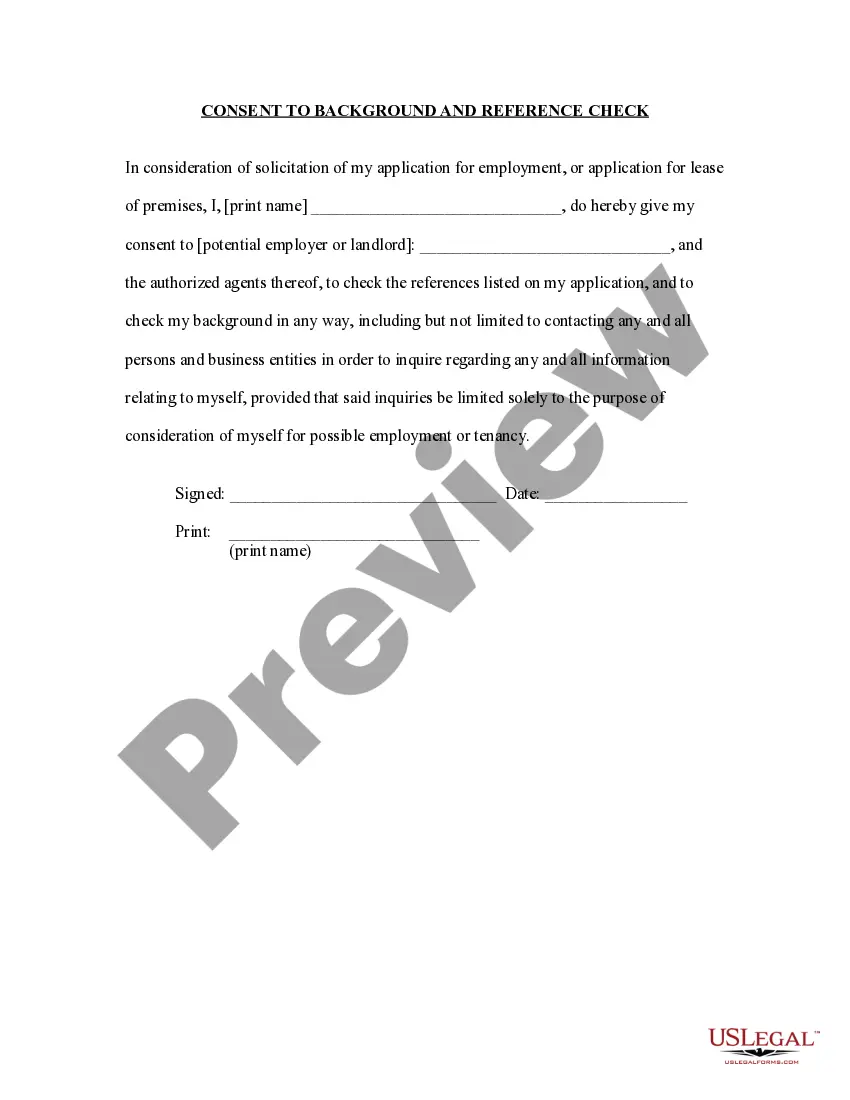
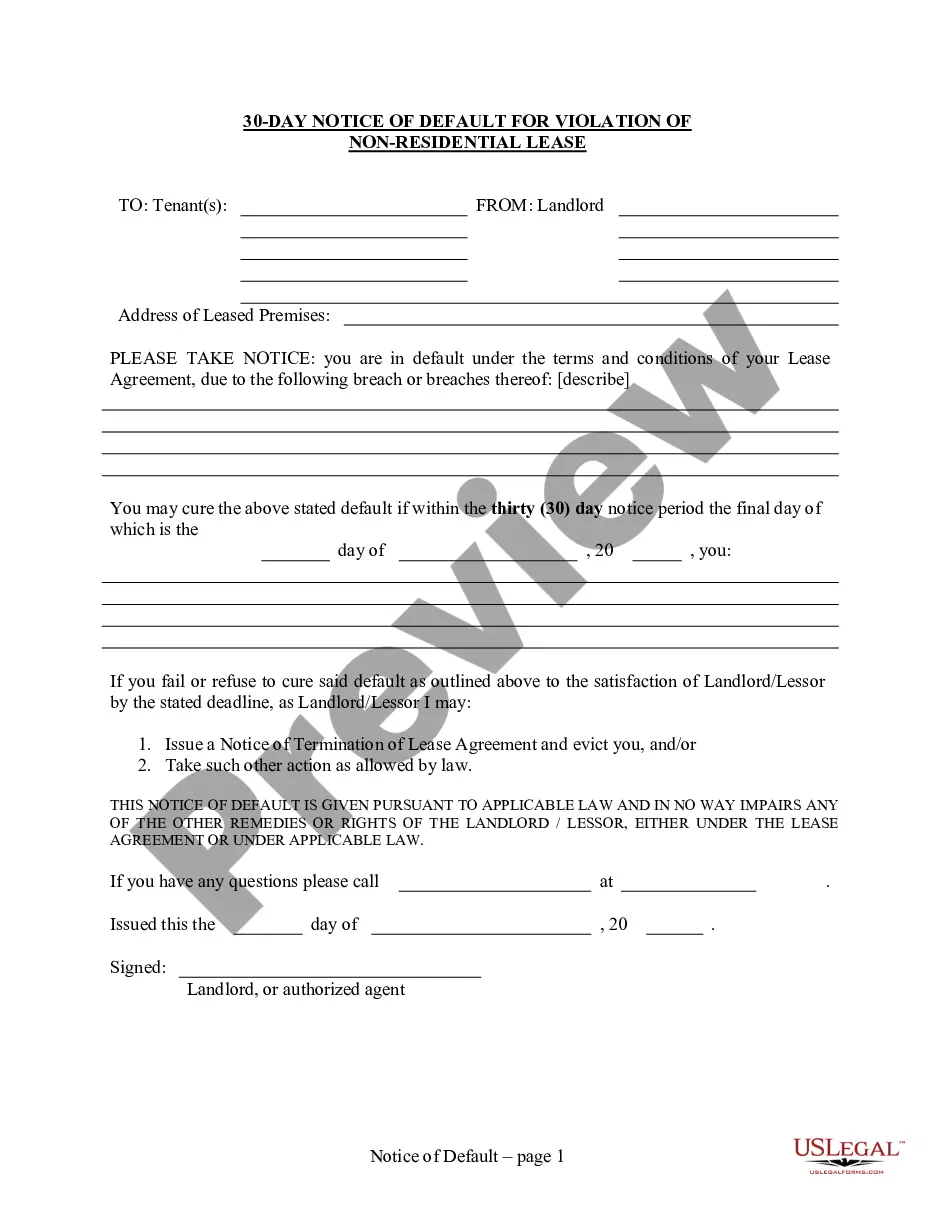
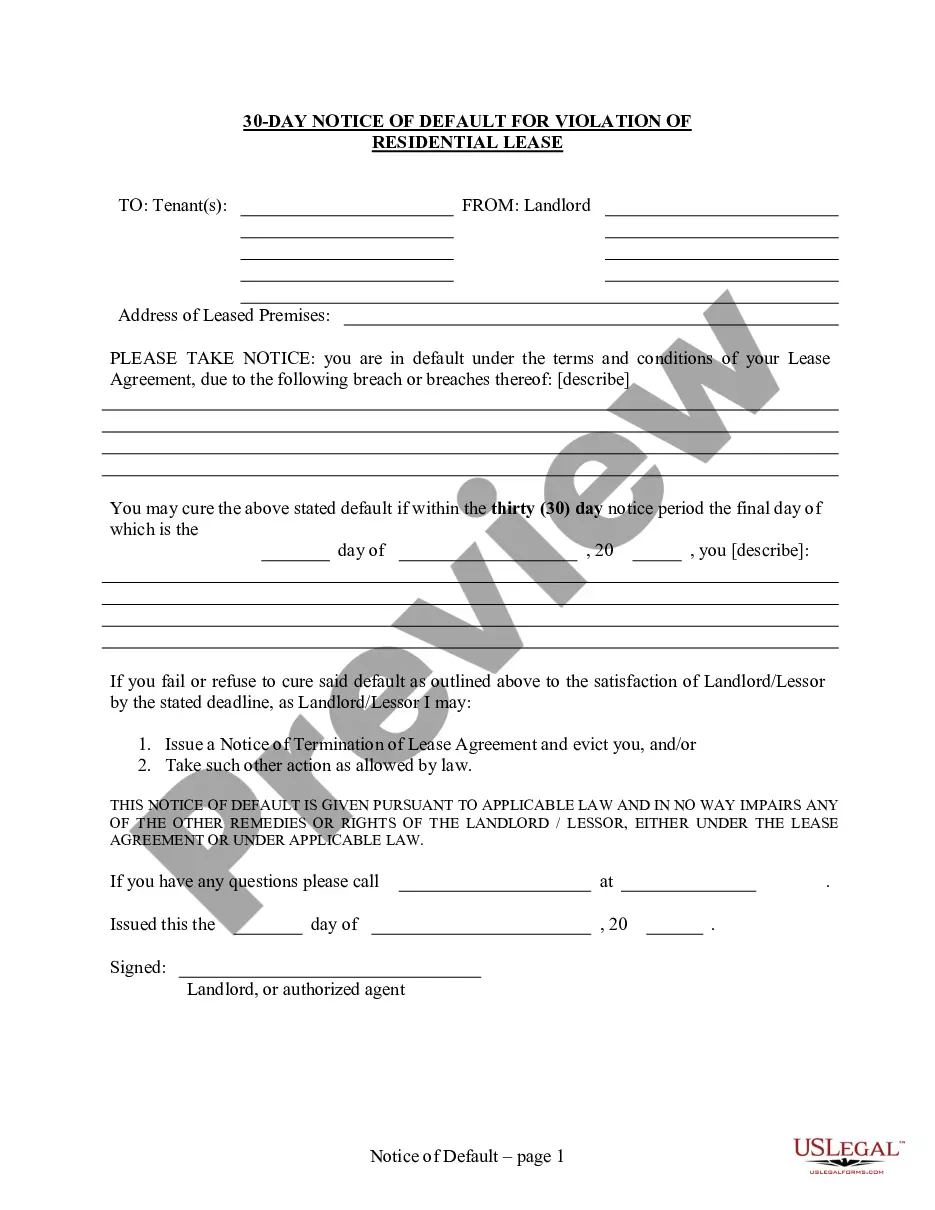
The 30 Day Notice to Terminate for Breach of Lease - Nonresidential is a formal document used by landlords to notify non-residential tenants of a breach of their lease agreement, excluding non-payment of rent. This notice specifies the breach and gives the tenant a 30-day period to remedy the issue. If the tenant fails to address the breach, the landlord may terminate the lease agreement.
Key parts of this document
- Identification of the landlord and tenant involved in the lease agreement.
- Address of the leased premises to which the notice applies.
- Detailed description of the specific lease breach.
- Deadline for the tenant to cure the breach, set at thirty (30) days.
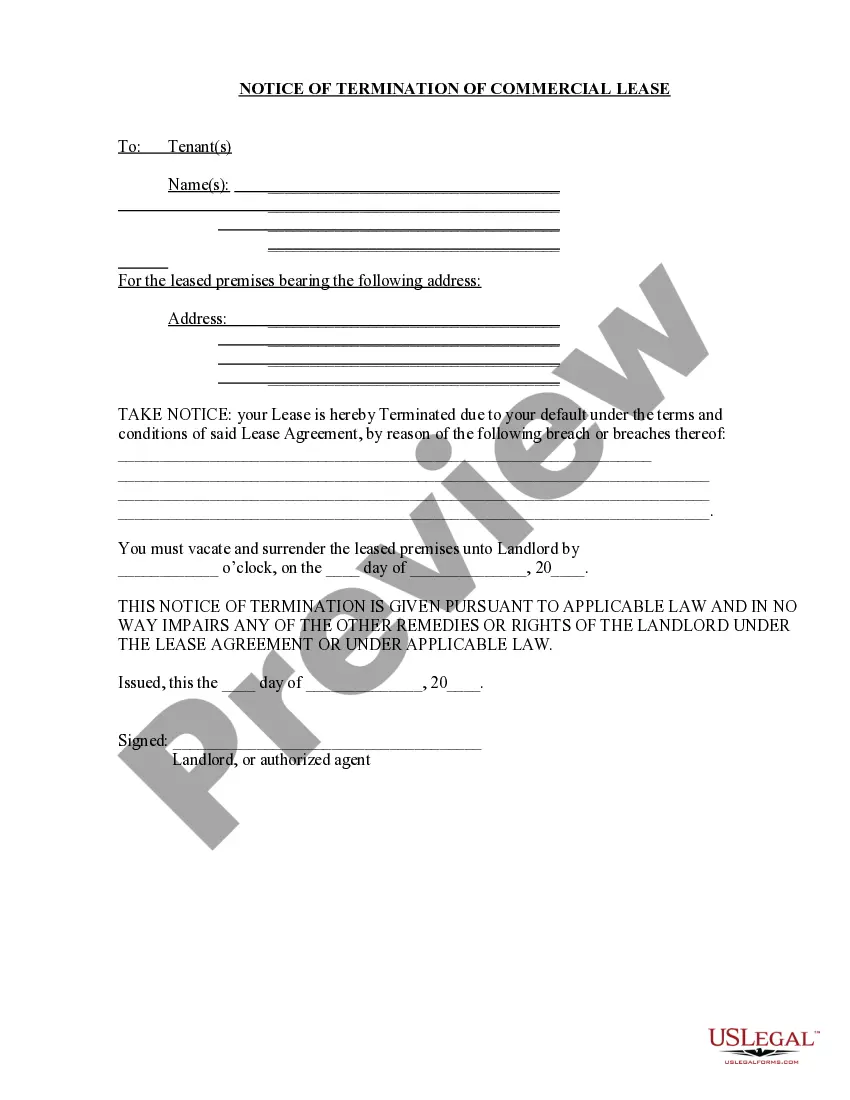
- Consequences for failing to remedy the breach, including lease termination.
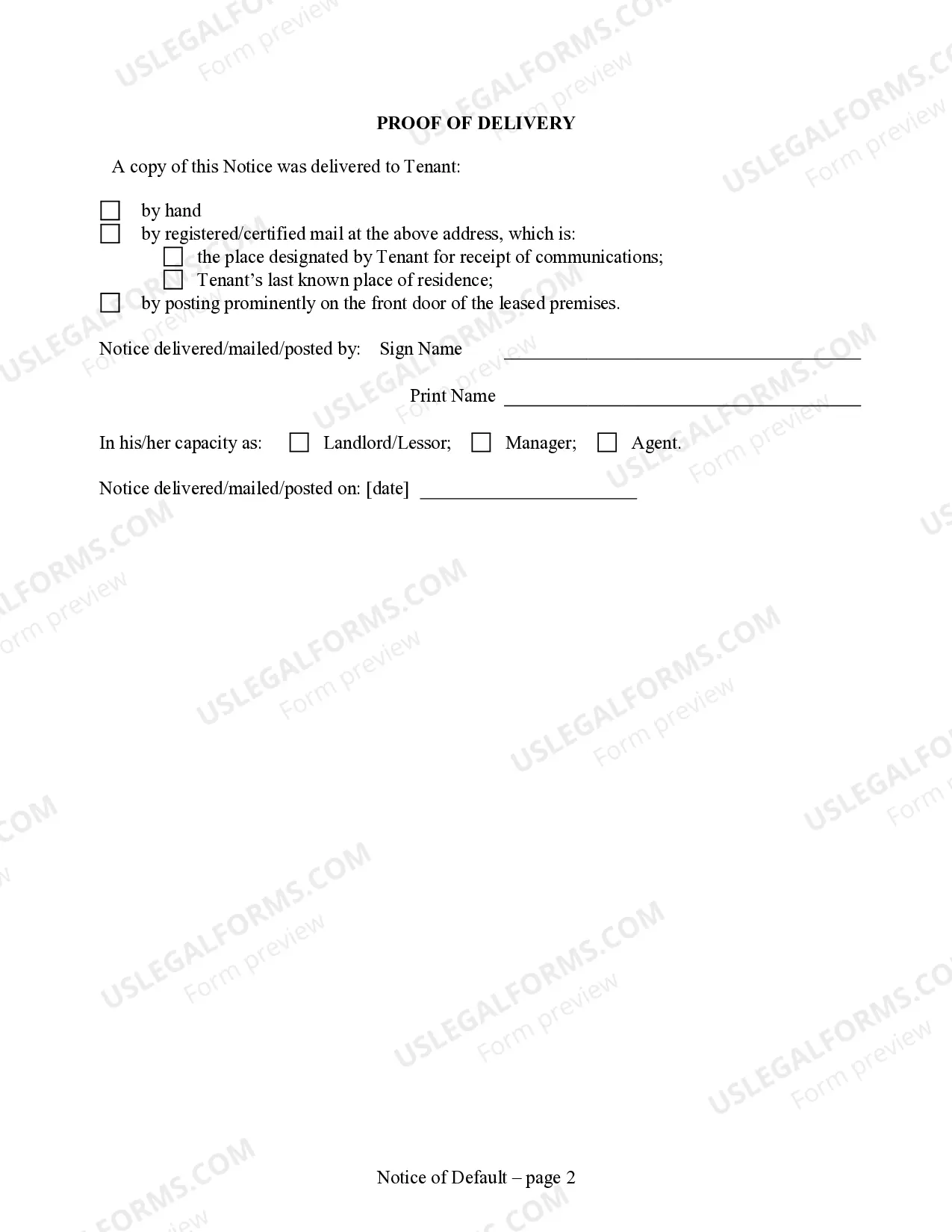
- Proof of delivery methods for the notice to the tenant.


When this form is needed
This form should be used when a landlord identifies a breach in a lease agreement for a non-residential property, such as a commercial space, industrial property, or similar locations, and wishes to formally notify the tenant. This notice is particularly important when the breach is not related to the non-payment of rent and allows the tenant a chance to correct the issue within the specified timeframe.
Who should use this form
- Landlords of non-residential properties looking to address lease violations.
- Property managers acting on behalf of landlords regarding lease agreements.
- Commercial landlords managing industrial or business leases.
- Businesses leasing space who need to understand their responsibilities under the lease agreement.
Instructions for completing this form
- Identify the parties: Enter the names of the landlord and tenant.
- Specify the property: Clearly provide the address of the leased premises.
- Description of the breach: Detail the specific issue causing the breach.
- Enter the date and deadline: State the notice issuance date and the final day to remedy the breach.
- Add signatures: Ensure the landlord or their authorized agent signs the notice.
Does this form need to be notarized?
This form does not typically require notarization unless specified by local law.
Get your form ready online
Our built-in tools help you complete, sign, share, and store your documents in one place.
Make edits, fill in missing information, and update formatting in US Legal Forms—just like you would in MS Word.
Download a copy, print it, send it by email, or mail it via USPS—whatever works best for your next step.
Sign and collect signatures with our SignNow integration. Send to multiple recipients, set reminders, and more. Go Premium to unlock E-Sign.
If this form requires notarization, complete it online through a secure video call—no need to meet a notary in person or wait for an appointment.
We protect your documents and personal data by following strict security and privacy standards.

Make edits, fill in missing information, and update formatting in US Legal Forms—just like you would in MS Word.

Download a copy, print it, send it by email, or mail it via USPS—whatever works best for your next step.

Sign and collect signatures with our SignNow integration. Send to multiple recipients, set reminders, and more. Go Premium to unlock E-Sign.

If this form requires notarization, complete it online through a secure video call—no need to meet a notary in person or wait for an appointment.

We protect your documents and personal data by following strict security and privacy standards.
Avoid these common issues
- Failing to provide a clear description of the breach.
- Not delivering the notice properly to the tenant.
- Missing the deadline for tenant correction.
- Not including signatures or relevant dates on the document.
Why use this form online
- Convenience in accessing and downloading the form at any time.
- Editability allows landlords to customize the notice as needed.
- Reliability of legally drafted templates ensures compliance with applicable laws.
Legal use & context
- This form provides a legal basis for landlords to enforce lease terms.
- The notice protects landlords' rights while giving tenants an opportunity to cure the breach.
- Understanding the implications of this notice is crucial for both landlords and tenants to avoid potential disputes.
Main things to remember
- The notice gives tenants 30 days to remedy a lease breach before termination.
- Clarity in the breach context and consequences is essential.
- Proper delivery of the notice is fundamental to enforceability.
Looking for another form?
Form popularity
FAQ
Dear (Name of landlord or manager), This letter constitutes my written (number of days' notice that you need to give based on your lease agreement)-day notice that I will be moving out of my apartment on (date), the end of my current lease. I am leaving because (new job, rent increase, etc.)
Provide the Tenant a Notice of Termination. File a Complaint in District Court. Summons is Issued by the Court. Attend the Court Hearing. Removal Through a Warrant of Restitution.
Assuming you are paying on the first of the month, your 30-day notice should be given 30 days before and specify the first of the month as the date you are out. For example, if you want to vacate in May, draft and deliver the notice before April 1 and list April 1 as the date the 30-day notice takes effect.
Give the landlord/agent a written termination notice and vacate move out and return the keys according to your notice, and/or. apply to the NSW Civil & Administrative Tribunal (NCAT) for a termination order.
Dear your landlord or property manager's name, I am writing to inform you I will be vacating my rental unit on date you intend to vacate. This letter meets the 30-day notice requirement outlined in my lease agreement.
The date you're submitting your notice. The date you're moving. Information on your current home the address and the landlord's name. A statement declaring that you intend to leave the home. A straightforward statement that you're providing this letter, 30 days out, per your lease agreement.
Components of the Letter Include your name and the rental address, and date the letter. Don't date it and hold onto it; date it for the day you are giving it to the landlord to start the 60 days. Address the letter to the landlord with a subject line of "60-Day Notice to Vacate."
A lease termination letter, or end of lease letter, is a notice provided to the tenant by the landlord to inform them that the lease will not continue after the set end date. As the end of your lease term approaches, you and your tenant may choose to renew for another term or end the lease agreement.
Your name, and the landlord's name and address. The date you're writing the letter. Informing the landlord you're breaking your lease early. The reason why you're breaking your lease. The building and apartment you're vacating. The date by which you're vacating.