Massachusetts 90 Day Notice to Terminate Year to Year Lease from Landlord to Tenant
What this document covers
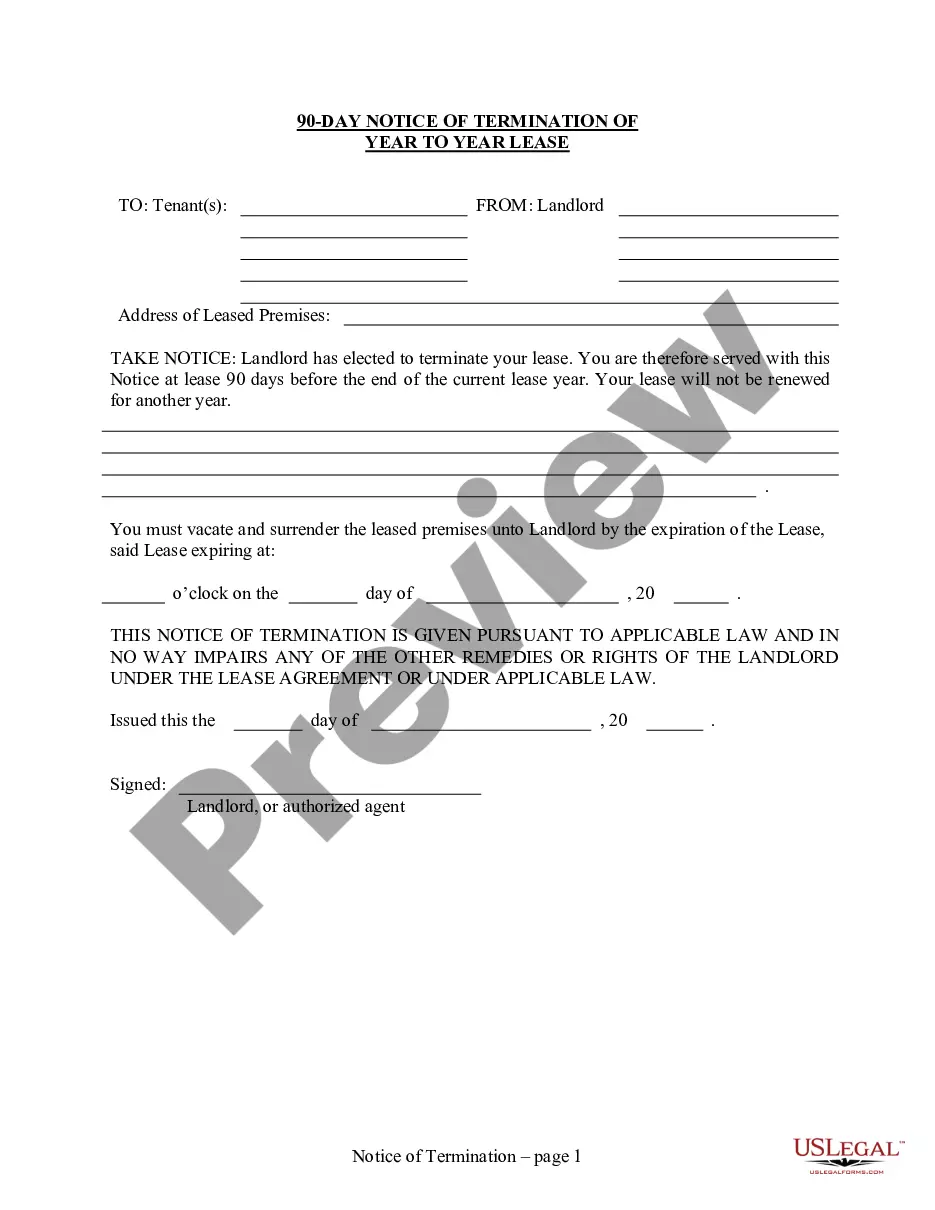
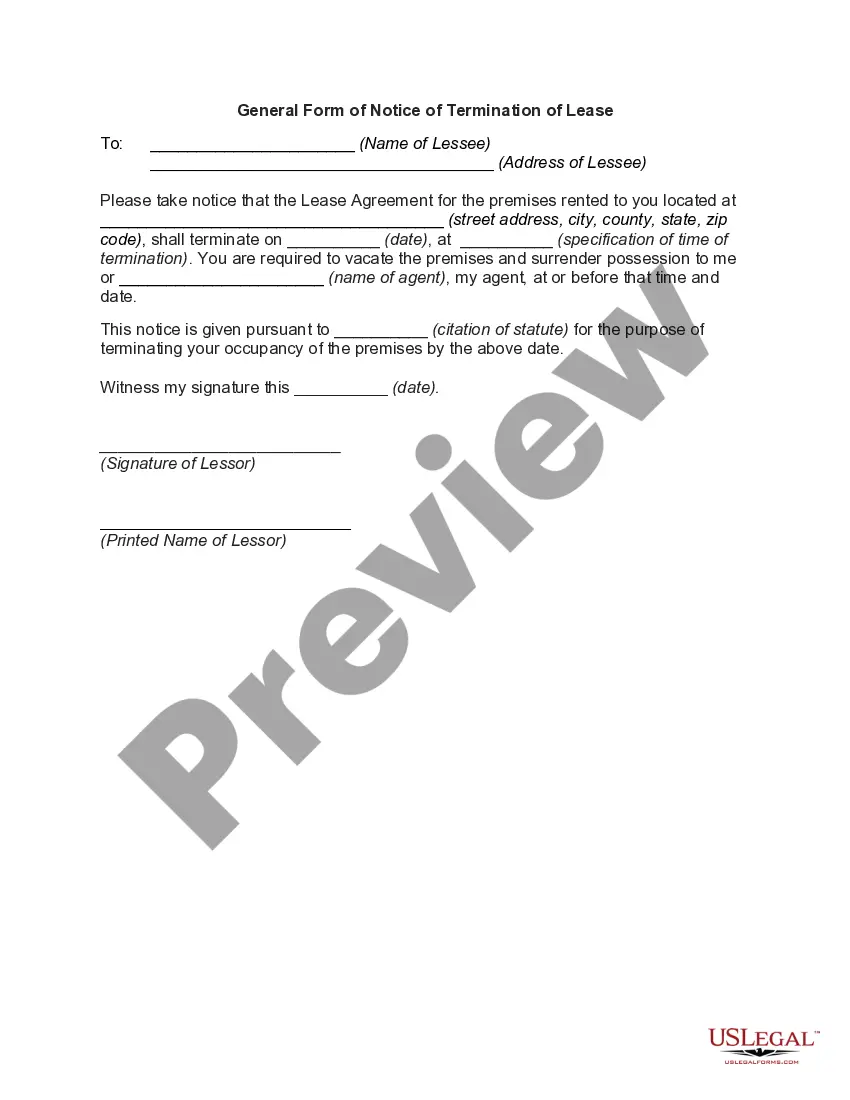
The 90 Day Notice to Terminate Year to Year Lease from Landlord to Tenant is a legal document used by landlords to formally notify tenants of the termination of a year-to-year lease. This notice is essential for ensuring compliance with state laws regarding lease termination, as it outlines the landlord's intent not to renew the lease without requiring a specific reason. The document clearly states that the tenant must vacate the premises by the end of the lease term, providing a mandatory 90-day notice period.
Key components of this form
- Identification of the landlord and tenant involved in the lease agreement.
- Address of the leased premises being terminated.
- Statement of termination from the landlord, specifying the end date of the lease.
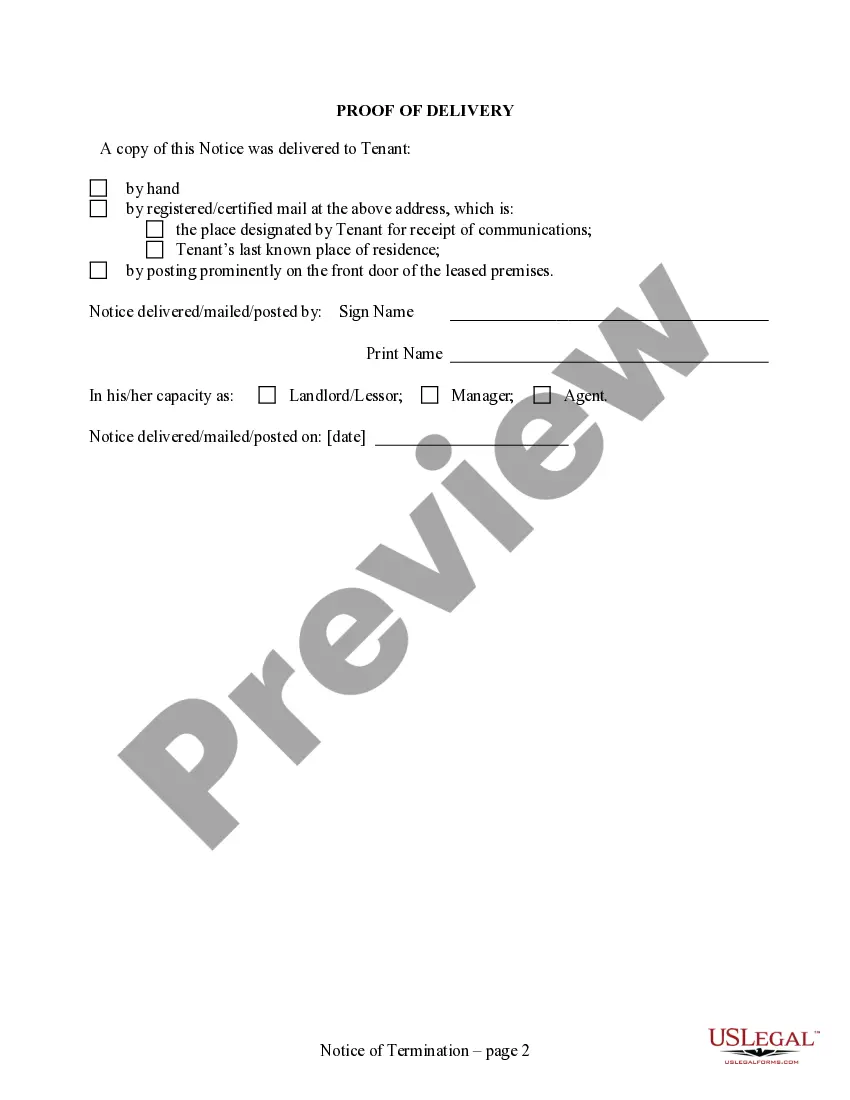
- Proof of delivery section for documenting how notice was served to the tenant.
- Signature lines for the landlord or authorized agent, affirming the notice is valid.

Common use cases
This form should be used when a landlord wishes to terminate a year-to-year lease, typically when they want to end the rental agreement without renewing it for another year. Use this notice when the landlord has decided to vacate the premises for personal reasons, property sale, or simply change in rental management. It is also needed to ensure tenants receive adequate notice as required by law.
Intended users of this form
- Landlords who have tenants under a year-to-year lease agreement.
- Property managers acting on behalf of landlords.
- Individuals or entities looking to legally terminate a rental lease.
Steps to complete this form
- Identify and enter the names of the landlord and tenant.
- Specify the address of the leased premises.
- Complete the statement of termination, including the final date the tenant must vacate.
- Sign the document, including the date of signing.
- Choose the method of delivery (hand, certified mail, or posting) and document it accordingly.
Does this form need to be notarized?
This form does not typically require notarization to be legally valid. However, some jurisdictions or document types may still require it. US Legal Forms provides secure online notarization powered by Notarize, available 24/7 for added convenience.
Get your form ready online
Our built-in tools help you complete, sign, share, and store your documents in one place.
Make edits, fill in missing information, and update formatting in US Legal Forms—just like you would in MS Word.
Download a copy, print it, send it by email, or mail it via USPS—whatever works best for your next step.
Sign and collect signatures with our SignNow integration. Send to multiple recipients, set reminders, and more. Go Premium to unlock E-Sign.
If this form requires notarization, complete it online through a secure video call—no need to meet a notary in person or wait for an appointment.
We protect your documents and personal data by following strict security and privacy standards.

Make edits, fill in missing information, and update formatting in US Legal Forms—just like you would in MS Word.

Download a copy, print it, send it by email, or mail it via USPS—whatever works best for your next step.

Sign and collect signatures with our SignNow integration. Send to multiple recipients, set reminders, and more. Go Premium to unlock E-Sign.

If this form requires notarization, complete it online through a secure video call—no need to meet a notary in person or wait for an appointment.

We protect your documents and personal data by following strict security and privacy standards.
Common mistakes to avoid
- Failing to provide the required 90 days' notice before the lease year ends.
- Not delivering the notice correctly, as outlined in the proof of delivery section.
- Inadvertently omitting signatures or dating the form incorrectly.
Advantages of online completion
- Quick and easy access to a legally compliant template.
- Editable fields allow landlords to customize the form as needed.
- Assurance of using attorney-drafted content for legal accuracy.
Legal use & context
- This form serves as a formal notification to tenants, providing them with adequate time to find alternate housing.
- Failure to properly execute this notice can lead to disputes or complications in tenancy termination.
What to keep in mind
- The form allows landlords to terminate year-to-year leases legally.
- It requires a minimum of 90 days' notice to tenants.
- Proper delivery and documentation are essential for the validity of the termination notice.
Looking for another form?
Form popularity
FAQ
The above are some of the many factors that help answer how long an eviction in Massachusetts take. Generally, an uncontested eviction will take between one to two months. A contested eviction, with requests for discovery and a jury trial, can take anywhere from three to six months.
Tenants without Leases.Until individual cities or the state changes the law, no fault evictions, where a landlord is evicting a tenant who has done nothing wrong, are lawful in Massachusetts. A landlord may also evict tenants without leases for non-payment of rent and for using the apartment for illegal purposes.
Tenant Rights to Withhold Rent in MassachusettsTenants may withhold rent or exercise the right to repair and deduct if a landlord fails to take care of important repairs, such as a broken heater. For specifics, see Massachusetts Tenant Rights to Withhold Rent or Repair and Deduct.
In Colorado, evictions are sometimes referred to as forcible entry & detainer (FED). Before you can file for eviction, you must generally provide 10 days' notice (increased from 3 days prior) for tenants to correct a deficiency or leave the property, except in certain circumstances.
When no such lease termination clause exists, a tenant should send a certified letter with return receipt (obtained at your local post office) to the landlord or assigns stating the reason for wanting to break the lease and detailing an expected move-out date, along with any pertinent documentation.
A landlord may legally terminate a lease if the tenant is in violation of the terms of the lease or has broken the law. The violation by the tenant must be significant, such as late rent, or having a dog despite a prohibition against pets in the premises.
The law requires tenants at will to give landlords written notice that they are moving out at least one full rental period or 30 days (whichever is longer) before moving.
Your landlord can end the let at any time by serving a written 'notice to quit'. The notice period will depend on the tenancy or agreement, but is often at least 4 weeks.
1 month's notice if your tenancy runs from month to month. 4 weeks' notice if your tenancy runs from week to week. If you live with your landlord. You don't have to give a set amount of notice (unless your tenancy agreement says otherwise).