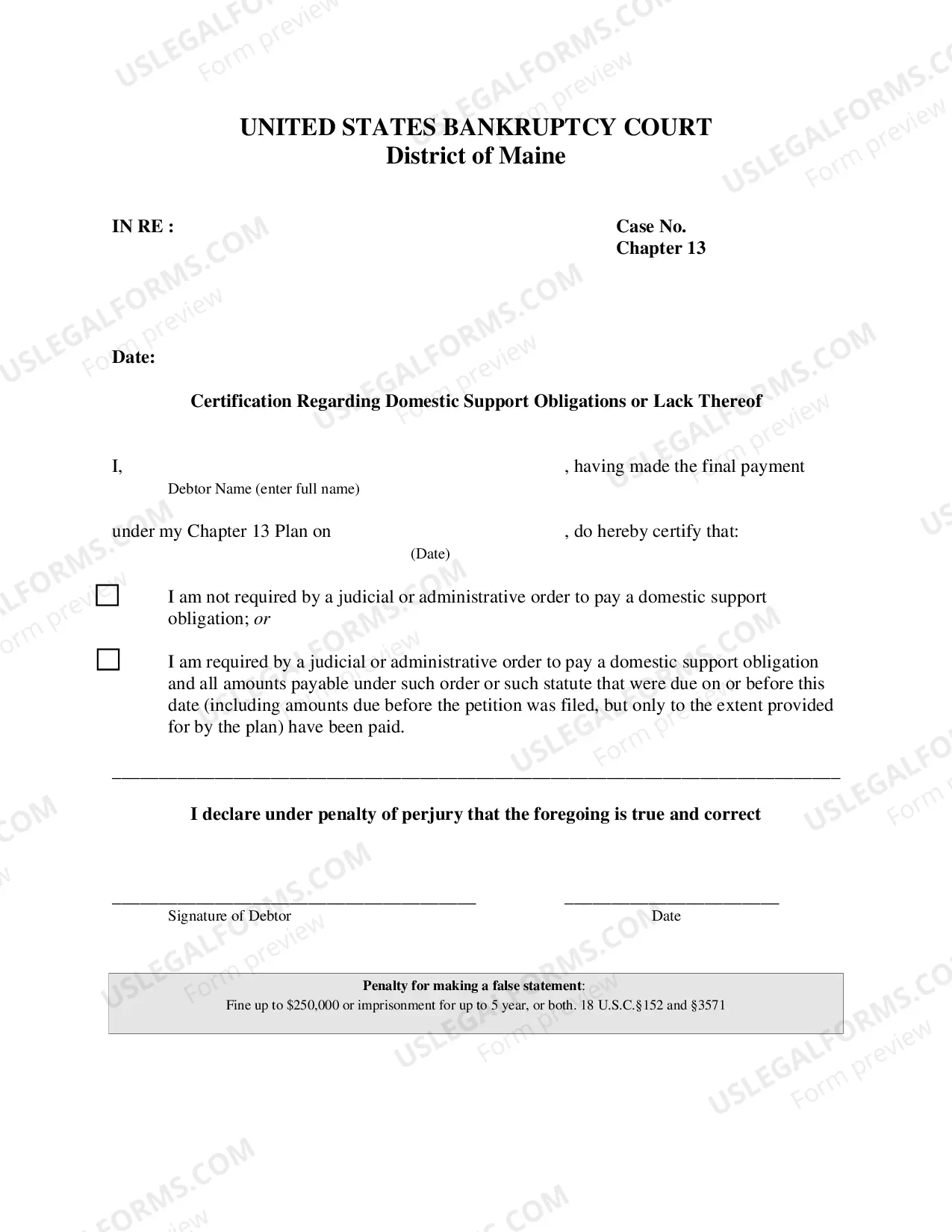
Kentucky Renunciation and Disclaimer of Joint Tenant or Tenancy Interest
What this document covers
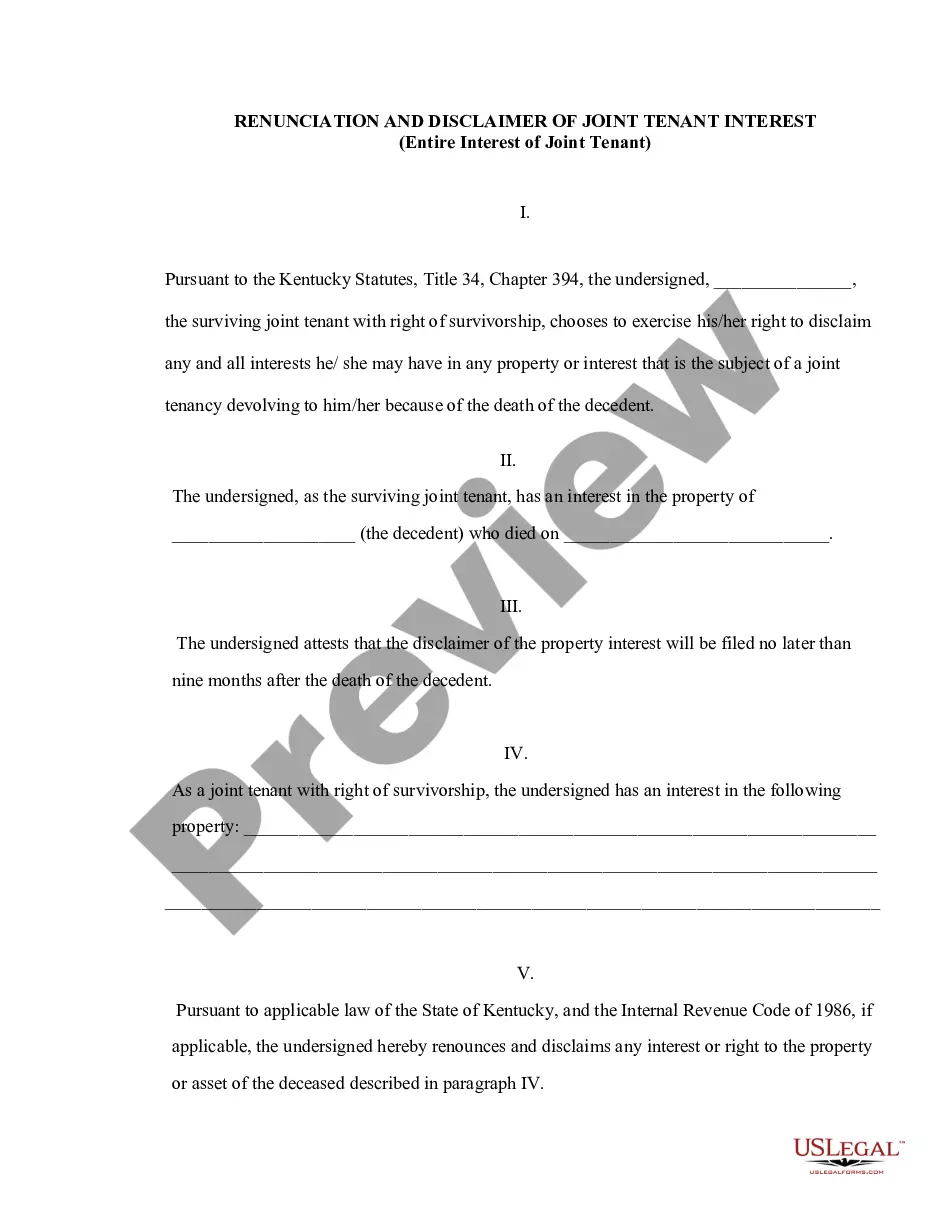
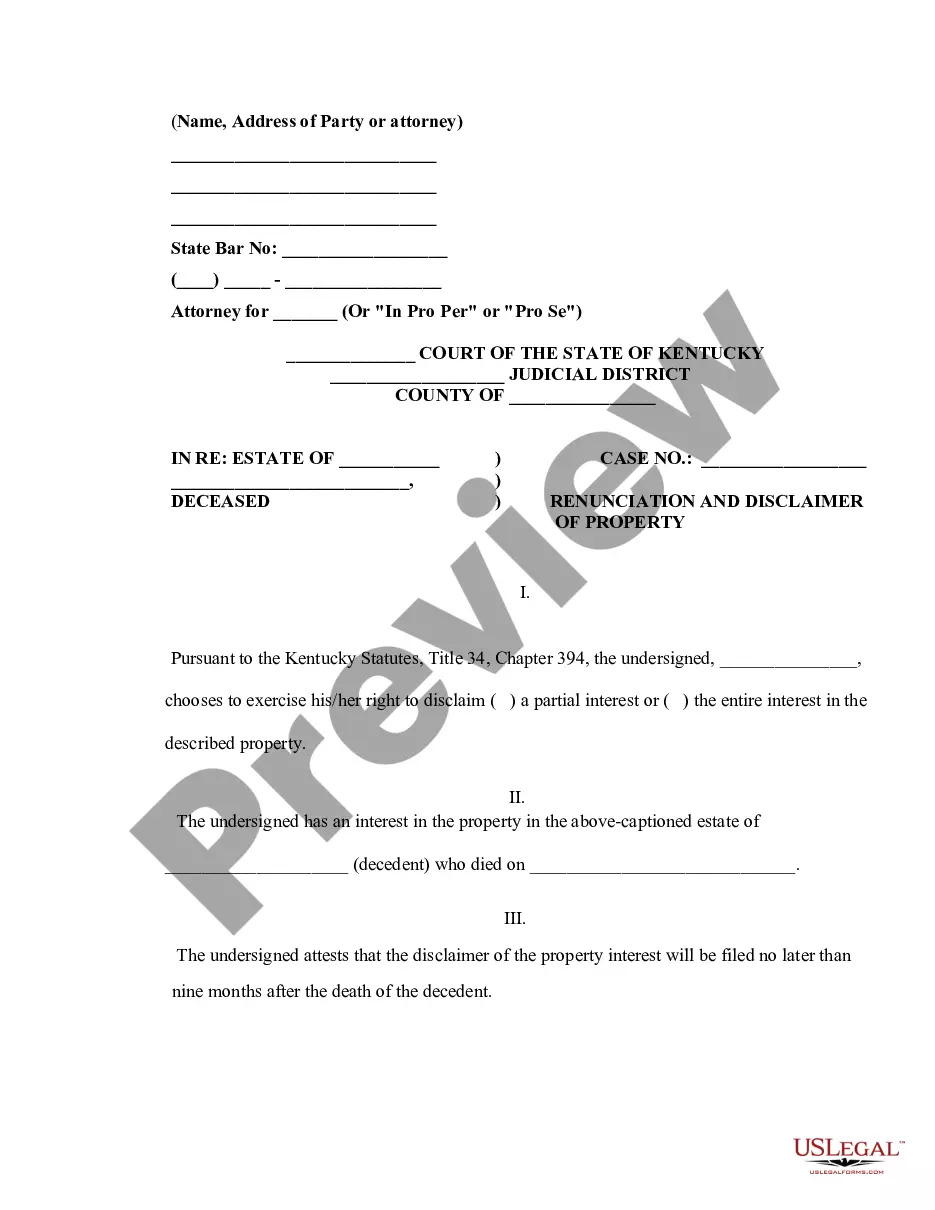
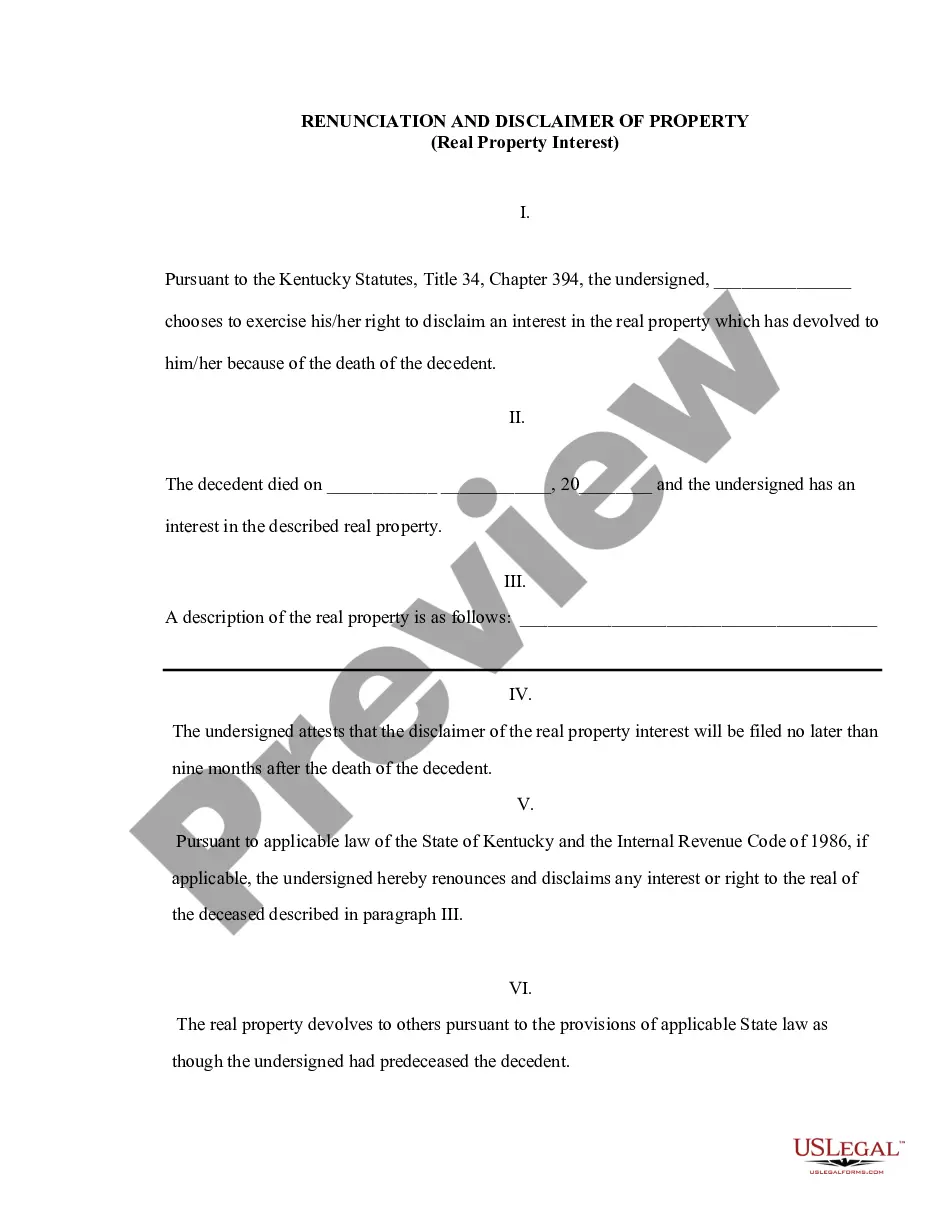
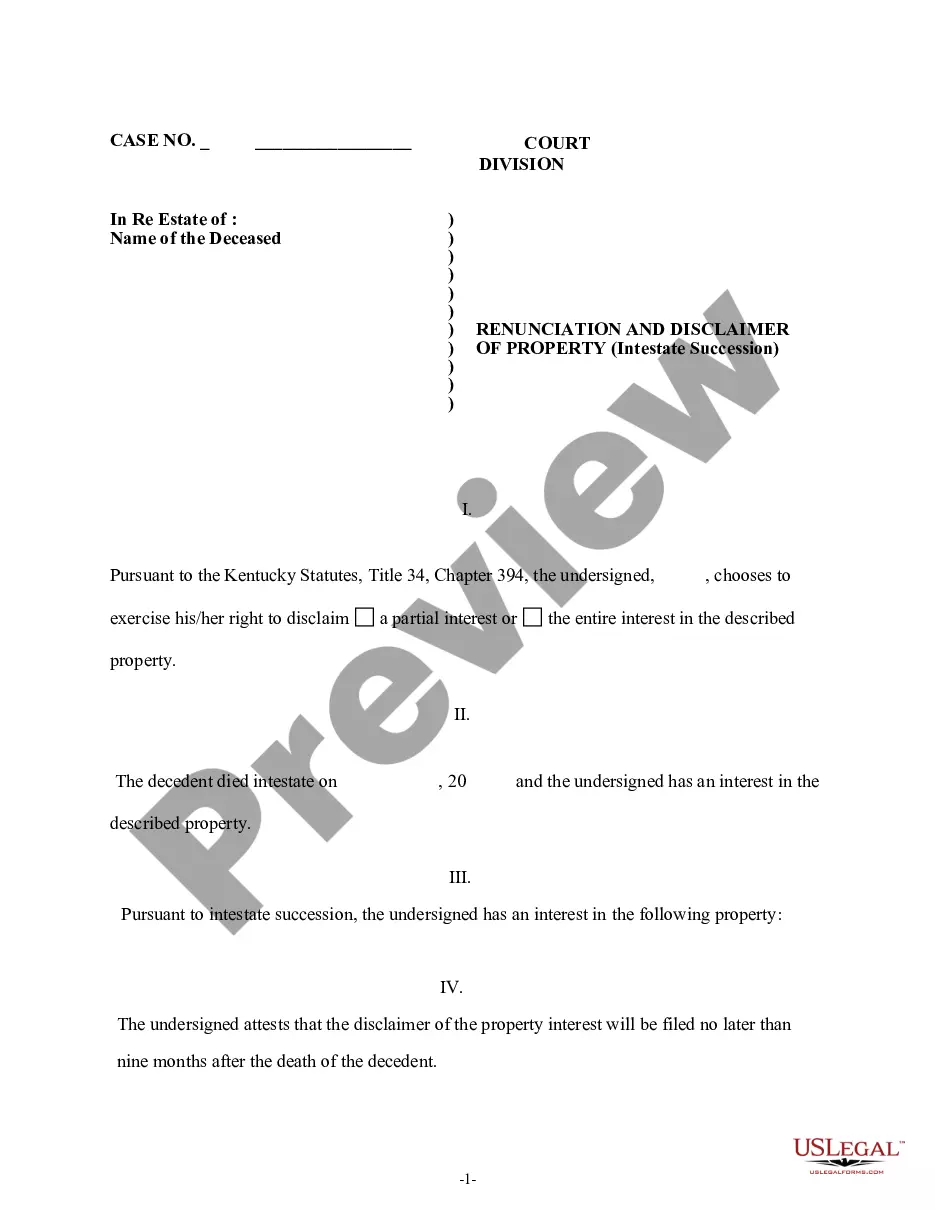
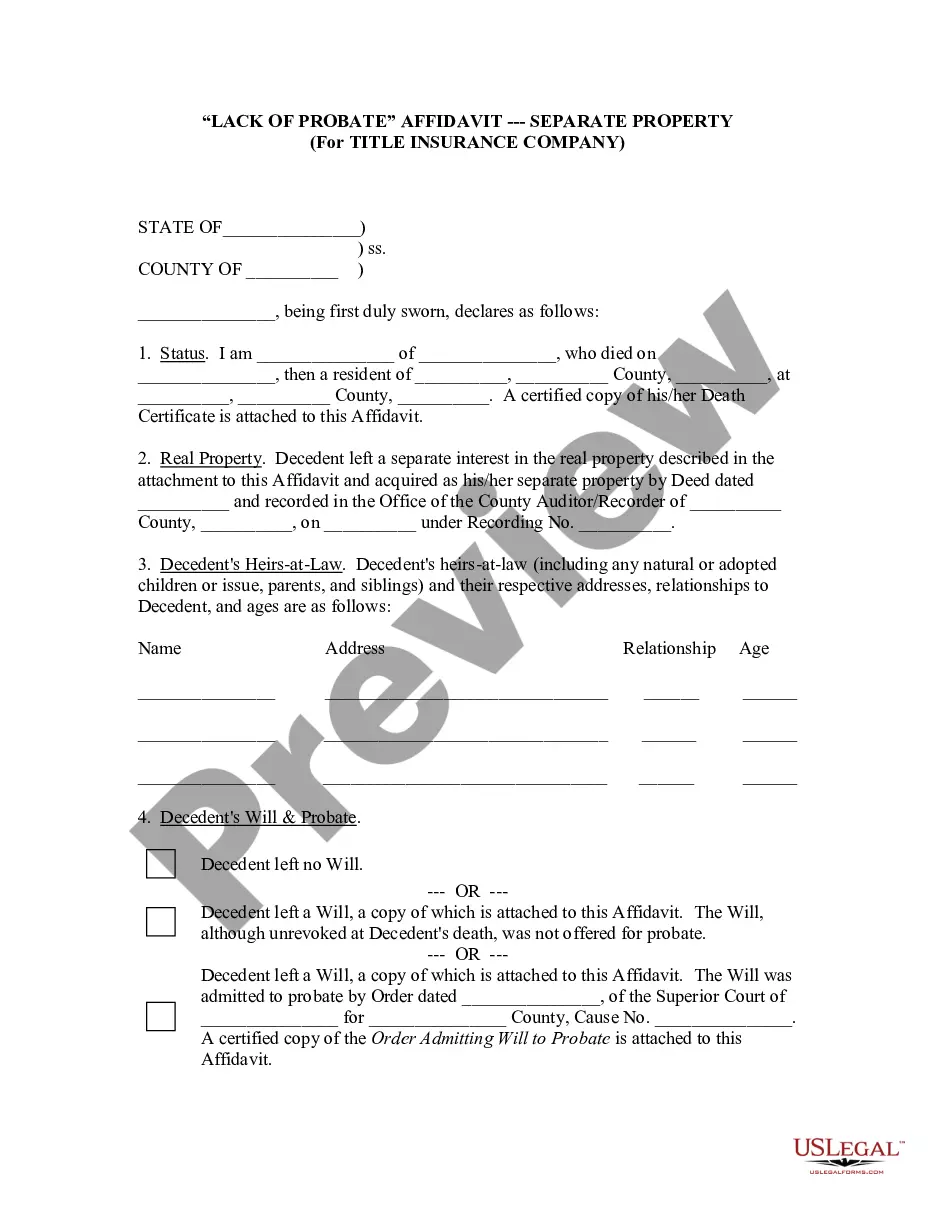
The Kentucky Renunciation and Disclaimer of Joint Tenant or Tenancy Interest is a legal document that allows a surviving joint tenant to officially renounce their interest in a property inherited through the death of a co-tenant. This form enables the surviving tenant to disclaim their rights to the property, ensuring that it passes to other designated beneficiaries as if they had predeceased the decedent. It is essential for individuals who do not wish to take on the ownership of property following the death of a joint tenant. This form is specific to Kentucky law, which outlines the process and timeline for such disclaimers.
What’s included in this form
- Identification of the surviving joint tenant and decedent.
- Declaration of the decision to disclaim any interest in the property.
- Notation of the property interests involved.
- Confirmation that the disclaimer will be filed within nine months of the decedent's death.
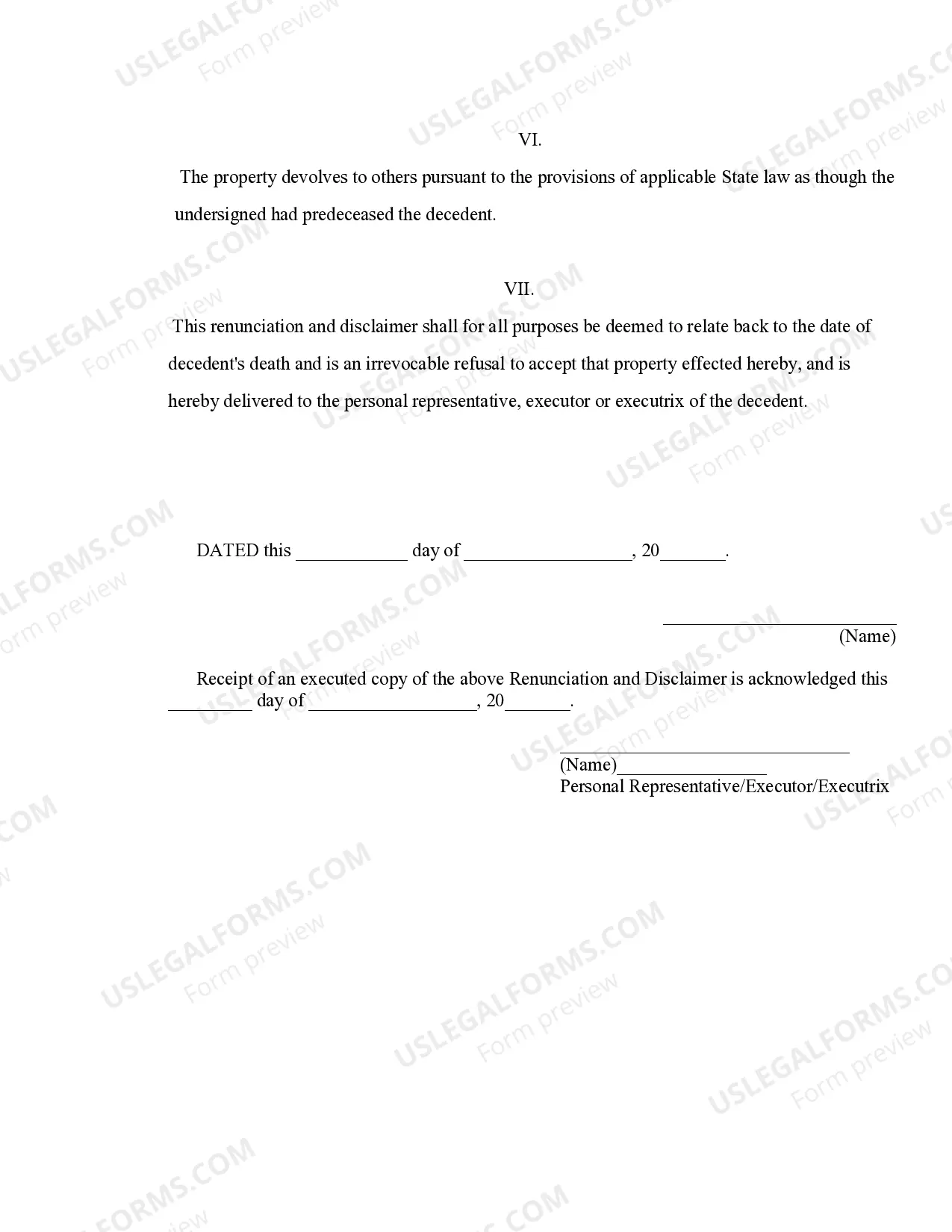
- Legal acknowledgment of the renunciation and its implications on property ownership.
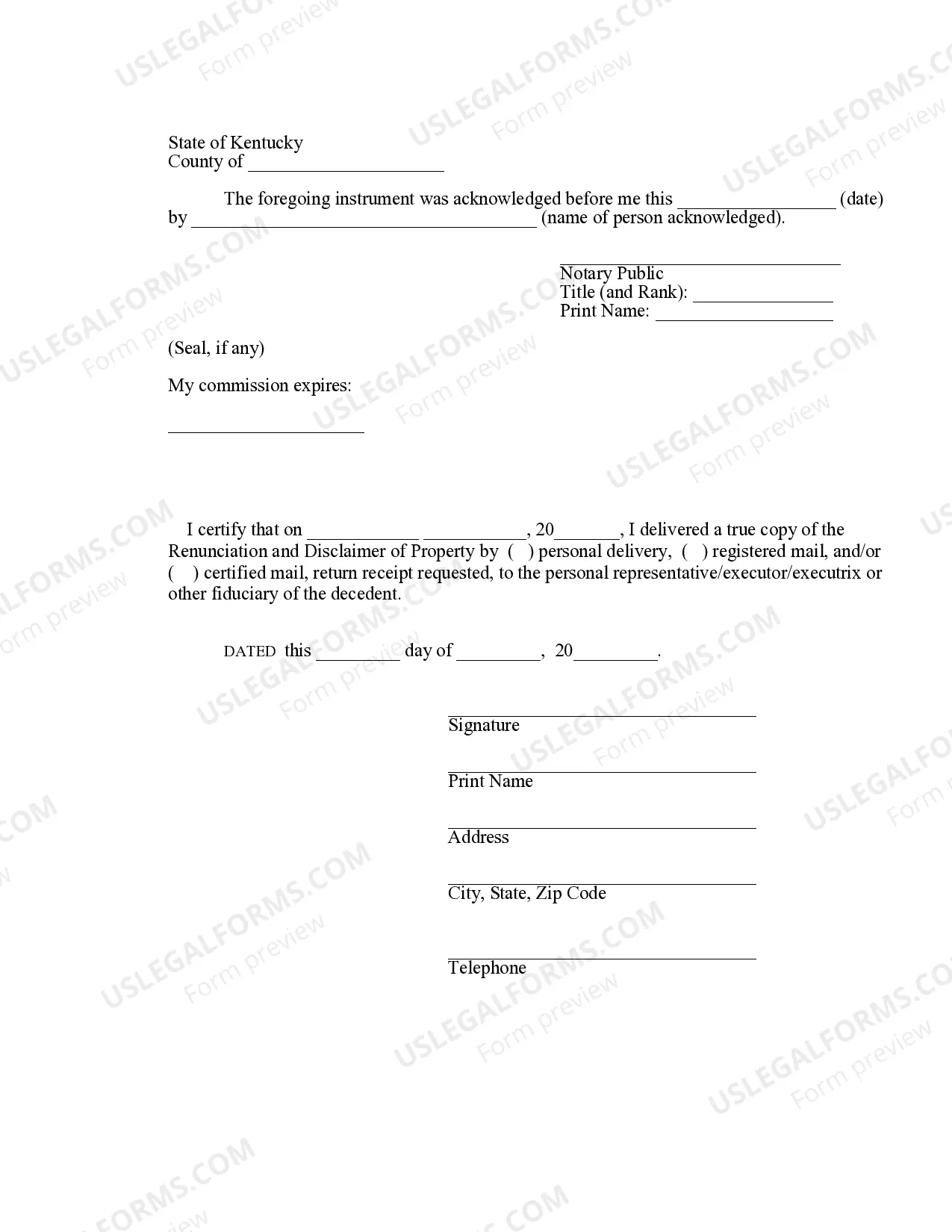
- Notary authentication and provision for delivery confirmation.
When to use this document
This form is necessary when a surviving joint tenant decides not to accept their share of a property interest after the death of the co-tenant. It is particularly applicable in cases where the surviving tenant wishes to relinquish their rights due to personal preferences, potential financial obligations, or when the property should instead pass to other heirs as outlined by the decedent's will or state law. Filing the disclaimer within nine months of the decedent's death is crucial for it to be valid.
Who can use this document
This form is intended for:
- Surviving joint tenants who wish to renounce their interest in inherited property.
- Individuals who have been designated as joint tenants and need to disclaim ownership for legal or personal reasons.
- Those looking to ensure the proper distribution of property as per state law.
Instructions for completing this form
- Identify the surviving joint tenant by filling in their name.
- Provide the name of the deceased and the date of their death.
- Specify the property in which the interest is being disclaimed.
- Sign the disclaimer, noting that it will be filed within the required timeline.
- Ensure the form is notarized and provide confirmation of delivery to the personal representative or executor of the estate.
Does this form need to be notarized?
This form must be notarized to be legally valid. Notarization ensures that the document is acknowledged by a legally authorized individual, adding a layer of authenticity to the assertion that the disclaimer is being made voluntarily. US Legal Forms offers integrated online notarization services, allowing you to complete this process securely via video call, anytime, and from anywhere.
Get your form ready online
Our built-in tools help you complete, sign, share, and store your documents in one place.
Make edits, fill in missing information, and update formatting in US Legal Forms—just like you would in MS Word.
Download a copy, print it, send it by email, or mail it via USPS—whatever works best for your next step.
Sign and collect signatures with our SignNow integration. Send to multiple recipients, set reminders, and more. Go Premium to unlock E-Sign.
If this form requires notarization, complete it online through a secure video call—no need to meet a notary in person or wait for an appointment.
We protect your documents and personal data by following strict security and privacy standards.
Make edits, fill in missing information, and update formatting in US Legal Forms—just like you would in MS Word.
Download a copy, print it, send it by email, or mail it via USPS—whatever works best for your next step.
Sign and collect signatures with our SignNow integration. Send to multiple recipients, set reminders, and more. Go Premium to unlock E-Sign.

If this form requires notarization, complete it online through a secure video call—no need to meet a notary in person or wait for an appointment.
We protect your documents and personal data by following strict security and privacy standards.
Common mistakes to avoid
- Failing to file the disclaimer within nine months of the decedent's death.
- Not providing complete and accurate details about the property involved.
- Neglecting to obtain notarization for the document, if applicable.
- Ignoring state-specific requirements or nuances in the language of the form.
Why use this form online
- Easy access to download and complete the form at your convenience.
- Templates are prepared by licensed attorneys, ensuring legal accuracy.
- Ability to edit the form to meet personal needs and preferences before finalizing.
- Secure storage options for completed documents to maintain privacy and compliance.
Legal use & context
This form serves to legally renounce property interests, following the guidelines established in Kentucky law. A properly executed disclaimer has enduring legal effects, allowing the property to pass to other beneficiaries as though the disclaiming party had predeceased the decedent. This ensures clear title and ownership without potential disputes among heirs.
What to keep in mind
- The form allows a surviving joint tenant to renounce their inherited property interest.
- It must be filed within nine months of the decedentâs death in accordance with Kentucky law.
- Notarization is required for the form to be legally binding.
- This process ensures the property is transferred to other designated beneficiaries as intended.
Looking for another form?
Form popularity
FAQ
What is a Deed of Disclaimer? A Deed of Disclaimer is a document that you can execute if you wish to Disclaim an inheritance due via the Rules of Intestacy and you are not applying for probate. A typical example of this is if a spouse of a deceased would prefer the estate passes to the children.
Disclaiming means that you give up your rights to receive the inheritance. If you choose to do so, whatever assets you were meant to receive would be passed along to the next beneficiary in line. It's not typical for people to disclaim inheritance assets.
Disclaim, in a legal sense, refers to the renunciation of an interest in, or an acceptance of, inherited assets, such as property, by way of a legal instrument. A person disclaiming an interest, right, or obligation is known as a disclaimant.
Put the disclaimer in writing. Deliver the disclaimer to the person in control of the estate usually the executor or trustee. Complete the disclaimer within nine months of the death of the person leaving the property. Do not accept any benefit from the property you're disclaiming.
The surviving spouse can serve as the sole trustee, but cannot have any power to direct the beneficial enjoyment of the disclaimed property unless the power is limited by an "ascertainable standard." This is necessary both to qualify the disclaimer and to avoid any taxable general power of appointment.
Property owned in joint tenancy automatically passes, without probate, to the surviving owner(s) when one owner dies. Setting up a joint tenancy is easy, and it doesn't cost a penny.
Jointly owned property is treated as consisting of a both present and a future interest in the jointly owned property. Thus, a surviving spouse may disclaim the future interest in jointly owned property on the death of their spouse, including assets that were held by the spouses as tenants by the entirety.
It must be in writing. It must be made within 9 months of the date of death of the decedent. The disclaimant cannot receive any benefits from the assets.
In New South Wales, the Registrar General is able record the State of New South Wales as the proprietor of disclaimed land. The land will remain subject to any charges and mortgages despite the change in proprietor.