Illinois 5 Day Notice to Pay Rent or Lease Terminates - Nonresidential or Commercial
About this form
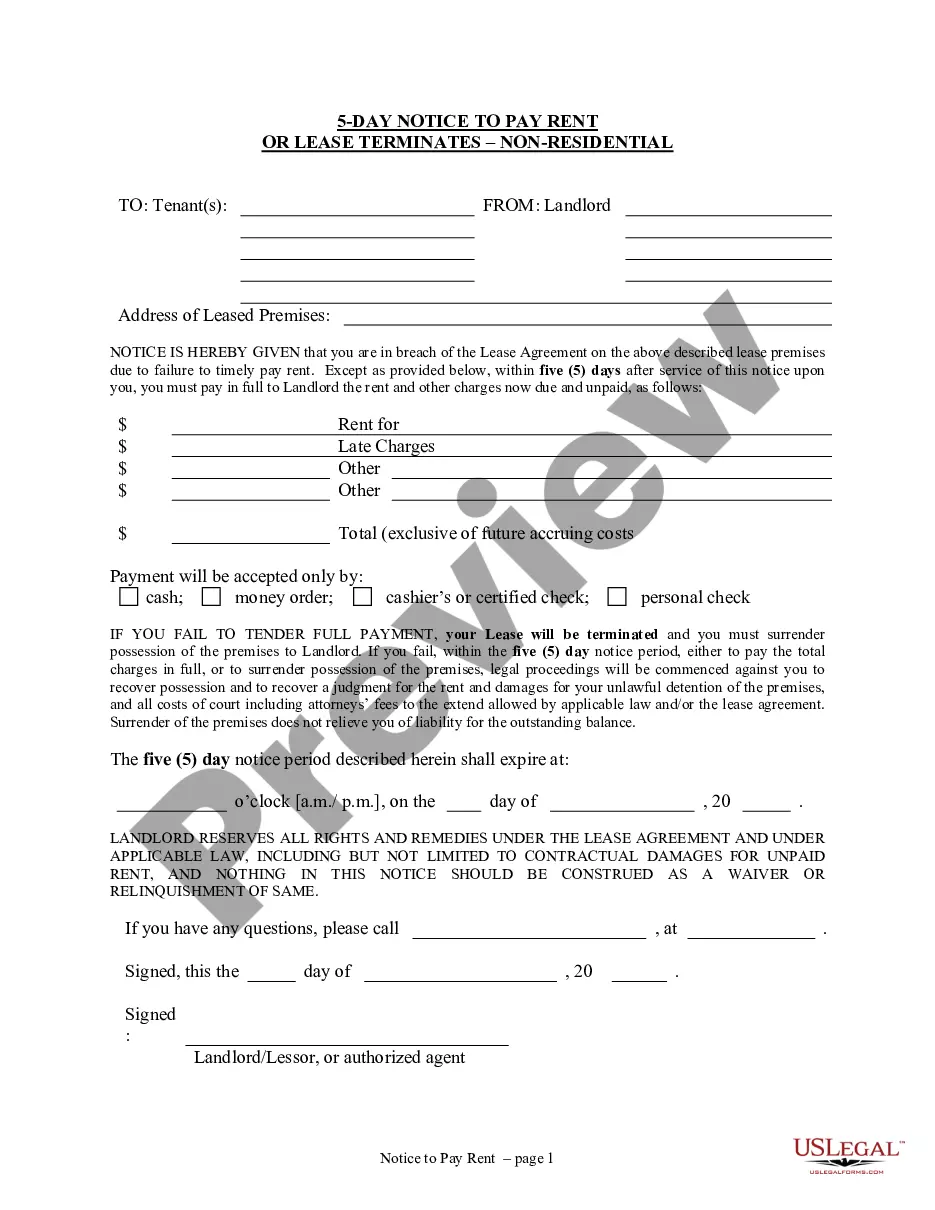
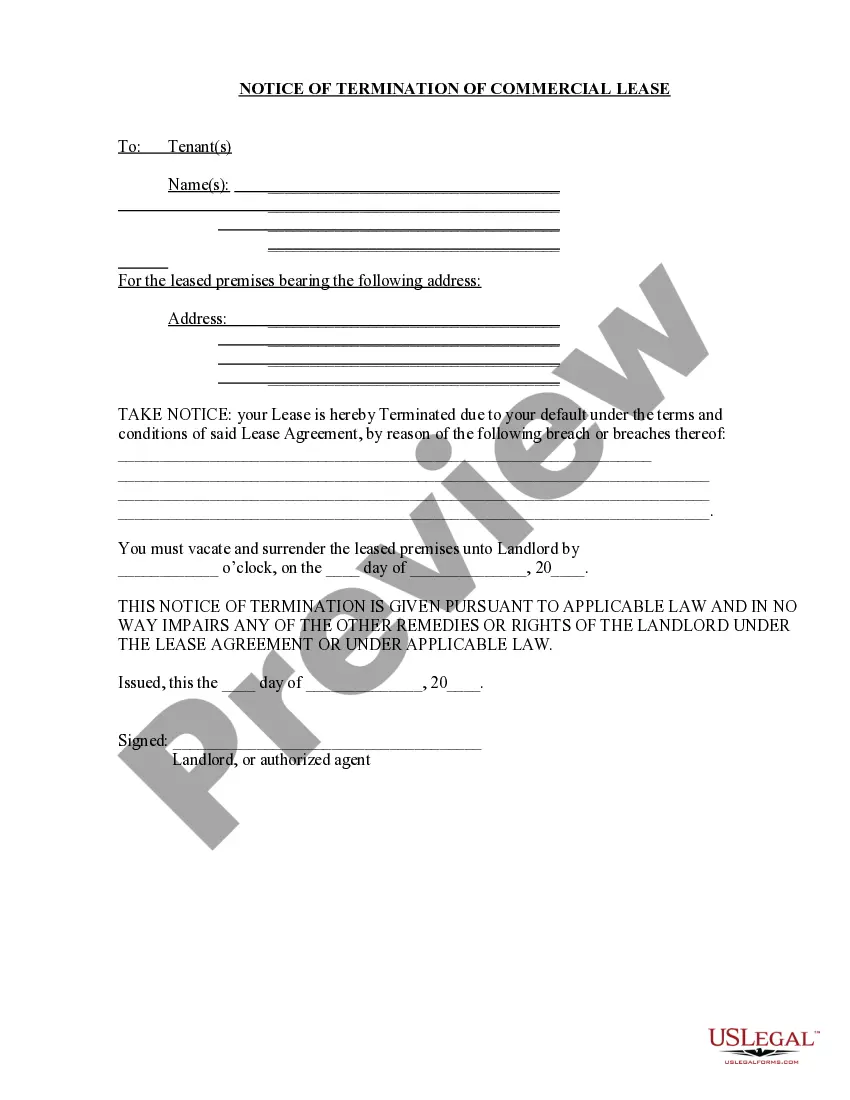
The 5 Day Notice to Pay Rent or Lease Terminates is a legal document used by landlords to formally demand overdue rent from tenants of non-residential or commercial properties. This notice grants tenants a five-day period to make payment or face potential termination of their lease. Unlike other notices, this form emphasizes the urgency of settling rent arrears in compliance with state-specific regulations.
Form components explained
- Identification of the tenant and landlord.
- Details of the leased premises.
- Amount of overdue rent and any additional charges.
- Instructions for making payment and consequences of non-payment.
- Deadline for payment (five days after notice delivery).
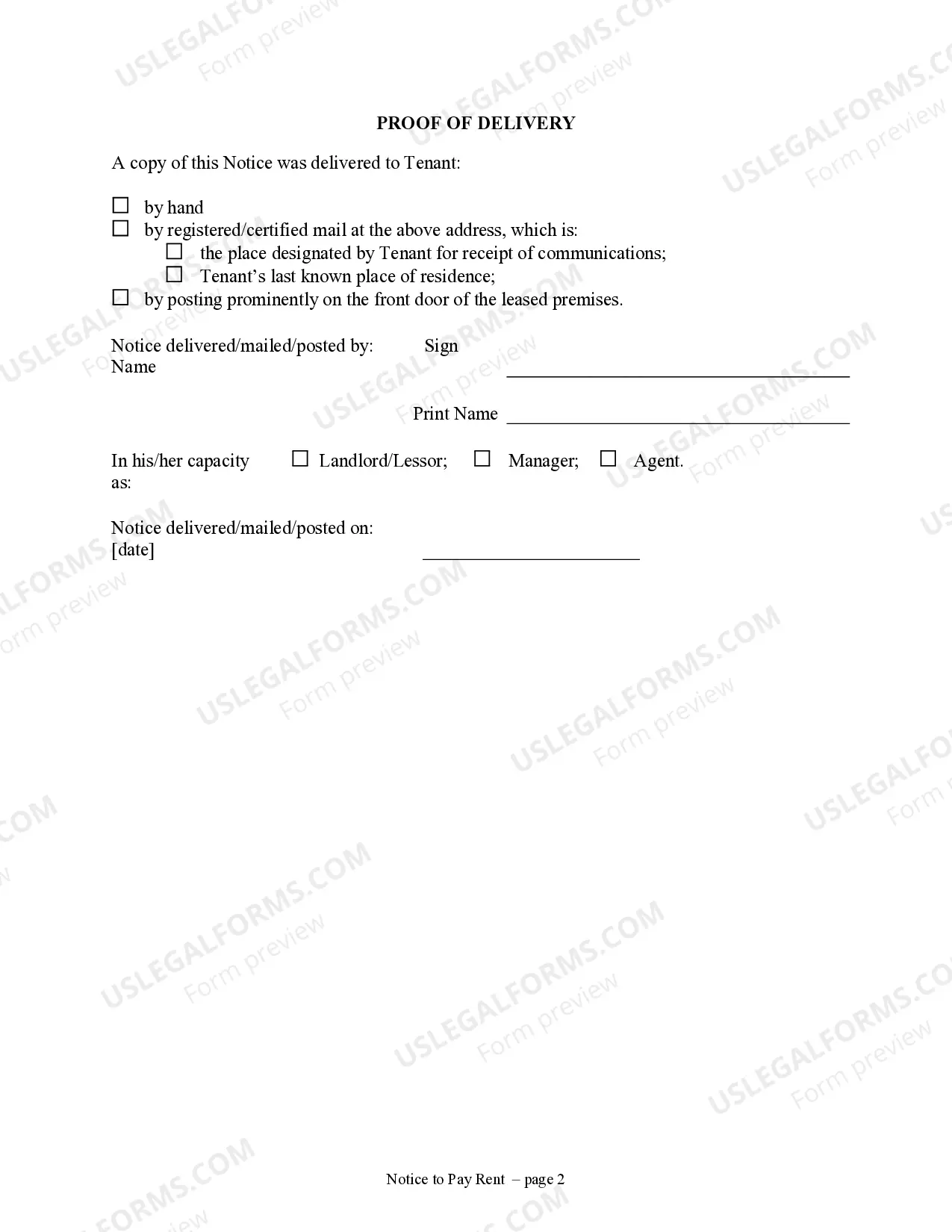
- Proof of delivery method for the notice.


Common use cases
This notice should be used when a landlord needs to address a tenant's failure to pay rent within the specified timeframe. It serves as the formal first step in resolving rental payment issues, and if the tenant does not comply within five days, the landlord may proceed with eviction or lease termination. It is essential in maintaining legal compliance when managing non-residential properties.
Who this form is for
- Landlords of non-residential or commercial properties.
- Property managers dealing with tenant payment issues.
- Investors owning commercial real estate seeking to enforce lease agreements.
- Anyone needing to initiate the eviction process due to non-payment of rent.
How to prepare this document
- Identify the tenant(s) and landlord, including their addresses.
- Clearly describe the leased premises.
- Calculate the total overdue rent and any additional charges.
- Specify the payment methods accepted by the landlord.
- Indicate the deadline for payment (exact date and time).
- Document the method of delivery for the notice and sign it accordingly.
Notarization requirements for this form
This form usually doesn’t need to be notarized. However, local laws or specific transactions may require it. Our online notarization service, powered by Notarize, lets you complete it remotely through a secure video session, available 24/7.
Get your form ready online
Our built-in tools help you complete, sign, share, and store your documents in one place.
Make edits, fill in missing information, and update formatting in US Legal Forms—just like you would in MS Word.
Download a copy, print it, send it by email, or mail it via USPS—whatever works best for your next step.
Sign and collect signatures with our SignNow integration. Send to multiple recipients, set reminders, and more. Go Premium to unlock E-Sign.
If this form requires notarization, complete it online through a secure video call—no need to meet a notary in person or wait for an appointment.
We protect your documents and personal data by following strict security and privacy standards.

Make edits, fill in missing information, and update formatting in US Legal Forms—just like you would in MS Word.

Download a copy, print it, send it by email, or mail it via USPS—whatever works best for your next step.

Sign and collect signatures with our SignNow integration. Send to multiple recipients, set reminders, and more. Go Premium to unlock E-Sign.

If this form requires notarization, complete it online through a secure video call—no need to meet a notary in person or wait for an appointment.

We protect your documents and personal data by following strict security and privacy standards.
Common mistakes to avoid
- Failing to include the correct total amount due.
- Not providing a clear deadline for payment.
- Using an incorrect method of delivery for the notice.
- Neglecting to sign the document properly.
- Assuming that delivery methods do not require documentation.
Benefits of completing this form online
- Immediate access to a legally vetted template.
- Easily customizable to fit specific circumstances.
- Downloadable and editable to meet local legal requirements.
- Available anytime, allowing for quick response to overdue rent situations.
- Helps ensure compliance with state laws to protect landlord rights.
Legal use & context
- This notice serves as legal proof of the landlord's demand for payment.
- Failure to use this notice appropriately may impact eviction proceedings.
- Always retain a copy for your records.
What to keep in mind
- This form is crucial for managing overdue rent in non-residential leases.
- It allows landlords to reclaim rent owed within a specified period.
- Understanding state-specific rules is essential for effective use.
- Prompt handling of the notice can mitigate further legal complications.
Looking for another form?
Form popularity
FAQ
Take action Usually, the judge will give you 7-14 days. The date you have to move out will be listed on the Eviction Order. The landlord cannot do anything before that date. If you need more time to move, you will need to file a motion with the court.
The Illinois 5-Day Notice to Quit (Non-Payment of Rent) is a document used in the unfortunate event when a tenant fails to pay rent on time.This notice should be served in person, given to the tenant by the landlord or the landlord's agent.
Since there's no clear state law allowing it, there's no standard practice for withholding rent in Illinois. That said, tenants should always start by informing a landlord of any problems in their rental unit in writing and give the landlord a reasonable period of time to fix it.
Stat. § 735/1.4) or changing the locks on the door of the rental unit. If the landlord tries to evict the tenant through one of these methods, without a court order, the landlord could owe the tenant damages. See the Nolo article Illegal Eviction Procedures in Illinois for more information.
Tenant Responses When Served with a Five-Day Eviction Notice in Illinois.If the tenant pays the rent within the five-day time period, then the eviction process is over. If the tenant fails to pay rent in the future, the landlord must give the tenant a new eviction notice and repeat the eviction process.
In Illinois, if there is no lease or if the lease does not specify a move out date, the Landlord must give at least 30 days of notice to a tenant that the landlord wants to move out. This notice must be in writing and must arrive to the tenant at least 30 days prior to their move out date.
The landlord must give the tenant notice and go through the court process to get an Eviction Order. Then they must get the Sheriff to remove the tenant from the unit. The landlord cannot change the locks or remove the tenant's property until the Sheriff enforces the Eviction Order.
Provides that a landlord may enter only at reasonable times except in case of an emergency and that an entry between A.M. and P.M., or at a time requested by the tenant, shall be presumed reasonable.