Iowa 3 Day Notice to Pay Rent or Lease Terminated for Nonresidential or Commercial Property
What is this form?
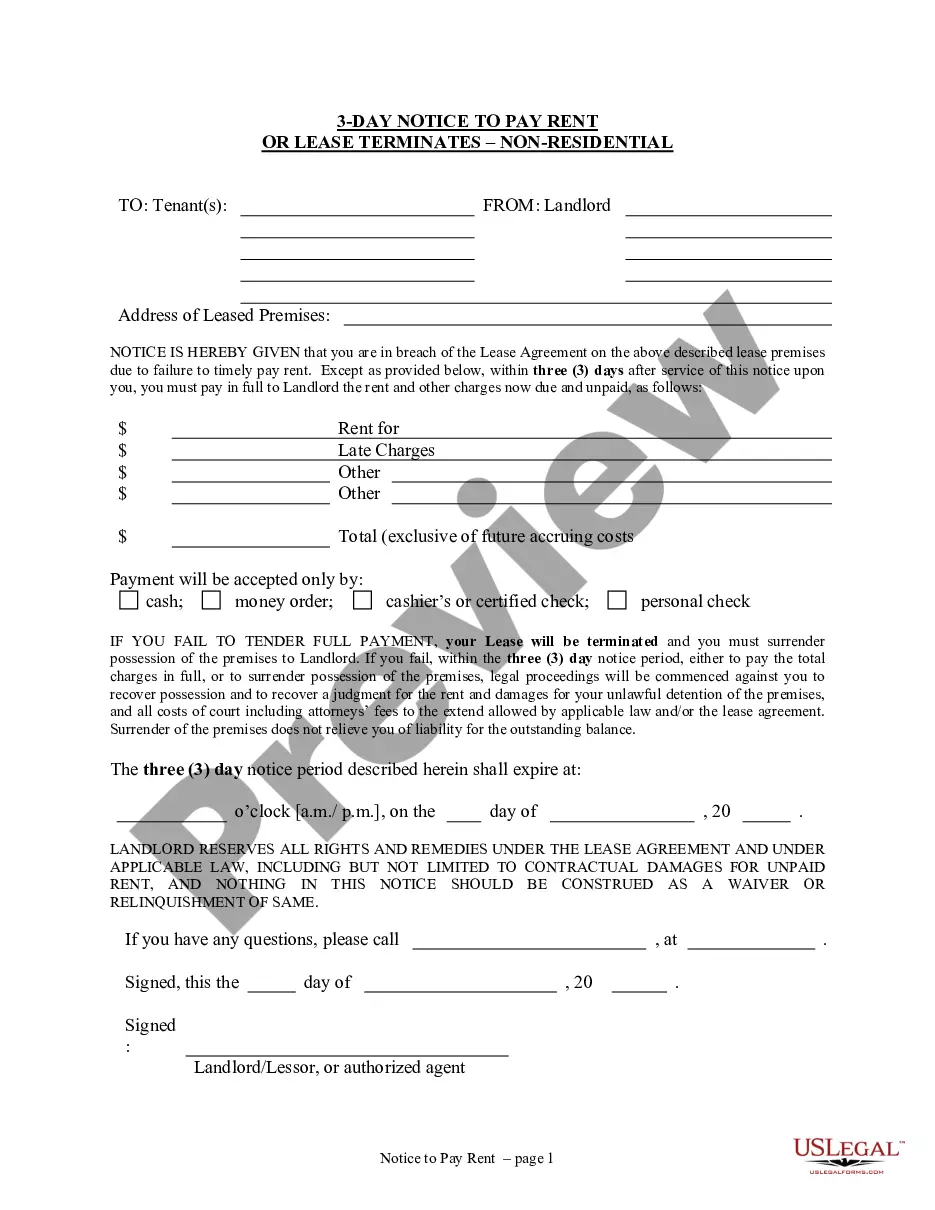
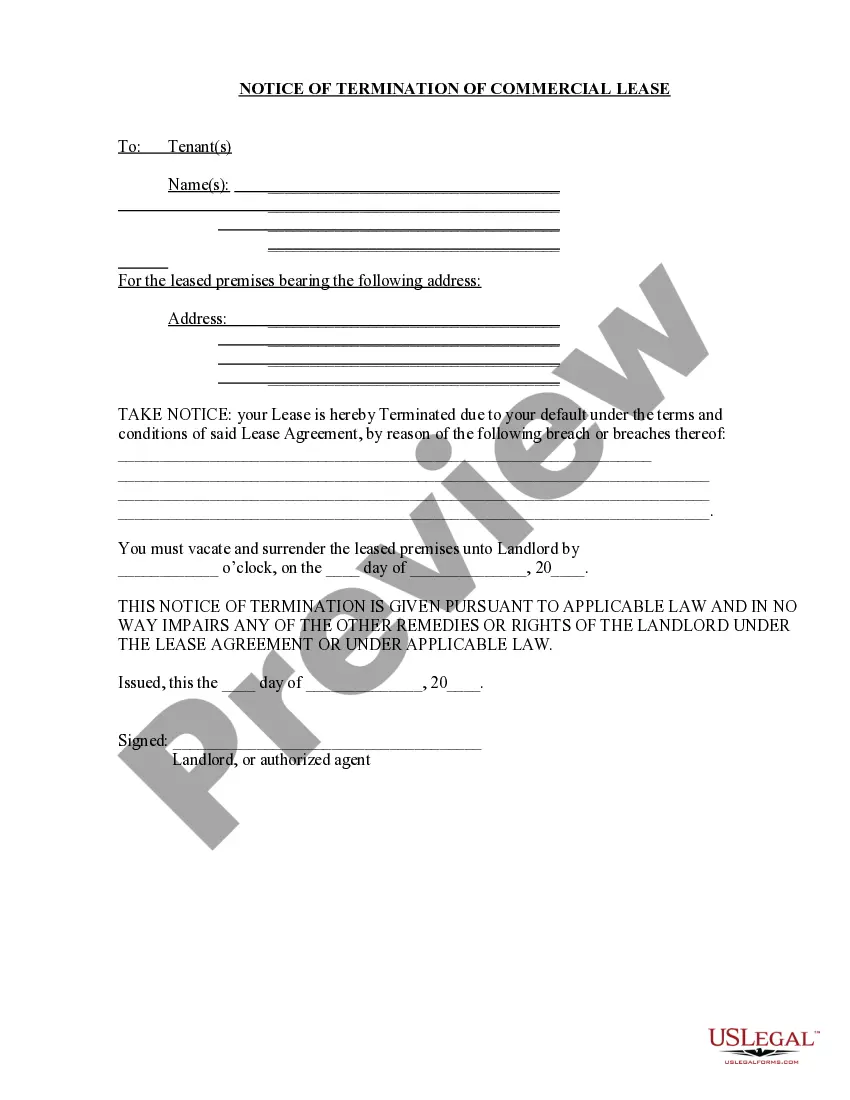
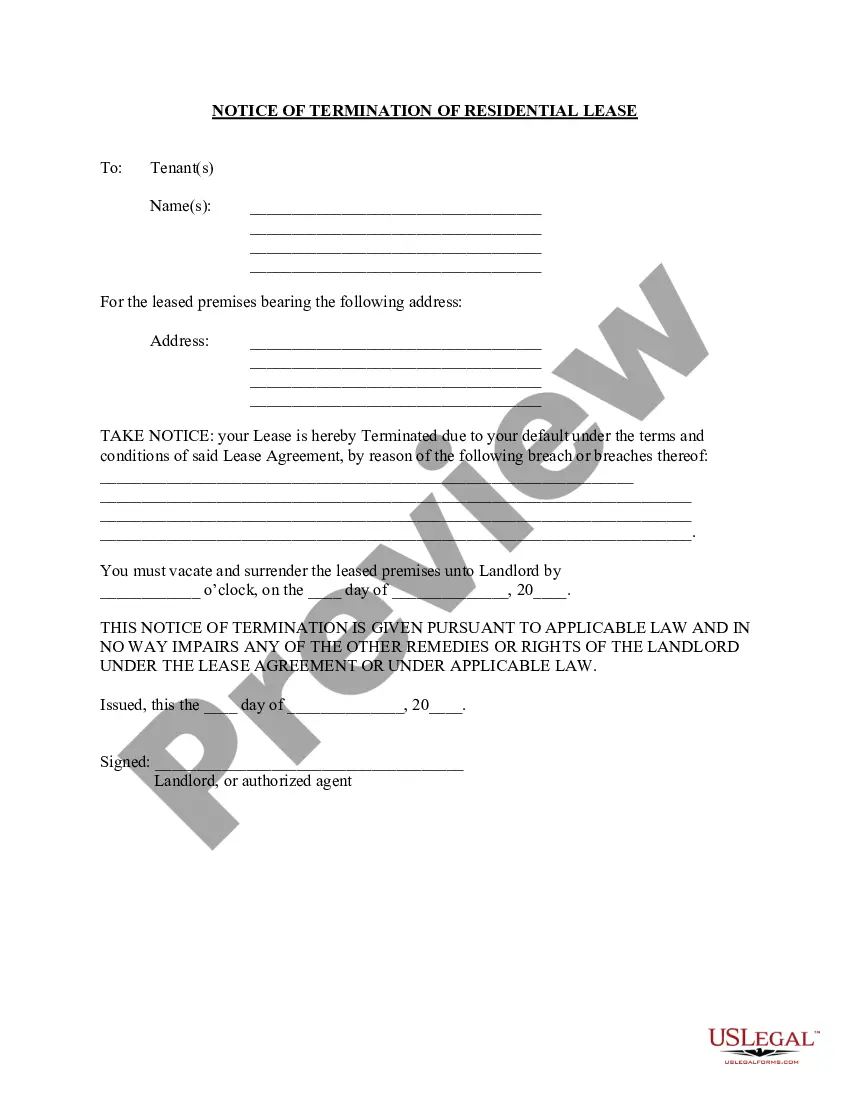
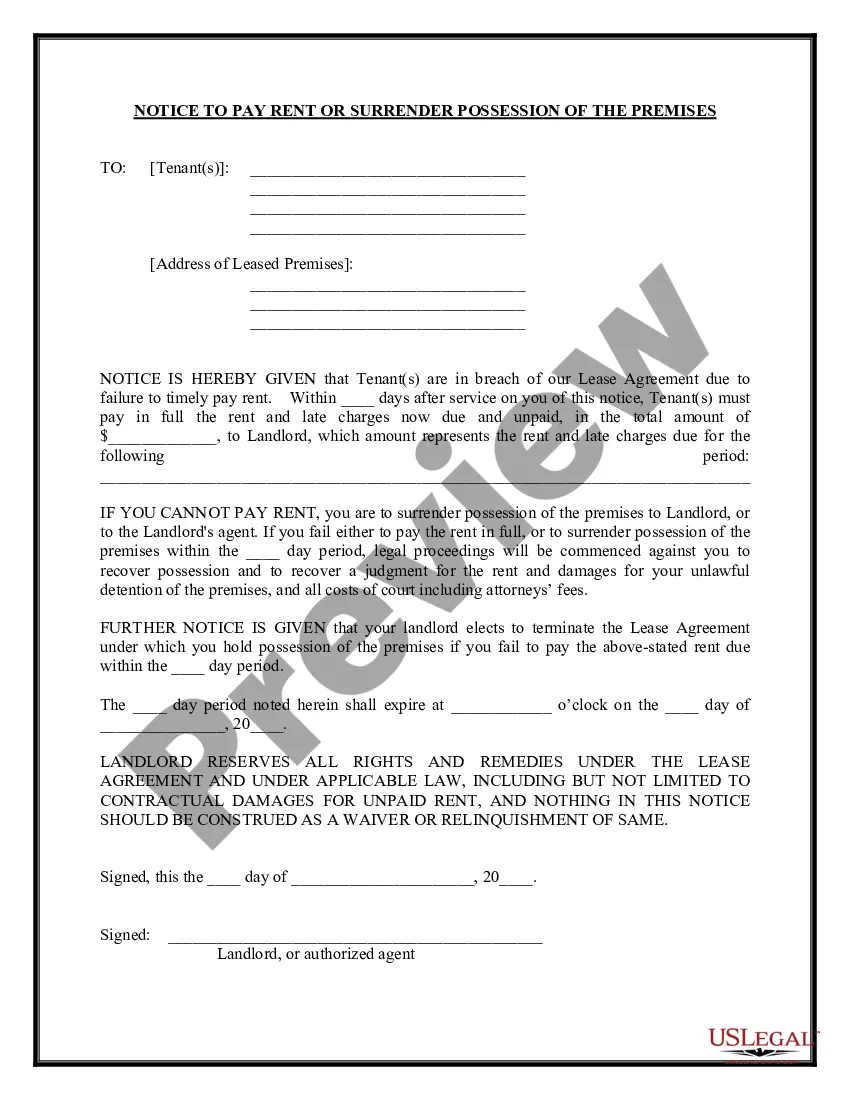
The 3 Day Notice to Pay Rent or Lease Terminated for Nonresidential or Commercial Property is a legal document used by landlords to formally request overdue rent from commercial tenants. This notice alerts tenants that they have three days to pay their outstanding rent or face the possibility of lease termination and eviction. Unlike other notices, this form specifically addresses nonresidential properties, ensuring that tenants understand the seriousness of their financial obligations. If the tenant fails to respond in the specified timeframe, the lease may be terminated, and eviction proceedings could begin.
Key components of this form
- Identification of the tenant(s) and landlord.
- Details of the leased premises.
- Amount of overdue rent and any applicable late charges.
- Instructions for payment, including acceptable payment methods.
- Warning about potential eviction if payment is not made.
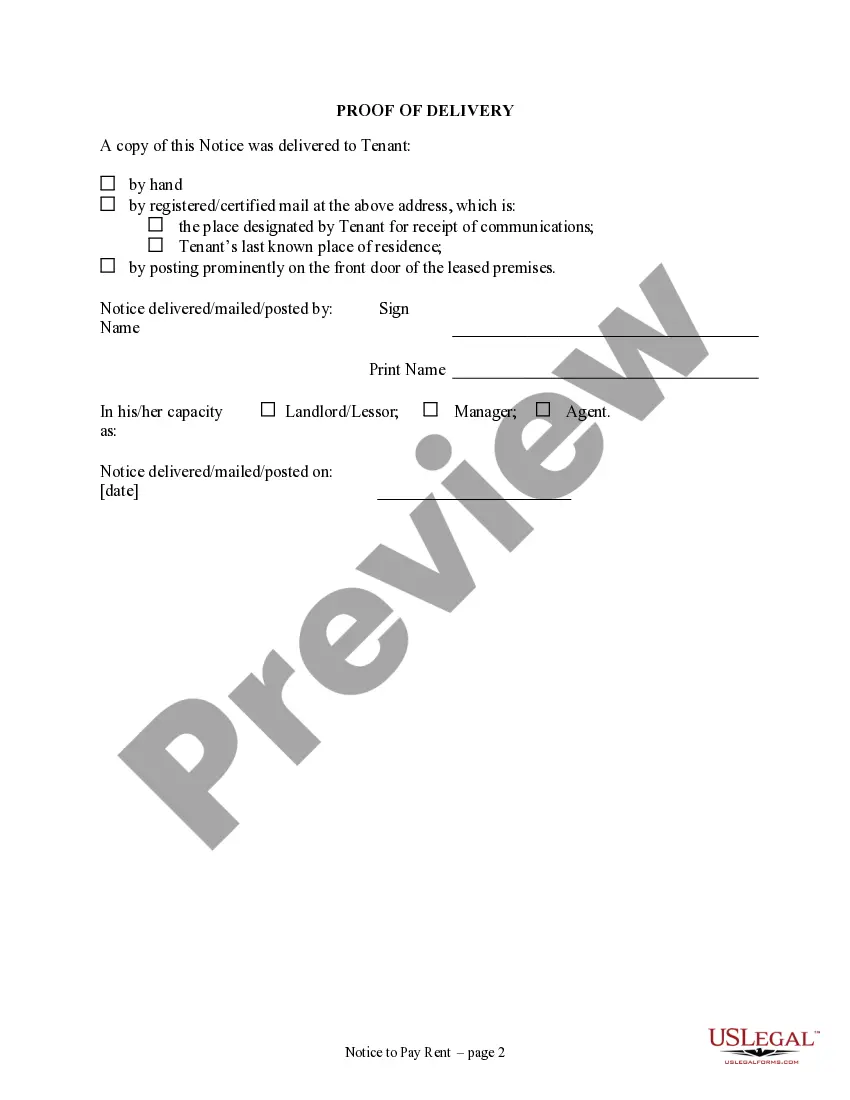
- Proof of delivery confirmation for serving the notice.
When this form is needed
This form is necessary when a landlord has not received rent payment from a commercial tenant and wishes to formally notify them of the overdue amount. It should be used when the rent is at least three days past due, serving as a last warning before initiating eviction procedures. Situations might include the end of a grace period or when a tenant repeatedly delays payment, prompting the landlord to take legal action for recovery of owed rent.
Who this form is for
- Landlords managing nonresidential or commercial properties.
- Property managers acting on behalf of landlords.
- Commercial property owners seeking a formal method to collect overdue rents.
How to complete this form
- Identify the parties involved by filling in the names of the landlord and tenant.
- Specify the address of the leased premises clearly.
- Enter the total amount of overdue rent, including any late charges.
- Choose the acceptable payment methods for the overdue rent.
- Confirm the expiration date and time of the notice period.
- Sign and date the notice, and ensure proof of delivery is noted and completed.
Notarization requirements for this form
This form does not typically require notarization to be legally valid. However, some jurisdictions or document types may still require it. US Legal Forms provides secure online notarization powered by Notarize, available 24/7 for added convenience.
Get your form ready online
Our built-in tools help you complete, sign, share, and store your documents in one place.
Make edits, fill in missing information, and update formatting in US Legal Forms—just like you would in MS Word.
Download a copy, print it, send it by email, or mail it via USPS—whatever works best for your next step.
Sign and collect signatures with our SignNow integration. Send to multiple recipients, set reminders, and more. Go Premium to unlock E-Sign.
If this form requires notarization, complete it online through a secure video call—no need to meet a notary in person or wait for an appointment.
We protect your documents and personal data by following strict security and privacy standards.

Make edits, fill in missing information, and update formatting in US Legal Forms—just like you would in MS Word.

Download a copy, print it, send it by email, or mail it via USPS—whatever works best for your next step.

Sign and collect signatures with our SignNow integration. Send to multiple recipients, set reminders, and more. Go Premium to unlock E-Sign.

If this form requires notarization, complete it online through a secure video call—no need to meet a notary in person or wait for an appointment.

We protect your documents and personal data by following strict security and privacy standards.
Typical mistakes to avoid
- Failing to provide the correct total amount due, including all charges.
- Not delivering the notice according to state requirements.
- Missing the notice period deadline for eviction proceedings.
- Omitting signature and date, which could invalidate the notice.
Advantages of online completion
- Convenient access to legal forms that can be downloaded instantly.
- Editability allows for customization to fit specific situations.
- Forms drafted by licensed attorneys ensure compliance with state laws.
- Reduces the risk of errors compared to hand-written forms.
Looking for another form?
Form popularity
FAQ
Typically, a landlord must provide tenants in Iowa sufficient time to move out based on the lease agreement's terms and the duration of the tenancy. For month-to-month tenancies, a 30-day notice is standard, while longer leases may require a 60-day notice. Understanding these regulations helps both landlords and tenants navigate their rights and responsibilities effectively.
A landlord in Iowa can initiate eviction proceedings shortly after issuing a 3 day notice for non-payment of rent. If the tenant does not comply with the notice by paying rent or addressing the situation, the landlord may file for eviction in court. This process emphasizes the importance of addressing any rental issues immediately.
In Iowa, the notice period for a tenant to move out typically varies based on the length of the tenancy. For leases longer than a year, a landlord must usually provide 60 days' notice, while shorter leases might require 30 days. Understanding these timeframes is vital for tenants to secure new accommodation and ensure a smooth transition.
In Iowa, if a landlord decides not to renew a lease, they are generally required to provide a written notice. The notice period usually depends on how long the tenant has lived in the property, but it is often at least 30 days. Providing this notice allows tenants to find new housing and helps avoid sudden disruptions.
It is possible to contest or overturn an eviction notice in Iowa, depending on the circumstances. If you believe the eviction notice was served improperly or without cause, you can challenge it in court. Presenting evidence is crucial during this process. Legal assistance can provide guidance on the best approach to take.
While this question pertains to North Dakota, it's important to note that eviction rules differ from Iowa's process. In Iowa, tenants are entitled to a 3-day notice for non-payment before eviction proceedings commence. If you face eviction challenges, understanding the local laws and regulations is vital. Seeking help from legal services can clarify these points.
In Iowa, the eviction process can begin immediately after the 3-day notice for non-payment is served. Once the notice period expires without compliance from the tenant, a landlord may file for eviction. The entire process varies based on local court schedules and can take time. Being familiar with these steps can help ensure a smooth procedure.
Yes, you can contest a 3-day eviction notice in Iowa. If you believe the notice was improperly issued or the claims of non-payment are inaccurate, you can challenge it in court. Providing evidence or documentation may support your case during this process. It is advisable to seek legal counsel to navigate this situation effectively.
Serving a 3 Day Notice in Iowa requires delivering the notice directly to the tenant or posting it on the property if they are unavailable. This notice must clearly state the amount due and the time frame for the tenant to resolve the issue. It is essential to keep a copy of this notice for your records. With resources from USLegalForms, you can find templates and guidelines for effective service.
In Iowa, a tenant must provide at least 30 days' notice if they wish to terminate a month-to-month lease. However, the amount of notice can differ depending on the lease agreement terms. For nonresidential and commercial properties, the rules may vary, so it’s essential to understand your specific lease. Resources like USLegalForms can provide insight into proper notification protocols.