District of Columbia Partial Release of Property From Deed of Trust for Individual
About this form
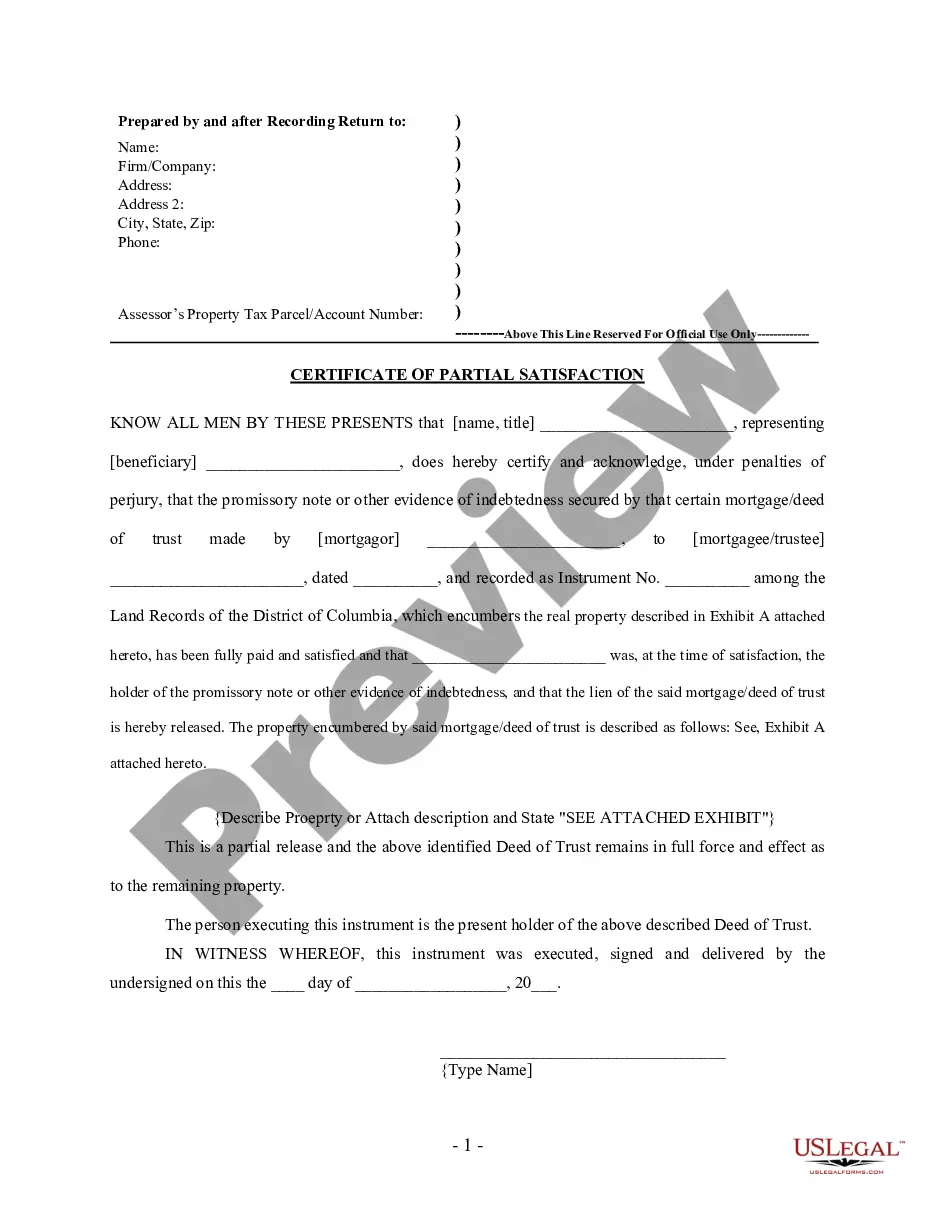
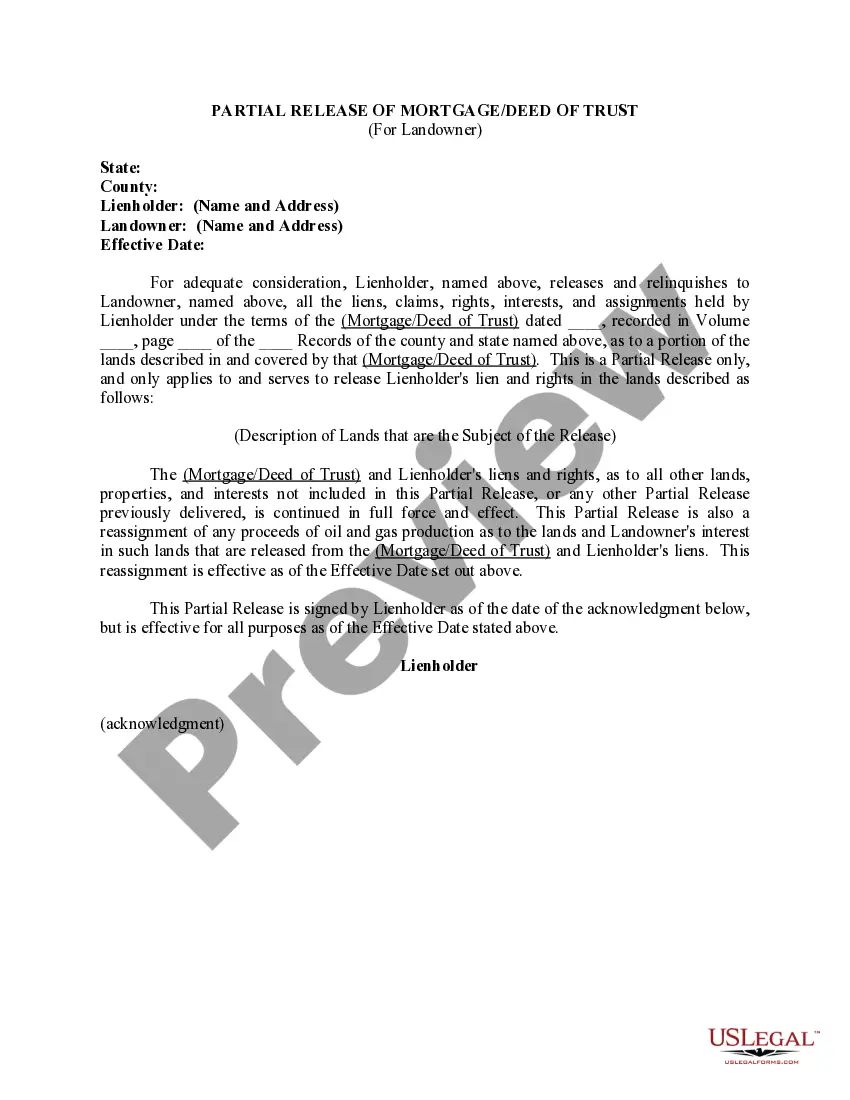
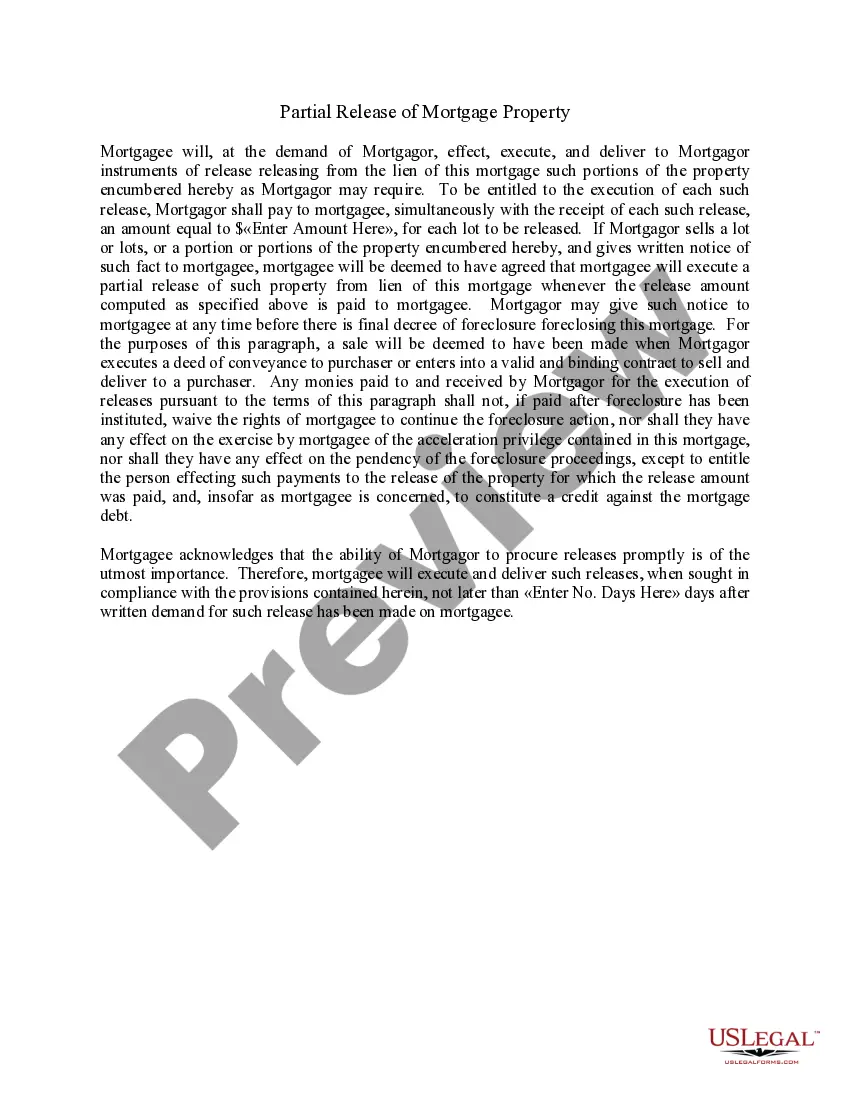
The Partial Release of Property From Deed of Trust for Individual is a legal document that allows the holder of a deed of trust or mortgage to release a portion of the property listed as security. This form ensures that while a part of the property is released, the remaining property is still secured under the original deed of trust, which remains in effect. This is different from a full release, as it pertains specifically to only a portion of the property involved in the mortgage agreement.
Key components of this form
- Property description section to detail the specific portion being released.
- A statement confirming that the original deed of trust remains in full force for the remaining property.
- Signature line for the current holder of the deed of trust to execute the release.
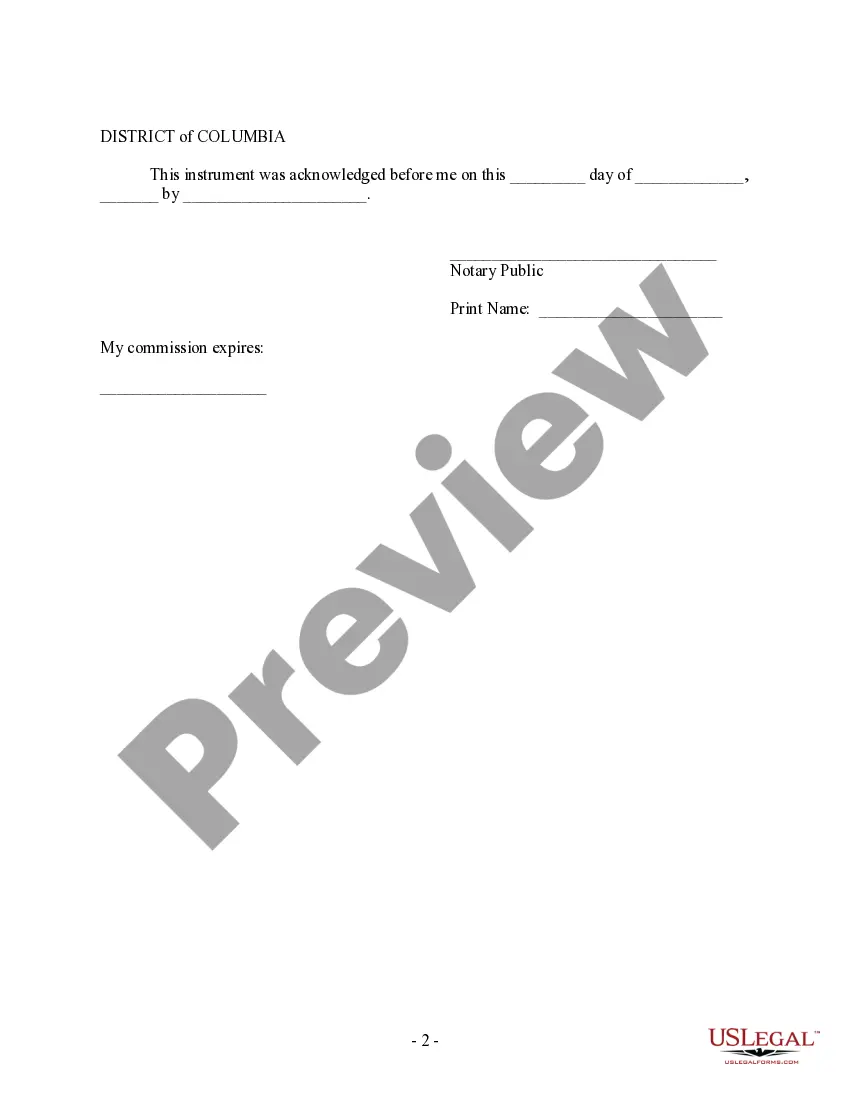
- Notary acknowledgment section to verify the authenticity of the signature.
- Date fields for signing and notarization to document when the form is executed.


When to use this form
This form is commonly used when a property owner wants to sell or transfer a portion of their property that is currently under a deed of trust without affecting the remaining property. It is useful in cases where only part of the secured property needs to be released, such as in the division of property after a divorce or when refinancing a portion of the property.
Who can use this document
- Property owners holding a deed of trust who need to partially release property.
- Lenders or mortgage holders who are managing changes to secured property.
- Legal representatives handling real estate transactions for clients.
- Individuals involved in property division or refinancing arrangements.
How to complete this form
- Identify the specific property being released from the deed of trust.
- Clearly describe the property or attach a detailed exhibit specifying the property.
- Ensure that the person executing the instrument is the current holder of the deed of trust.
- Fill in the date of execution in the designated fields.
- Sign the form in the presence of a notary public for verification.
Does this form need to be notarized?
This document requires notarization to meet legal standards. US Legal Forms provides secure online notarization powered by Notarize, allowing you to complete the process through a verified video call, available 24/7.
Get your form ready online
Our built-in tools help you complete, sign, share, and store your documents in one place.
Make edits, fill in missing information, and update formatting in US Legal Forms—just like you would in MS Word.
Download a copy, print it, send it by email, or mail it via USPS—whatever works best for your next step.
Sign and collect signatures with our SignNow integration. Send to multiple recipients, set reminders, and more. Go Premium to unlock E-Sign.
If this form requires notarization, complete it online through a secure video call—no need to meet a notary in person or wait for an appointment.
We protect your documents and personal data by following strict security and privacy standards.

Make edits, fill in missing information, and update formatting in US Legal Forms—just like you would in MS Word.

Download a copy, print it, send it by email, or mail it via USPS—whatever works best for your next step.

Sign and collect signatures with our SignNow integration. Send to multiple recipients, set reminders, and more. Go Premium to unlock E-Sign.

If this form requires notarization, complete it online through a secure video call—no need to meet a notary in person or wait for an appointment.

We protect your documents and personal data by following strict security and privacy standards.
Common mistakes
- Failing to provide a complete and accurate description of the property being released.
- Not having the form signed in front of a notary public, which can render the document invalid.
- Omitting the date of execution which is crucial for the timeline of the release.
- Incorrectly assuming the original deed of trust is canceled when only a partial release is made.
Benefits of using this form online
- Convenience of downloading the form instantly without the need to visit a legal office.
- Editable templates that allow for easy customization to fit specific property needs.
- Access to professionally drafted forms created by licensed attorneys to ensure legal compliance.
Looking for another form?
Form popularity
FAQ
The process of handling a deed of trust usually involves several key parties, including the borrower, lender, and sometimes a title company or attorney. Each of these parties plays a crucial role in the proper execution and recording of necessary documents. When dealing with a District of Columbia Partial Release of Property From Deed of Trust for Individual, it helps to have a platform like uslegalforms at your side. This service can provide guidance and the appropriate forms to ensure a smooth process throughout your transaction.
Yes, a release typically must be in the form of a deed, as it formally transfers the title and rights back to the property owner. This deed serves as official documentation of the release, ensuring that all parties acknowledge the change in ownership status. Within the context of the District of Columbia Partial Release of Property From Deed of Trust for Individual, having a properly executed release deed is essential to protect your interests and confirm your authority over the property.
To remove someone from a deed of trust, you typically need to execute a formal release or modification agreement. This document must be signed by both parties and may require notarization. Additionally, it often needs to be recorded with the appropriate local government office. This process is integral to the District of Columbia Partial Release of Property From Deed of Trust for Individual, ensuring that all parties maintain clear ownership and responsibility concerning the property.
The three common types of deeds include warranty deeds, quitclaim deeds, and special purpose deeds. A warranty deed guarantees that the grantor holds clear title to the property, a quitclaim deed transfers whatever interest the grantor has without guarantees, and special purpose deeds serve specific functions, such as a District of Columbia Partial Release of Property From Deed of Trust for Individual. Each type of deed serves distinct legal purposes, making it crucial to choose the right one for your transaction.
The phrase 'deed of release' refers to a legal document that relinquishes rights or claims to a property held under a deed of trust. In the context of the District of Columbia Partial Release of Property From Deed of Trust for Individual, it denotes the official reduction of the mortgage liability on a specific part of the property. This document is essential for ensuring that the property title remains clear and unencumbered. Therefore, understanding this concept can aid in navigating real estate transactions.
A release deed is necessary because it formally recognizes that a part of the property is no longer encumbered by the deed of trust. Without it, the borrower might face issues with title clarity when selling or refinancing the property. Essentially, the District of Columbia Partial Release of Property From Deed of Trust for Individual ensures proper documentation of any changes in property ownership. This can protect you from future legal disputes.
In the context of a District of Columbia Partial Release of Property From Deed of Trust for Individual, the release deed is typically signed by the lender or the trustee. The borrower may also need to sign depending on the specific terms of the trust. This ensures that all parties are formally acknowledging the release of the property. It is important to consult with a legal professional or a platform like US Legal Forms to ensure proper compliance.
To release a deed of trust, you'll typically need to satisfy the obligations secured by the deed, at which point the lender will issue a release document. This document must then be filed with the District of Columbia’s land records office. To ensure that you meet all requirements efficiently, consider using the resources available through uslegalforms and learn more about the District of Columbia Partial Release of Property From Deed of Trust for Individual.
A quitclaim deed in the District of Columbia is a legal instrument that allows one party to transfer their interest in a property to another party without making any warranties about the title. This type of deed is often used in simple transfers, such as when one individual is added or removed from a deed of trust. When dealing with the District of Columbia Partial Release of Property From Deed of Trust for Individual, understanding quitclaim deeds can be beneficial.
The release of a deed of trust typically involves the lender providing a formal document declaring that the obligation secured by the deed has been fulfilled. Once completed, this document must be recorded in the appropriate land records. Familiarizing yourself with the District of Columbia Partial Release of Property From Deed of Trust for Individual can greatly assist you in understanding this process.