Connecticut 15 Day Notice of Material Noncompliance with Lease or Rental Agreement - Nonresidential - 15 days to Cure
About this form
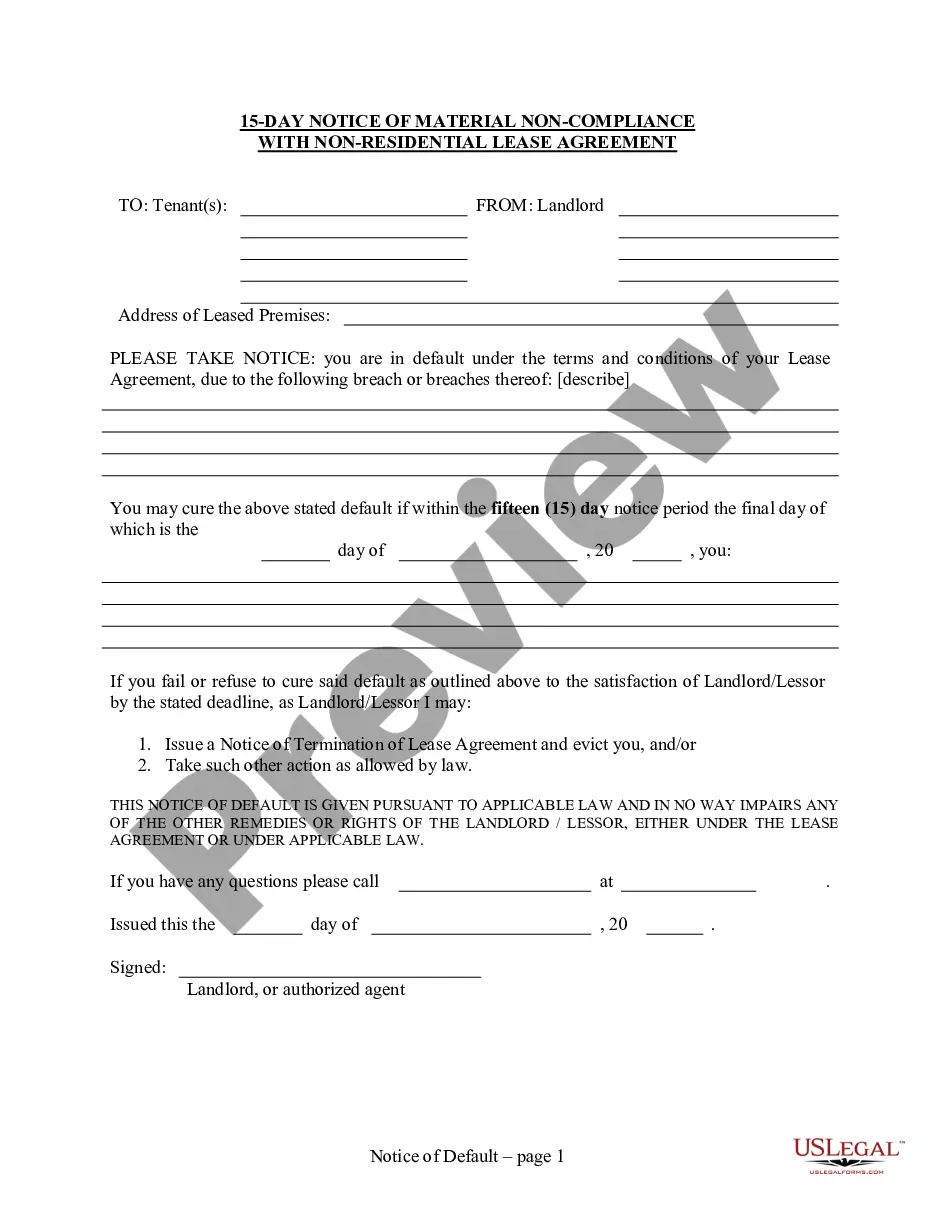
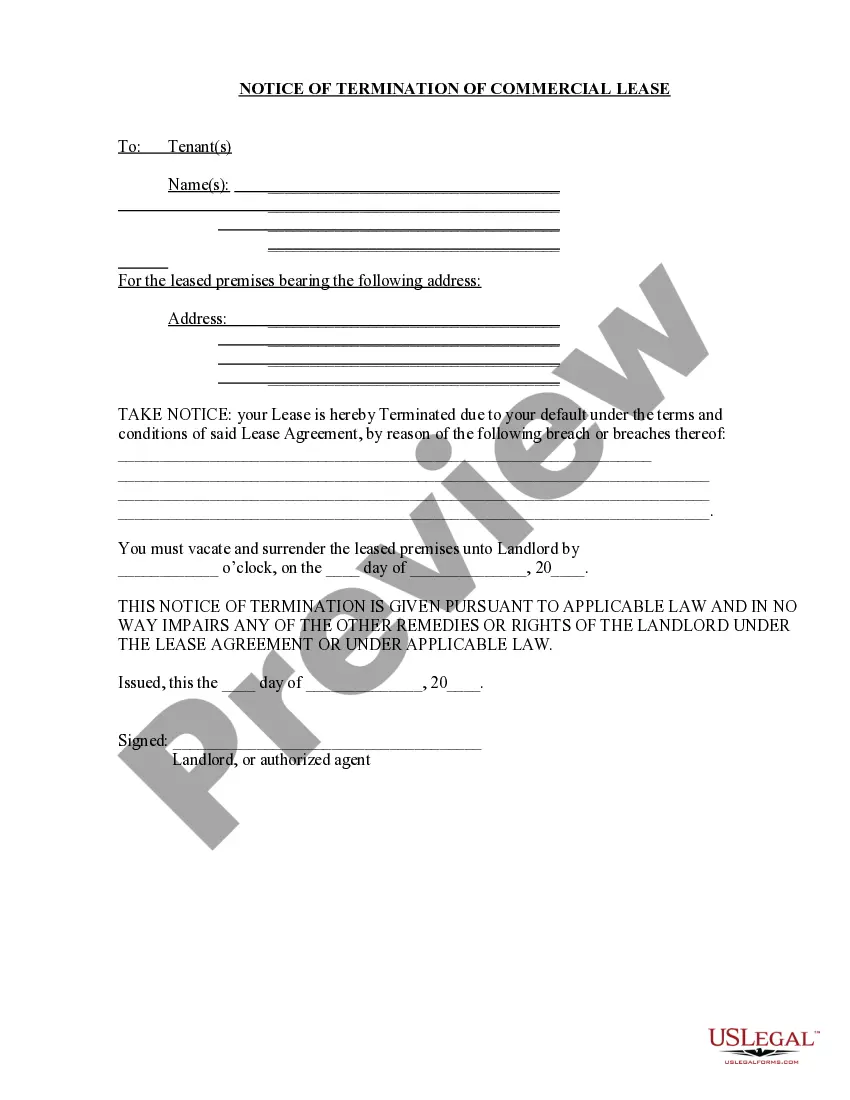
The 15 Day Notice of Material Noncompliance with Lease or Rental Agreement - Nonresidential is a legal document used by landlords to notify tenants about overdue rent payments for non-residential properties, such as commercial or industrial spaces. This notice allows the tenant 15 days to cure the default by paying the overdue rent. It serves as a crucial step before potential lease termination or eviction, and it is important to follow the specified process to ensure compliance with local laws.
Key components of this form
- Identification of the landlord and tenant involved in the lease agreement.
- Description of the breach of the lease agreement, specifically concerning overdue rent.
- A clear deadline of 15 days for the tenant to resolve the noncompliance.
- Consequences of failing to cure the breach, including potential lease termination and eviction proceedings.
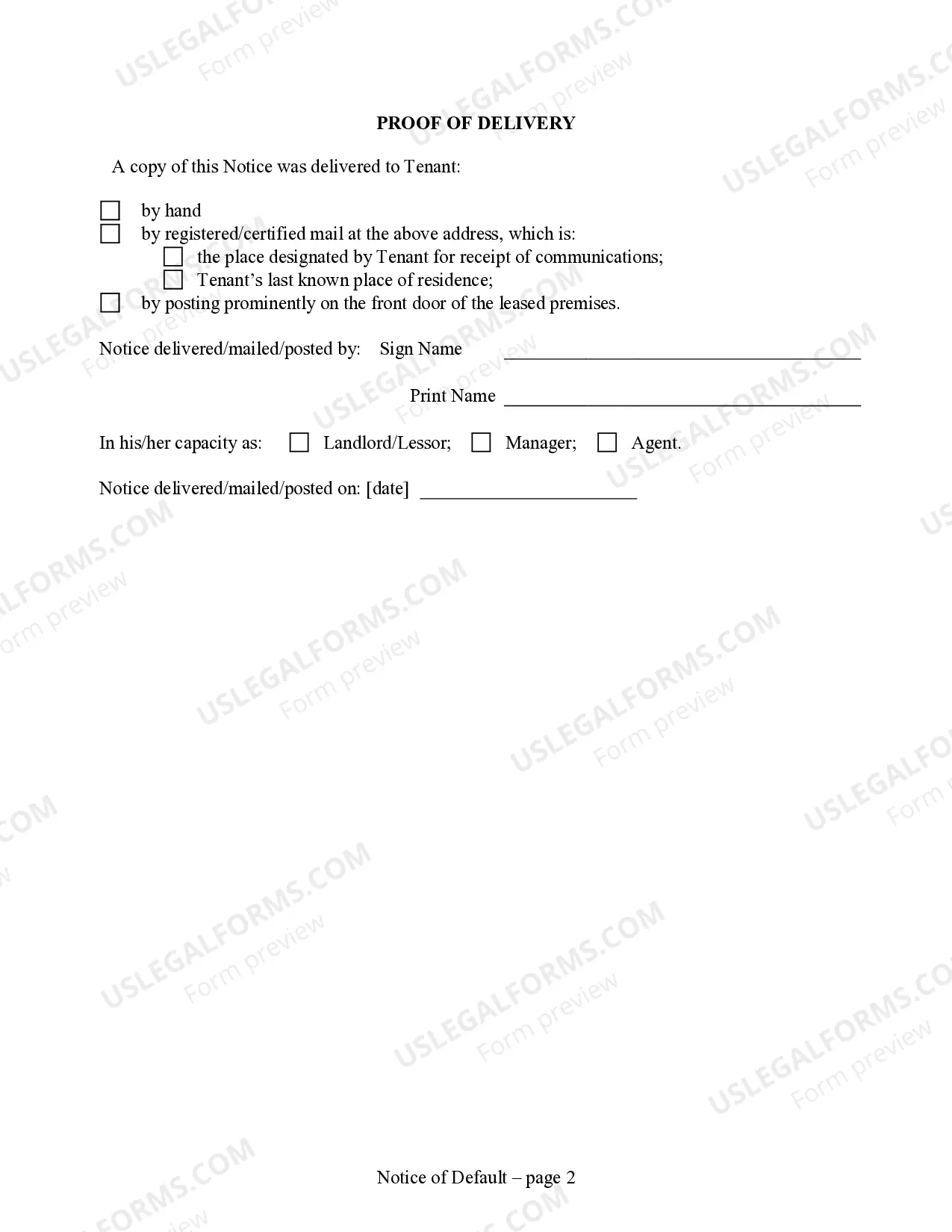
- Proof of delivery options for the notice to the tenant, ensuring legal notice is adequately provided.


Situations where this form applies
This form should be used when a landlord needs to notify a non-residential tenant of their failure to pay rent. It is applicable in situations where the tenant has not paid rent for a specific period and requires a formal warning and timeframe to remedy the situation. Using this notice helps the landlord legally establish a record of the breach and initiate necessary actions should the tenant fail to comply.
Who this form is for
- Landlords managing non-residential properties such as offices, stores, or industrial facilities.
- Property managers acting on behalf of landlords.
- Tenants who want to understand their obligations regarding overdue rent in non-residential leases.
Completing this form step by step
- Identify the parties involved by entering the names and addresses of the landlord and tenant.
- Describe the specific breach of the lease agreement, detailing the overdue rent amount.
- Specify the deadline for curing the default, including the final date for payment.
- Sign and date the notice to formalize the document.
- Choose and execute a method of delivering the notice to the tenant, keeping a record of this action.
Notarization requirements for this form
This form does not typically require notarization to be legally valid. However, some jurisdictions or document types may still require it. US Legal Forms provides secure online notarization powered by Notarize, available 24/7 for added convenience.
Get your form ready online
Our built-in tools help you complete, sign, share, and store your documents in one place.
Make edits, fill in missing information, and update formatting in US Legal Forms—just like you would in MS Word.
Download a copy, print it, send it by email, or mail it via USPS—whatever works best for your next step.
Sign and collect signatures with our SignNow integration. Send to multiple recipients, set reminders, and more. Go Premium to unlock E-Sign.
If this form requires notarization, complete it online through a secure video call—no need to meet a notary in person or wait for an appointment.
We protect your documents and personal data by following strict security and privacy standards.

Make edits, fill in missing information, and update formatting in US Legal Forms—just like you would in MS Word.

Download a copy, print it, send it by email, or mail it via USPS—whatever works best for your next step.

Sign and collect signatures with our SignNow integration. Send to multiple recipients, set reminders, and more. Go Premium to unlock E-Sign.

If this form requires notarization, complete it online through a secure video call—no need to meet a notary in person or wait for an appointment.

We protect your documents and personal data by following strict security and privacy standards.
Common mistakes to avoid
- Failing to specify the exact amount of overdue rent.
- Not clearly stating the deadline for curing the default.
- Neglecting to deliver the notice through a legally acceptable method.
- Omitting the signatures or dates, which may affect the form's validity.
Why use this form online
- Easy access to a professionally drafted legal document.
- Ability to quickly customize the form according to your specific needs.
- Secure and convenient download options that can be completed at your own pace.
- Access to state-specific information that helps ensure compliance with local laws.
Looking for another form?
Form popularity
FAQ
Statute 47a-15 in Connecticut pertains to the 15 Day Notice of Material Noncompliance with Lease or Rental Agreement for nonresidential properties. This law allows landlords to notify tenants of specific lease violations, providing them a 15-day period to correct the issues. If the tenant fails to address the noncompliance within this timeframe, the landlord may take further action, such as termination of the lease. Understanding this statute is crucial for both landlords and tenants to ensure compliance and protect their rights.
When dealing with a disrespectful tenant, maintain professionalism throughout your interactions. Address any issues calmly and document what was said and done. If their behavior affects compliance or lease terms, remind them of the Connecticut 15 Day Notice of Material Noncompliance with Lease or Rental Agreement - Nonresidential - 15 days to Cure, which may prompt them to reconsider their actions.
In Connecticut, landlords need to provide a written notice of non-renewal. This notice should be given at least 30 days before the lease ends, ensuring the tenant has sufficient time to find alternative housing. Familiarizing yourself with the Connecticut 15 Day Notice of Material Noncompliance with Lease or Rental Agreement - Nonresidential - 15 days to Cure can also help clarify your rights.
If a tenant is ignoring your communications, start by documenting all your attempts to reach out. You may want to send a certified letter, reminding them of the Connecticut 15 Day Notice of Material Noncompliance with Lease or Rental Agreement - Nonresidential - 15 days to Cure. This formal reminder can encourage them to respond to your requests more promptly.
Dealing with noncompliance typically involves issuing a formal notice to the party in violation. Referencing the Connecticut 15 Day Notice of Material Noncompliance with Lease or Rental Agreement - Nonresidential - 15 days to Cure is vital in this process. Ensure that you keep a record of all communications, and consider legal options if compliance is not achieved.
Addressing tenant noncompliance requires clear communication and documentation. Initially, provide the tenant with a written notice highlighting the violations and the Connecticut 15 Day Notice of Material Noncompliance with Lease or Rental Agreement - Nonresidential - 15 days to Cure. If the situation does not improve, consider taking further steps, such as issuing a formal eviction notice.
When managing a non responsive landlord, it's crucial to document all communications. Send a formal letter outlining your concerns and reference the Connecticut 15 Day Notice of Material Noncompliance with Lease or Rental Agreement - Nonresidential - 15 days to Cure if necessary. If there is continued silence, consider escalating the issue by seeking legal advice or mediation through an attorney.
A notice to quit can be deemed invalid in Connecticut for several reasons, including failure to provide proper timeframes or lack of necessary information. If the notice does not meet the legal standards established by the Connecticut 15 Day Notice of Material Noncompliance with Lease or Rental Agreement - Nonresidential - 15 days to Cure, it may not hold up in court. It is crucial for landlords to follow the law closely to avoid complications in the eviction process.
In Connecticut, the eviction process typically begins after a landlord has issued a notice to quit, which provides the tenant a set timeframe to correct their violations. With the Connecticut 15 Day Notice of Material Noncompliance with Lease or Rental Agreement - Nonresidential - 15 days to Cure, landlords can commence the eviction process if tenants do not resolve the issues within 15 days. However, the timeline can vary based on specific cases and local court processes.
The 15 day notice to quit in Connecticut is a legal requirement that gives tenants notice to remedy a violation or face eviction. This notice is tied to instances of material noncompliance with a lease or rental agreement, specifically the Connecticut 15 Day Notice of Material Noncompliance with Lease or Rental Agreement - Nonresidential - 15 days to Cure. This process allows landlords to formally communicate issues while giving tenants a fair chance to correct their behavior.