California Partial Release of Property From Deed of Trust for Corporation
Overview of this form
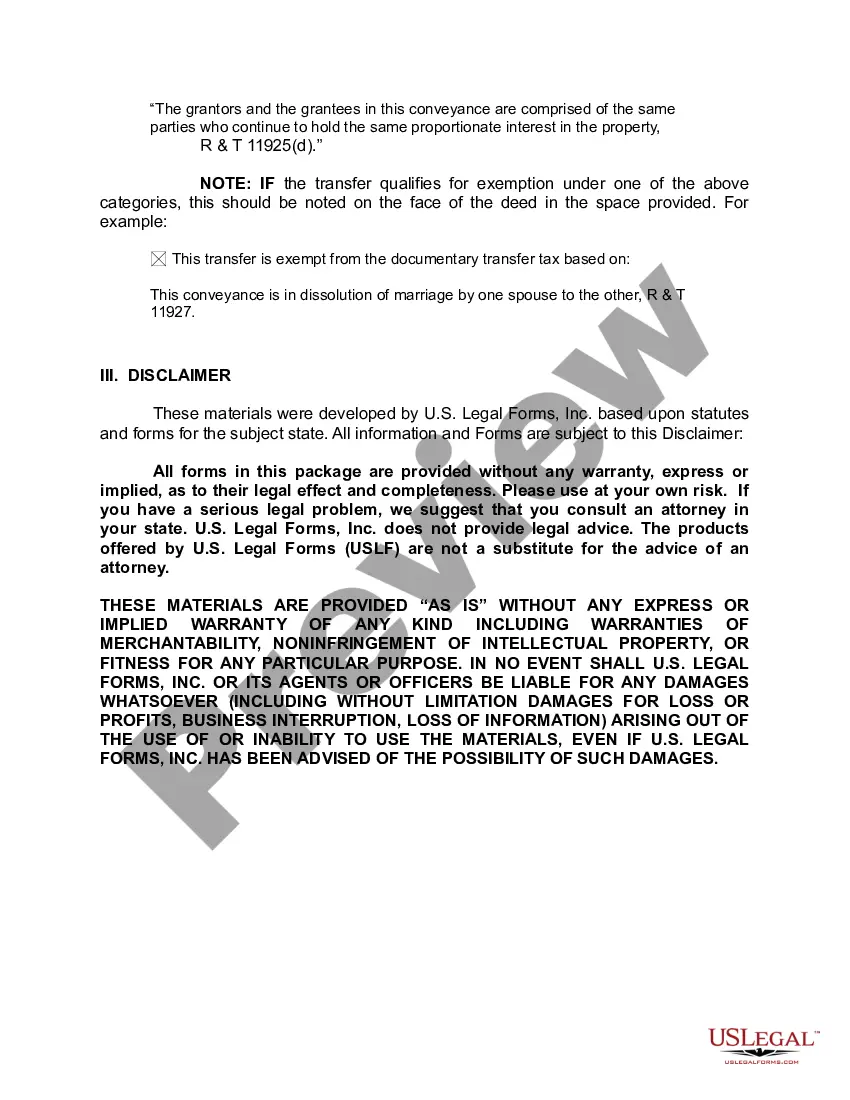
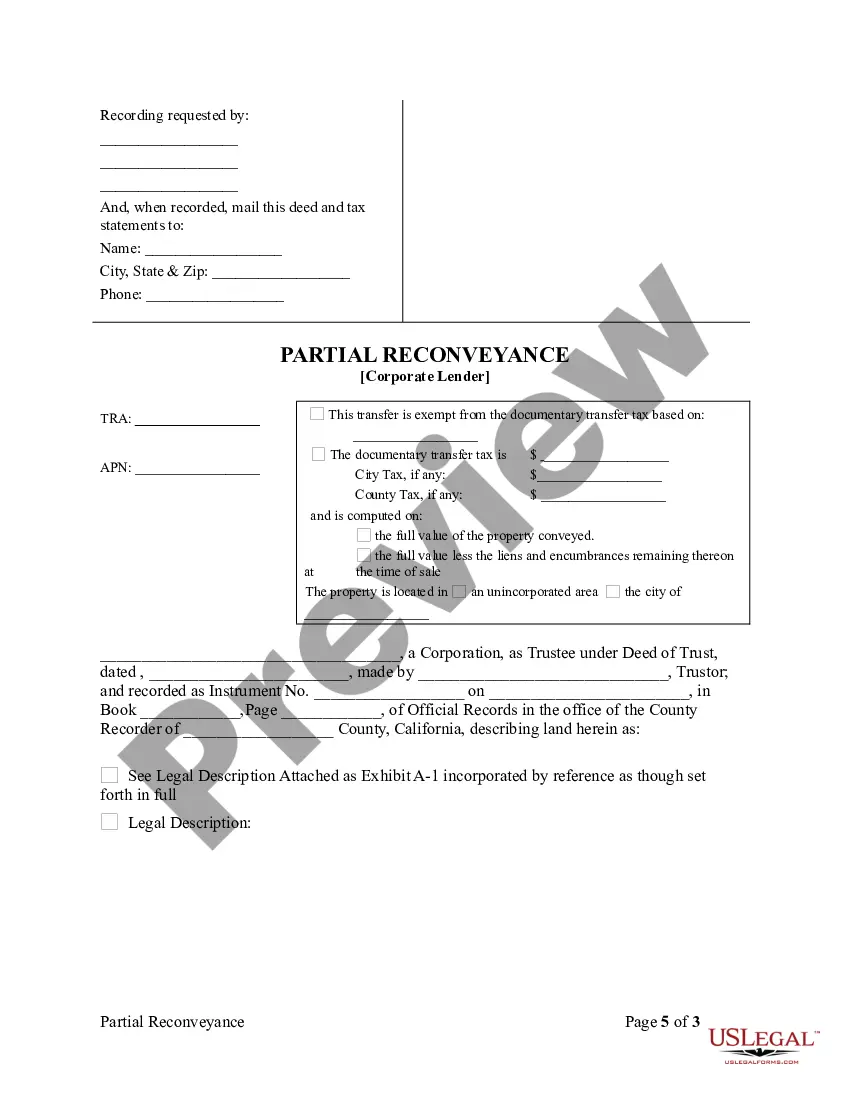
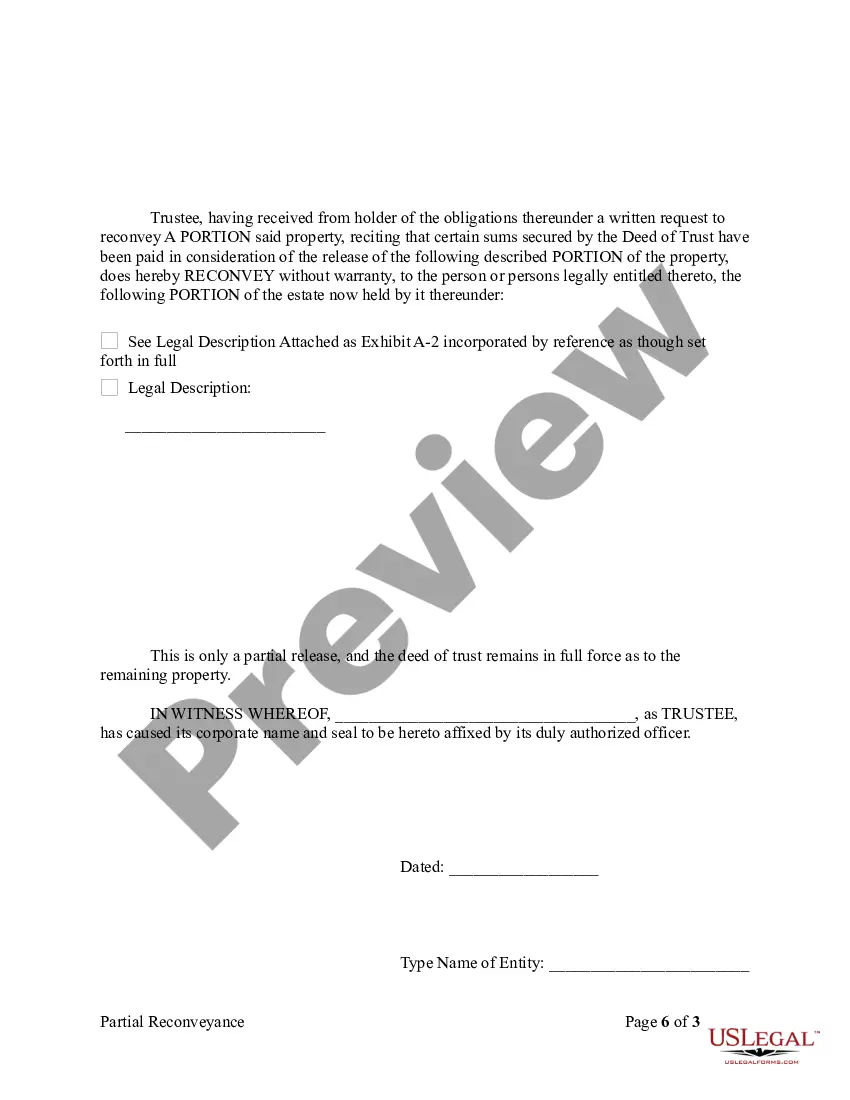
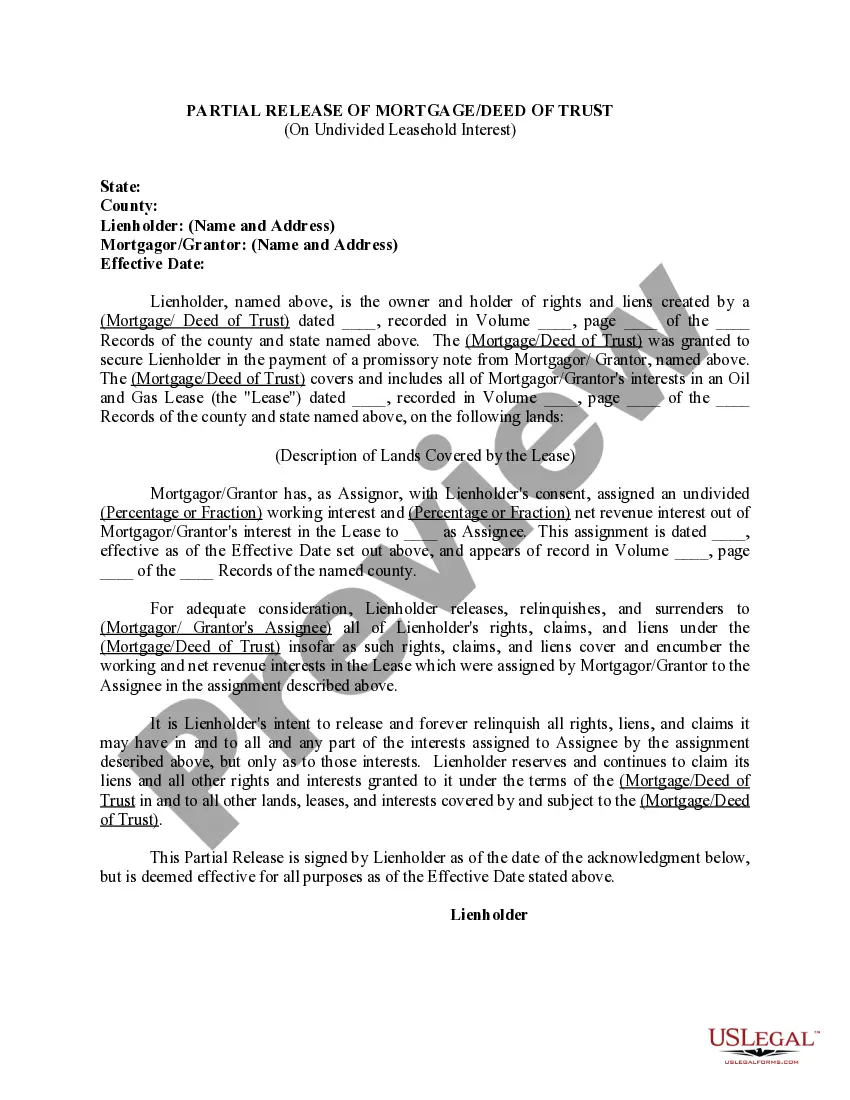
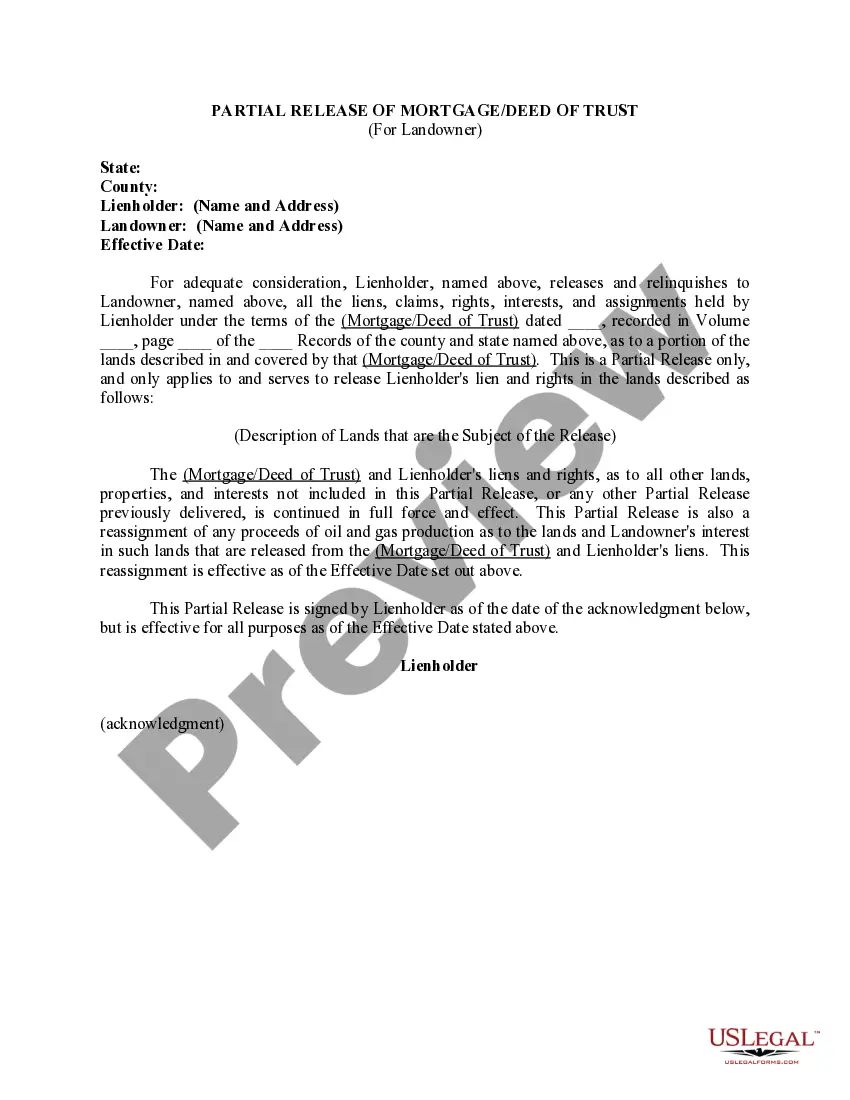
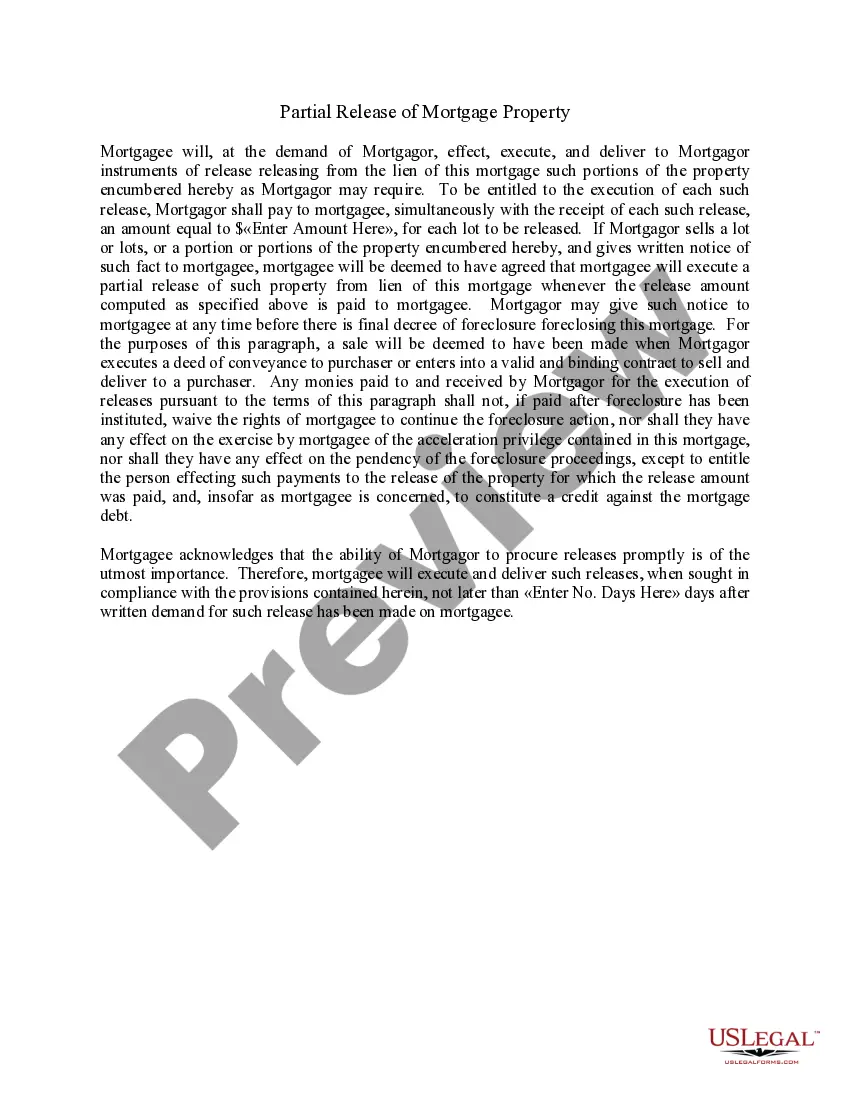
The Partial Release of Property From Deed of Trust for Corporation form is a legal document used to release part of a property from a mortgage or deed of trust held by a corporation. Unlike a full release, this form allows a specific portion of the property to be freed from the mortgage obligations while the remainder stays encumbered. It is essential for situations where a corporation needs to transfer or convey a portion of the property without discharging the entire lien.
Key components of this form
- Identification of the corporation holding the deed of trust.
- Details of the property being released, including legal description.
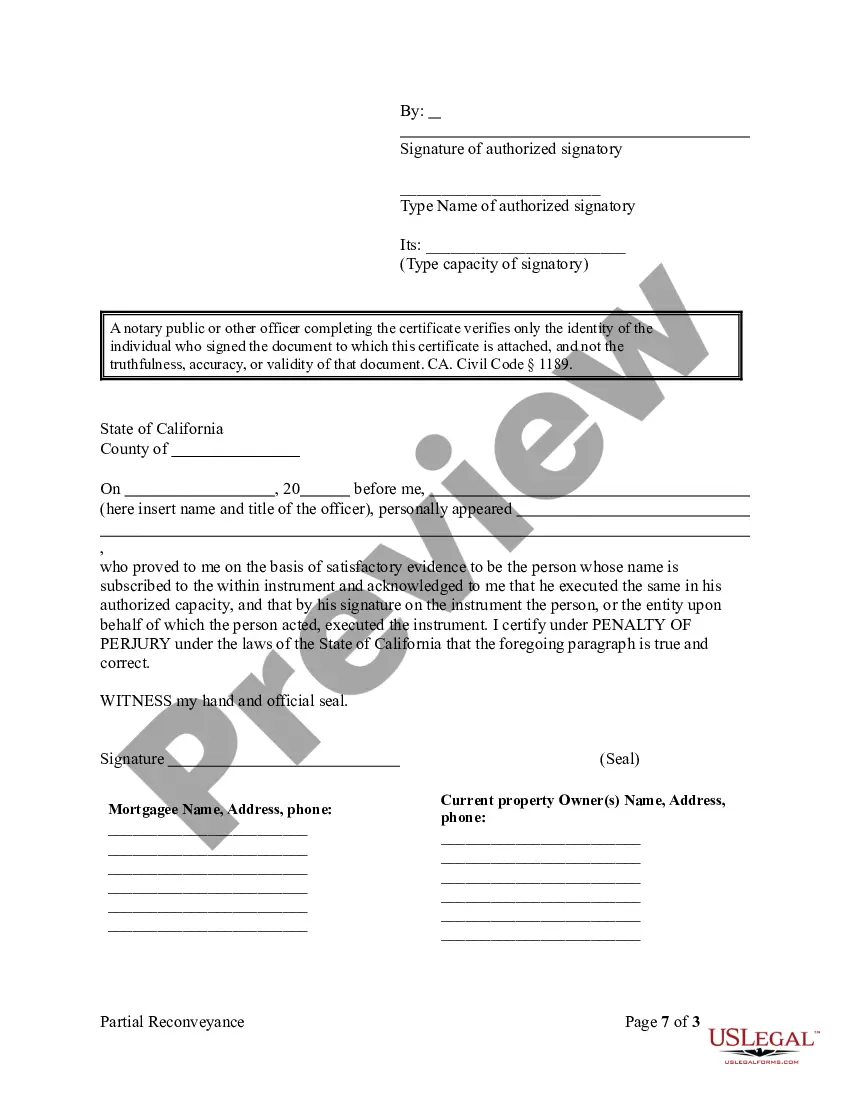
- Signature fields for authorized representatives of the corporation.
- Notary acknowledgment section for authenticity.
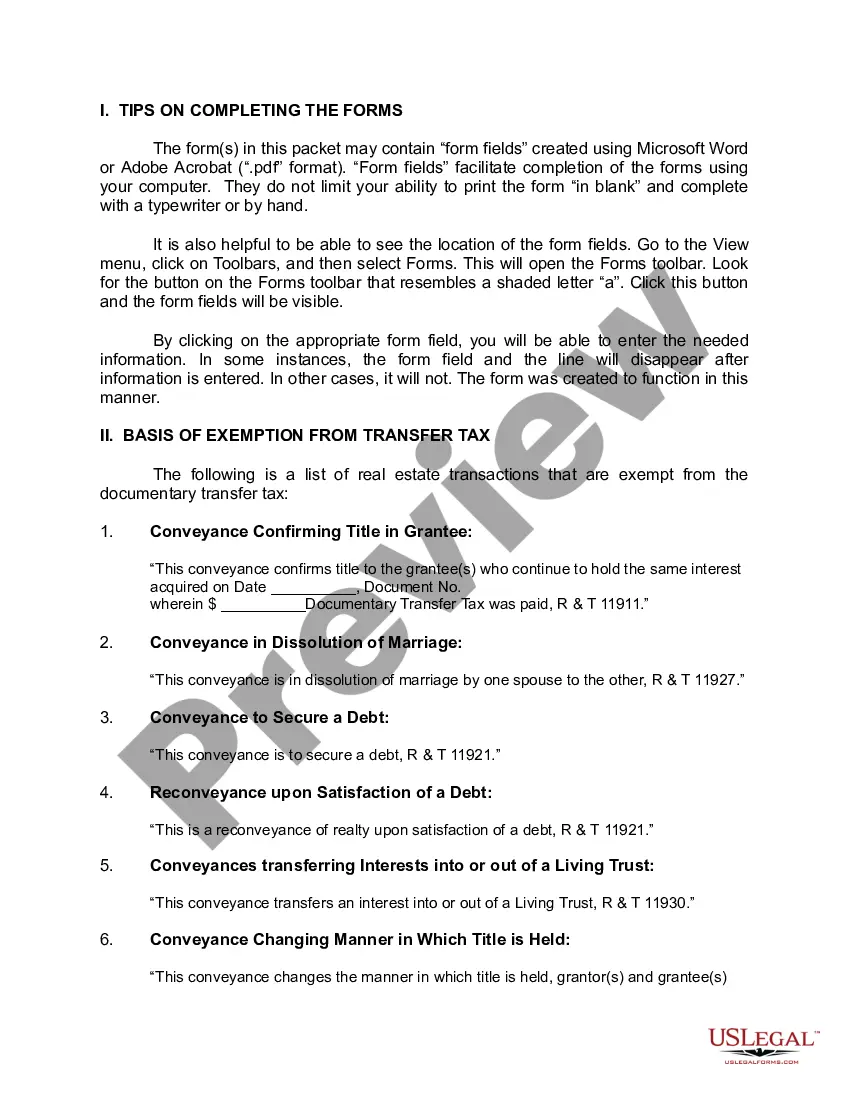
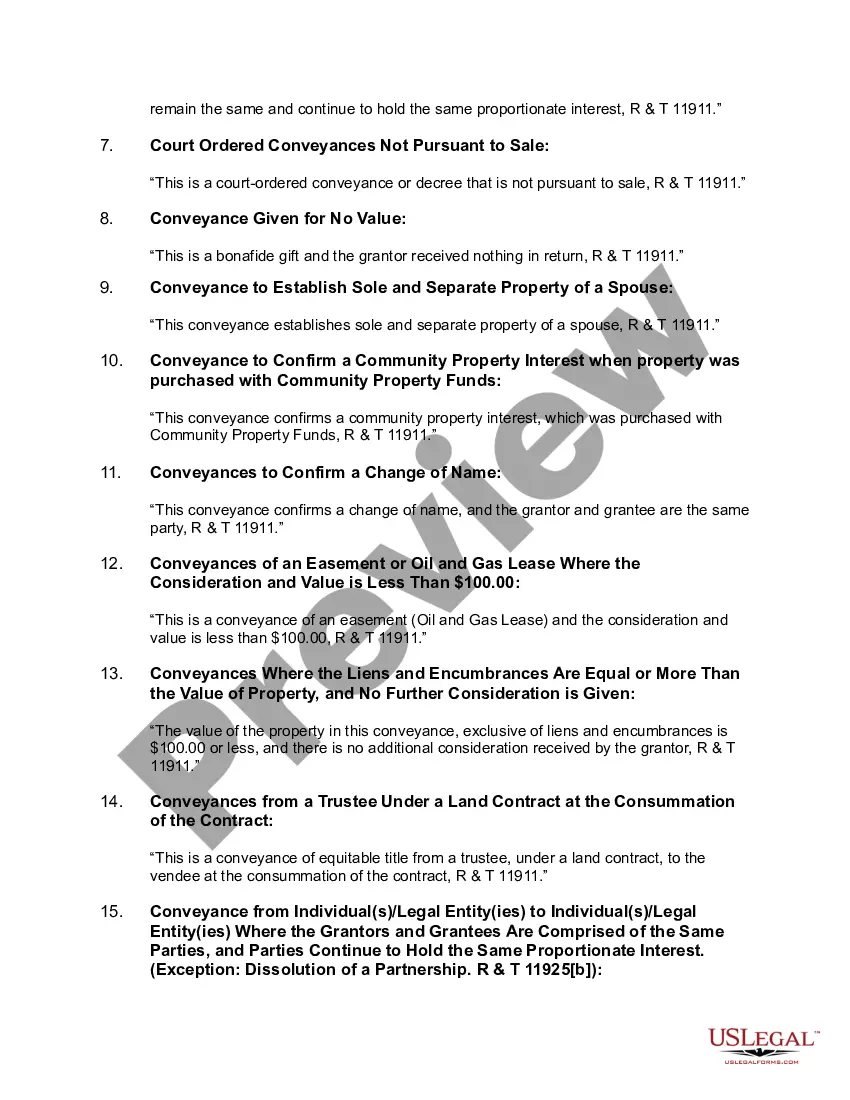
- References to applicable transfer tax exemptions, if any.

Situations where this form applies
This form is typically used when a corporation needs to release part of a property from a deed of trust, usually in circumstances such as selling a portion of the land, restructuring corporate assets, or fulfilling obligations from a lease or partnership agreement. It's a practical solution when partial interest in a property must be conveyed without affecting the entire mortgage agreement.
Who this form is for
- Corporations that hold a deed of trust on real property.
- Real estate professionals involved in partial property transfers.
- Attorneys advising clients on property transactions.
- Individuals authorized by the corporation to execute legal documents.
How to prepare this document
- Identify the corporation by entering its name and address in the designated fields.
- Provide a detailed legal description of the property being released.
- Specify the portion of the property that is being released from the deed of trust.
- Have the appropriate corporate representatives sign the document.
- Obtain a notary's signature and seal to validate the document.
Does this form need to be notarized?
This document requires notarization to meet legal standards. US Legal Forms provides secure online notarization powered by Notarize, allowing you to complete the process through a verified video call, available 24/7.
Get your form ready online
Our built-in tools help you complete, sign, share, and store your documents in one place.
Make edits, fill in missing information, and update formatting in US Legal Forms—just like you would in MS Word.
Download a copy, print it, send it by email, or mail it via USPS—whatever works best for your next step.
Sign and collect signatures with our SignNow integration. Send to multiple recipients, set reminders, and more. Go Premium to unlock E-Sign.
If this form requires notarization, complete it online through a secure video call—no need to meet a notary in person or wait for an appointment.
We protect your documents and personal data by following strict security and privacy standards.

Make edits, fill in missing information, and update formatting in US Legal Forms—just like you would in MS Word.

Download a copy, print it, send it by email, or mail it via USPS—whatever works best for your next step.

Sign and collect signatures with our SignNow integration. Send to multiple recipients, set reminders, and more. Go Premium to unlock E-Sign.

If this form requires notarization, complete it online through a secure video call—no need to meet a notary in person or wait for an appointment.

We protect your documents and personal data by following strict security and privacy standards.
Common mistakes
- Failing to include a detailed legal description of the property.
- Not having the proper authority to sign on behalf of the corporation.
- Neglecting the notary requirement, leading to an invalid form.
- Leaving fields blank or incomplete, which can cause delays in processing.
Advantages of online completion
- Convenience of completing the form at your own pace, from any location.
- Editable templates allow for customization specific to your needs.
- Reliability of forms drafted by licensed attorneys, ensuring legal compliance.
- Immediate access to downloadable documents without waiting for shipping.
Looking for another form?
Form popularity
FAQ
A partial reconveyance of a deed of trust occurs when part of the property covered by the deed is released from the trust. This process allows owners to remove specific parcels from the mortgage obligations while keeping the remaining property under the existing deed of trust. In the context of California, a Partial Release of Property From Deed of Trust for Corporation can facilitate the sale or refinancing of a portion of the property without disrupting the overall financing arrangement. Using a platform like US Legal Forms can simplify this process by providing the necessary documentation and guidance for corporations navigating partial reconveyances.
In California, a deed of trust does not show ownership; rather, it serves as a security interest in the property. The actual ownership is reflected on the property title. Understanding how the California Partial Release of Property From Deed of Trust for Corporation works can clear up any confusion about ownership versus the lender's interest. This distinction is critical for those dealing with property transactions.
To remove someone from a deed without refinancing, you can use a quitclaim deed. This legal document allows the current owner to transfer their interest without affecting existing loans. The California Partial Release of Property From Deed of Trust for Corporation can facilitate this process for corporate properties. It is also best to consult with a legal professional to ensure everything is executed correctly.
In California, to remove a co-owner from your house title, you will need their consent to sign a quitclaim deed. This deed transfers their interest to you, effectively updating the title. The California Partial Release of Property From Deed of Trust for Corporation is beneficial in navigating property matters involving corporations. Legal advice can also help you avoid potential complications during this process.
To remove a co-owner from a property title, you need to execute a deed that relinquishes their interest. This typically involves using a quitclaim deed to transfer ownership. If you are managing corporate property, the California Partial Release of Property From Deed of Trust for Corporation can guide you in ensuring compliance with relevant regulations. Consulting with a real estate attorney is advisable for a seamless transition.
Filling out a California grant deed involves several steps. First, ensure you have the necessary information, like the parties’ names and the property description. You can leverage the California Partial Release of Property From Deed of Trust for Corporation to understand what details need to be included for corporate properties. After you fill out the deed, don’t forget to notarize it and file it with your county's recorder's office.
Yes, you can remove someone's name from a property deed. This process generally involves drafting and signing a quitclaim deed or grant deed. Using the California Partial Release of Property From Deed of Trust for Corporation can also simplify this process, especially for corporations. It is wise to consult with a legal expert to ensure the removal aligns with California laws.
A partial release is often included in situations where a corporation needs to sell or refinance part of a property while retaining the overall ownership structure. Common scenarios might involve development projects or sales of interest in a commercial property. This allows companies to strategically manage real estate assets while dealing with financial obligations. Exploring the California Partial Release of Property From Deed of Trust for Corporation can help streamline this process.
Partial reconveyance occurs when a lender releases a portion of the property from the deed of trust while retaining rights to the remaining part. This process is common in California and allows for greater flexibility in property management for corporate entities. It empowers corporations to reassign portions of their real estate holdings without complete liquidation. Utilizing partial reconveyances can improve financial maneuverability.
A partial deed release is a document that removes a portion of property from the lien of a deed of trust, allowing the owner to sell or refinance that specific section. This process is especially beneficial for corporations that might want to liquidate certain assets without disturbing the entire property. By leveraging the California Partial Release of Property From Deed of Trust for Corporation, businesses can optimize their asset management strategies. Proper documentation and recording are keys to ensuring valid partial releases.