West Virginia Letter from Tenant to Landlord about Landlord using Unlawful Self-Help to Gain Possession
About this form
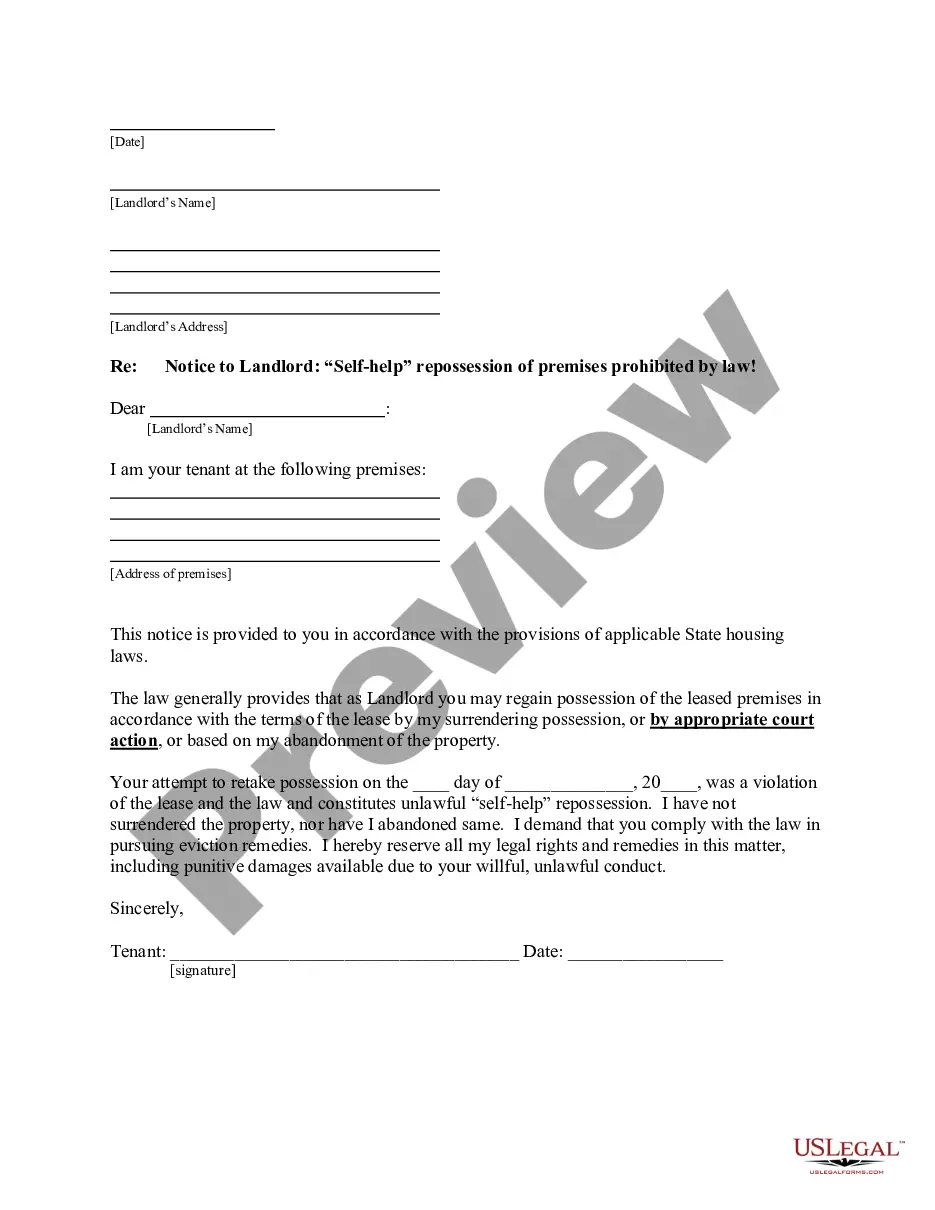
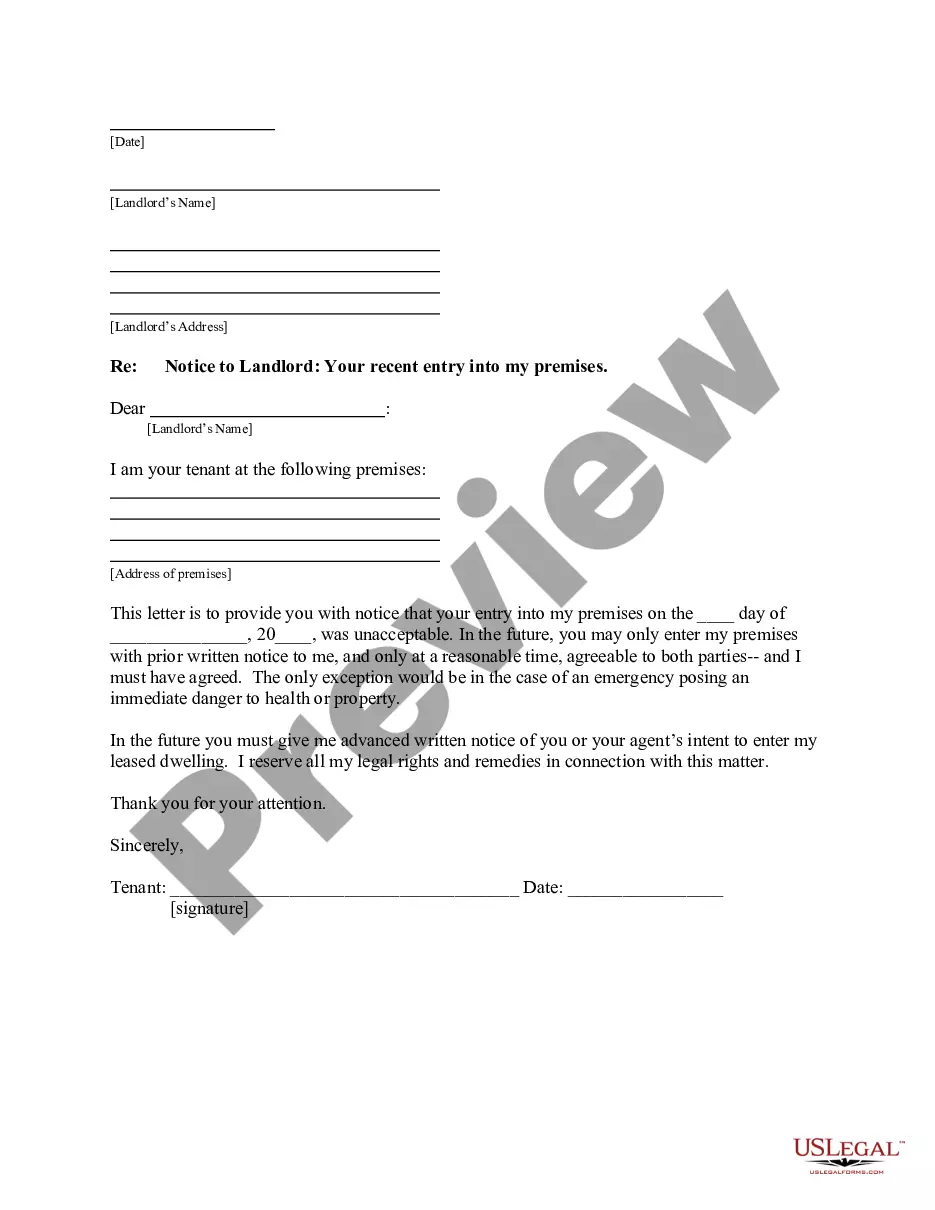
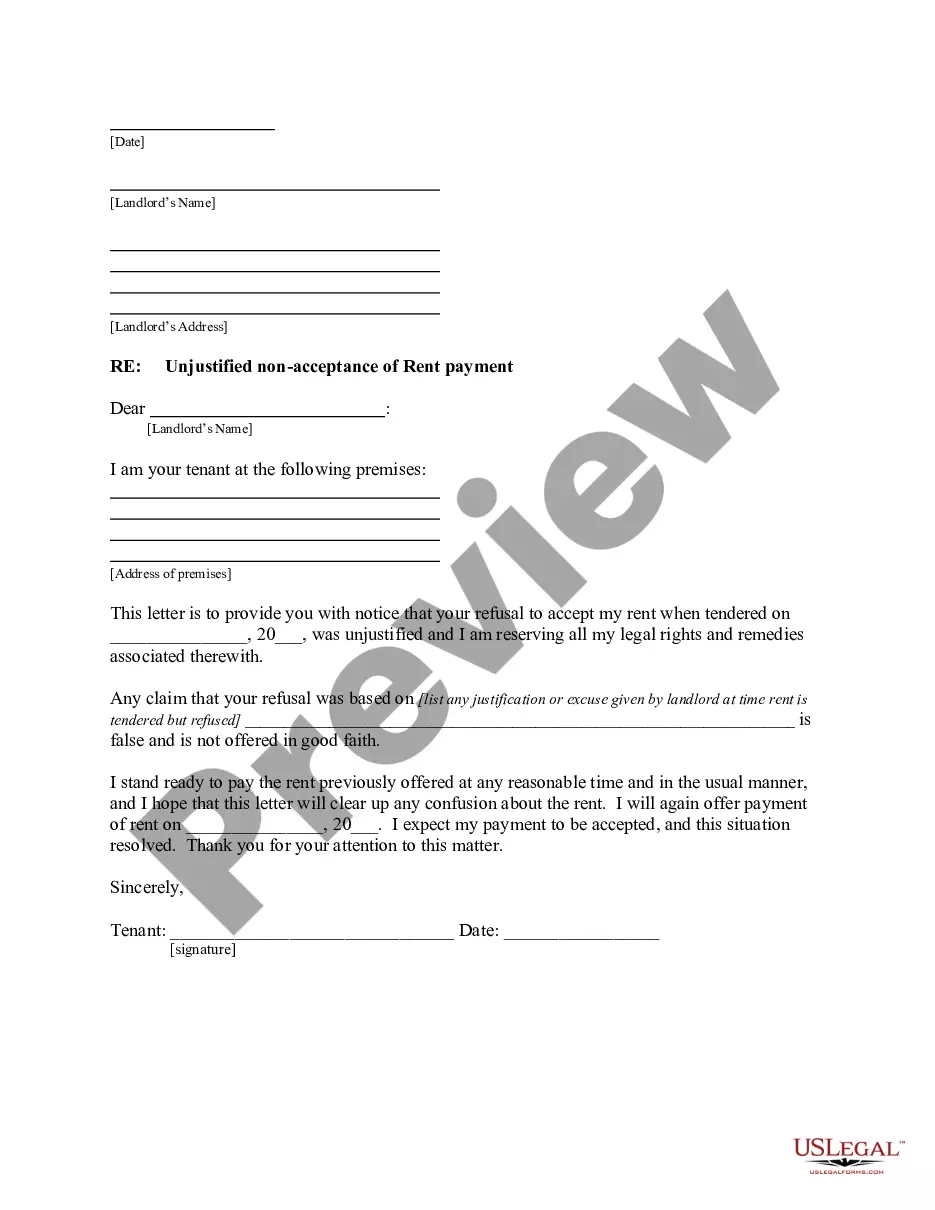
This Letter from Tenant to Landlord about landlord using unlawful self-help to gain possession is a document designed to address illegal eviction practices. It informs the landlord that the tenant has not abandoned the property and that the landlord's attempt to regain possession was unlawful. This form is critical for tenants facing unauthorized eviction actions, helping them assert their rights effectively.
Main sections of this form
- Identification of the tenant and landlord involved in the rental agreement.
- A specific date indicating the unlawful action taken by the landlord.
- A declaration that the property has not been abandoned or surrendered by the tenant.
- A demand for the landlord to comply with legal eviction procedures.
- Reservation of legal rights, including the option for punitive damages due to unlawful conduct.

When to use this form
This form should be used when a tenant has experienced unlawful eviction attempts by the landlord. If a landlord tries to regain possession of the leased property through illegal means, such as changing locks or removing the tenant's belongings without going through appropriate legal channels, this letter serves as a formal notification that such actions are not permitted under the law.
Who this form is for
- Tenants facing unlawful attempts to regain possession of their rental property.
- Individuals who want to formally notify their landlord of illegal eviction actions.
- Any tenant looking to assert their legal rights regarding possession of the lease agreement.
Instructions for completing this form
- Fill in your name and address as the tenant.
- Provide the landlordâs name and address.
- Specify the date of the unlawful action taken by the landlord.
- Clearly state that you have not surrendered or abandoned the property.
- Sign and date the letter to finalize it for delivery.
Notarization requirements for this form
This form does not typically require notarization unless specified by local law. Ensure to check any regional requirements before delivery.
Get your form ready online
Our built-in tools help you complete, sign, share, and store your documents in one place.
Make edits, fill in missing information, and update formatting in US Legal Forms—just like you would in MS Word.
Download a copy, print it, send it by email, or mail it via USPS—whatever works best for your next step.
Sign and collect signatures with our SignNow integration. Send to multiple recipients, set reminders, and more. Go Premium to unlock E-Sign.
If this form requires notarization, complete it online through a secure video call—no need to meet a notary in person or wait for an appointment.
We protect your documents and personal data by following strict security and privacy standards.

Make edits, fill in missing information, and update formatting in US Legal Forms—just like you would in MS Word.

Download a copy, print it, send it by email, or mail it via USPS—whatever works best for your next step.

Sign and collect signatures with our SignNow integration. Send to multiple recipients, set reminders, and more. Go Premium to unlock E-Sign.

If this form requires notarization, complete it online through a secure video call—no need to meet a notary in person or wait for an appointment.

We protect your documents and personal data by following strict security and privacy standards.
Common mistakes to avoid
- Failing to specify the date of the unlawful action taken by the landlord.
- Not including complete contact information for both the tenant and landlord.
- Neglecting to sign the letter before delivery.
Why use this form online
- Conveniently download and customize the letter to your specific situation.
- Edit the content as needed to accurately reflect your circumstances.
- Access reliable legal templates drafted by licensed attorneys.
Looking for another form?
Form popularity
FAQ
If you're seeking damages for emotional distress caused by a landlord's discrimination, or punitive damages for especially blatant and intentional discrimination, a lawsuit may well be your best bet. Understand what's involved in suing your landlord. You may file a lawsuit in either federal or state court.
If you think your landlord is violating the Fair Housing Act, you can get that landlord in trouble by filing a complaint at HUD.gov. Your remedy for breach of quiet enjoyment is to terminate the lease and move or sue in small claims court.
In South Carolina, the Writ of Ejectment allows the county sheriff to remove the renter forcibly. Once issued, the renter will have five days to vacate the premises. Once evicted, you may find that the tenant has left behind some personal belongings.
The landlord had a duty to reasonably maintain the property; The landlord knew or should have known of the dangerous condition; The landlord breached their duty by failing to repair/fix the dangerous condition;
Benefits of Suing Your Landlord Filing a lawsuit does have some potential advantages for tenants. Could Motivate a Landlord to Settle Outside of Court: Notifying your landlord of your intention to sue him or her could motivate your landlord to do everything in their power to avoid actually going to court.
Know your state's landlord/tenant laws. Read and respond to the court summons. Try to work out a settlement. Consider legal counsel. Show up for court. Look sharp and provide evidence.
Know Your Landlord-Tenant Act. Be Aware of Scams. Get Tenant Insurance. Ask For a Walk-Through Inspection. Read the Lease Agreement. Understand Notices and Eviction Terms. Look Out For Your Safety.
An eviction stay of execution due to hardship under CCP 918 in California may be granted if the tenant satisfies the court that extreme hardship would occur but for the temporary delay. A landlord should oppose the motion and specify why the stay would be prejudicial and harmful to the landlord.
If your landlord breaches the warranty of habitability or the warranty of quiet enjoyment, you may be able to sue her to recover monetary damages.In some states, such as California and Arizona, you may be able to seek emotional distress damages if the landlord's actions were particularly egregious.