North Dakota Letter from Tenant to Landlord containing Notice to Cease Unjustified Nonacceptance of Rent
About this form
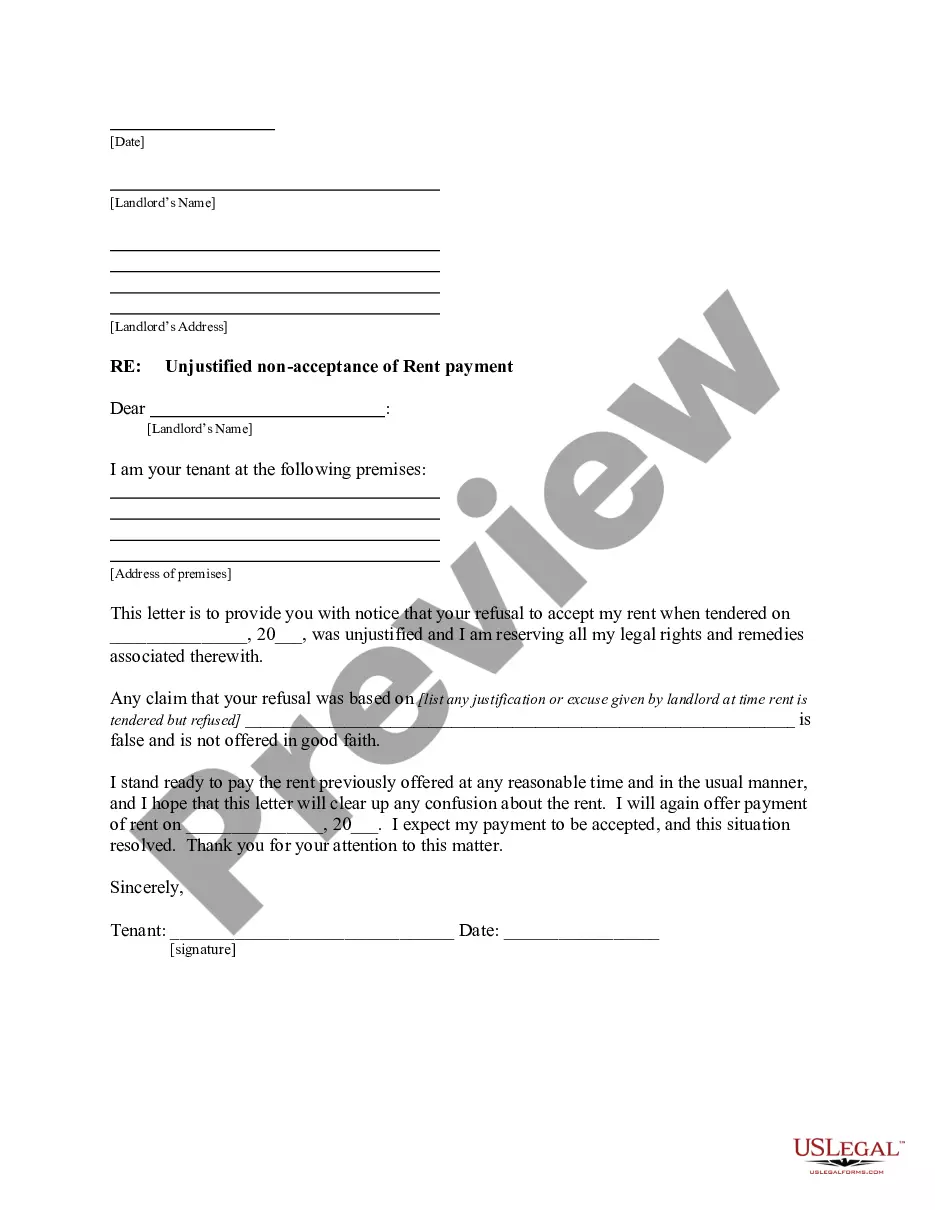
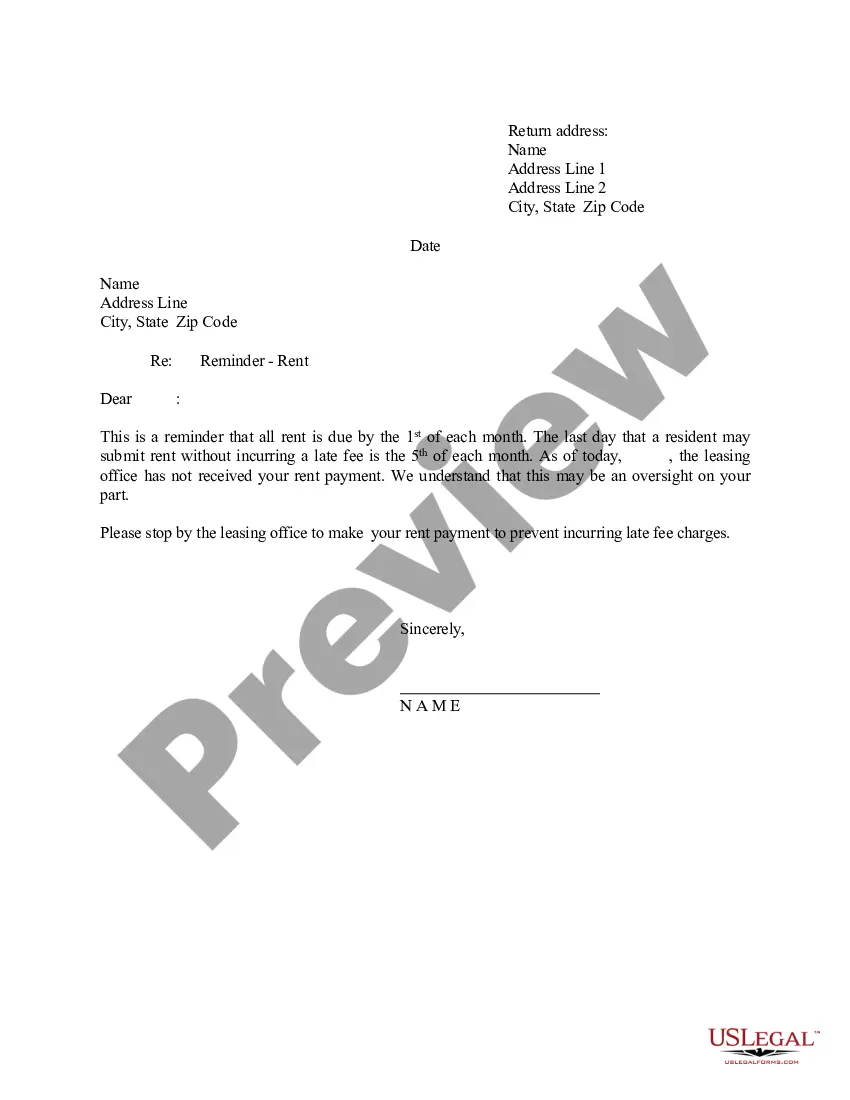
This Letter from Tenant to Landlord containing Notice to Cease Unjustified Nonacceptance of Rent is a formal communication from a tenant to a landlord. It asserts that the landlord's refusal to accept rent payments is unjustified. This form is designed to reserve the tenant's legal rights and remedies in response to the landlord's actions, distinguishing it from other generic tenant-landlord communication formats.
Main sections of this form
- Identification of the tenant and landlord.
- A statement asserting the unjustified nature of the rent refusal.
- Offer to pay rent at a specified future date.
- A request for the acceptance of rent to resolve the issue.
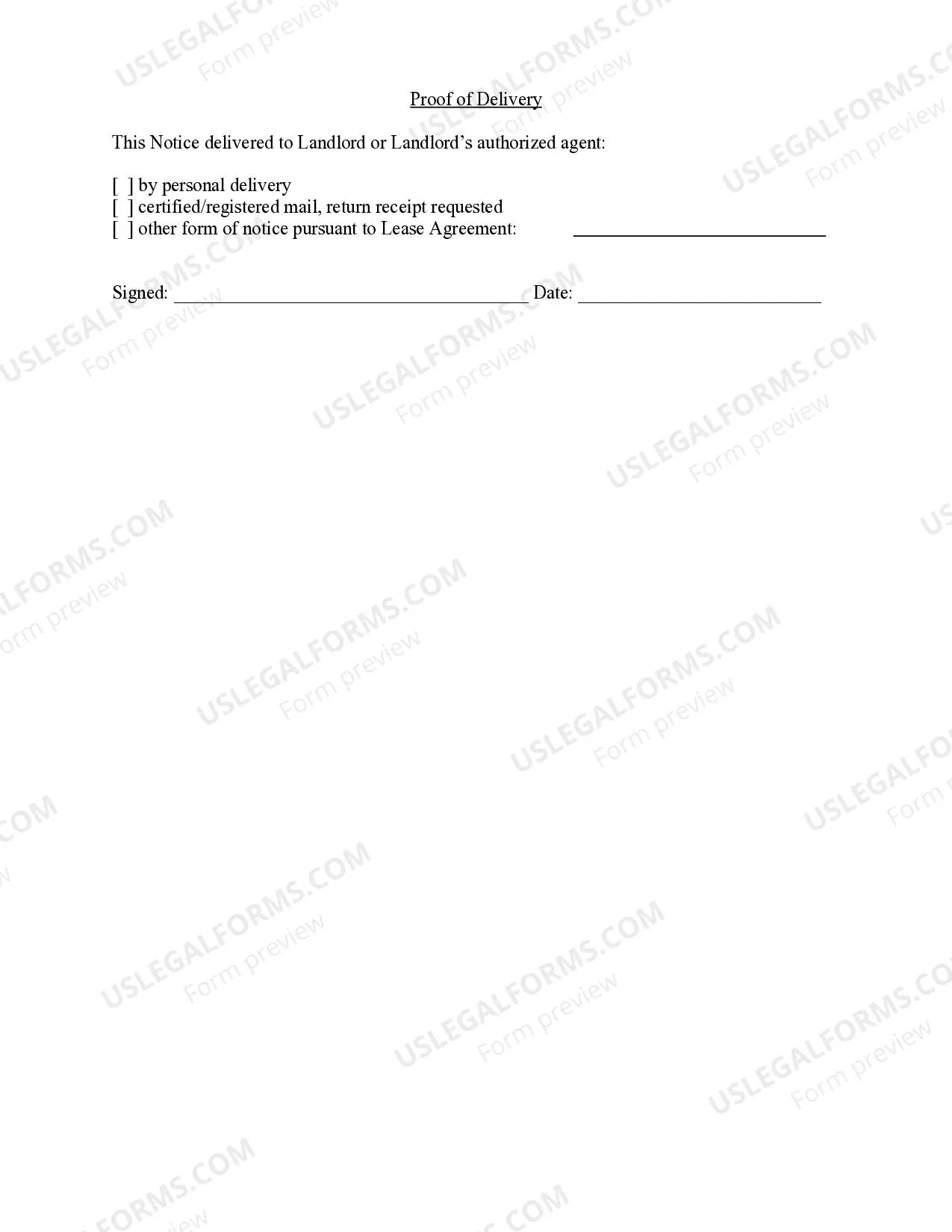
- A section for delivery proof to the landlord or agent.



When this form is needed
This form should be used in situations where a landlord has unjustly refused to accept a tenant's rental payment. It can be beneficial when there is a need to formally document the tenant's assertion that the refusal was not in good faith and to clarify intent to fulfill rental obligations. Using this form helps in preventing future misunderstandings and can serve as documentation for potential legal action if required.
Who this form is for
- Tenants who have faced unjustified rejection of their rent payments.
- Individuals looking to formally communicate with their landlord about rental payment issues.
- Those who want to ensure they reserve all legal rights concerning rental disputes.
Completing this form step by step
- Enter the names and contact information for both the tenant and landlord.
- Clearly state the reasons why the landlord's refusal to accept rent is considered unjustified.
- Specify the date you will offer payment of rent again.
- Include a signature and date to validate the letter.
- Deliver the notice personally or via a method that provides proof of delivery.
Notarization requirements for this form
This form does not typically require notarization unless specified by local law. It is advisable to check specific requirements in your jurisdiction to ensure compliance.
Get your form ready online
Our built-in tools help you complete, sign, share, and store your documents in one place.
Make edits, fill in missing information, and update formatting in US Legal Forms—just like you would in MS Word.
Download a copy, print it, send it by email, or mail it via USPS—whatever works best for your next step.
Sign and collect signatures with our SignNow integration. Send to multiple recipients, set reminders, and more. Go Premium to unlock E-Sign.
If this form requires notarization, complete it online through a secure video call—no need to meet a notary in person or wait for an appointment.
We protect your documents and personal data by following strict security and privacy standards.

Make edits, fill in missing information, and update formatting in US Legal Forms—just like you would in MS Word.

Download a copy, print it, send it by email, or mail it via USPS—whatever works best for your next step.

Sign and collect signatures with our SignNow integration. Send to multiple recipients, set reminders, and more. Go Premium to unlock E-Sign.

If this form requires notarization, complete it online through a secure video call—no need to meet a notary in person or wait for an appointment.

We protect your documents and personal data by following strict security and privacy standards.
Typical mistakes to avoid
- Failing to include specific reasons why the rent refusal is unjustified.
- Not stating a clear date for re-offering rent payment.
- Neglecting to sign and date the letter.
- Using unclear language that could confuse the landlord about your intentions.
Why use this form online
- Convenience of accessing and downloading the form anytime.
- Editability to customize the document based on individual circumstances.
- Access to attorney-drafted forms ensures legal accuracy and reliability.
Legal use & context
- This form serves as a legal document that may be used in court if disputes regarding rent payments arise.
- It highlights the tenant's intention to uphold their rental obligations and protects their legal rights.
- Properly documenting communication with the landlord can help establish a record in case of further legal actions.
Quick recap
- The letter serves as formal notification of the landlordâs refusal to accept rent, emphasizing the tenant's rights.
- Completing this letter accurately helps in preventing future disputes.
- Always keep records of the notice delivery to protect your legal interests.
Looking for another form?
Form popularity
FAQ
No, a landlord cannot just kick you out. They need to follow the formal eviction process provided in your state. If a landlord uses illegal self-help measures, such as changing the locks or throwing out your belongings, you should be able to hold the landlord accountable and remain on the property.
Tell Them The Problem & Consequences. Explain the reason that you want the tenant to go. Offer Them a Way Out. Let the tenant know that you are willing to give them a lump sum of cash in agreement for leaving the property. The Release.
The rental property address, including unit number (if applicable) The names of all tenants on the lease agreement. The date the lease violation notice was written. The specific reason for the notice. The time and date the violation occurred (if applicable)
Yes, your tenant is within their rights to refuse you access to the property. In a lot of cases, tenants will refuse because the date and time isn't convenient for them and will suggest an alternative date or ask you to rearrange. However, some tenants will persistently try to obstruct you from entering the property.
Pay any delinquent rent that is due to the landlord within the allotted time of the notice. Move out of the premises within the allotted time of the notice. File an answer with the judicial court. File a motion to stay with the court.
Using County Court bailiffs (or sometimes High Court Sheriffs) acting under a court order for possession is the ONLY legal way you can physically evict tenants from a property if they refuse to go voluntarily.Sometimes tenants will try to get you to delay and they can be very persuasive.
Approach The Court Of Law You will have to send a legal notice to your tenant asking him/her to pay the arrears of rent or else to vacate within a month. The tenant has to pay rent in the court once it is assessed by the court and in case he/she fails, it invites immediate eviction.
If the tenant refuses, you are permitted to send them a notice to agree or quit the property. The tenant refusing you access constitutes a breach in the lease agreement, so they could be evicted if they continue to deny access.
File for eviction with your local courthouse. Gather evidence. Come to the court hearing to prove your case. Win a writ of possession and have the tenant removed by the sheriff.