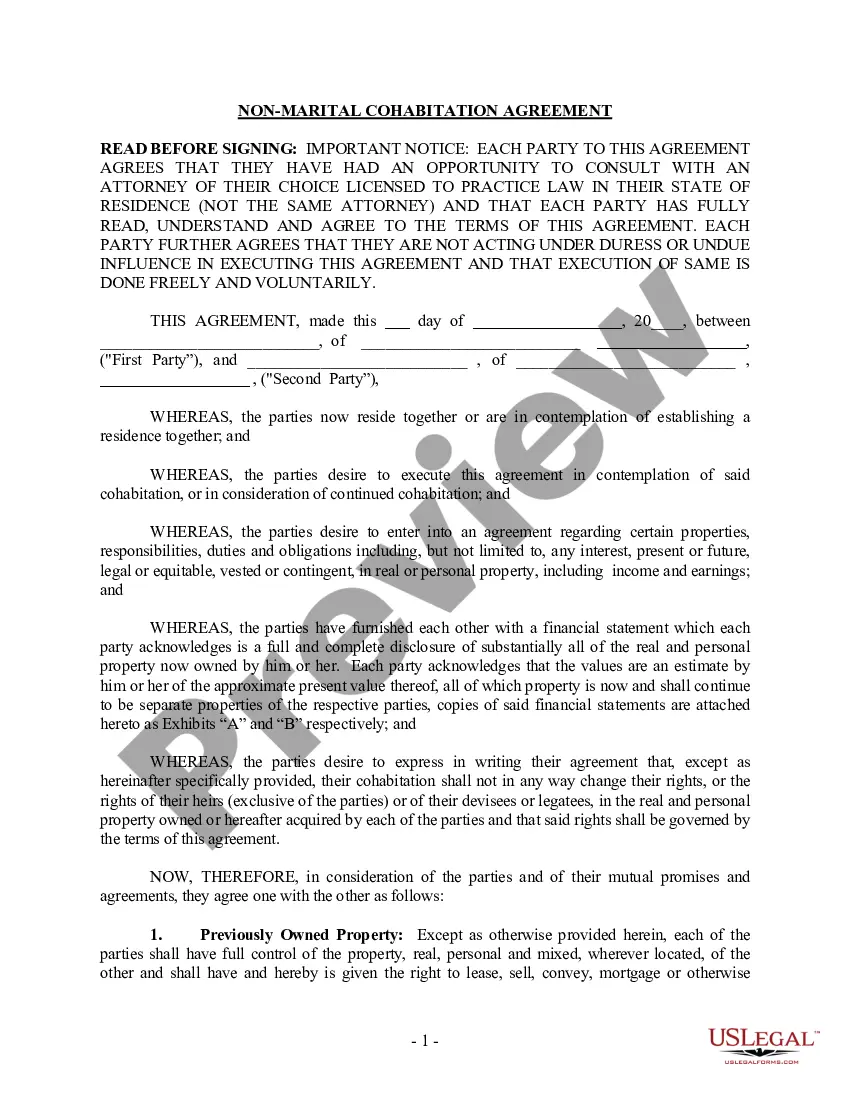
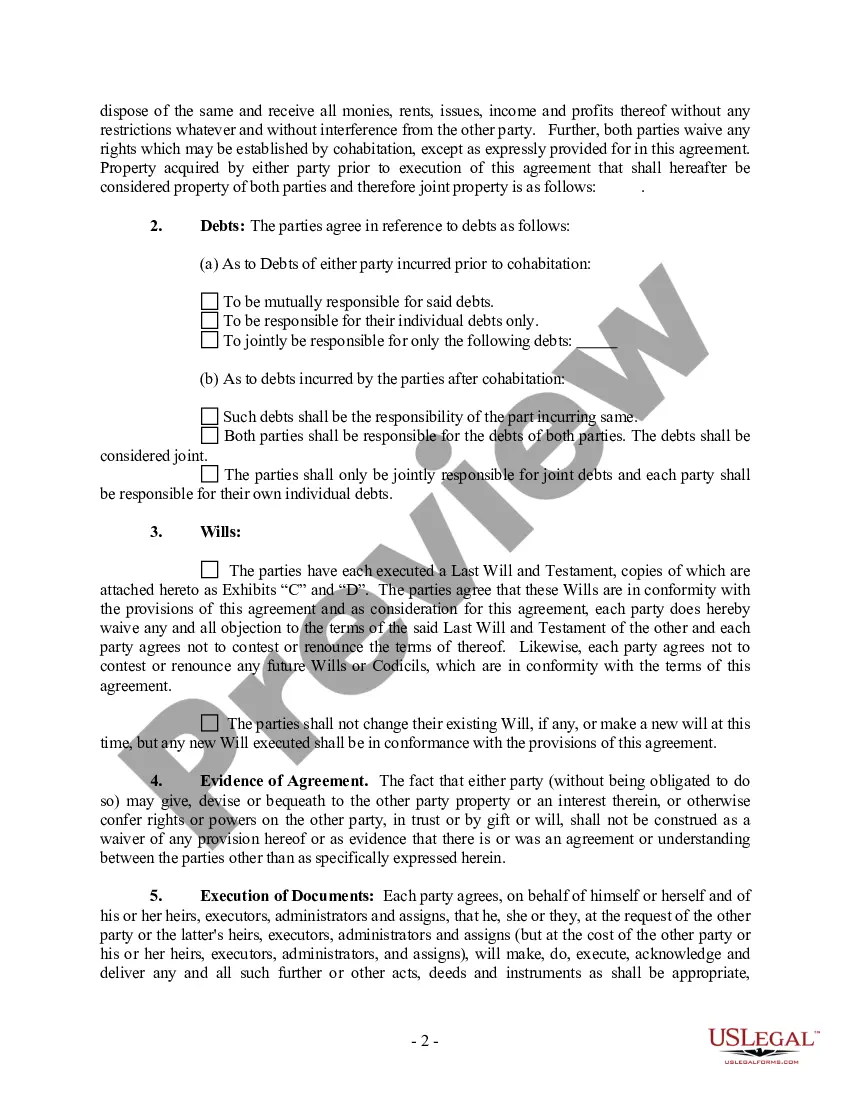
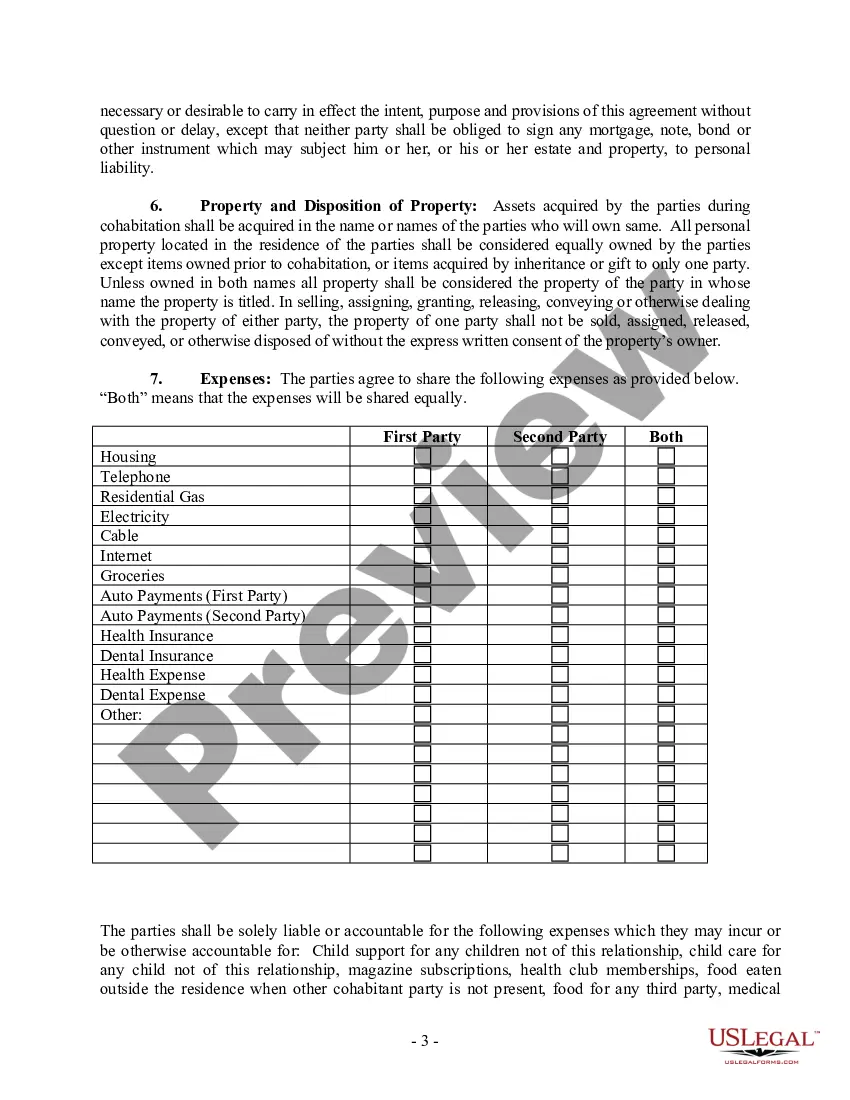
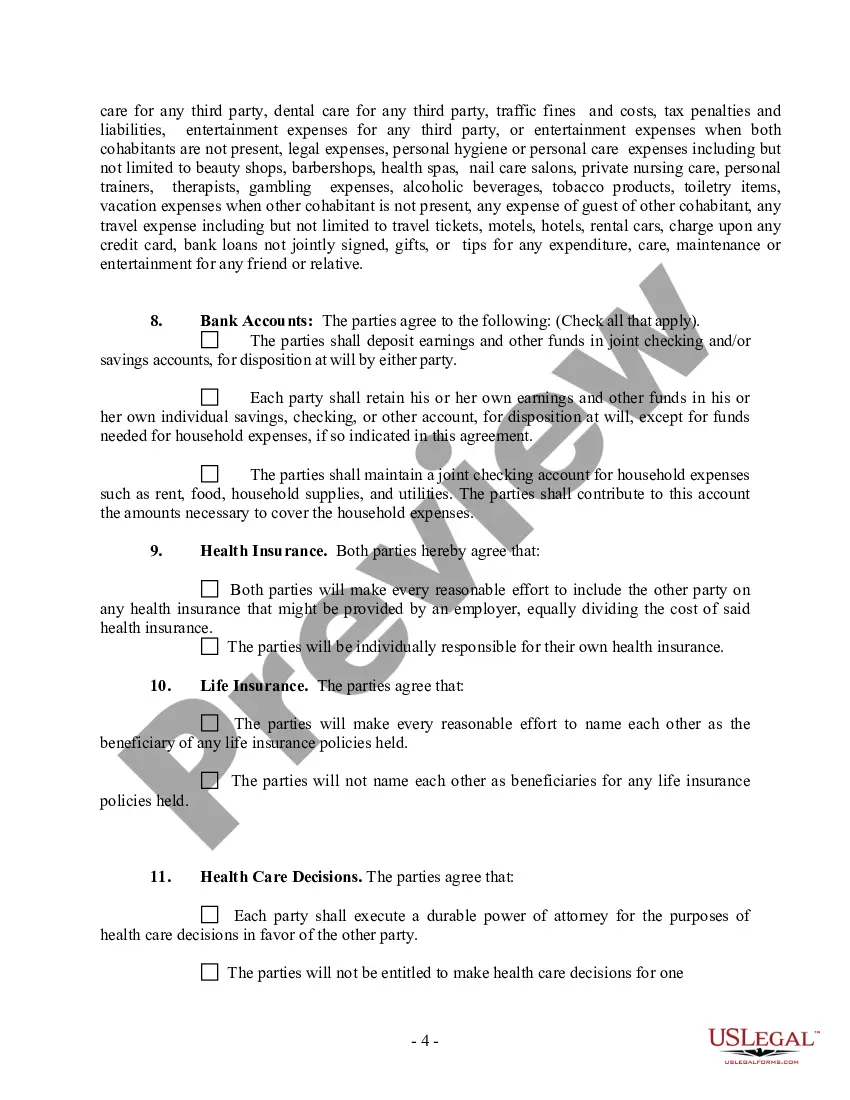
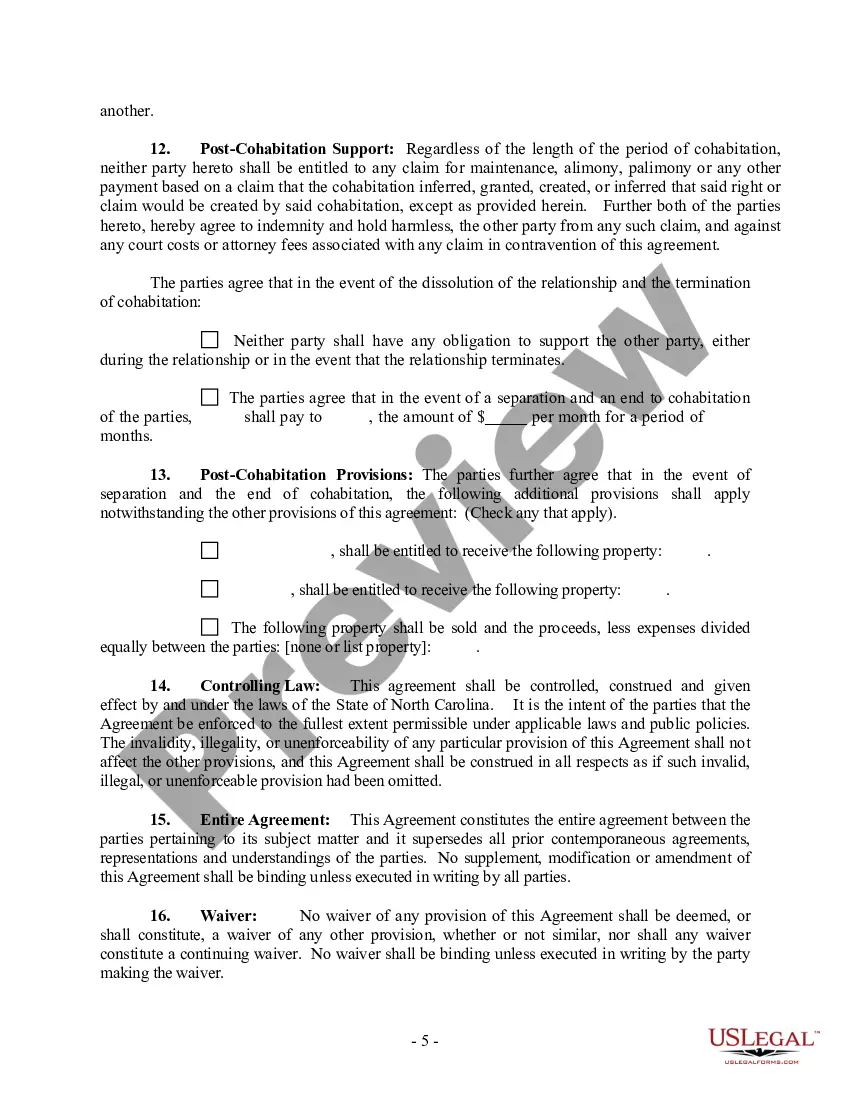
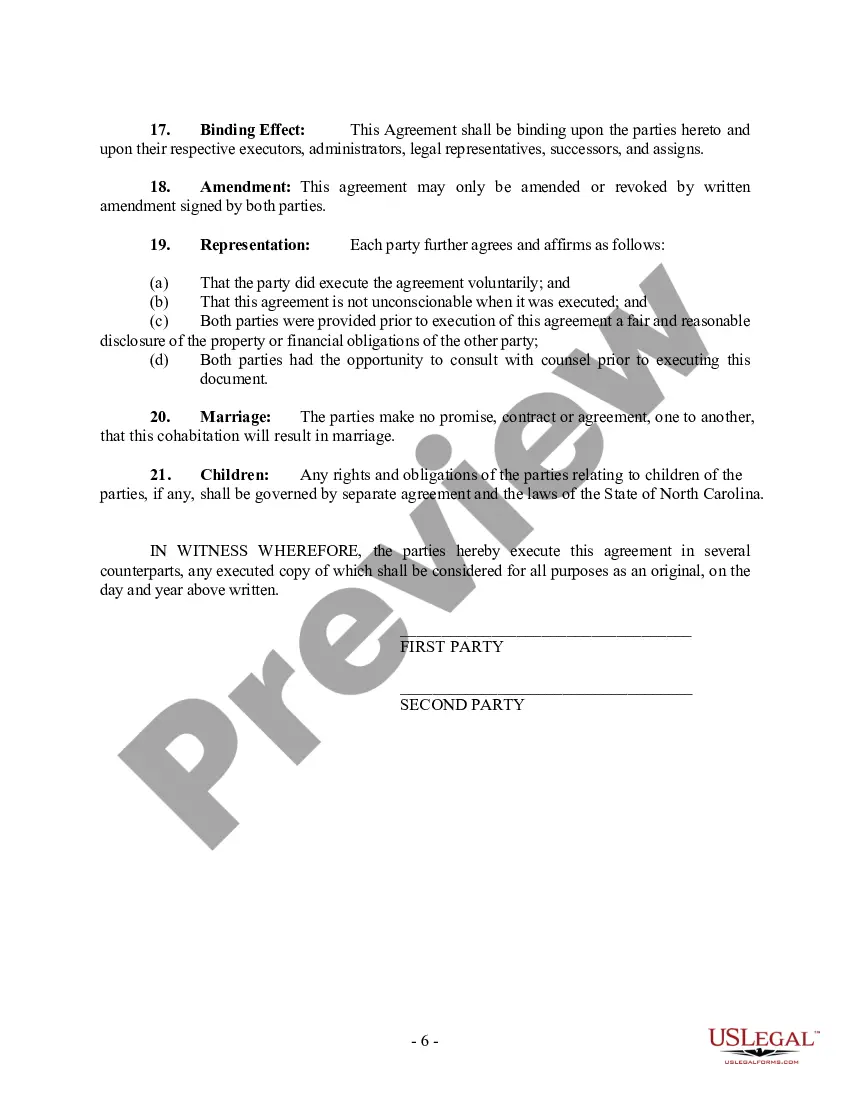
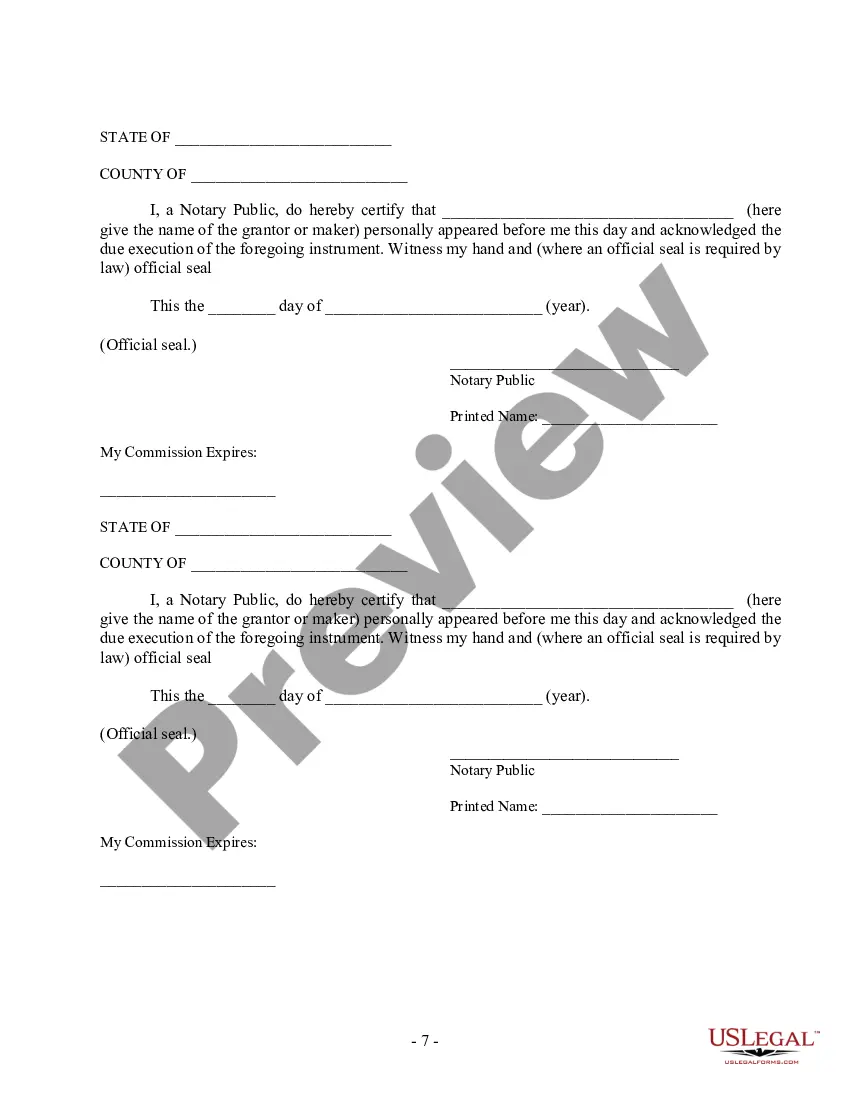
The Non-Marital Cohabitation Living Together Agreement is a legal document designed for couples who choose to live together without being married. This agreement clarifies the expectations and responsibilities of each party regarding expenses, assets, and property division. Unlike a marriage contract, this agreement specifically addresses the unique concerns that arise in a non-marital living arrangement, helping to prevent disputes and misunderstandings that may occur over time.
This agreement is beneficial for couples who are planning to cohabitate but want to establish clear terms regarding their financial and property arrangements. It is useful in avoiding potential disputes about shared expenses or property ownership. Ideal scenarios for using this form include moving in together, setting financial expectations without legal marriage, or clarifying each party's rights in case of a breakup.
To make this form legally binding, it must be notarized. Our online notarization service, powered by Notarize, lets you verify and sign documents remotely through an encrypted video session.
Our built-in tools help you complete, sign, share, and store your documents in one place.
Make edits, fill in missing information, and update formatting in US Legal Forms—just like you would in MS Word.
Download a copy, print it, send it by email, or mail it via USPS—whatever works best for your next step.
Sign and collect signatures with our SignNow integration. Send to multiple recipients, set reminders, and more. Go Premium to unlock E-Sign.
If this form requires notarization, complete it online through a secure video call—no need to meet a notary in person or wait for an appointment.
We protect your documents and personal data by following strict security and privacy standards.

Make edits, fill in missing information, and update formatting in US Legal Forms—just like you would in MS Word.

Download a copy, print it, send it by email, or mail it via USPS—whatever works best for your next step.

Sign and collect signatures with our SignNow integration. Send to multiple recipients, set reminders, and more. Go Premium to unlock E-Sign.

If this form requires notarization, complete it online through a secure video call—no need to meet a notary in person or wait for an appointment.

We protect your documents and personal data by following strict security and privacy standards.
A living arrangement in which an unmarried couple lives together in a long-term relationship that resembles a marriage. In most places, it is legal for unmarried people to live together, although some Zoning laws prohibit more than three unrelated people from inhabiting a house or apartment.
Although the State of North Carolina has never recognized domestic partnerships or civil unions, many states, like Connecticut, Delaware, New Hampshire, and Washington, have converted all civil unions entered in their jurisdiction to marriages, effectively granting those couples all the benefits of marriage.
Two fairly inexpensive and easy ways of proving a spouse is cohabitating are filing a public records request and using the power of the subpoena. Public Records Request I typically make records request for the address in question from all law enforcement agencies in that jurisdiction.
A North Carolina Superior Court judge has issued a formal ruling declaring that the state's law barring unmarried couples from living together is unconstitutional and blocked state officials from enforcing it.
Yes, cohabitation before marriage is still technically illegal in North Carolina.Yes, it is still illegal according to NC general statute 14-184. This law dates back to 1805 and is punishable by up to 60 days in jail. North Carolina is one of only 5 states that still have a cohabitation law on the books.
You do not count as living together unless you are living together in the same home as a couple. People are often told that if their partner stays over 2 or 3 nights a week that it counts as living together.
Yes, cohabitation before marriage is still technically illegal in North Carolina.Yes, it is still illegal according to NC general statute 14-184. This law dates back to 1805 and is punishable by up to 60 days in jail. North Carolina is one of only 5 states that still have a cohabitation law on the books.
A domestic partnership is a marriage alternative, usually but not always reserved for same-sex couples.Domestic partnerships are not recognized by the state of North Carolina, although businesses and municipal governments are permitted to offer benefits to domestic partners.
In North Carolina, cohabitation is defined as two adults living together continually, in a relationship similar to married persons.