Maryland Special Warranty Deed - Individual to Individual
Overview of this form
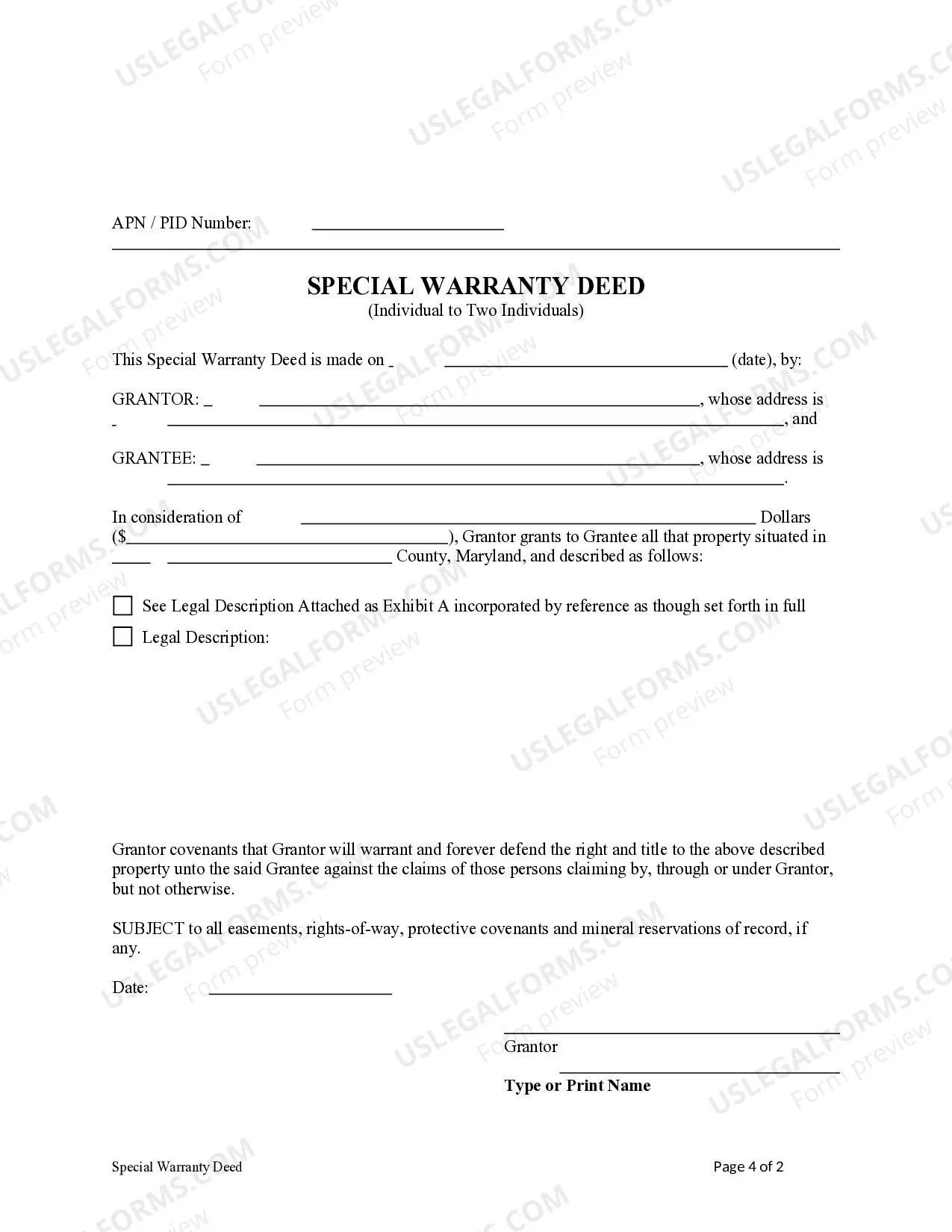
The Special Warranty Deed is a legal document used to transfer property ownership from one individual (the Grantor) to another (the Grantee). Unlike a general warranty deed, the Special Warranty Deed only provides limited guarantees regarding the title. It specifically warrants the title against claims made by individuals who are associated with the Grantor, offering a layer of protection for the Grantee while also limiting the Grantor's liability. This form ensures compliance with state laws and is essential for recording property transfers.
What’s included in this form
- Identification of the Grantor and Grantee
- Description of the property being transferred
- Statement of limited warranty by the Grantor
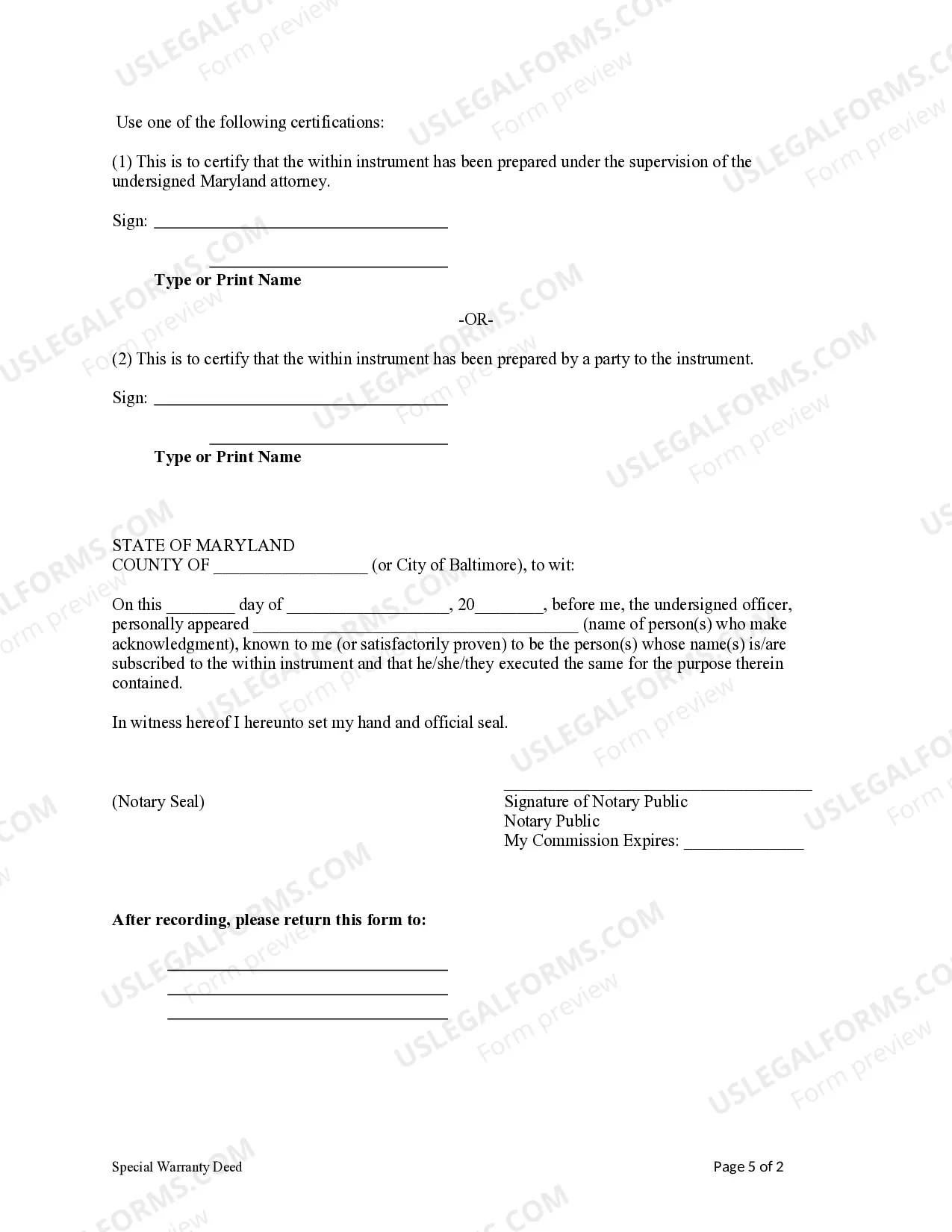
- Signatures of both the Grantor and Grantee
- Date of the transfer





When to use this form
This form is commonly used when an individual wishes to sell or transfer property to another individual while providing limited assurances regarding the property's title. It is appropriate in various situations, such as private sales, inheritance scenarios, or gifting property between family members. Using a Special Warranty Deed can help clarify the extent of the Grantor's liability, making it a suitable choice for many personal transactions.
Who should use this form
- Individuals transferring property ownership to another individual
- Buyers and sellers involved in real estate transactions
- Heirs distributing inherited property among beneficiaries
- Individuals gifting property to family or friends
How to complete this form
- Identify the parties: Provide the full names of the Grantor and Grantee.
- Specify the property: Clearly describe the property being transferred, including any legal descriptions required.
- Enter the warranty clause: Include the language that outlines the limited warranty offered by the Grantor.
- Include signatures: Ensure that both the Grantor and Grantee sign the form appropriately.
- Date the deed: Indicate the date of the property transfer at the designated location.
Notarization guidance
Notarization is required for this form to take effect. Our online notarization service, powered by Notarize, lets you verify and sign documents remotely through an encrypted video session, available 24/7.
Get your form ready online
Our built-in tools help you complete, sign, share, and store your documents in one place.
Make edits, fill in missing information, and update formatting in US Legal Forms—just like you would in MS Word.
Download a copy, print it, send it by email, or mail it via USPS—whatever works best for your next step.
Sign and collect signatures with our SignNow integration. Send to multiple recipients, set reminders, and more. Go Premium to unlock E-Sign.
If this form requires notarization, complete it online through a secure video call—no need to meet a notary in person or wait for an appointment.
We protect your documents and personal data by following strict security and privacy standards.

Make edits, fill in missing information, and update formatting in US Legal Forms—just like you would in MS Word.

Download a copy, print it, send it by email, or mail it via USPS—whatever works best for your next step.

Sign and collect signatures with our SignNow integration. Send to multiple recipients, set reminders, and more. Go Premium to unlock E-Sign.

If this form requires notarization, complete it online through a secure video call—no need to meet a notary in person or wait for an appointment.

We protect your documents and personal data by following strict security and privacy standards.
Common mistakes to avoid
- Failing to properly identify the parties involved.
- Omitting a clear description of the property being transferred.
- Neglecting to sign or date the deed.
- Using outdated forms that do not comply with current laws.
Why complete this form online
- Convenient access to legally drafted documents at your fingertips.
- Edit and customize the form easily using software like Microsoft Word or Adobe Acrobat.
- Reliable templates that comply with legal requirements, saving time and effort.
Legal use & context
- This deed is legally binding upon execution by the Grantor.
- It is important to record the Special Warranty Deed with the appropriate local government office to establish official ownership.
- Limited warranties mean the Grantor is only liable for issues occurring during their ownership.
What to keep in mind
- The Special Warranty Deed provides a limited guarantee on property title.
- It is crucial for Grantors to understand the implications of their limited warranty.
- Always ensure the form is properly completed, signed, and recorded.
Looking for another form?

Form popularity
FAQ
Special warranty deed -- warrants that the seller did nothing personally during his ownership of the property that would create a defect in the title to the property. This is the type of deed most often used in Maryland.
Special warranties allow the transfer of property title between seller and buyer. The purchase of title insurance can mitigate the risk of prior claims to the special warranty deed.
In order to make the Warranty Deed legally binding, the Seller needs to sign it front of a notary public. Then signed and notarized deed must be filed at the city or county office for recording property documents. Before filing with this office all previously billed property taxes must be paid in full.
To change the names on a real estate deed, you will need to file a new deed with the Division of Land Records in the Circuit Court for the county where the property is located. The clerk will record the new deed.
A warranty deed guarantees that: The grantor is the rightful owner of the property and has the legal right to transfer the title.The title would withstand third-party claims to ownership of the property. The grantor will do anything to ensure the grantee's title to the property.
A statutory warranty deed is different from a warranty deed because it is a shorter form made available through your state's statutes and it may not outright list the promise that the title is guaranteed to be clear. Instead, because it is a statutory form, this guarantee is implied and is still legally enforceable.
Typically, the lender will provide you with a copy of the deed of trust after the closing. The original warranty deeds are often mailed to the grantee after they are recorded. These are your original copies and should be kept in a safe place, such as a fireproof lockbox or a safe deposit box at a financial institution.
A special warranty deed to real estate offers protection to the buyer through the seller's guarantee that the title has been free and clear of encumbrances during their ownership of the property. It does not guarantee clear title beyond their ownership.