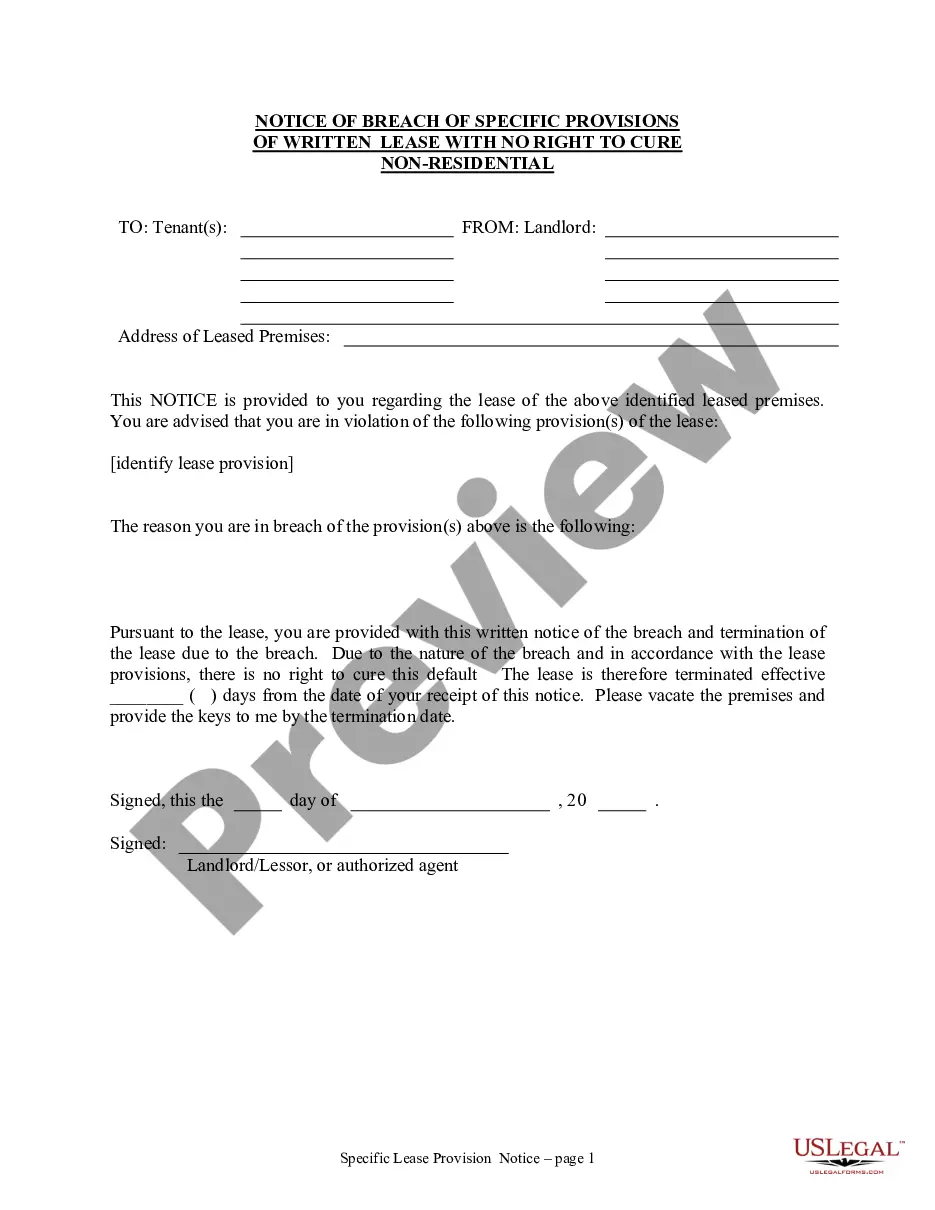
The Notice of Breach of Written Lease for Violating Specific Provisions of Lease with No Right to Cure for Nonresidential Property is a formal document that landlords use to inform tenants about violations of lease terms. Unlike other lease notices, this specific form terminates the lease without providing the tenant an opportunity to correct the breach. It serves as a critical legal tool in nonresidential property management where compliance with the lease is essential to avoid disputes and ensure orderly property use.
This form should be used when a landlord needs to formally notify a tenant of lease violations that cannot be remedied. It is applicable in situations such as repeated late payments, unauthorized alterations to the property, or failure to comply with specific lease conditions stated in a nonresidential lease agreement. Using this form ensures that the landlord complies with legal notice requirements and avoids future disputes.
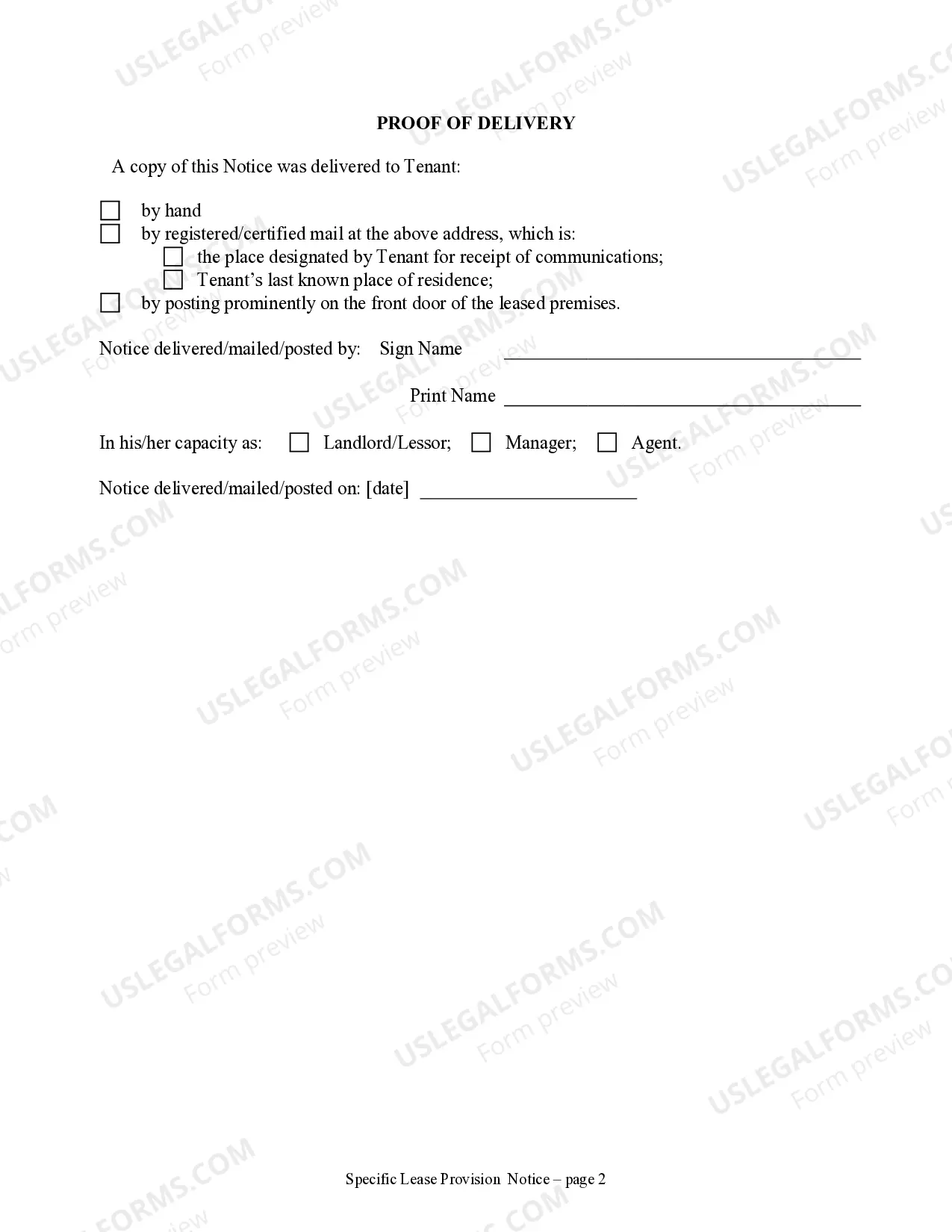
This form does not typically require notarization unless specified by local law. However, ensure that proper protocol is followed in delivering the notice to maintain its legal validity.
Our built-in tools help you complete, sign, share, and store your documents in one place.
Make edits, fill in missing information, and update formatting in US Legal Forms—just like you would in MS Word.
Download a copy, print it, send it by email, or mail it via USPS—whatever works best for your next step.
Sign and collect signatures with our SignNow integration. Send to multiple recipients, set reminders, and more. Go Premium to unlock E-Sign.
If this form requires notarization, complete it online through a secure video call—no need to meet a notary in person or wait for an appointment.
We protect your documents and personal data by following strict security and privacy standards.

Make edits, fill in missing information, and update formatting in US Legal Forms—just like you would in MS Word.

Download a copy, print it, send it by email, or mail it via USPS—whatever works best for your next step.

Sign and collect signatures with our SignNow integration. Send to multiple recipients, set reminders, and more. Go Premium to unlock E-Sign.

If this form requires notarization, complete it online through a secure video call—no need to meet a notary in person or wait for an appointment.

We protect your documents and personal data by following strict security and privacy standards.
If a tenant fails to pay rent, breaks a rule, or significantly damages the property, then it is considered breach of contract and you have grounds for eviction. If there are people living in the unit that are not on the lease, then that is also breach of contract and you have grounds to evict them.
In many cases, the lease may give the tenant the option to pay an early termination fee. If this is the case, tenants can expect to pay one to two months' rent in order to exit the lease agreement.
If a tenant breaches a tenancy agreement it is possible that their landlord will try and evict them from the property. The sort of breaches of tenancy which result in a landlord seeking a court order for possession include:Damage to the property (eg broken windows)
If you pay all outstanding charges before moving, including any back rent and fees, breaking a lease won't hurt your credit score. However, breaking a lease can damage your credit if it results in unpaid debt.Landlords generally don't report unpaid rent to credit bureaus.
If a resident fails to abide by the agreed-upon terms, legal action can be taken. If an eviction is the end-result of this action, it will stay listed on the resident's record for up to seven years. The most common reason evictions are requested involves failure to pay rent.
So you might not have to pay much, if any additional rent, when you break your lease. You need pay only the amount of rent the landlord loses because you moved out early. This is because Louisiana requires landlords to take reasonable steps to keep their losses to a minimumor to mitigate damages in legal terms.
Under California law, a lease does have to be in writing to be enforceable, but only when the lease is for a period of more than a year.
If you break a lease without legal grounds to do so, you may: Be required to pay the rent for the remaining months on your lease. Be subject to legal action from your landlord, and/or. Receive a negative mark on your credit report.