Kansas Letter from Tenant to Landlord about Landlord using Unlawful Self-Help to Gain Possession
About this form
This form is a letter from a tenant to a landlord concerning the unlawful self-help methods used by the landlord to gain possession of rented property. The purpose of this letter is to inform the landlord that their attempts to reclaim the property outside the legal eviction process are illegal. This letter also emphasizes the tenant's rights regarding possession under the lease agreement and local laws.
Form components explained
- Date of the unlawful self-help action taken by the landlord.
- Explanation of the tenant's position regarding the possession of the property.
- Demand for compliance with legal eviction methods.
- Reservation of all legal rights, including potential claims for damages.
- Signature line for the tenant to provide their name and date of the letter.

Situations where this form applies
You should use this letter when your landlord attempts to regain possession of the rental property through illegal means, such as changing locks or forcibly removing your belongings. This form serves as a formal notice that such actions are against the law and that you expect the landlord to follow legal eviction processes.
Who should use this form
- Tenants who have experienced unlawful eviction attempts by their landlord.
- Individuals who wish to assert their rights under a rental agreement.
- Those seeking to formally notify their landlord of legal boundaries regarding eviction.
Instructions for completing this form
- Identify and enter the date when the landlord attempted the unlawful action.
- Clearly state that you have not abandoned or surrendered the property.
- Include a demand for the landlord to follow legal eviction procedures.
- Reserve your rights to pursue damages for unlawful conduct.
- Sign and date the letter at the bottom to give it legal standing.
Notarization guidance
In most cases, this form does not require notarization. However, some jurisdictions or signing circumstances might. US Legal Forms offers online notarization powered by Notarize, accessible 24/7 for a quick, remote process.
Get your form ready online
Our built-in tools help you complete, sign, share, and store your documents in one place.
Make edits, fill in missing information, and update formatting in US Legal Forms—just like you would in MS Word.
Download a copy, print it, send it by email, or mail it via USPS—whatever works best for your next step.
Sign and collect signatures with our SignNow integration. Send to multiple recipients, set reminders, and more. Go Premium to unlock E-Sign.
If this form requires notarization, complete it online through a secure video call—no need to meet a notary in person or wait for an appointment.
We protect your documents and personal data by following strict security and privacy standards.
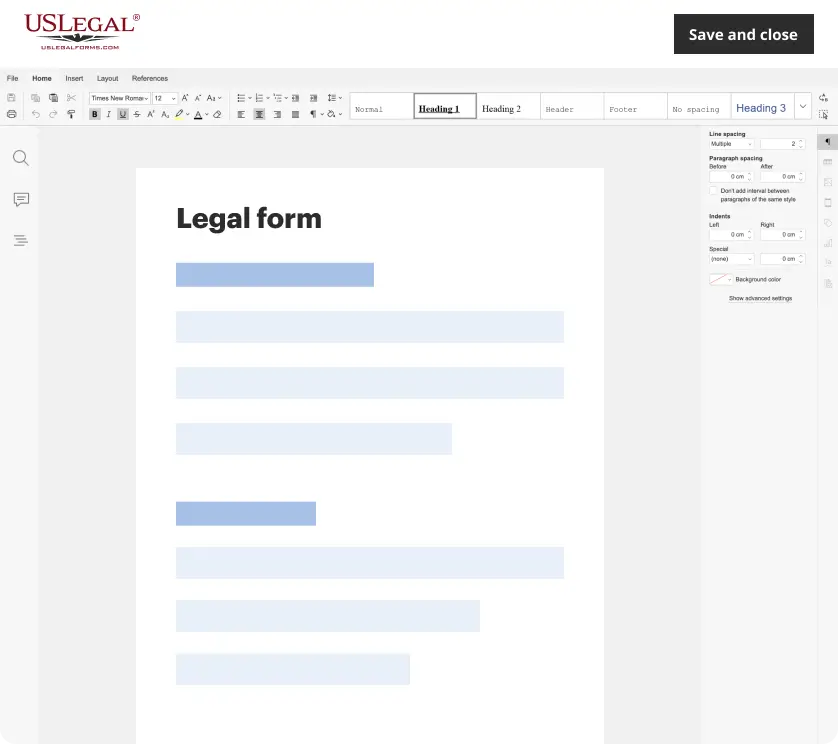
Make edits, fill in missing information, and update formatting in US Legal Forms—just like you would in MS Word.
Download a copy, print it, send it by email, or mail it via USPS—whatever works best for your next step.
Sign and collect signatures with our SignNow integration. Send to multiple recipients, set reminders, and more. Go Premium to unlock E-Sign.
If this form requires notarization, complete it online through a secure video call—no need to meet a notary in person or wait for an appointment.
We protect your documents and personal data by following strict security and privacy standards.
Typical mistakes to avoid
- Not clearly stating the date of the landlord's unlawful action.
- Failing to include a demand for compliance with the law.
- Neglecting to sign and date the letter before sending it.
- Using vague language that does not clearly communicate your rights.
- Omitting a record of how the letter will be delivered to the landlord.
Advantages of online completion
- Convenient access to legally drafted templates from licensed attorneys.
- Edit the form easily to include your specific details.
- Download instantly for immediate use and distribution.
- Reliable resource offering legal protections tailored to your needs.
Legal use & context
- This letter serves as a formal notice and can support your case if legal action becomes necessary.
- Understanding your rights as a tenant is crucial for maintaining lawful possession of your rental property.
- Using this letter helps document your stance against unlawful eviction tactics.
Main things to remember
- Use this letter to formally notify your landlord of unlawful self-help eviction attempts.
- Ensure it is clear, precise, and includes all necessary information.
- Retain a copy for your records and best practices in communication.
Looking for another form?
Form popularity
FAQ
The 14-day/30-day notice must say how the tenant is breaching the lease and that the lease will automatically terminate 30 days (or more) from the date of the notice unless the tenant fixes the problem within 14 days of the date of the notice.
Can I sue in Small Claims Court for emotional distress or lost wages? No. There must be a specific section of landlord-tenant law or a written agreement that has been violated in order to use Small Claims Court, and you can only sue for money owed to you. You cannot sue to force the landlord to do something.
Review Your Lease Before You Sign. Research Local Laws. Keep Records. Pay Your Rent. Maintain Respectful Communication. Seek an Agreeable Solution. Request Repairs in Writing. What Do You Think?
Kansas Eviction Process Timeline Issuance/Service of Summons and Complaint at least 3 days prior to the eviction hearing. Court Hearing and Ruling on the Eviction 3-28 days, depending on whether a follow-up hearing is held. Issuance of Writ of Restitution A few hours to a few days.
When a lease ends, a tenant may choose to move, continue to pay rent as a month-to-month tenant, or sign a new lease. If a tenant continues to pay rent after a lease ends, in most states the terms of the expired lease carry over into a month-to-month tenancy.
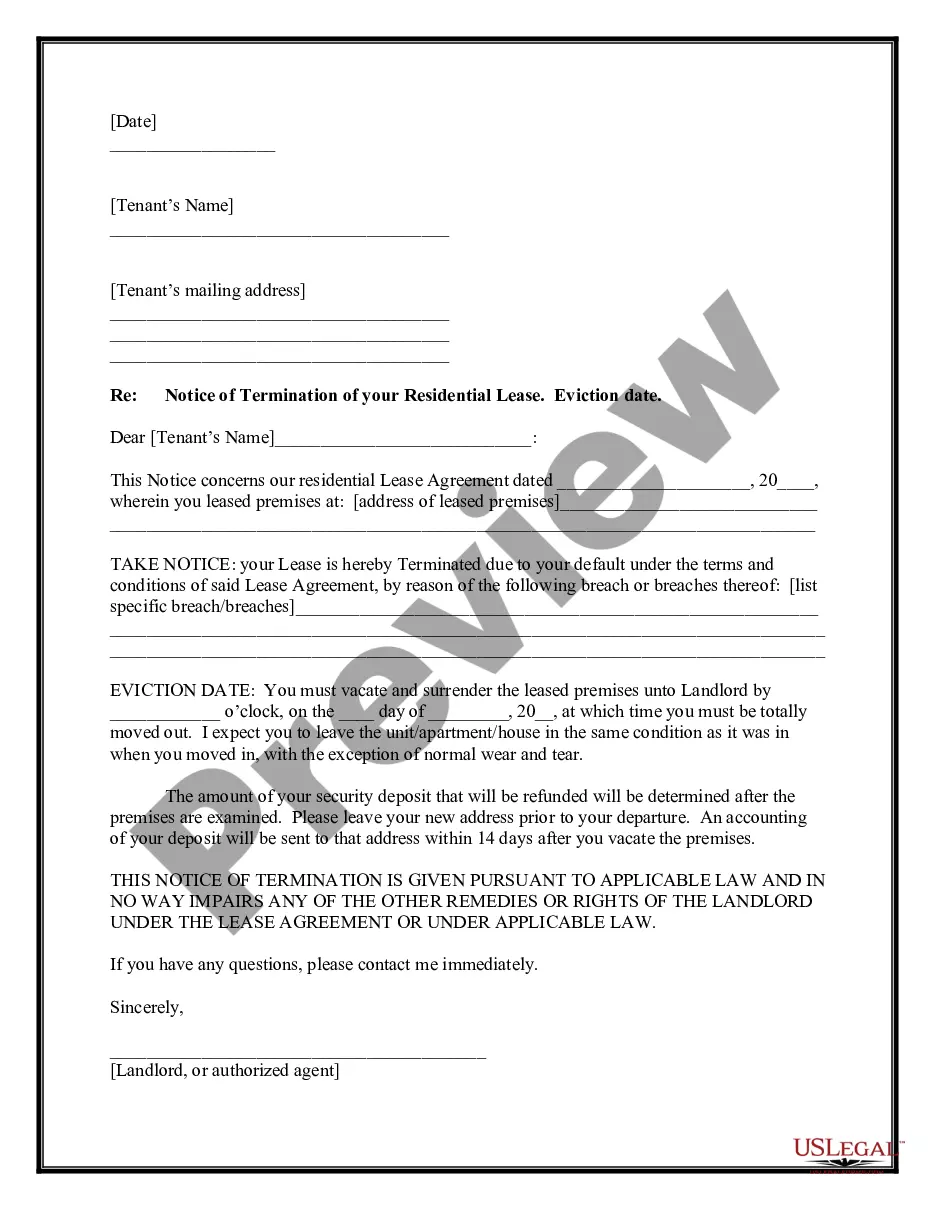
Address the Tenant(s) Named in the Residential Lease. List the Lease Information. Notify the Tenant of the Eviction. Give a Reason for the Eviction. Serve the Eviction Notice to the Tenant(s)
Unfortunately that is not the case. Once a break notice has been served is cannot be unilaterally withdrawn. Even if both parties agree that the notice is withdrawn, service of the notice terminates the existing lease and creates a new tenancy by implication. There are a number of consequences that flow from this.
If you think your landlord is violating the Fair Housing Act, you can get that landlord in trouble by filing a complaint at HUD.gov. Your remedy for breach of quiet enjoyment is to terminate the lease and move or sue in small claims court.
Nebraska Eviction is 3 Days or 30 Days And it must state that the tenant may halt the eviction process by paying the rent or curing the violation within the notice period.