Georgia Letter from Tenant to Landlord about Landlord using Unlawful Self-Help to Gain Possession
Overview of this form
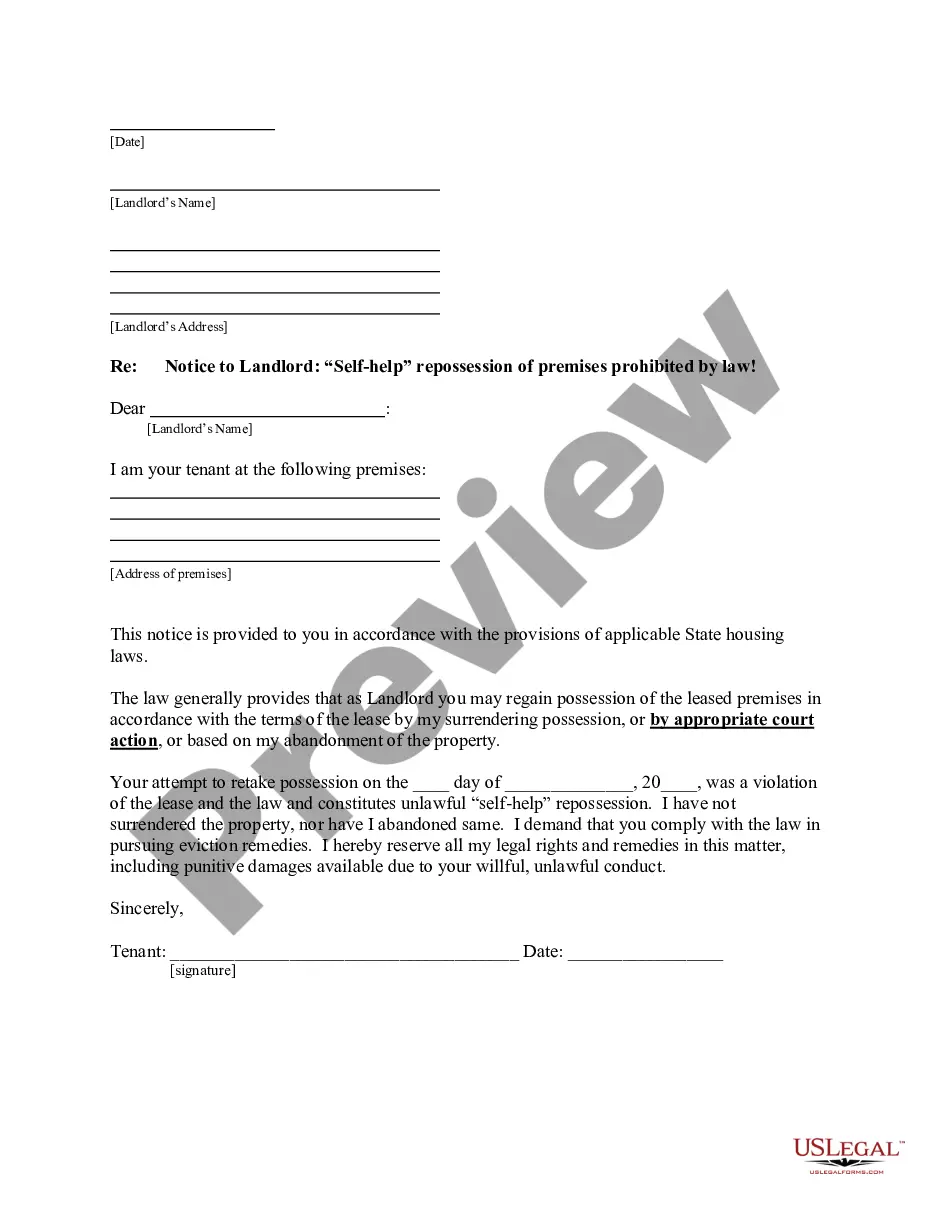
This Letter from Tenant to Landlord about Landlord using Unlawful Self-Help to Gain Possession is a formal communication from a tenant to their landlord. The purpose of this letter is to notify the landlord that any attempt to regain possession of the property through illegal means, known as unlawful self-help, is against the law. This form emphasizes that landlords must follow legal procedures, such as court action or tenant surrender, to reclaim possession. It serves as a protective measure for tenants, differentiating it from other notices or communications regarding evictions or disputes.
Main sections of this form
- Identification of the landlord and tenant.
- Date of the alleged unlawful possession attempt.
- Statement of non-abandonment of the property.
- Demand for the landlord to comply with legal eviction processes.
- Reservation of tenant's legal rights and potential for punitive damages.
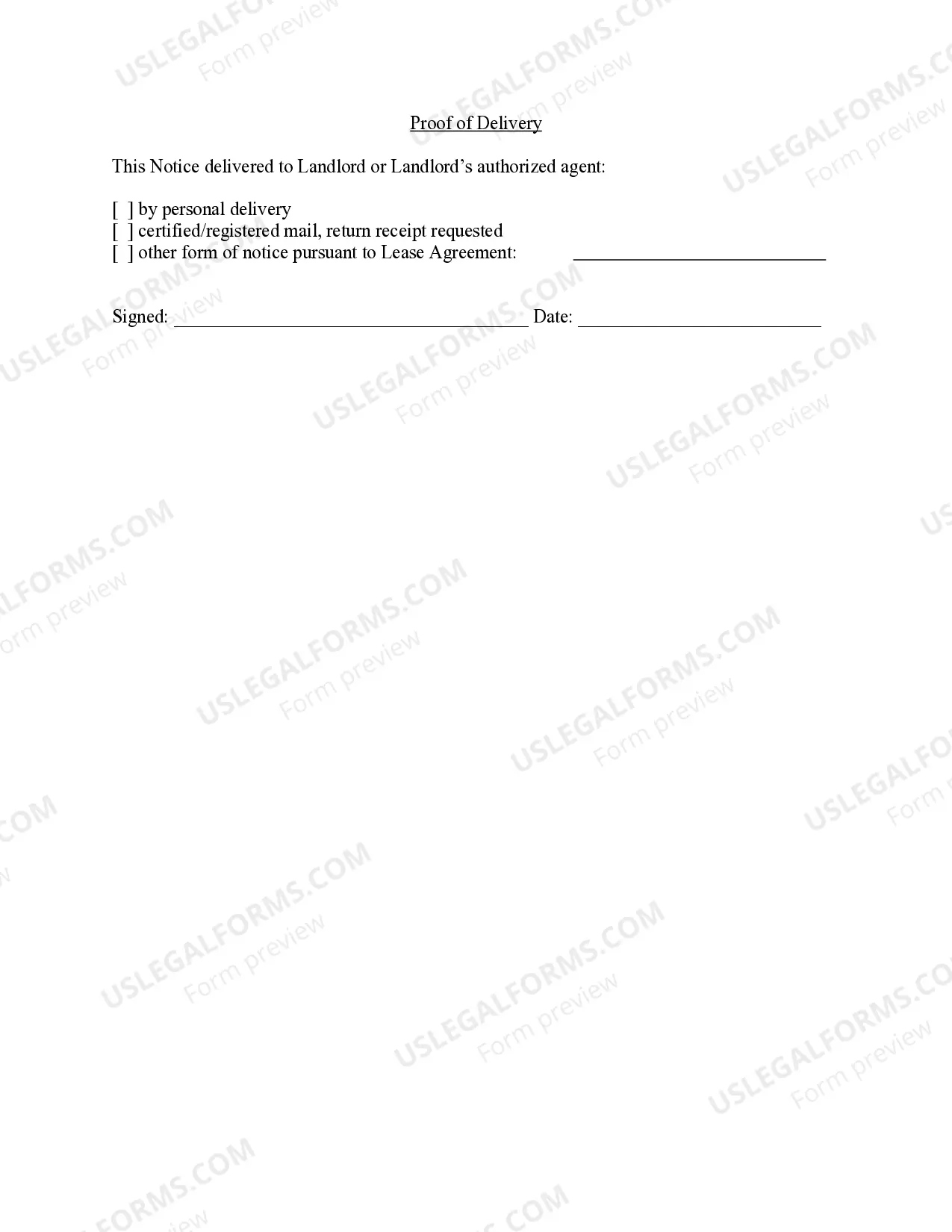
- Signature line for the tenant and proof of delivery instructions.
Common use cases
This form is useful when a tenant believes that their landlord has attempted to regain possession of the rental property through unlawful self-help methods, such as changing locks or removing the tenant's belongings without a court order. Tenants should use this letter as a formal declaration of their intent to follow legal processes and protect their rights. This form is particularly important to send as documentation in case further legal action is needed.
Intended users of this form
This form is intended for:
- Tenants who believe their landlord is attempting illegal eviction.
- Individuals currently in a lease agreement seeking to assert their rights.
- Tenants facing potential self-help eviction methods by their landlords.
Steps to complete this form
- Identify the parties involved: write the names of the tenant and landlord.
- Specify the date of the landlord's unlawful possession attempt.
- Clearly state that you have not abandoned the property.
- Include a demand for the landlord to follow legal eviction procedures.
- Sign the letter and include the date of signing.
Does this document require notarization?
This form does not typically require notarization unless specified by local law. It is important to check state requirements to ensure compliance with any additional documentation needed.
Get your form ready online
Our built-in tools help you complete, sign, share, and store your documents in one place.
Make edits, fill in missing information, and update formatting in US Legal Forms—just like you would in MS Word.
Download a copy, print it, send it by email, or mail it via USPS—whatever works best for your next step.
Sign and collect signatures with our SignNow integration. Send to multiple recipients, set reminders, and more. Go Premium to unlock E-Sign.
If this form requires notarization, complete it online through a secure video call—no need to meet a notary in person or wait for an appointment.
We protect your documents and personal data by following strict security and privacy standards.
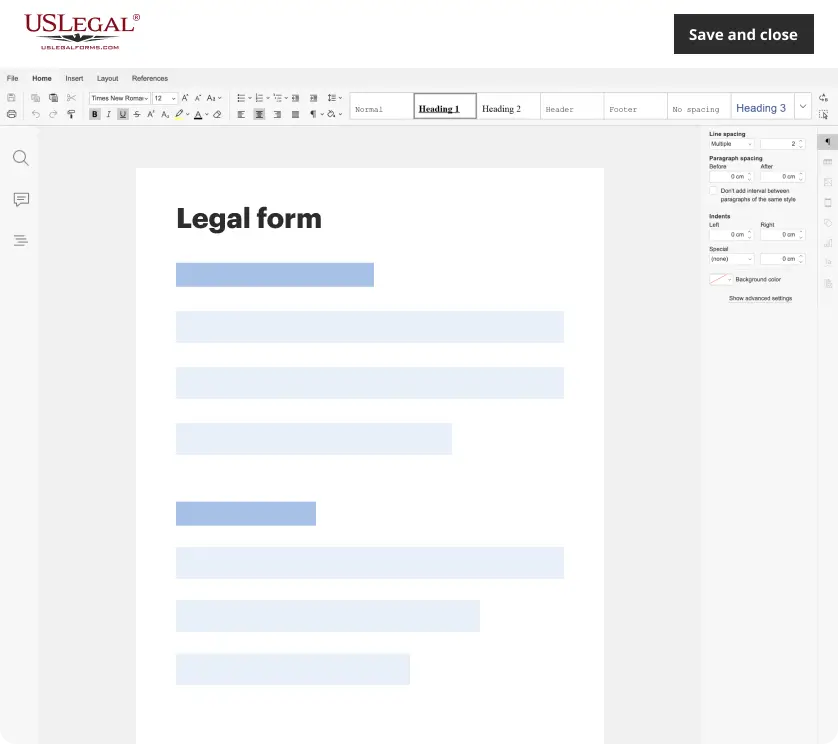
Make edits, fill in missing information, and update formatting in US Legal Forms—just like you would in MS Word.
Download a copy, print it, send it by email, or mail it via USPS—whatever works best for your next step.
Sign and collect signatures with our SignNow integration. Send to multiple recipients, set reminders, and more. Go Premium to unlock E-Sign.

If this form requires notarization, complete it online through a secure video call—no need to meet a notary in person or wait for an appointment.
We protect your documents and personal data by following strict security and privacy standards.
Typical mistakes to avoid
- Not specifying the date of the unlawful action.
- Failing to sign the letter.
- Not providing evidence of previous communication with the landlord.
- Using unclear language regarding the demand for legal compliance.
Why complete this form online
- Convenience of downloading and filling out the form at any time.
- Editability allows tenants to customize the content to their specific situation.
- Access to legally drafted forms ensures accuracy and compliance.
- This form serves as a formal notice to the landlord regarding their unlawful actions.
- While this letter does not initiate formal eviction procedures, it preserves the tenant's rights under the law.
- It can serve as evidence should legal action become necessary in the future.
Looking for another form?
Form popularity
FAQ
To effectively threaten legal action against your landlord, begin by outlining the specific unlawful actions they have taken, such as using self-help methods to regain possession. Next, refer to your rights as a tenant under Georgia law, emphasizing that you are aware of your legal standing. It is crucial to communicate your intentions clearly, indicating that you are prepared to seek legal remedies if necessary. A well-drafted Georgia Letter from Tenant to Landlord about Landlord using Unlawful Self-Help to Gain Possession can serve as a strong foundation for this correspondence.
To write a formal letter to your landlord, start with your name and address at the top, followed by the landlord's name and address. Clearly state the purpose of your letter, such as addressing unlawful self-help actions they may be taking to gain possession of your unit. Use a polite but firm tone, and provide specific details regarding the situation. You may conclude by referencing the Georgia Letter from Tenant to Landlord about Landlord using Unlawful Self-Help to Gain Possession to emphasize the importance of adhering to legal methods.
In a notice letter to your landlord, include your contact information, the date, and details about the issue at hand. Clearly articulate your request or complaint, whether it’s about repairs or other concerns like potential unlawful actions. Leveraging a Georgia Letter from Tenant to Landlord about Landlord using Unlawful Self-Help to Gain Possession can help convey the seriousness of the issue while adhering to legal standards.
Writing a letter to your landlord about problems involves outlining the specific issue, noting when it started, and the impact it has had on your living conditions. Be straightforward, and request a timeline for repairs or action. Remember, utilizing a Georgia Letter from Tenant to Landlord about Landlord using Unlawful Self-Help to Gain Possession can add gravity to serious complaints.
An example of written notice to a landlord can include sections on the tenant's name, address, date, and the specific issue being addressed, such as maintenance requests. It's important that this notice is clear and concise to ensure the landlord understands the urgency. A Georgia Letter from Tenant to Landlord about Landlord using Unlawful Self-Help to Gain Possession would serve as a critical piece of correspondence in this context.
In writing a letter to a landlord for harassment, specify the behavior causing concern, noting dates and incidents. Clearly state your expectation for resolution and request that the harassment cease. A detailed Georgia Letter from Tenant to Landlord about Landlord using Unlawful Self-Help to Gain Possession can help you document your grievances and foster a legal response.
To write a formal letter to a landlord, begin with your contact details, followed by the date and the landlord's information. Clearly state your purpose, whether it's a request, issue, or complaint, like addressing unlawful self-help actions. Concluding with a call to action ensures that your concerns are acknowledged, especially when using a Georgia Letter from Tenant to Landlord about Landlord using Unlawful Self-Help to Gain Possession.
Fighting a writ of possession involves responding to the court with a valid defense. In Georgia, one can argue against the lawful basis of the eviction or assert unlawful actions taken by the landlord. A Georgia Letter from Tenant to Landlord about Landlord using Unlawful Self-Help to Gain Possession can become an essential document in establishing your position against wrongful eviction actions.
A good tenant reference letter highlights a tenant's reliability, prompt payments, and respect for the property. It should detail the duration of the tenancy and affirm the tenant's good behavior. Using a Georgia Letter from Tenant to Landlord about Landlord using Unlawful Self-Help to Gain Possession can help clarify any legal nuances during the leasing process.
A letter from a tenant to a landlord typically outlines issues that need attention or requests for repairs. For instance, a tenant might write about a leak in the apartment and request timely repairs. In situations involving unlawful self-help, a Georgia Letter from Tenant to Landlord about Landlord using Unlawful Self-Help to Gain Possession can serve as a formal complaint addressing relevant legal concerns.