Affidavit in Compliance with Section 55.505, Florida Statutes in Support of Recording Foreign Judgment
About this form
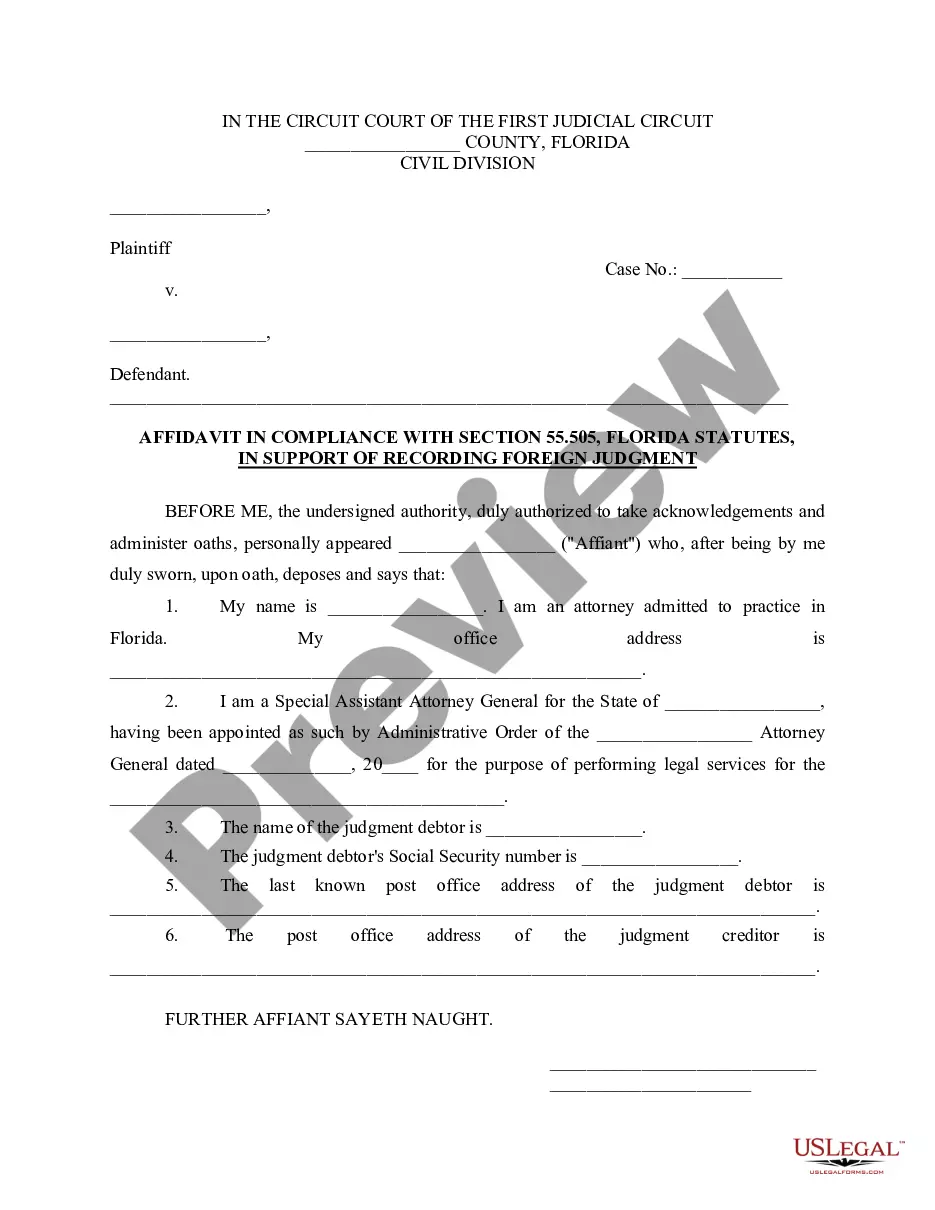
The Affidavit in Compliance with Section 55.505, Florida Statutes in Support of Recording Foreign Judgment is a legal document required in Florida when a judgment creditor seeks to record a foreign judgment. This form is essential for providing the necessary information about both the judgment debtor and the creditor, ensuring that the creditor can enforce the judgment in Florida. Unlike other affidavits, this specific form is designed to comply with Florida's statutory requirements for foreign judgments.
Key parts of this document
- Affiant's name and attorney information.
- Judgment debtor's name and Social Security number.
- Last known address of the judgment debtor.
- Post office address of the judgment creditor.
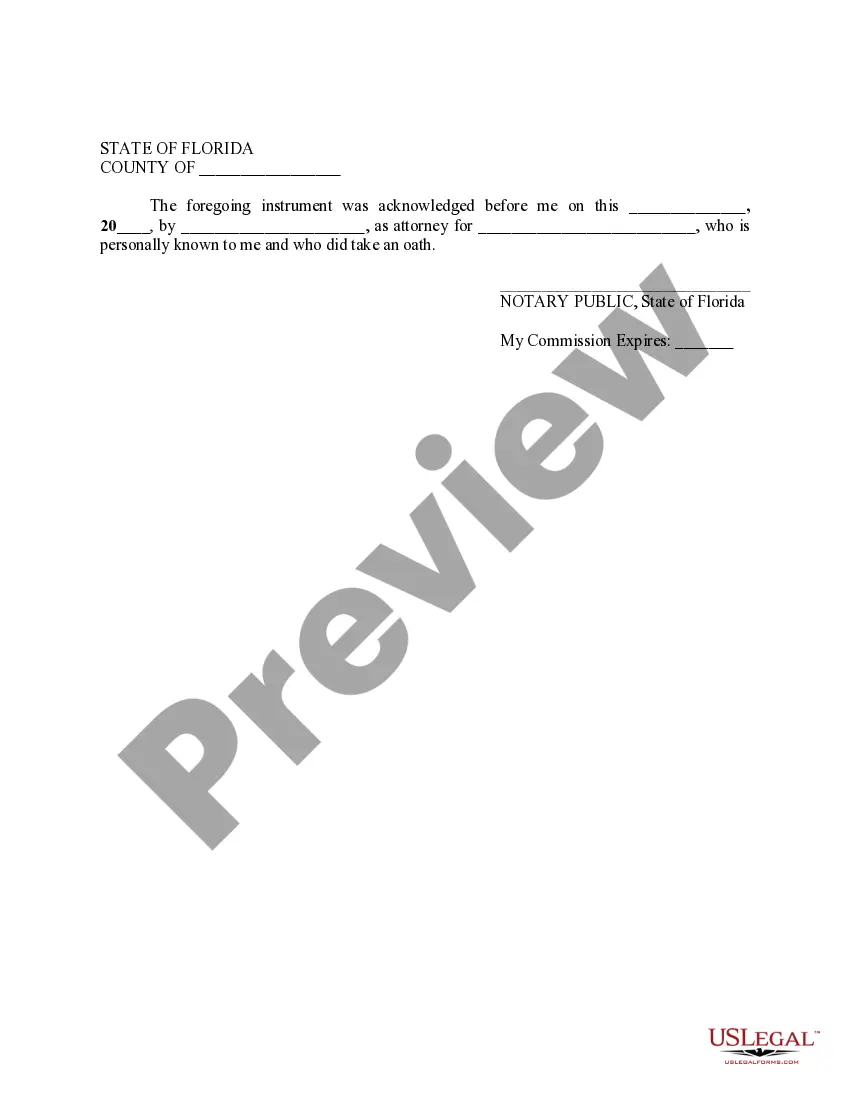
- Notary public acknowledgment section.
When to use this document
This affidavit should be used when a creditor has obtained a judgment in another state or country and wishes to enforce that judgment in Florida. It is necessary to provide all relevant details about the debtor to comply with Florida laws regarding the enforcement of foreign judgments.
Who needs this form
- Creditors who hold a judgment from a foreign court.
- Attorneys representing judgment creditors.
- Individuals seeking to enforce their legal right to collected debts in Florida.
Instructions for completing this form
- Identify the affiant (the attorney) and provide the office address.
- Fill in the name and details of the judgment debtor, including their Social Security number if known.
- Provide the last known address for the judgment debtor.
- Include the creditor's post office address.
- Have the form notarized after signing it in accordance with the notary public's requirements.
Notarization guidance
Yes, this form must be notarized to be legally valid. This ensures the authenticity of the signatures and the information provided. US Legal Forms offers integrated online notarization, allowing you to complete this process securely via video call without the need for travel.
Get your form ready online
Our built-in tools help you complete, sign, share, and store your documents in one place.
Make edits, fill in missing information, and update formatting in US Legal Forms—just like you would in MS Word.
Download a copy, print it, send it by email, or mail it via USPS—whatever works best for your next step.
Sign and collect signatures with our SignNow integration. Send to multiple recipients, set reminders, and more. Go Premium to unlock E-Sign.
If this form requires notarization, complete it online through a secure video call—no need to meet a notary in person or wait for an appointment.
We protect your documents and personal data by following strict security and privacy standards.

Make edits, fill in missing information, and update formatting in US Legal Forms—just like you would in MS Word.

Download a copy, print it, send it by email, or mail it via USPS—whatever works best for your next step.

Sign and collect signatures with our SignNow integration. Send to multiple recipients, set reminders, and more. Go Premium to unlock E-Sign.

If this form requires notarization, complete it online through a secure video call—no need to meet a notary in person or wait for an appointment.

We protect your documents and personal data by following strict security and privacy standards.
Common mistakes to avoid
- Failing to provide the judgment debtor's Social Security number, if known.
- Not completing the form with accurate and up-to-date addresses.
- Neglecting to have the affidavit properly notarized.
Main things to remember
- The affidavit is necessary for creditors aiming to enforce foreign judgments in Florida.
- Accurate completion and notarization of the form are crucial for legal compliance.
- Failure to provide all required information can delay the enforcement process.
Looking for another form?
Form popularity
FAQ
To record a foreign judgment in Florida, you need to begin by filing the foreign judgment in a FL court along with a certified copy of the judgment. Additionally, you must include an Affidavit in Compliance with Section 55.505, Florida Statutes in Support of Recording Foreign Judgment to validate the filing. This process ensures that your foreign judgment is legally recognized in Florida and can be enforced. Using US Legal Forms simplifies this process by providing the necessary templates and instructions.
In Florida, the statutes regarding the removal of a Homeowners Association (HOA) board member can often be found in Chapter 720 of the Florida Statutes. Homeowners typically have the right to remove a board member through a vote, provided the bylaws allow for it. It's crucial to understand your association's governing documents to navigate this process effectively. For clarity on legal matters, including potential challenges or documentation needs, the Affidavit in Compliance with Section 55.505, Florida Statutes in Support of Recording Foreign Judgment can be a helpful tool, and platforms like US Legal Forms offer relevant forms and guidance.
To record a judgment in Florida, you must file the judgment with the clerk of court in the county where the judgment debtor resides or where the property is located. You will often need to complete an Affidavit in Compliance with Section 55.505, Florida Statutes in Support of Recording Foreign Judgment to ensure compliance with state laws. Once recorded, the judgment acts as a lien on the debtor's property. For assistance with filing, US Legal Forms provides helpful resources.
To domesticate a foreign judgment in Florida, you must file the judgment in the appropriate Florida court. You will need to provide a certified copy of the original judgment, along with an Affidavit in Compliance with Section 55.505, Florida Statutes in Support of Recording Foreign Judgment. This process ensures that the foreign judgment has the same effect as if it were issued in Florida. Utilizing resources like US Legal Forms can simplify this process by offering the necessary templates.
In Florida, property owners do not have a general duty to warn undiscovered trespassers about hazards on their property. However, if a property owner knows about a specific danger and a trespasser arrives unexpectedly, the owner may be liable for any injuries. It is important to remember that understanding legal responsibilities can be complex. For legal matters involving finance or property, consider using the Affidavit in Compliance with Section 55.505, Florida Statutes in Support of Recording Foreign Judgment on platforms like US Legal Forms.
Section 705.105 of the Florida Statutes discusses the procedures for enforcing judgments by seizure of personal property. This section can be crucial for parties looking to recover assets based on a judgment rendered. When dealing with an Affidavit in Compliance with Section 55.505, Florida Statutes in Support of Recording Foreign Judgment, consider how related enforcement statutes could impact your strategy.
To create a valid affidavit in Florida, you must ensure it includes detailed factual statements, the affiant’s sworn signature, and proper notarization. Furthermore, if you are working on an Affidavit in Compliance with Section 55.505, Florida Statutes in Support of Recording Foreign Judgment, you must adhere strictly to the statutory requirements defined for foreign judgments. Following these requirements will enhance your affidavit’s validity.
An affidavit must contain specific details, including the affiant's name, the facts they are attesting to, and a clear statement of the purpose of the affidavit. For an Affidavit in Compliance with Section 55.505, Florida Statutes in Support of Recording Foreign Judgment, it is essential to detail the foreign judgment and any supporting evidence. This clarity will aid the court in processing your filing efficiently.
Section 25.075 of the Florida Statutes addresses the responsibilities and operational procedures of the Supreme Court in Florida. While not directly related to foreign judgments, understanding these statutory procedures may assist legal professionals in navigating complex court matters effectively. Ensure that your approach to an Affidavit in Compliance with Section 55.505, Florida Statutes in Support of Recording Foreign Judgment considers all related statutes.
In Florida, the statute of limitations for enforcing a judgment is typically 20 years. This means that you have a significant period within which you can pursue enforcement actions on your judgment. However, timely actions are recommended, especially when preparing your Affidavit in Compliance with Section 55.505, Florida Statutes in Support of Recording Foreign Judgment.