Delaware Assignment of Mortgage by Corporate Mortgage Holder
What this document covers
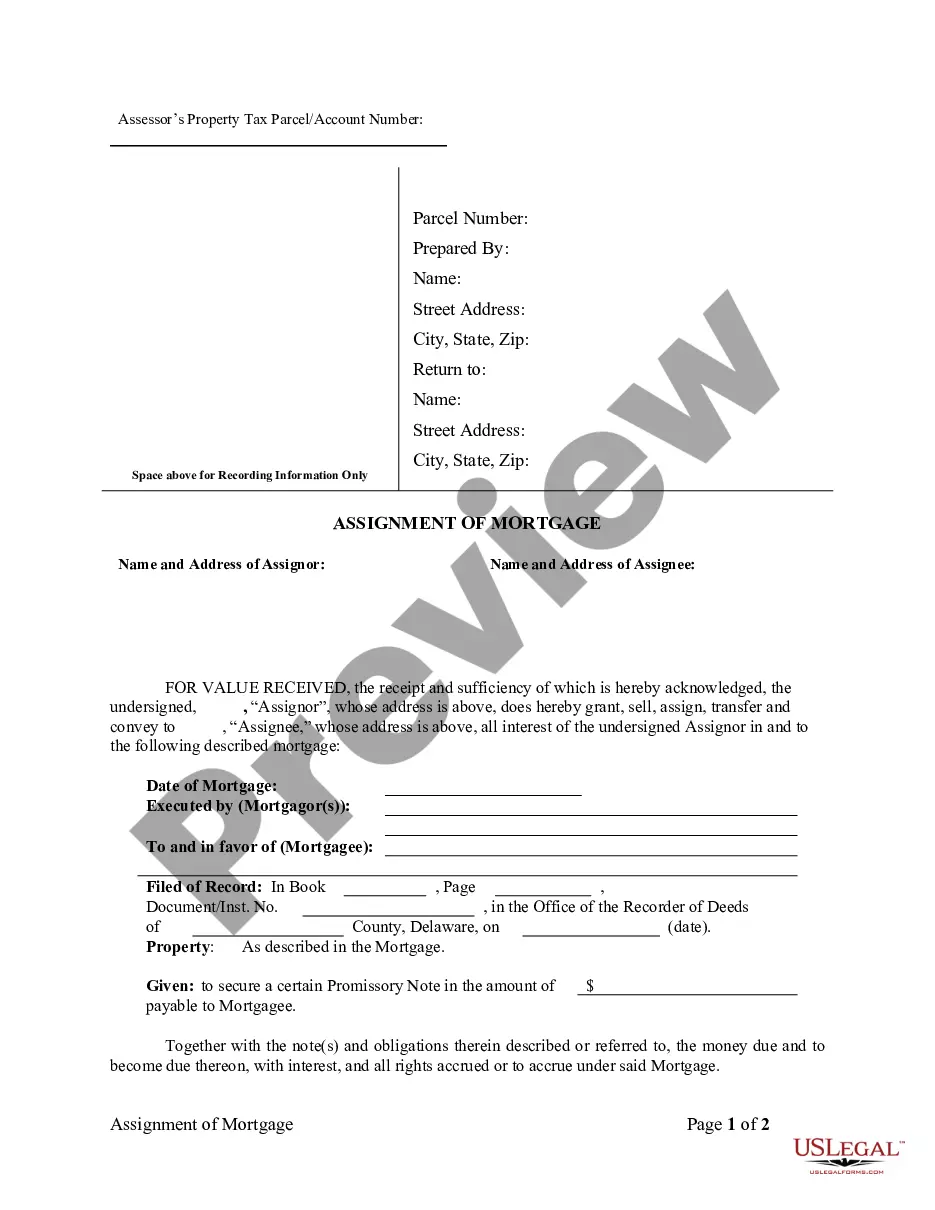
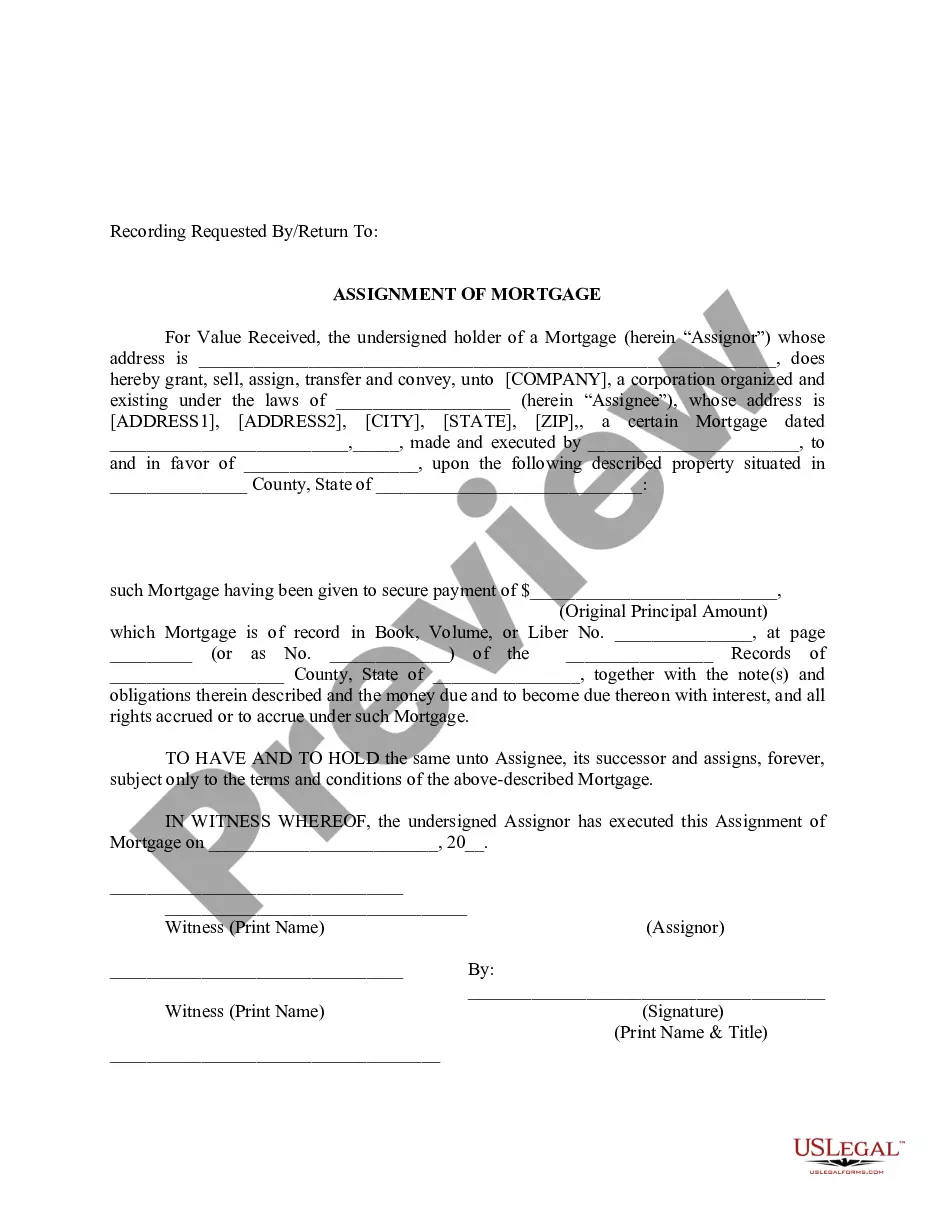
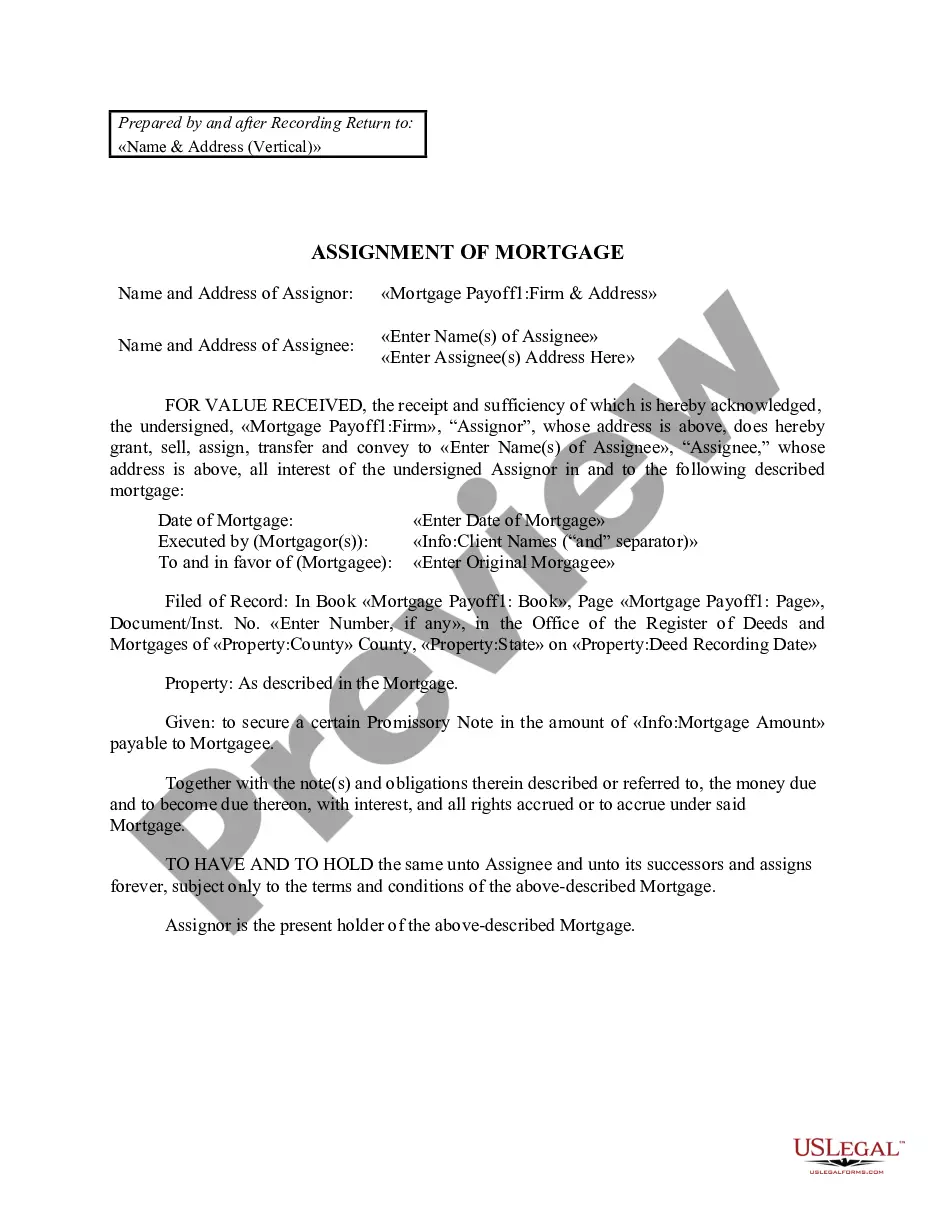
The Assignment of Mortgage by Corporate Mortgage Holder is a legal document that allows a corporate mortgage holder to transfer their interest in a mortgage or deed of trust to another party. Unlike simple mortgage assignments, this form is specifically designed for corporations that hold the mortgage, providing a clear legal pathway for the assignment of their rights and interests.
What’s included in this form
- Date of Mortgage
- Names of Mortgagor(s) and Mortgagee
- Description of the Property
- Details of the Promissory Note being secured
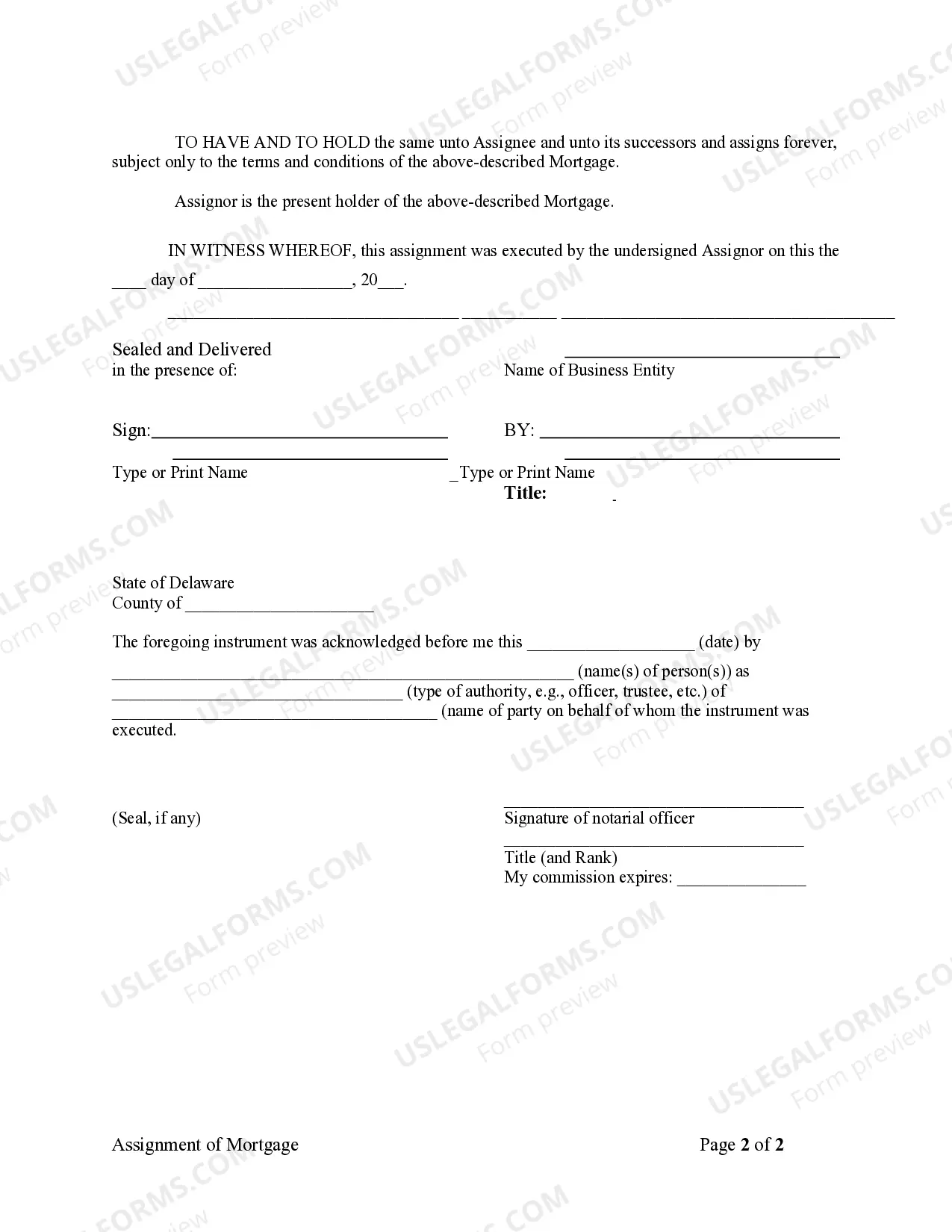
- Assignment declarations from the Assignor
Common use cases
This form should be used when a corporate entity that holds a mortgage intends to transfer its rights and interests to another party. Common situations include the sale of a mortgage portfolio, restructuring of debts, or when engaging in transactions involving mortgage-backed securities.
Intended users of this form
- Corporations that hold mortgages or deeds of trust
- Third parties acquiring mortgage interests
- Legal and financial professionals assisting in mortgage transactions
How to complete this form
- Identify and enter the date of the mortgage.
- List the names of the mortgagor(s) and the mortgagee.
- Provide a detailed description of the property involved.
- Specify the terms of the Promissory Note being secured.
- Sign and date the document to formalize the assignment.
Does this document require notarization?
This form needs to be notarized to ensure legal validity. US Legal Forms provides secure online notarization powered by Notarize, allowing you to complete the process through a verified video call, available anytime.
Get your form ready online
Our built-in tools help you complete, sign, share, and store your documents in one place.
Make edits, fill in missing information, and update formatting in US Legal Forms—just like you would in MS Word.
Download a copy, print it, send it by email, or mail it via USPS—whatever works best for your next step.
Sign and collect signatures with our SignNow integration. Send to multiple recipients, set reminders, and more. Go Premium to unlock E-Sign.
If this form requires notarization, complete it online through a secure video call—no need to meet a notary in person or wait for an appointment.
We protect your documents and personal data by following strict security and privacy standards.

Make edits, fill in missing information, and update formatting in US Legal Forms—just like you would in MS Word.

Download a copy, print it, send it by email, or mail it via USPS—whatever works best for your next step.

Sign and collect signatures with our SignNow integration. Send to multiple recipients, set reminders, and more. Go Premium to unlock E-Sign.

If this form requires notarization, complete it online through a secure video call—no need to meet a notary in person or wait for an appointment.

We protect your documents and personal data by following strict security and privacy standards.
Mistakes to watch out for
- Failing to properly identify all parties involved.
- Not including the correct property description.
- Omitting signatures or dates, which can invalidate the form.
Benefits of using this form online
- Convenient access to legal forms from anywhere.
- Editable templates tailored to your specific needs.
- Reliable drafting by licensed attorneys to ensure legal compliance.
What to keep in mind
- The Assignment of Mortgage by Corporate Mortgage Holder is essential for corporate entities transferring mortgage interests.
- Completing this form accurately facilitates smooth financial transactions.
- Consulting legal advice is recommended for state-specific requirements.
Looking for another form?
Form popularity
FAQ
Releasing an assignment of a mortgage typically involves preparing and filing a formal document with the appropriate local authorities. This document needs to clearly state that the Delaware Assignment of Mortgage by Corporate Mortgage Holder has been canceled or released. It is essential to follow the state-specific guidelines and use accurate legal terminology to ensure a successful release. If you need assistance navigating the paperwork, uslegalforms can provide helpful resources and templates to streamline the process.
A corporation assignment of deed of trust refers to the transfer of a mortgage obligation from one corporate entity to another. In the context of a Delaware Assignment of Mortgage by Corporate Mortgage Holder, this process ensures that the original lender’s interest is effectively passed to a new entity. This transfer is crucial for maintaining clear ownership and financial responsibility for the mortgage. Understanding this assignment helps buyers and sellers navigate their financial commitments smoothly.
A corporate assignment of a mortgage refers to the process by which a corporation transfers its mortgage rights to another party. This can occur for various reasons, such as consolidating responsibilities or managing financial obligations more effectively. Understanding corporate assignments is vital for anyone involved in real estate transactions, as they impact ownership and financial liabilities.
When a mortgage is assigned in Delaware, the purchaser typically receives the assignment document and a copy of the original mortgage agreement. These documents serve as proof of the new ownership and outline the terms of repayment. It's essential for the purchaser to review these documents carefully, as they define their rights and responsibilities concerning the mortgage.
In simple terms, a mortgage assignment transfers the lender's rights and obligations to a new party. This process allows the new mortgage holder to collect payments and enforce the terms of the mortgage if necessary. In Delaware, a proper assignment ensures that all documentation is filed correctly and follows state laws for a smooth transfer of ownership.
A corporate assignment of a mortgage occurs when a corporation transfers its rights in a mortgage to another entity or individual. This process can streamline transactions and help corporations manage their mortgage portfolios effectively. Understanding the implications of such assignments is crucial for both the assignor and assignee to ensure all legal requirements are met.
In a Delaware Assignment of Mortgage by Corporate Mortgage Holder, the individuals authorized by the corporate holder must sign the assignment. Typically, this includes corporate officers or designated signatories approved by the company's bylaws. Be sure to check that all necessary signatures are in place to ensure legal validity.
To complete an assignment of mortgage in Delaware, you must gather the necessary documentation including the original mortgage and any existing assignments. Next, you will fill out the assignment form, ensuring that you include the details of the mortgage, the assignor, and the assignee. After signing the form, you should record it with the county recorder’s office to make the assignment official.