Connecticut Amendment of Residential Lease
Overview of this form
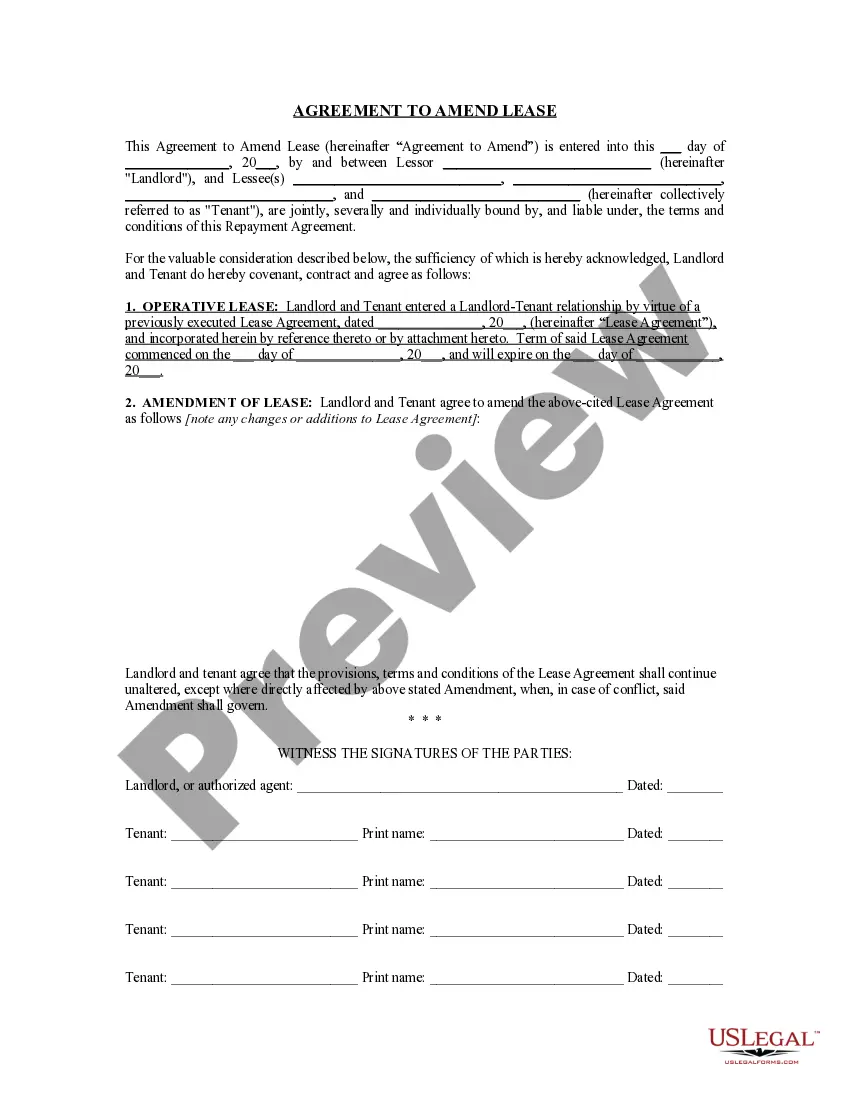
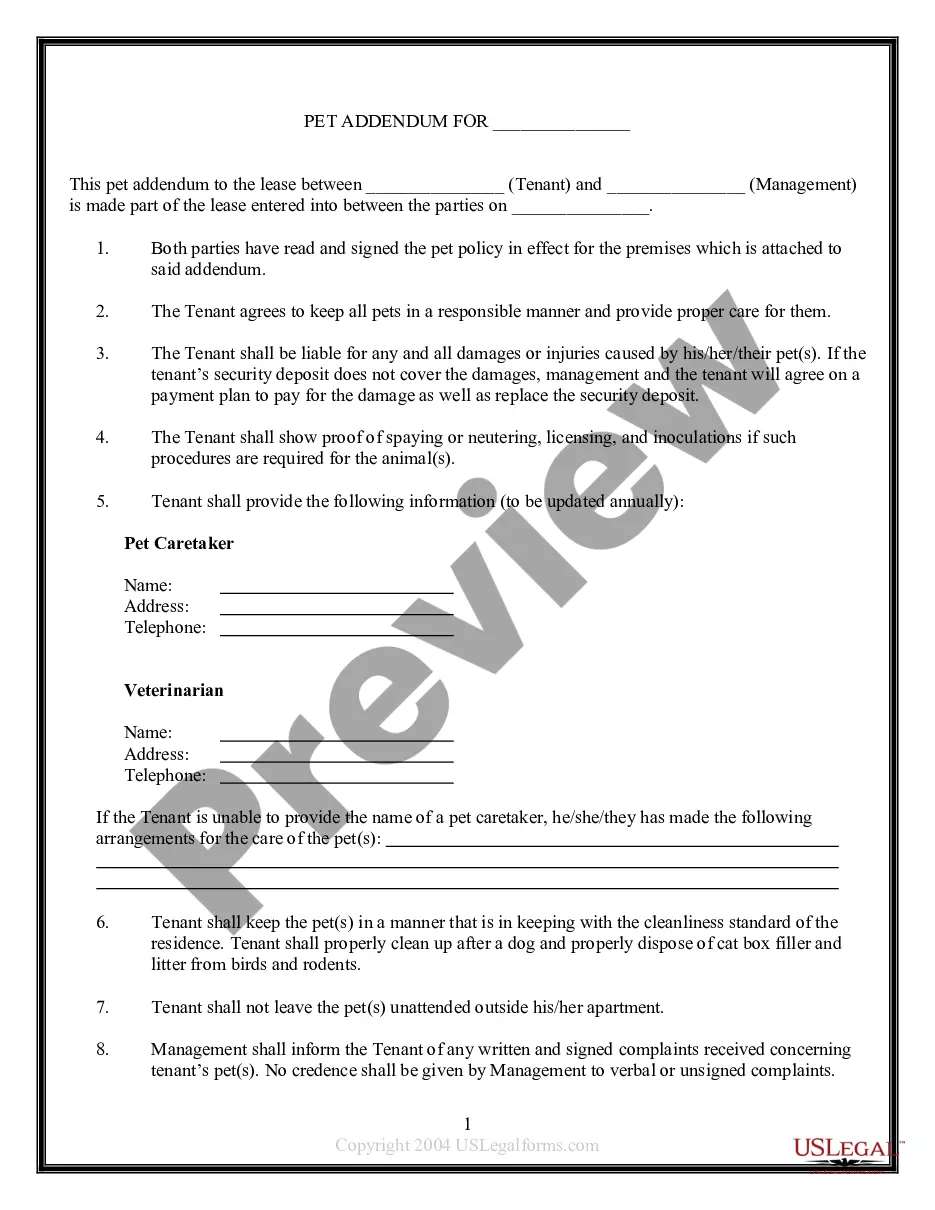
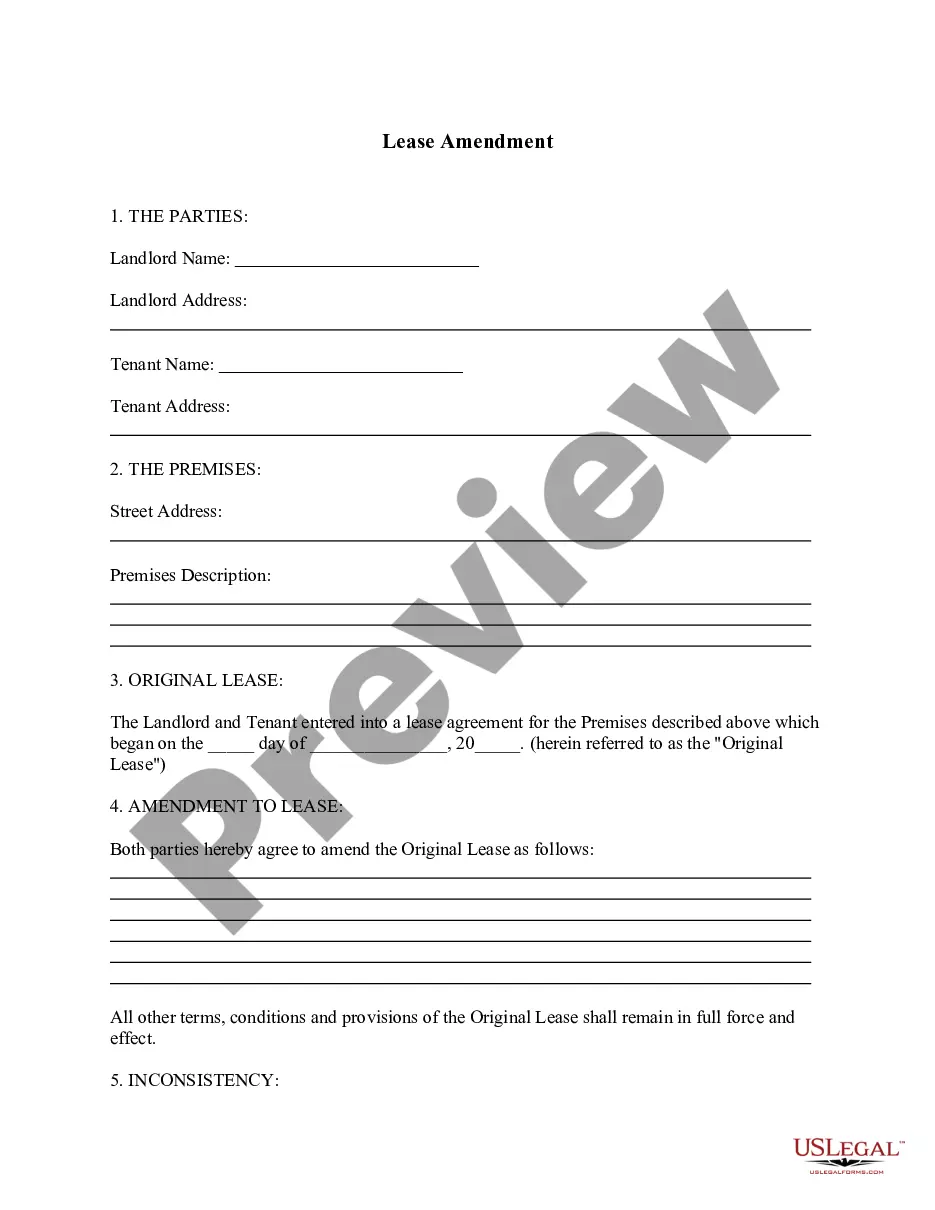
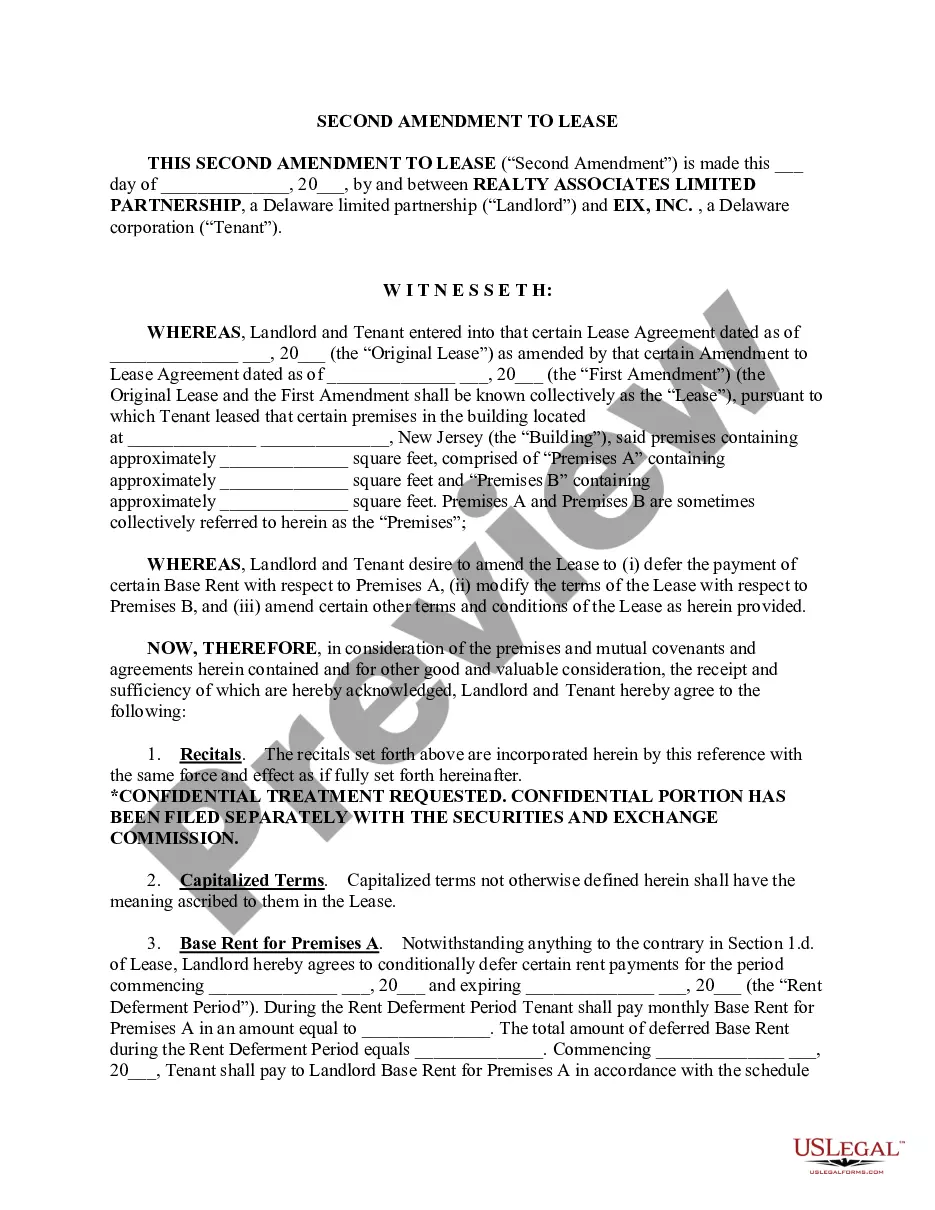
The Amendment of Residential Lease is a legal document that allows landlords and tenants to modify the terms of an existing lease agreement. This form is essential when changes are agreed upon, ensuring that all involved parties are aware of the updates to the lease. Unlike a completely new lease, this amendment integrates the changes into the existing contract while maintaining legal compliance with state regulations.
What’s included in this form
- Date of the agreement
- Names and contact information of the landlord and tenants
- Reference to the original lease agreement
- Description of amendments being made
- Signatures of all parties involved
When this form is needed
This form should be used when there is a need to make changes to an existing residential lease. Common situations include adjusting rental amounts, extending the lease duration, or modifying other lease terms such as maintenance responsibilities or tenant rules. It promotes clarity and prevents future disputes regarding lease changes.
Who can use this document
This form is intended for:
- Landlords looking to update lease agreements
- Tenants who have agreed upon changes to their lease terms
- Property managers facilitating lease modifications
Completing this form step by step
- Identify and enter the date of the agreement.
- Fill in the names and contact information for both the landlord and tenants involved.
- Reference the original lease agreement and specify the date it was executed.
- Clearly outline the amendments being made to the lease terms.
- Ensure all parties read and sign the amendment to acknowledge acceptance of the changes.
Does this form need to be notarized?
This form does not typically require notarization to be legally valid. However, some jurisdictions or document types may still require it. US Legal Forms provides secure online notarization powered by Notarize, available 24/7 for added convenience.
Get your form ready online
Our built-in tools help you complete, sign, share, and store your documents in one place.
Make edits, fill in missing information, and update formatting in US Legal Forms—just like you would in MS Word.
Download a copy, print it, send it by email, or mail it via USPS—whatever works best for your next step.
Sign and collect signatures with our SignNow integration. Send to multiple recipients, set reminders, and more. Go Premium to unlock E-Sign.
If this form requires notarization, complete it online through a secure video call—no need to meet a notary in person or wait for an appointment.
We protect your documents and personal data by following strict security and privacy standards.

Make edits, fill in missing information, and update formatting in US Legal Forms—just like you would in MS Word.

Download a copy, print it, send it by email, or mail it via USPS—whatever works best for your next step.

Sign and collect signatures with our SignNow integration. Send to multiple recipients, set reminders, and more. Go Premium to unlock E-Sign.

If this form requires notarization, complete it online through a secure video call—no need to meet a notary in person or wait for an appointment.

We protect your documents and personal data by following strict security and privacy standards.
Typical mistakes to avoid
- Failing to reference the original lease agreement correctly.
- Omitting signatures from one or more parties.
- Not specifying all changes in detail, leading to ambiguity.
Why use this form online
- Quick and easy access to necessary legal forms.
- Edit and customize the form according to specific needs.
- Reliable templates drafted by licensed attorneys to ensure legal compliance.
Looking for another form?
Form popularity
FAQ
Renegotiating a lease after signing is possible through a Connecticut Amendment of Residential Lease. This process requires mutual agreement between the landlord and tenant on the new terms. During renegotiation, both parties can discuss rent, lease duration, or other conditions. By documenting these changes, both parties can maintain transparency and avoid misunderstandings.
The timeframe for backing out after signing a lease varies, but generally, a tenant may face legal obligations immediately upon signing. If you wish to back out, it's wise to consult a legal professional familiar with Connecticut laws on lease agreements. A Connecticut Amendment of Residential Lease can also help modify terms if you need adjustments. Always act promptly to minimize potential issues.
Yes, you can change your move-in date after signing a lease by creating a Connecticut Amendment of Residential Lease. This requires the consent of both you and your landlord. Once agreed, the new date should be documented in the amendment for clarity. It’s a simple process that ensures both parties are informed of the new arrangement.
Making changes to a lease after signing is possible through a Connecticut Amendment of Residential Lease. This document formally records any modifications agreed upon by both the landlord and tenant. Such changes might include rent adjustments, alteration of terms, or even lease duration. Always ensure that the amendment is documented to avoid future disputes.
Yes, you can change a lease agreement after signing through a Connecticut Amendment of Residential Lease. However, both the landlord and the tenant must agree on the changes. Documentation of these changes through a formal amendment is essential. This protects both parties and keeps everything transparent.
A Connecticut Amendment of Residential Lease allows both tenants and landlords to make changes to an existing lease agreement. This process typically requires writing and mutual consent. Once both parties agree to the proposed changes, they can sign the amendment, which then becomes part of the original lease. This ensures clarity and alignment on the new terms.
It's ideal to inform your landlord of your intentions not to renew at least 30 days before your lease ends. Early communication allows for a smoother transition for both parties. Take advantage of a Connecticut Amendment of Residential Lease to document your notice. Clear and prompt communication fosters a positive rental experience.
In Connecticut, landlords must give tenants a minimum of one month’s notice to vacate for month-to-month leases. For longer-term leases, a notice period may be longer. It is essential to be informed about these timelines so you can plan accordingly. Reference a Connecticut Amendment of Residential Lease to address these moving details.
Similar to the previous answer, landlords must provide adequate notice based on the lease type. The specific notice period can range from one month to three months for yearly leases. This information ensures you are prepared and aware of your rights. A Connecticut Amendment of Residential Lease can clarify these timelines.
Landlords in Connecticut must provide written notice if they choose not to renew a lease. The required notice period depends on the lease term; for example, a month-to-month lease requires a 1-month notice. Understanding these regulations aids in navigating landlord-tenant relationships. Utilize a Connecticut Amendment of Residential Lease for clarity on terms and expectations.