California Confidentiality Agreement for Healthcare Workers Employee Information and Patient Information
About this form
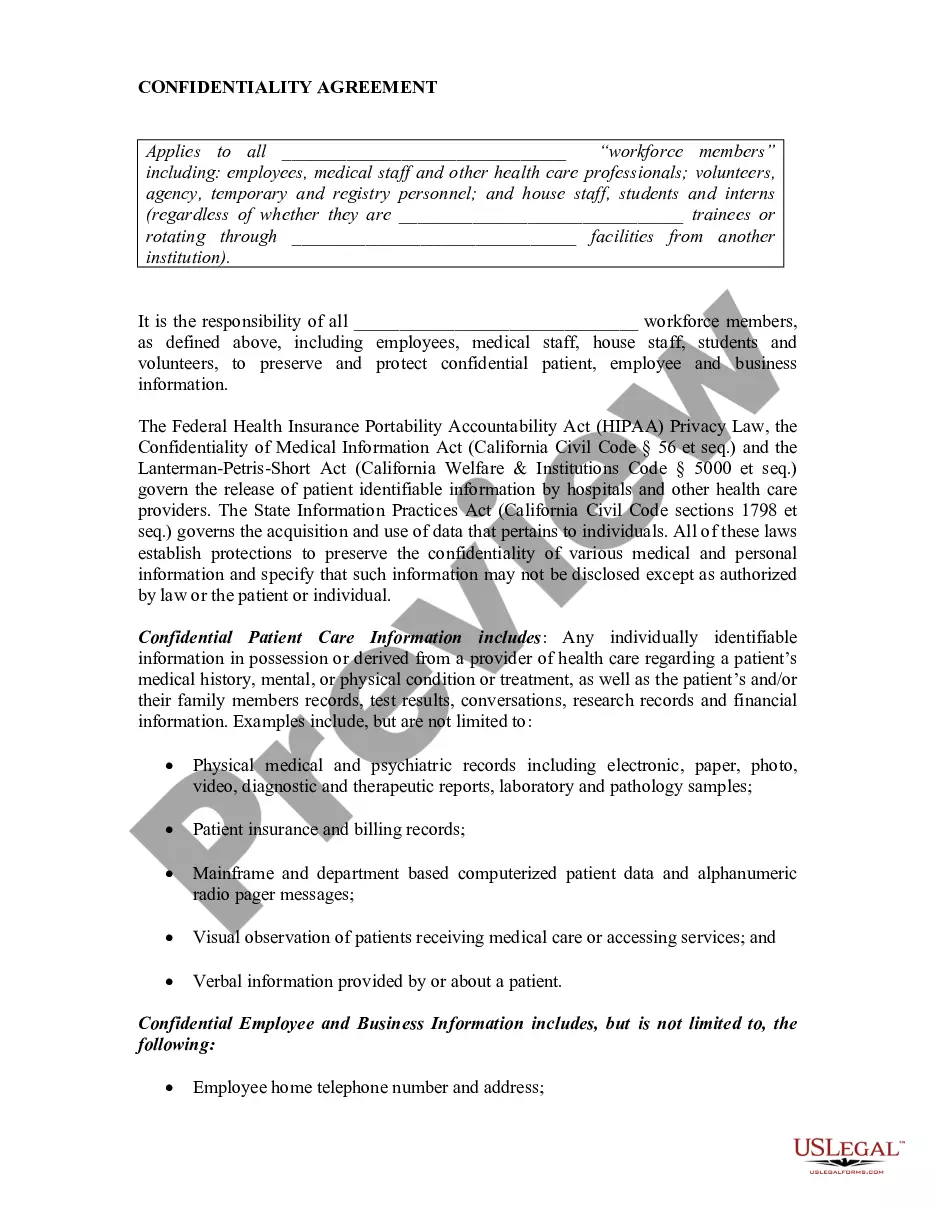
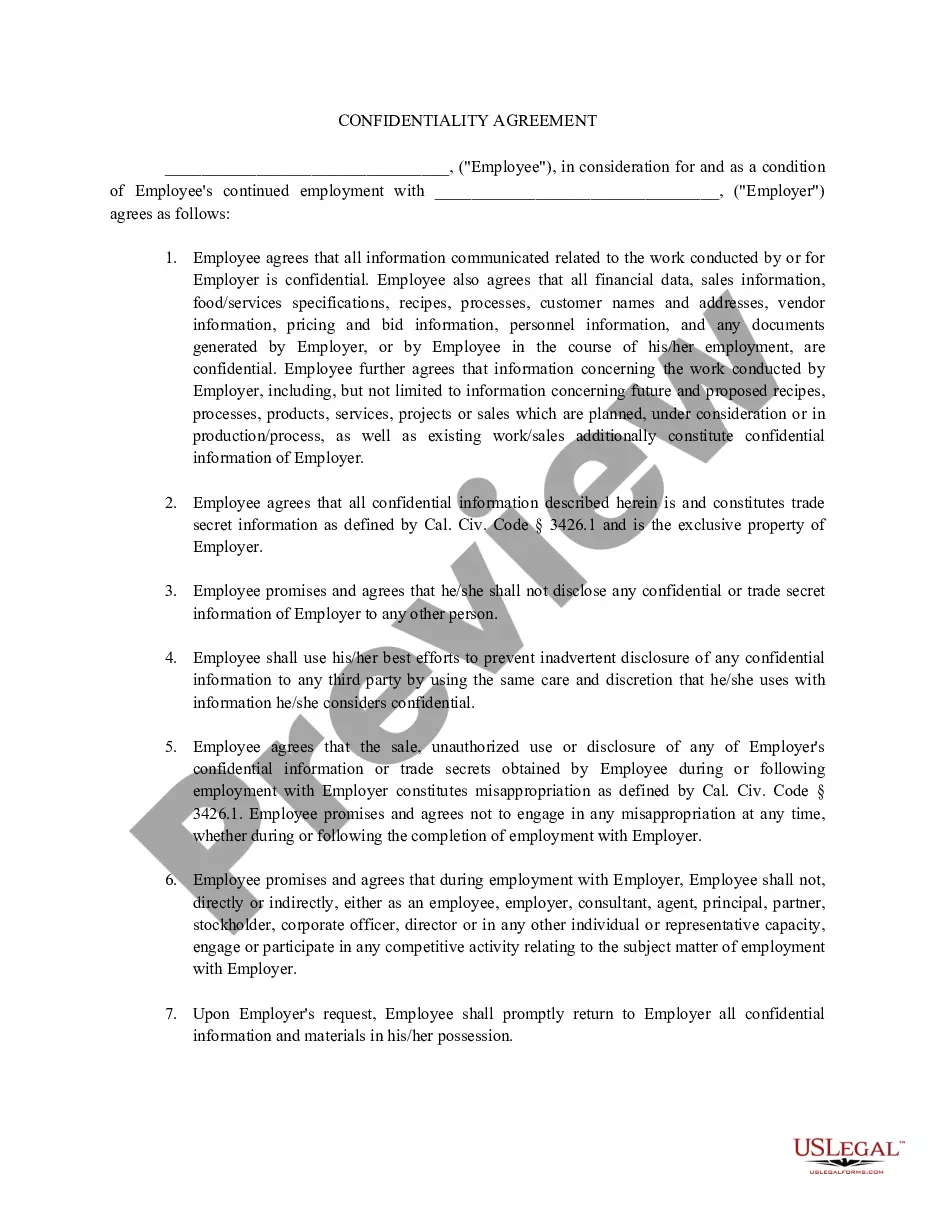
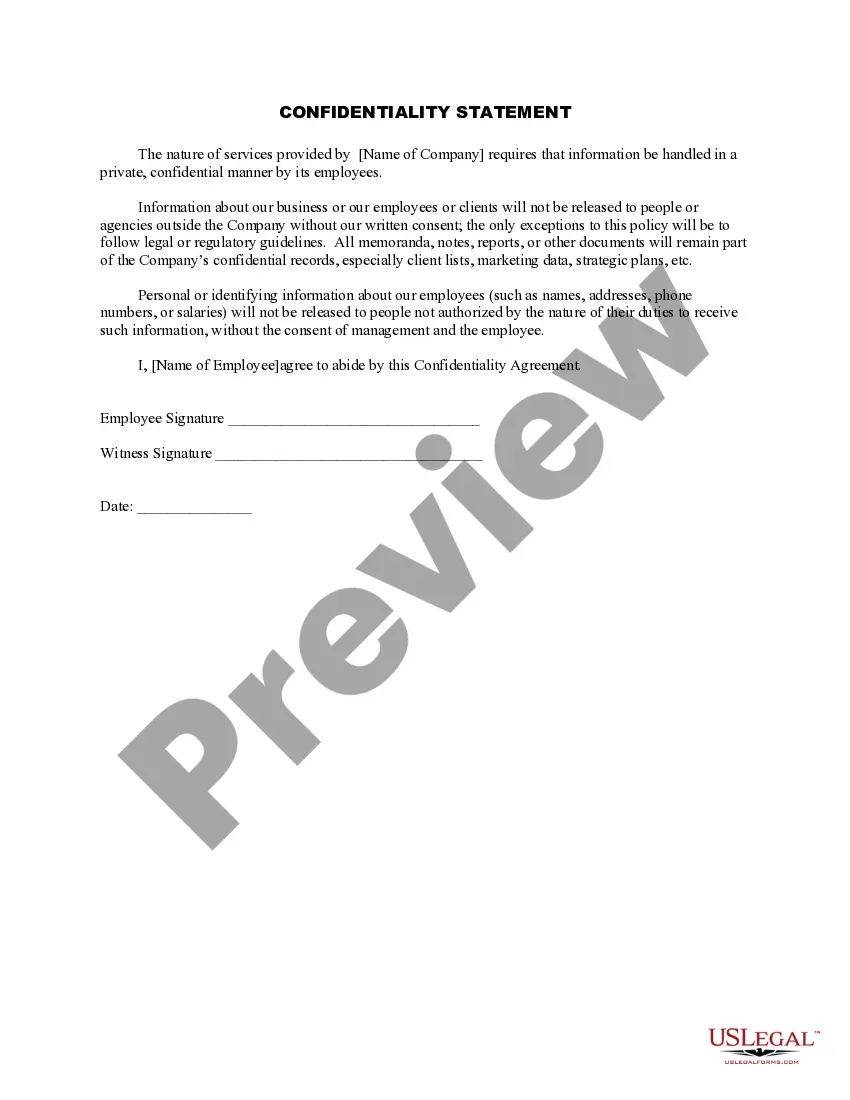
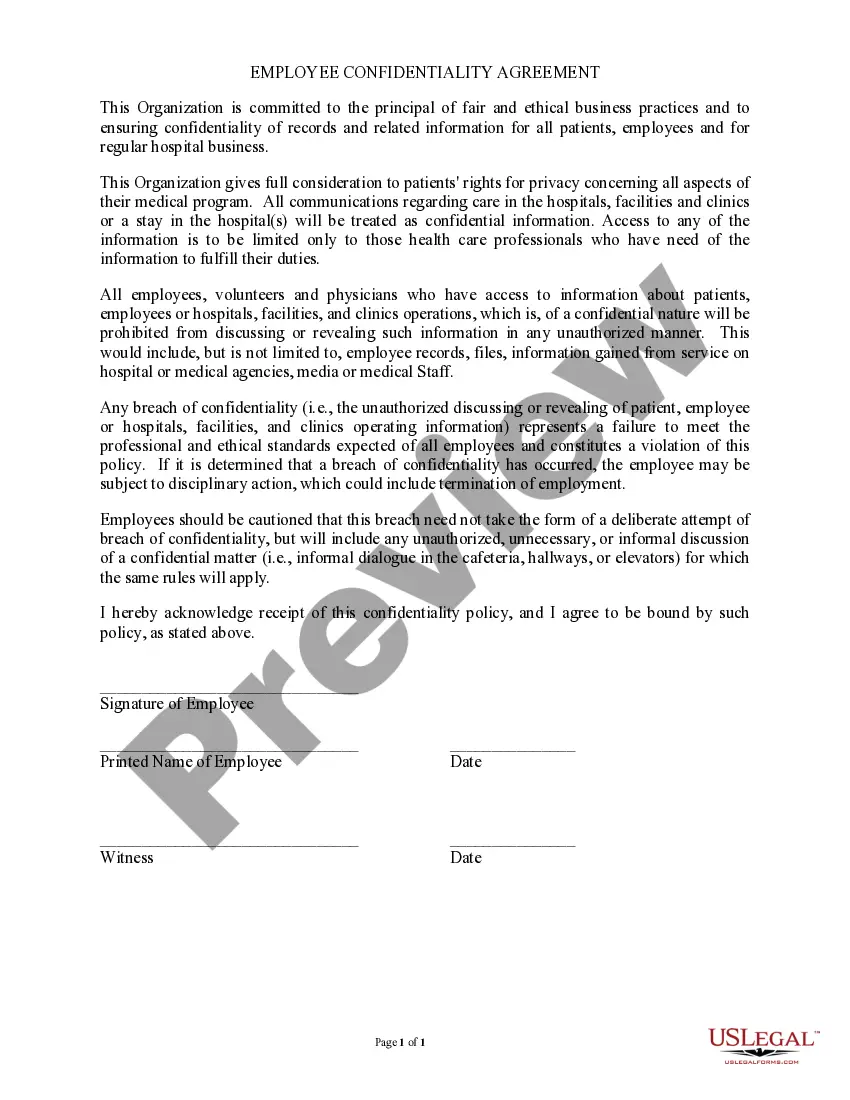
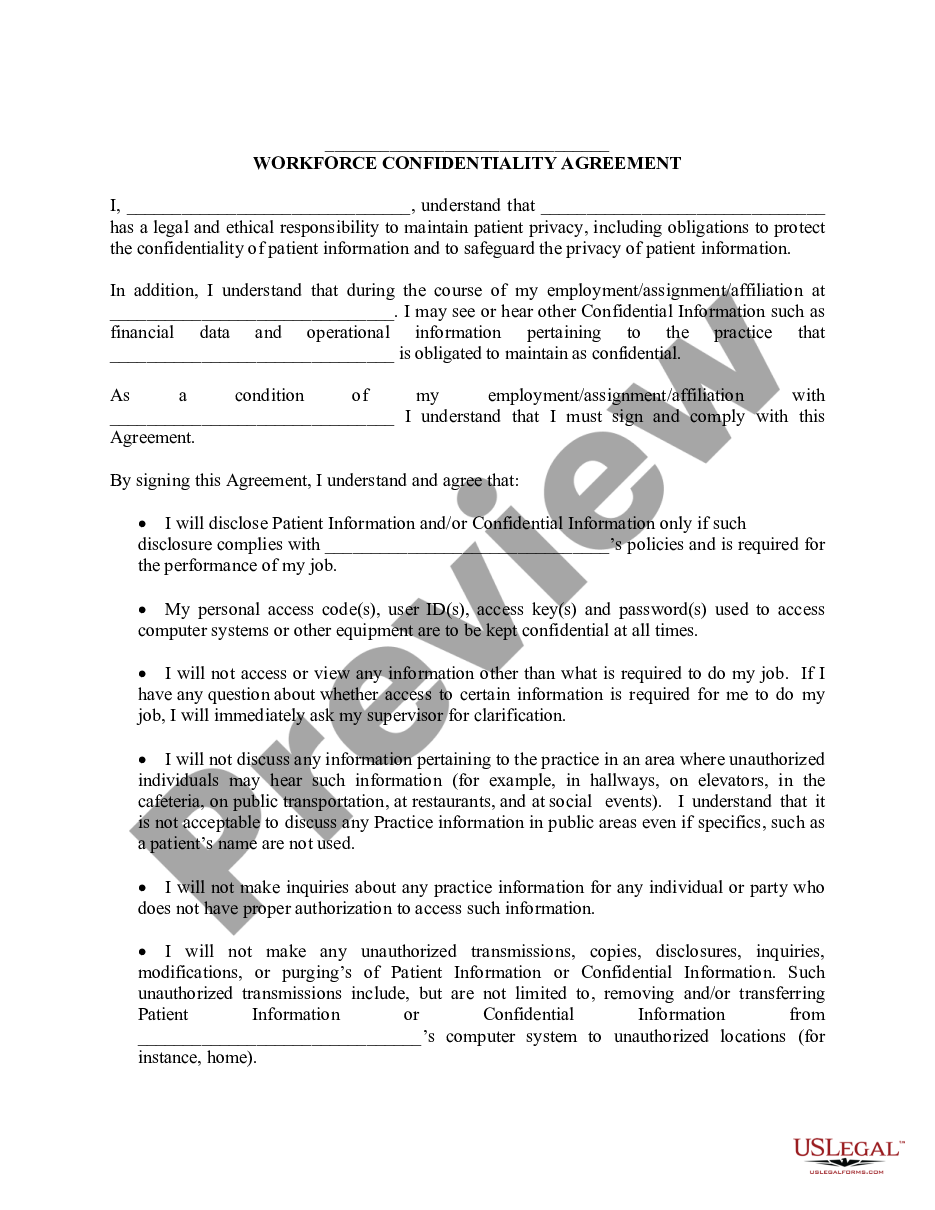
The Confidentiality Agreement for Healthcare Workers Employee Information and Patient Information is a legal document designed to protect sensitive information pertaining to both patients and employees within the healthcare setting. Specifically relevant in California, this form ensures that all workforce members adhere to strict confidentiality guidelines, as mandated by laws such as HIPAA and the Confidentiality of Medical Information Act. It stands apart from other confidentiality agreements by focusing on dual aspects: safeguarding patient health information and protecting employee privacy rights.
Main sections of this form
- Identifies the parties involved, including employees, medical staff, students, and volunteers.
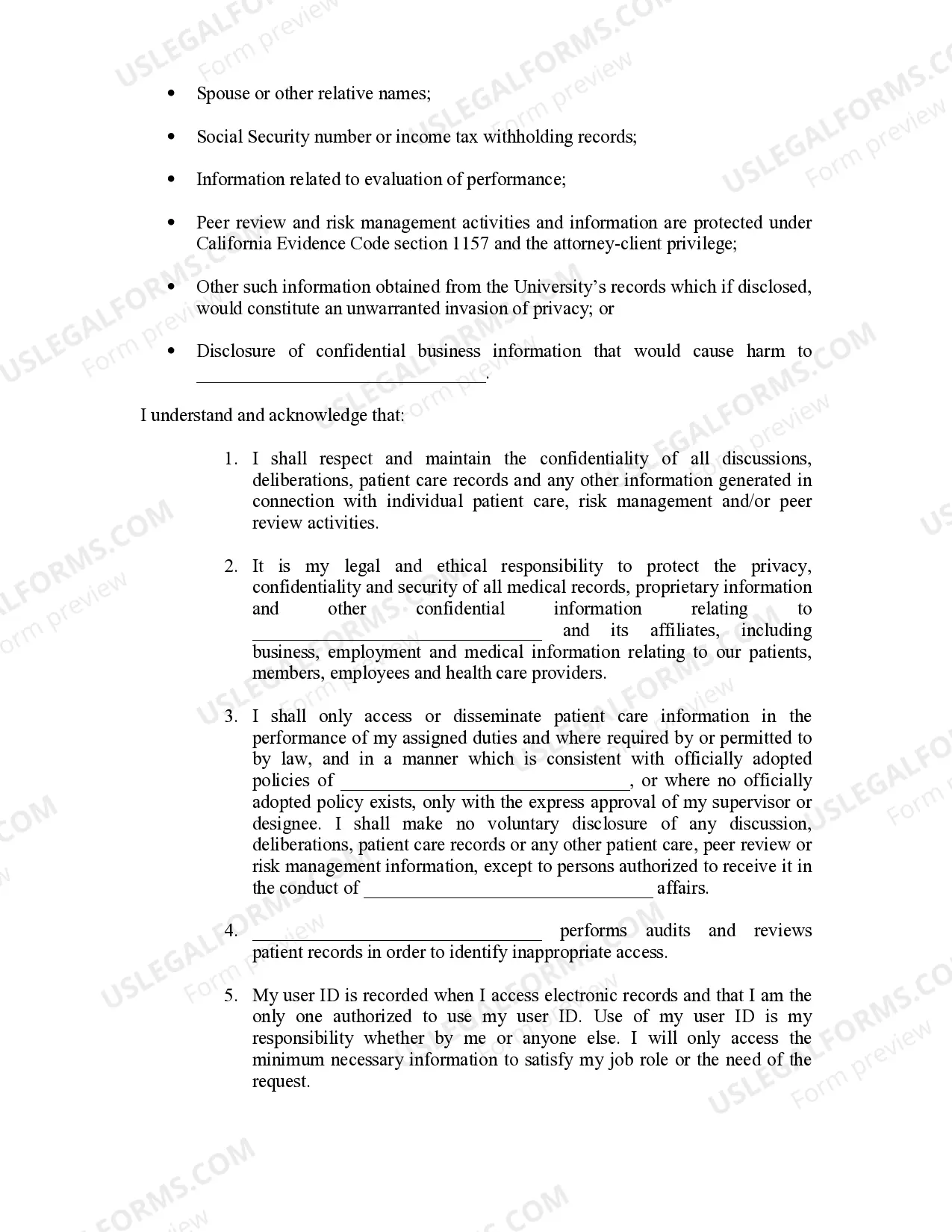
- Details obligations regarding the protection of confidential patient, employee, and business information.
- Outlines the legal framework guiding confidentiality, including HIPAA and California civil codes.
- Defines confidential information, such as medical records and employee personal details.
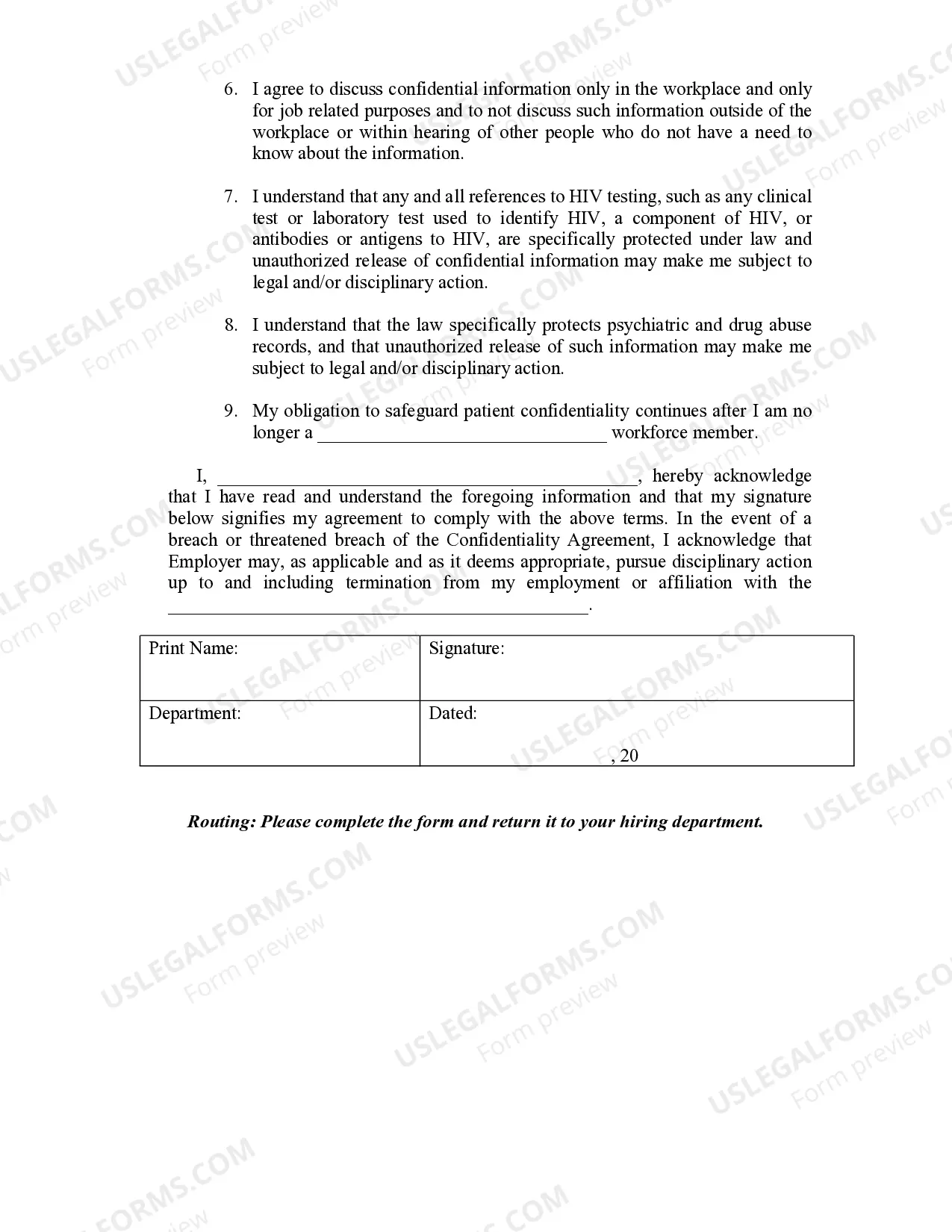
- Establishes consequences for breaches of confidentiality, including potential disciplinary action.
When to use this document
This form is used whenever a healthcare worker is hired or involved in patient care within a healthcare facility. It is essential prior to accessing or handling any sensitive patient or employee information. It is also needed during training sessions, internships, or rotations where confidentiality must be maintained at all times.
Who needs this form
- Healthcare employees who handle patient information.
- Medical staff and professionals involved in patient care.
- Students and interns in medical training programs.
- Volunteers engaged in healthcare environments.
- Temporary or agency personnel working in healthcare settings.
Steps to complete this form
- Fill out the identifying information, including your name and position.
- Read through the confidentiality obligations carefully.
- Sign and date the form to acknowledge your understanding and agreement.
- Return the completed form to the designated hiring department.
- Keep a copy for your records if necessary.
Notarization guidance
Notarization is generally not required for this form. However, certain states or situations might demand it. You can complete notarization online through US Legal Forms, powered by Notarize, using a verified video call available anytime.
Get your form ready online
Our built-in tools help you complete, sign, share, and store your documents in one place.
Make edits, fill in missing information, and update formatting in US Legal Forms—just like you would in MS Word.
Download a copy, print it, send it by email, or mail it via USPS—whatever works best for your next step.
Sign and collect signatures with our SignNow integration. Send to multiple recipients, set reminders, and more. Go Premium to unlock E-Sign.
If this form requires notarization, complete it online through a secure video call—no need to meet a notary in person or wait for an appointment.
We protect your documents and personal data by following strict security and privacy standards.

Make edits, fill in missing information, and update formatting in US Legal Forms—just like you would in MS Word.

Download a copy, print it, send it by email, or mail it via USPS—whatever works best for your next step.

Sign and collect signatures with our SignNow integration. Send to multiple recipients, set reminders, and more. Go Premium to unlock E-Sign.

If this form requires notarization, complete it online through a secure video call—no need to meet a notary in person or wait for an appointment.

We protect your documents and personal data by following strict security and privacy standards.
Mistakes to watch out for
- Failing to read the entire document before signing.
- Omitting required fields such as name and department.
- Assuming verbal agreements about confidentiality are sufficient.
- Not understanding the legal implications of a breach.
- Neglecting to check for updates in company policies regarding confidentiality.
Why use this form online
- Convenience of immediate access and no need for physical paperwork.
- Editability allows for personalized use based on specific healthcare settings.
- Reliability ensures compliance with legal standards and protections.
- Quick submission process directly to your hiring department.
Legal use & context
- This form is legally binding as long as it is completed correctly and signed by the parties involved.
- Forms must be kept confidential and handled according to company policy and legal regulations.
- All parties should be aware that breaches of this agreement can result in legal consequences, including termination.
Looking for another form?
Form popularity
FAQ
Non-disclosure agreements (NDAs) can hold up in court in California if they meet the necessary legal requirements. Courts will evaluate whether the NDA protects legitimate business interests without imposing unreasonable restrictions on an employee. Crafting a clear California Confidentiality Agreement for Healthcare Workers Employee Information and Patient Information can enhance the enforceability of your NDA.
Confidentiality agreements are generally enforceable in California, provided they adhere to legal standards. The agreements must not restrict an employee's ability to engage in lawful activities or express their rights. A robust California Confidentiality Agreement for Healthcare Workers Employee Information and Patient Information can ensure that your agreements hold up in court.
In California, employee information deemed confidential includes personal identification details, medical history, and any information related to an employee's healthcare. This confidentiality is paramount to ensure trust within the workplace. Utilizing the California Confidentiality Agreement for Healthcare Workers Employee Information and Patient Information can help outline and protect this sensitive information.
The California Confidentiality of Medical Information Act (CMIA) and HIPAA are similar but not identical. While both laws aim to protect medical information, CMIA provides more stringent protections for patient information within California. Understanding the nuances of both laws is crucial for healthcare employers navigating the California Confidentiality Agreement for Healthcare Workers Employee Information and Patient Information.
Employee confidentiality agreements can be enforceable if they comply with California law. These agreements must provide a legitimate purpose for protecting employee and patient information. Ensuring your agreement is comprehensive and follows the requirements of the California Confidentiality Agreement for Healthcare Workers Employee Information and Patient Information can aid enforceability.
Yes, employee confidentiality agreements are enforceable in California as long as they meet specific legal criteria. The agreements must clearly define the confidential information and the obligations of the employee. By using a well-drafted California Confidentiality Agreement for Healthcare Workers Employee Information and Patient Information, employers can strengthen their position in case of disputes.
Yes, the California Medical Information Act (CMIA) applies to employers, particularly in the healthcare sector. This act helps protect employee information and patient information by requiring strict confidentiality standards. Employers must ensure that their confidentiality agreements, such as the California Confidentiality Agreement for Healthcare Workers Employee Information and Patient Information, align with CMIA guidelines.
In California, employers may request a doctor's note if you take a sick leave for longer than a specific period. This request helps ensure that employees have appropriate medical support to return to work. Consider using a California Confidentiality Agreement for Healthcare Workers Employee Information and Patient Information to understand your rights regarding sharing medical documentation and to ensure your personal information remains protected.
You are not obligated to inform your employer about your health condition unless it impacts your ability to perform your job. Open communication can help create a supportive work environment, but it's essential to weigh the potential impacts. Utilizing a California Confidentiality Agreement for Healthcare Workers Employee Information and Patient Information can help you navigate what information you should share while protecting your privacy.
In California, patient confidentiality is primarily governed by the Confidentiality of Medical Information Act (CMIA). This law protects personal health information from unauthorized disclosure, ensuring that healthcare workers maintain the privacy of both employee information and patient information. Understanding these protections is crucial, especially when you engage with a California Confidentiality Agreement for Healthcare Workers Employee Information and Patient Information.