Payment Plan Agreement Template For Medical Office
Description
Get your form ready online
Our built-in tools help you complete, sign, share, and store your documents in one place.
Make edits, fill in missing information, and update formatting in US Legal Forms—just like you would in MS Word.
Download a copy, print it, send it by email, or mail it via USPS—whatever works best for your next step.
Sign and collect signatures with our SignNow integration. Send to multiple recipients, set reminders, and more. Go Premium to unlock E-Sign.
If this form requires notarization, complete it online through a secure video call—no need to meet a notary in person or wait for an appointment.
We protect your documents and personal data by following strict security and privacy standards.

Make edits, fill in missing information, and update formatting in US Legal Forms—just like you would in MS Word.

Download a copy, print it, send it by email, or mail it via USPS—whatever works best for your next step.

Sign and collect signatures with our SignNow integration. Send to multiple recipients, set reminders, and more. Go Premium to unlock E-Sign.

If this form requires notarization, complete it online through a secure video call—no need to meet a notary in person or wait for an appointment.

We protect your documents and personal data by following strict security and privacy standards.
Looking for another form?


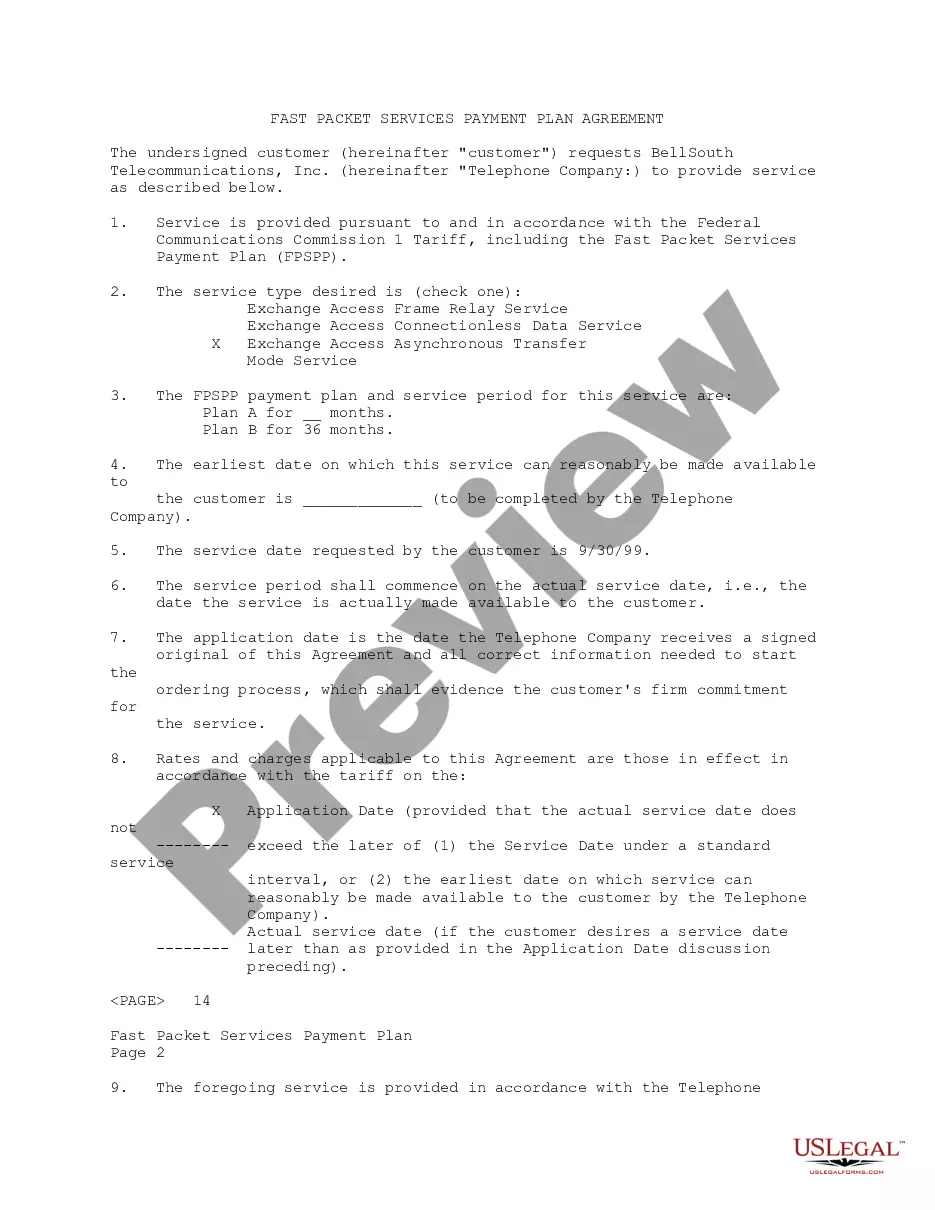
How to fill out Fast Packet Services Payment Plan Agreement?
There's no longer a requirement to spend hours looking for legal documents to adhere to your local state guidelines.
US Legal Forms has gathered all of them in one location and made their access easier.
Our website provides over 85k templates for any commercial and personal legal situations organized by state and area of application.
Creating legal documents under federal and state regulations is quick and simple with our library. Test out US Legal Forms today to keep your paperwork organized!
- All forms are professionally crafted and verified for authenticity, so you can trust in obtaining an updated Payment Plan Agreement Template For Medical Office.
- If you are acquainted with our platform and already possess an account, ensure your subscription is active before obtaining any templates.
- Log In to your account, select the document, and click Download.
- You can also revisit all saved documents at any time by accessing the My documents tab in your profile.
- If you've never engaged with our platform before, the process will involve additional steps to finalize.
- Here’s how new users can find the Payment Plan Agreement Template For Medical Office in our collection.
- Examine the page content thoroughly to confirm it has the sample you need.
- To assist, utilize the form description and preview options if available.
Form popularity
FAQ
Top Challenges to Collecting Patient Financial ResponsibilityHealthcare organizations lack price transparency.Unclear billing processes.Organizations need automated billing.Patients can't afford to pay medical bills.
Here are 9 key items to include in your financial policy.Co-pays and deductibles.Insurance billing.Referrals and pre-authorizations.Patients without insurance (self-pay)Missed appointments.Returned or NSF checks.Copies of Medical Records.Payment plans and outstanding balances.More items...?
The payment agreement should include:Creditor's Name and Address;Debtor's Name and Address;Acknowledgment of the Balance Owed;Amount Owed;Interest Rate (if any);Repayment Period;Payment Instructions;Late Payment (if any); and.More items...?
crafted policy will prevent patients from being surprised about their financial obligation when they receive your services. It will also give your practice some legal protection should a patient fail to pay what you are entitled to collect.
A payment plan agreement, also known as an installment agreement, is a written legal document that allows one party to make smaller payments over time to payoff a larger debt.
