Montana Adoption
Adoption documents are essential for legal adoption processes. Our attorney-drafted templates make it quick and easy to complete your forms.

Similar documents: key differences
- Petition for Adoption vs. Application for Adoption — both seek court approval, but terms can vary by state.
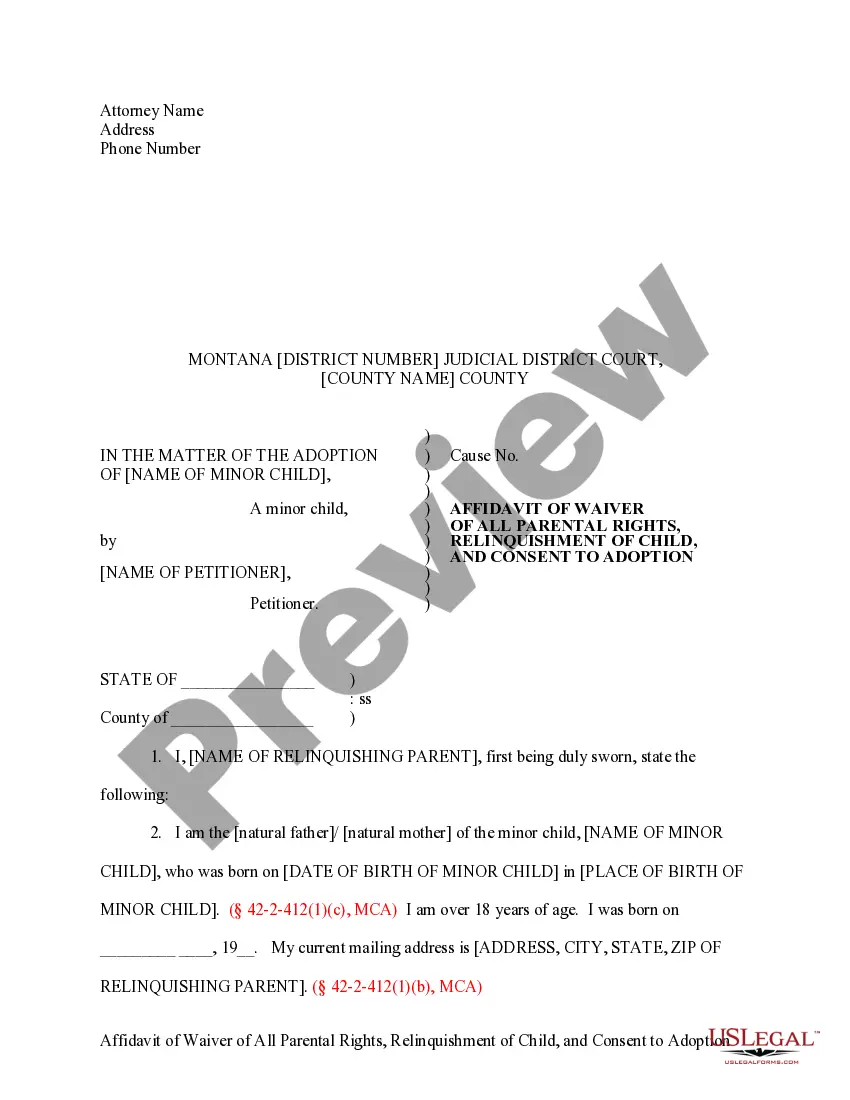
- Consent to Adoption vs. Relinquishment of Parental Rights — one grants consent, while the other permanently removes parental rights.
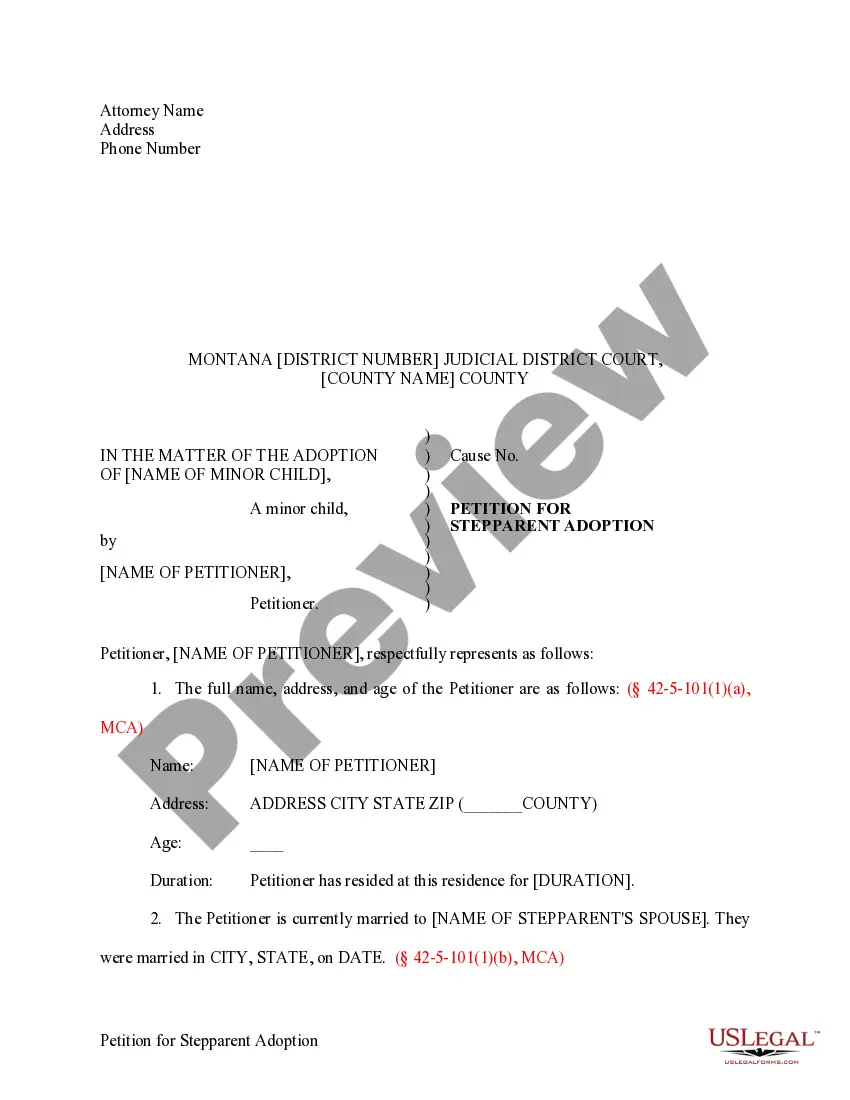
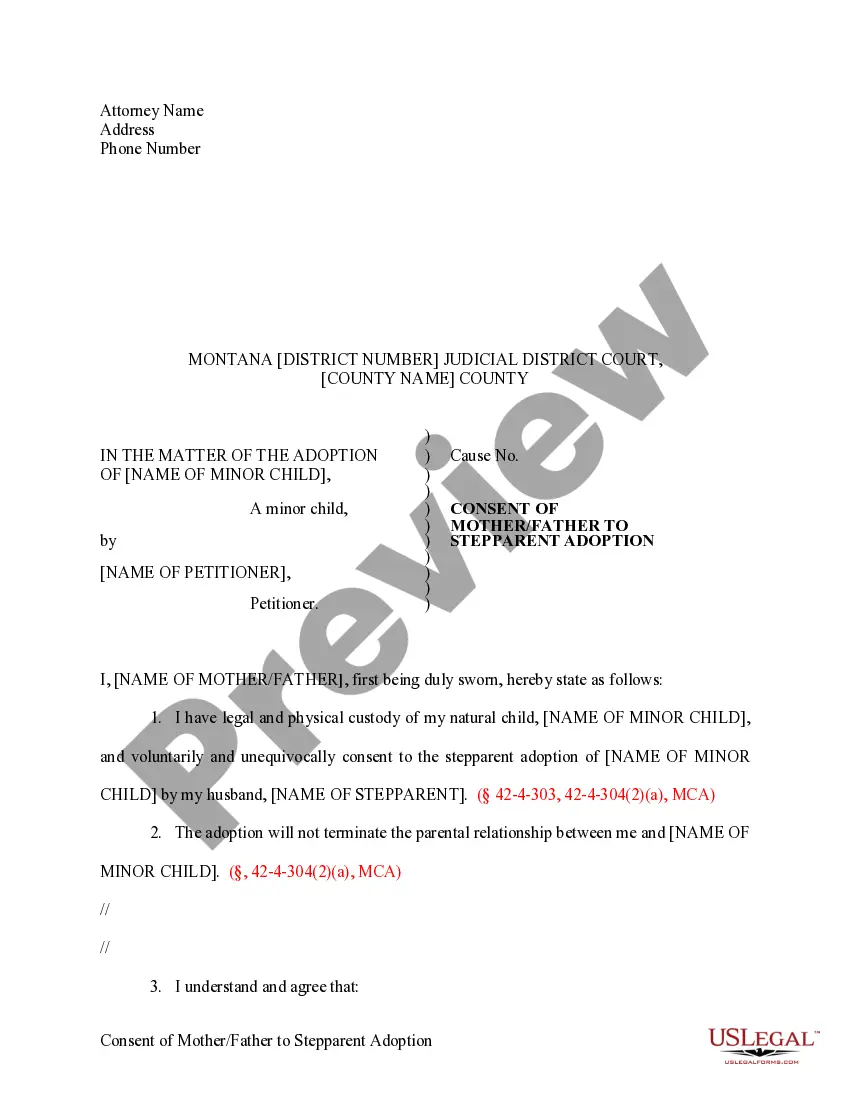
- Step-Parent Adoption vs. Adult Adoption — step-parent adoption is for minors, while adult adoption involves individuals over 18.
- Agency Adoption vs. Independent Adoption — agency adoption is facilitated by a licensed agency, while independent adoption occurs directly between parties.
Search for more forms
Types of Adoption forms
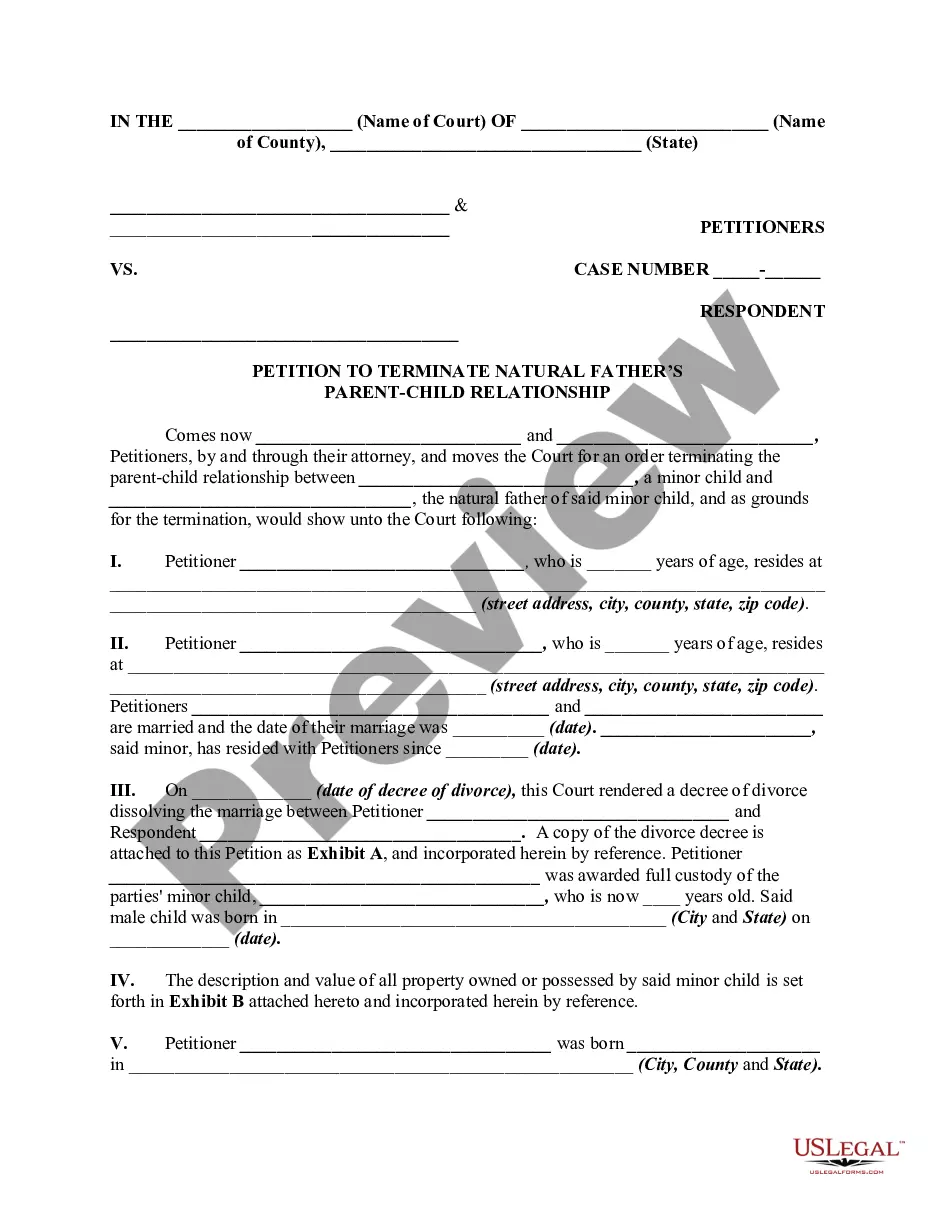
Petition: Husband & Wife Adopt Minor (Both Bio Parents Consent)
Ideal for couples seeking to adopt a minor with the consent of the biological parents, ensuring a legally sound and supportive process.
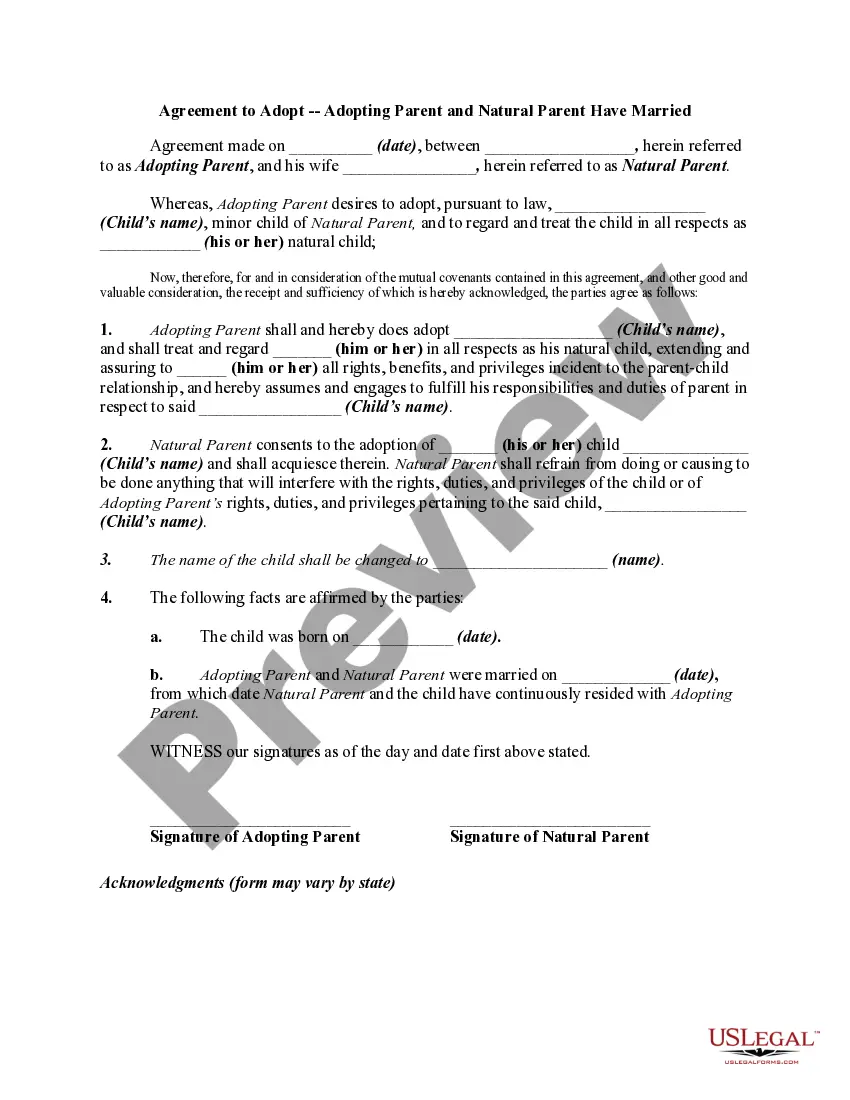
Agreement to Adopt: Stepparent
Ensure legal recognition of a child’s adoptive status after marriage between the stepparent and natural parent.
Petition for Kinship Adoption
Use this form when seeking to adopt a child with whom you have a familial relationship, ensuring legal rights and inheritance.
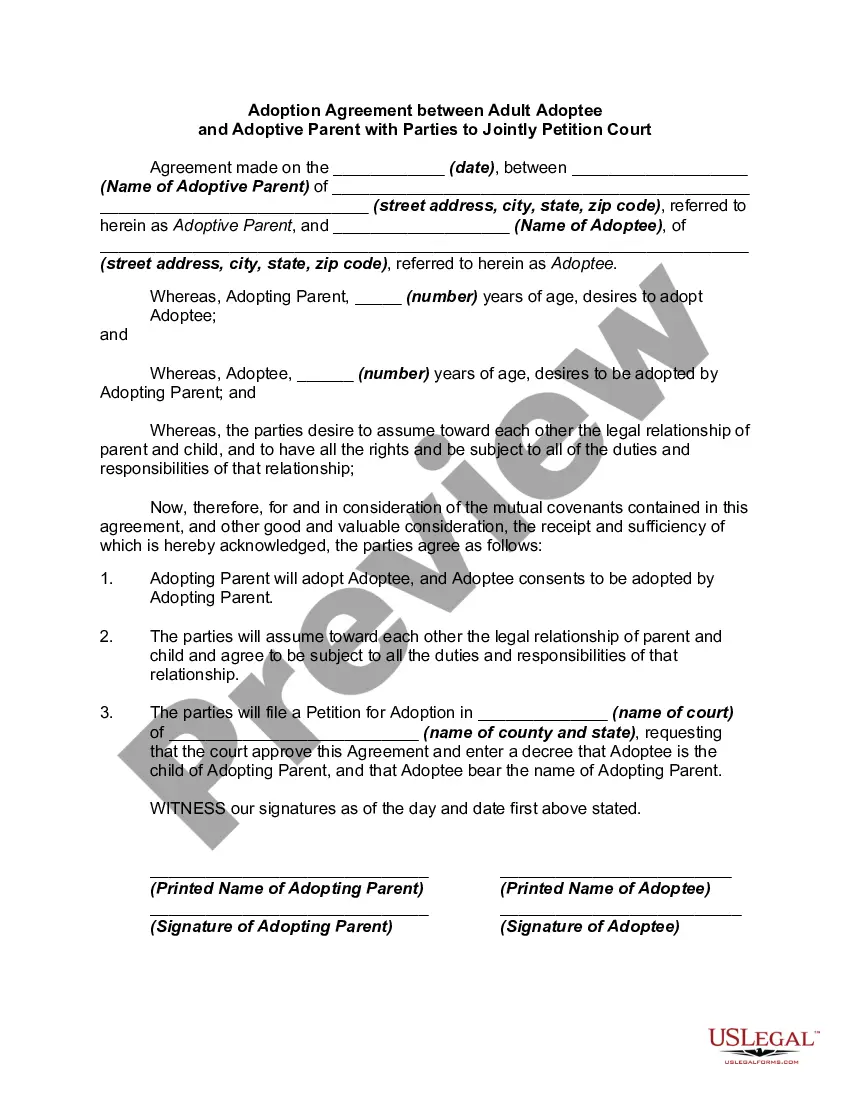
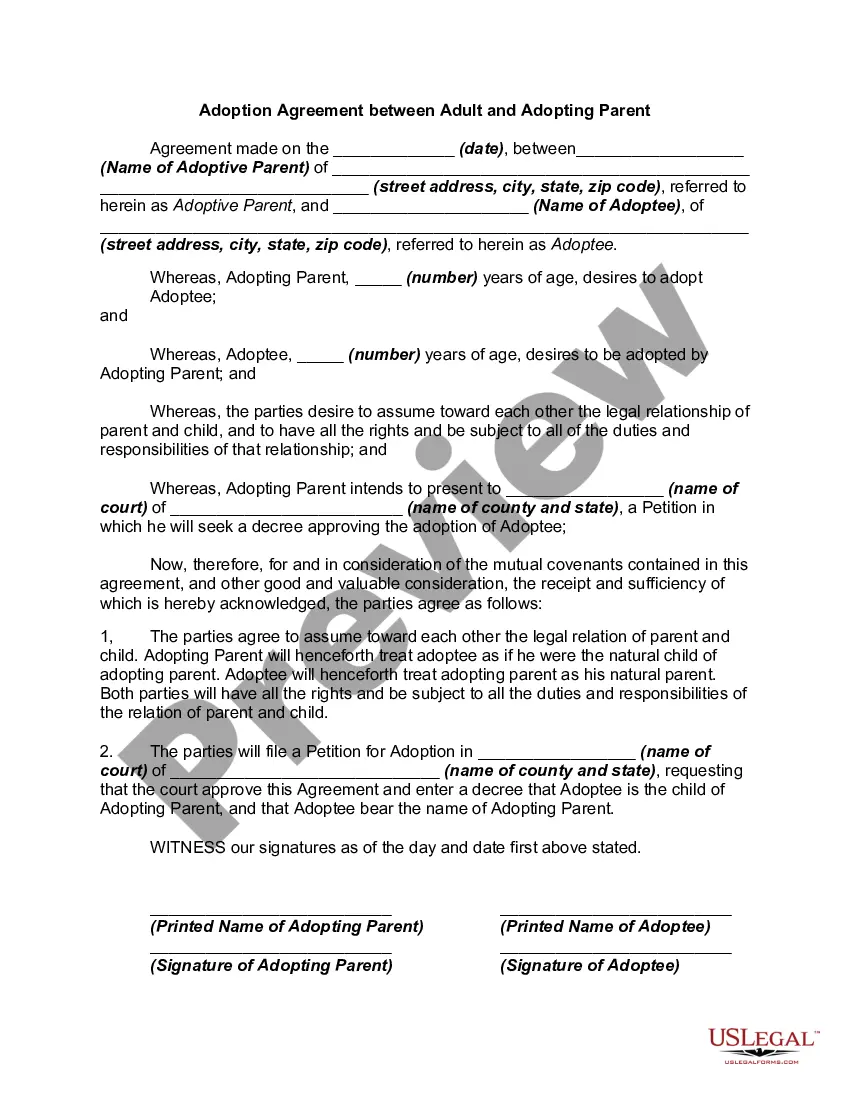
Adult Adoption Agreement
Establish a legal relationship between an adopting parent and an adult adoptee, ensuring rights and responsibilities akin to those of a biological parent-child relationship.
Application: Obtain Birth Certificate
Secure a hospital photocopy of a minor's birth certificate for adoption proceedings quickly and efficiently.
Answer: Bio Parent Contests Adoption
Respond to an adoption petition by contesting the petitioner's qualifications and protecting the child's best interests.
Adoption Agreement: Husband & Wife + Pregnant Bio Mother
Secure an agreement between prospective adoptive parents and a pregnant natural mother for medical cost payments related to the adoption process.
Common Montana Adoption documents
- Adoption Agreement — outlines the terms between adopting parties.
- Petition for Adoption — formally requests the court to approve the adoption.
- Consent to Adoption — grants permission from biological parents for adoption.
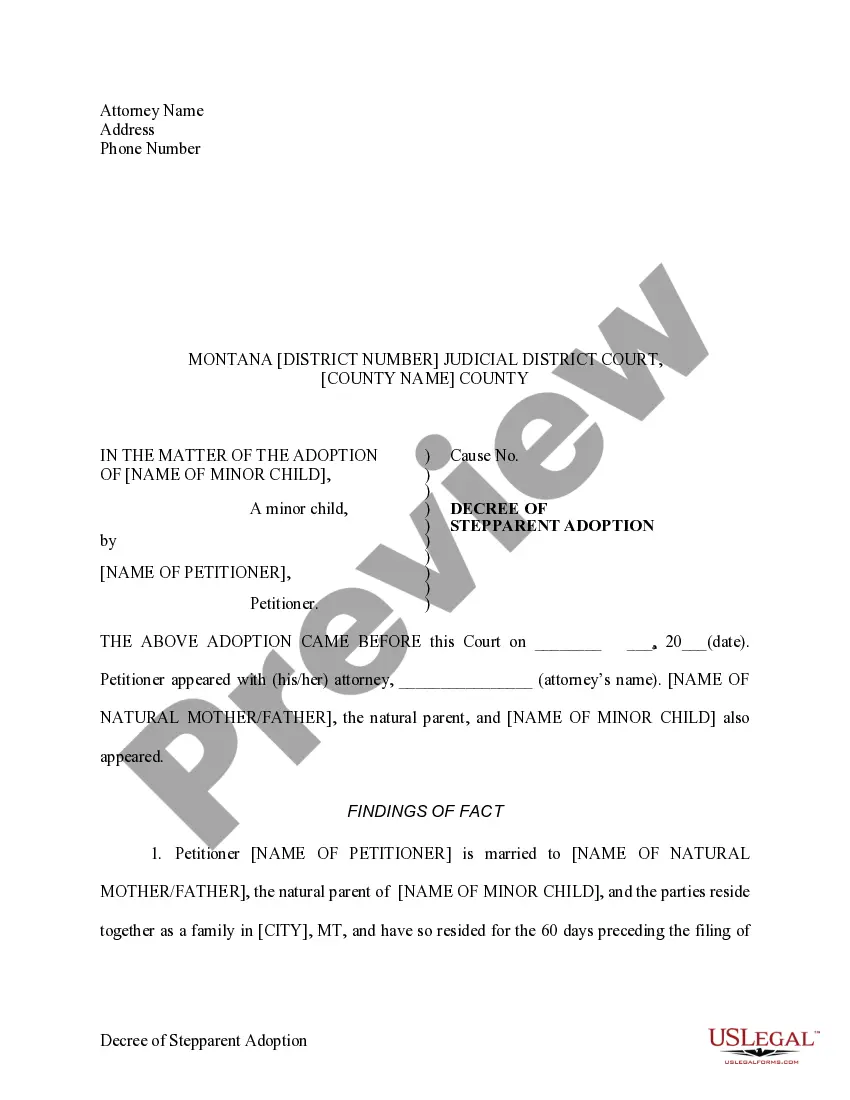
- Final Decree of Adoption — legally finalizes the adoption process.
- Adoption Home Study Forms — assesses the suitability of the adopting family.
Complete Montana Adoption packages
Bundle every form you need for a complete situation — not just one document.

 5 forms
Montana Relative Caretaker Legal Documents Package
Everything needed for a relative to assume custody of a child in one convenient package.
5 forms
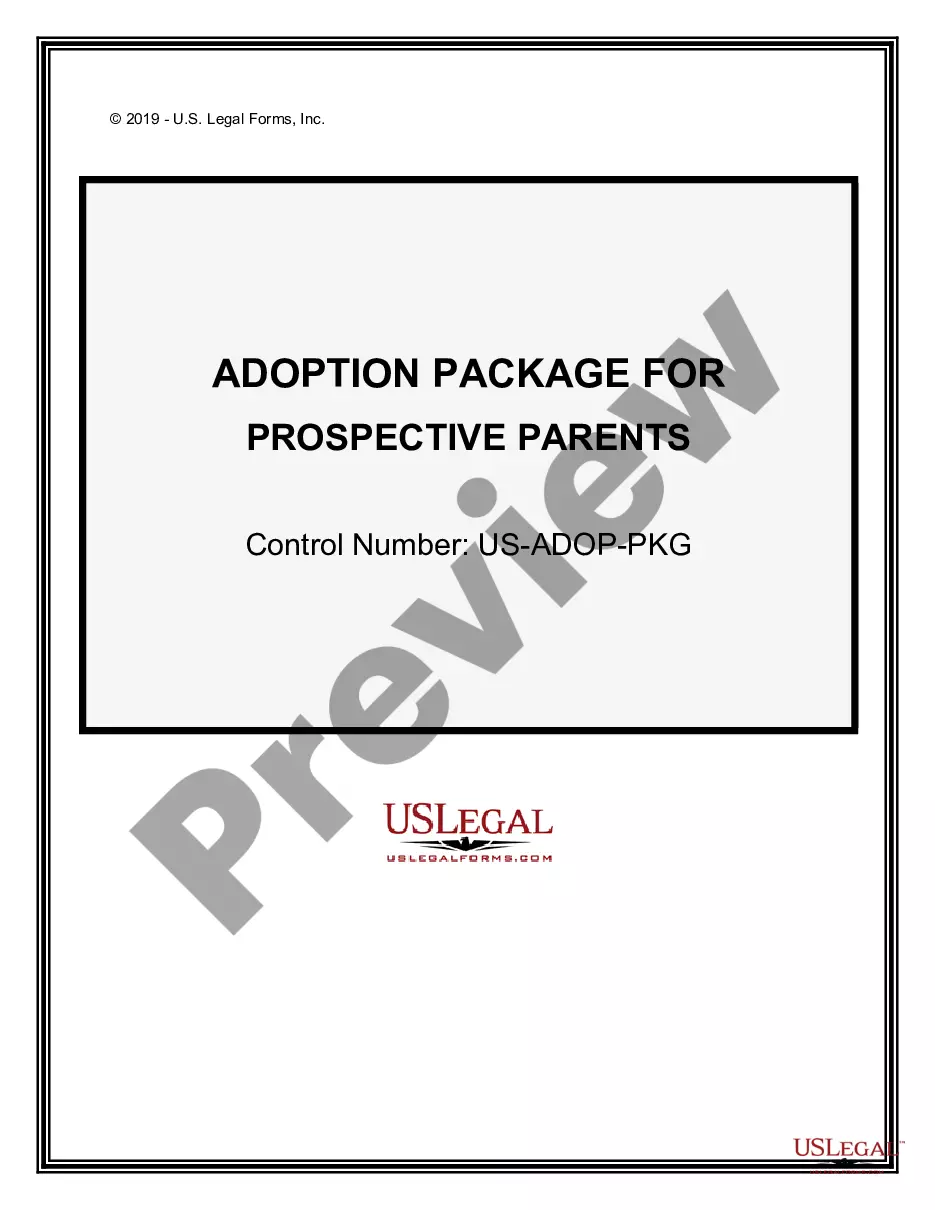
Adoption Package for Prospective Parents
Get everything needed for a smooth adoption process in one convenient package, including multiple legal forms tailored for prospective parents.
FAQs
A home study assesses the adopting family's suitability through interviews and evaluations.
The duration varies, but it can take several months to complete all requirements.
Yes, single individuals can adopt, depending on the agency or court's policies.
Costs may include application fees, home study expenses, and legal fees.
Yes, a step-parent can adopt their spouse's child, often simplifying the process.
Key legal points
- Adoption permanently transfers parental rights from biological parents to adoptive parents.
- Consent from biological parents is often required to proceed with adoption.
- Adoption processes can vary based on whether it is domestic or international.
- Certain documents may require notarization or witness signatures.
- A home study is typically part of the adoption process to assess the suitability of the adopting family.
How to get started
Begin your adoption journey in just a few simple steps.
- Find a template or package that fits your situation.
- Review the description, preview, and signing requirements.
- Get full access with a subscription.
- Complete it in the online editor.
- Export or send: download, email, USPS mail, notarize online, or send for e-signature.
Practical tip
Consider which type of adoption best suits your situation, such as agency or independent, to avoid confusion.