Loading
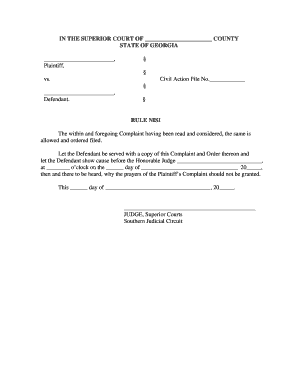
Get Ga Rule Nisi
How it works
-

Open form follow the instructions
-

Easily sign the form with your finger
-

Send filled & signed form or save
How to fill out the GA Rule Nisi online
Filing a GA Rule Nisi is an important step in the legal process, allowing a plaintiff to seek a court order to compel a defendant to respond to their complaint. This guide will walk you through each section of the form, providing clear instructions to help you complete it accurately and efficiently.
Follow the steps to fill out the GA Rule Nisi online effectively.
- Click 'Get Form' button to access the GA Rule Nisi document and open it in your chosen online editor.
- In the top section, fill in the name of the county where the superior court is located. This ensures the form is filed in the correct jurisdiction.
- Next, enter the names of the plaintiff and defendant in the appropriate fields. Clearly indicate who is bringing the complaint and who is being accused.
- In the 'Civil Action File No.' section, leave this blank if you are filing for the first time, as the court will assign a file number upon submission.
- Complete the text following 'Let the Defendant be served with a copy of this Complaint and Order thereon,' confirming that you are requesting the court to notify the defendant.
- Fill in the date and time when the defendant is to appear before the Honorable Judge. Make sure it is a future date and is clearly stated.
- Review all completed sections for accuracy, ensuring that all necessary information has been provided and is correct.
- Finally, save your changes, download a copy of the filled form, and prepare to print or share it as needed for submission.
Now that you know how to fill out the GA Rule Nisi, start completing your documents online today!
Related links form
In Georgia, the rule of nisi serves as a legal mechanism to manage court proceedings by providing temporary resolutions. It allows courts to ensure compliance with existing laws or agreements while cases are still active. Utilizing a GA Rule Nisi helps maintain order in family law situations and informs parties of their responsibilities.