Loading
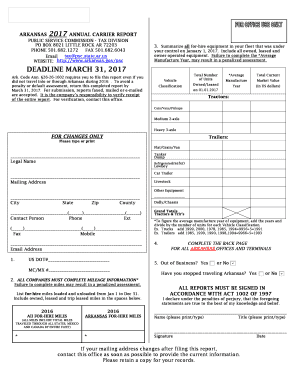
Get Arkansas Annual Carrier Report 2020
How it works
-

Open form follow the instructions
-

Easily sign the form with your finger
-

Send filled & signed form or save
How to fill out the Arkansas Annual Carrier Report 2020 online
Filling out the Arkansas Annual Carrier Report is essential for ensuring compliance with state regulations. This guide will walk you through the necessary steps to complete the report online, ensuring you provide all required information accurately.
Follow the steps to complete your Arkansas Annual Carrier Report online.
- Press ‘Get Form’ button to access the report and open it in your editing tool.
- Review the sections of the form thoroughly. Begin by summarizing all for-hire equipment in your fleet that was under your control on January 1, 2017. Include owned, leased, and owner-operated equipment.
- Fill in the total number of units for each vehicle classification, ensuring accuracy for the vehicle types such as tractors and trailers. Note the manufacture year and provide the average manufacture year by adding the years and dividing by the number of units in that category.
- Complete the mileage information section, listing for-hire miles loaded and unloaded from January 1 to December 31. This includes owned, leased, and trip leased miles.
- Declare if your company has stopped traveling in Arkansas and complete the required declaration by filling in your name, title, and signature. This section also requires the date of submission.
- Provide detailed information for each Arkansas location, including addresses and costs related to office furnishings and supplies, ensuring you differentiate between home-office, rented spaces, and terminal locations.
- Confirm all entries for accuracy. Save your changes, and decide if you want to download, print, or share the form for final submission.
Complete your Arkansas Annual Carrier Report online to ensure timely submission and compliance.
The Tax Division of the Arkansas Public Service Commission is responsible for assessing public utilities and carriers for ad valorem property tax purposes. These assessments generate annual revenues for local governments and public schools in Arkansas.