3. Augmented gross estate (add lines 1 and 2). . . . . . . . . . . . . . . . . . . $ 4. Federal total allowable deductions (from line 2, federal Form 706). . . . $ 5. Maryland QTIP election this return (from line 1 of Schedule D). . . . . . $ 6. Total deductions (add lines 4 and 5). . . . . . . . . . . . . . . . . . . . . . . . . $ 7. Maryland estate tax base (subtract line 6 from line 3). Do not enter less than zero. . . . . . . . . . . . . . . . . . . . . . . . . . . . . . . $ 8. Su.
Open form follow the instructions
Easily sign the form with your finger
Send filled & signed form or save
How to fill out the MD MET 1 online
Filling out the Maryland Estate Tax Return, known as MD MET 1, can seem daunting. This guide provides clear step-by-step instructions to help users navigate the process of completing this important document online, ensuring accuracy and compliance.
Follow the steps to successfully complete the MD MET 1 form.
- Click the ‘Get Form’ button to obtain the form and open it in the editor.
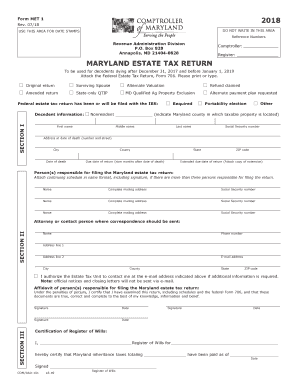
- Begin with Section I and provide the decedent's information. Include their first name, middle name, last name, and Social Security number. Also, complete the address at the date of death, including city, county, state, and ZIP code. Ensure you fill out the date of death and due date for the return.
- Indicate whether you are filing an original return or an amended return, as well as if the decedent had a surviving spouse. Check relevant boxes for alternate valuation and any claims such as a refund or alternate payment plans.
- List the persons responsible for filing the estate tax return in the specified area, including their names, Social Security numbers, and complete mailing addresses.
- Proceed to Section II to provide contact information for the attorney or contact person for correspondence. Include their name, mailing address, phone number, and email address, ensuring authorization for communication regarding additional information is indicated.
- In Section III, signatures from the responsible persons are required, along with the dates next to their signatures, certifying the accuracy of the provided information.
- Complete Section IV, which involves computations regarding the Maryland Estate Tax. Carefully follow the lines detailing federal totals, deductions, and any relevant calculations, ensuring all figures are correct.
- After completing all sections, review the form for accuracy. Save the changes, and make sure to download, print, or share the completed form as necessary.
Complete your Maryland Estate Tax Return online today to ensure compliance and avoid any penalties.
Experience a faster way to fill out and sign forms on the web. Access the most extensive library of templates available.
Related content
The Maryland estate tax return must be filed within nine months after the date of death of...
This program provides students with an in-depth exploration of global health issues...
Modo 1 Estabelecer redundância com uma combinação OPTICAL e COAXIAL. Modo 2 Estabelecer...
Get answers to your most pressing questions about US Legal Forms API.
Who must file MD Form 1?
MD Form 1 must be filed by individuals or entities operating within Maryland who owe income taxes based on their earnings. This includes not only residents but also non-residents who have Maryland-source income. If you're unsure about your filing requirements, refer to uslegalforms for user-friendly resources to assist you with the MD MET 1 process.
Do I need to file an estate tax return in Maryland?
You need to file an estate tax return in Maryland if the value of the property and assets in your estate surpass the state’s current exemption threshold. Failing to file when necessary can result in significant fines or penalties. For accurate guidance, it may be beneficial to use the resources offered by uslegalforms, which can help you navigate the filing process efficiently.
Do you have to file an estate tax return in Maryland?
Filing an estate tax return in Maryland is necessary if your estate exceeds the exemption limit established by the state. This requirement applies even if you believe your estate may not incur a tax liability. Maintaining compliance with MD MET 1 regulations can ultimately save you from penalties, so it’s wise to keep informed.
Do you always have to file an estate tax return?
Not everyone is required to file an estate tax return in Maryland. Generally, if your estate's value exceeds the state threshold, you will need to file. However, if your estate is below this limit, you may not need to submit an MD MET 1. Checking with a tax expert can help you understand your obligations.
Who is exempt from Maryland estate tax?
In Maryland, individuals with an estate valued below a certain threshold may be exempt from the estate tax. This threshold can change, so it’s important to stay updated with Maryland state regulations. If you are unsure about the specifics of the MD MET 1 exemptions, consulting a tax professional can provide clarity based on your situation.
Can I file my Maryland tax return online?
Yes, you can file your Maryland tax return online using the Maryland Comptroller's website or through various tax preparation software. Filing online is convenient and allows for quicker processing of your MD MET 1. Additionally, you can receive immediate confirmation of your submission, which provides peace of mind.
Where do I mail my MD Form 1?
You should mail your MD Form 1 to the Maryland State Comptroller's office. The address can vary depending on whether you're submitting a return, a payment, or other documents. It's best to confirm the correct mailing address on the official Maryland Comptroller website. This ensures your MD MET 1 gets processed promptly.
What triggers an estate tax return?
An estate tax return is typically triggered when the total value of the estate exceeds Maryland's exemption limit. This includes all assets, property, and certain financial accounts. Understanding what counts towards this threshold can help you prepare accordingly. The US Legal Forms platform can provide assistance in preparing necessary documentation to meet these requirements.
Who is exempt from Maryland inheritance tax?
Certain individuals, such as direct descendants and charitable organizations, are exempt from Maryland inheritance tax. This means that surviving spouses, children, and siblings often do not face this tax burden. Knowing who qualifies for these exemptions can ease planning during estate administration. For comprehensive information, consult resources from US Legal Forms.
How do I keep my inheritance from being taxed?
To keep your inheritance from being taxed, consider placing assets in a trust or gifting them before they are inherited. Understanding the various exemptions and deductions available is crucial for effective tax management. It is also beneficial to consult with professionals who can assist with tailored strategies for your situation. US Legal Forms provides essential resources to help streamline this planning.
Use professional pre-built templates to fill in and sign documents online faster. Get access to thousands of forms.
If you believe that this page should be taken down, please follow our DMCA take down process here.
This form is available in several versions. Select the version you need from the drop-down list below.