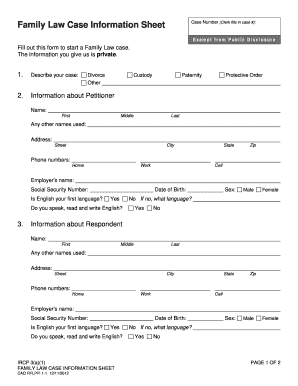
Describe your case: Divorce Other 2. Information about Petitioner Custody Paternity Protective Order Name: First Middle Last Any other names used: Address: Street City State Zip Phone numbers: Home Work Cell Employer s name: Social Security Number: Sex: Male Female Date of Birth: Is English your first language? Yes No If no, what language? Do you speak, read and write English? 3. Yes No Information about Respondent Name: First.
Open form follow the instructions
Easily sign the form with your finger
Send filled & signed form or save
How to fill out the ID IRCP 3(a)(1) online
This guide provides clear and detailed instructions on how to fill out the ID IRCP 3(a)(1) Family Law Case Information Sheet online. By following the steps outlined here, users can securely input their information to initiate a family law case while ensuring their privacy is maintained.
Follow the steps to complete the ID IRCP 3(a)(1) online.
- Click the ‘Get Form’ button to obtain the ID IRCP 3(a)(1) form and launch it in your preferred editing tool.
- Begin by describing your case. Choose the appropriate box that best fits your situation, selecting from options such as Divorce, Custody, Paternity, or Protective Order.
- Provide information about the Petitioner. Fill in the fields for the Petitioner’s name (first, middle, last), any other names used, address (street, city, state, zip), phone numbers (home, work, cell), employer's name, and Social Security number. Indicate the sex and date of birth of the Petitioner. Respond to whether English is the first language and specify language if applicable.
- Enter the same information for the Respondent as in Step 3. Ensure you accurately fill in all fields including name, address, phone numbers, employer’s name, Social Security number, date of birth, sex, language considerations, and ability to speak, read, and write English.
- List the Petitioner’s natural and adopted children under 18. Provide each child's name, date of birth, and Social Security number in the spaces provided.
- List the Respondent’s natural and adopted children under 18 using the same format as in Step 5.
- Detail any other cases involving children that relate to child support, custody, adoption, or guardianship. For each case, fill in the case number, date of order (or requested date), county/state, and type of case.
- Finally, note any cases involving violence or abuse. List each relevant case number, specify who the order was against, who it protected, the date of the order (or requested date), county/state, and type of case.
- Once all fields have been filled with the required information, save your changes. You can also download, print, or share the completed form as needed.
Start completing your ID IRCP 3(a)(1) form online today to ensure your family's needs are addressed promptly.
Experience a faster way to fill out and sign forms on the web. Access the most extensive library of templates available.
Related content
This rule governs all contempt proceedings brought in connection with a civil lawsuit or...
by B Thies — Plaintiffs sought declaratory relief prohibiting Saint Alphonsus from...
Apr 4, 2025 — The channel must be selected for AI blocks 3 and 4. • Channel 1 is the...
Get answers to your most pressing questions about US Legal Forms API.
What is the Rule of Civil Procedure 50 in Idaho?
Idaho Rule of Civil Procedure 50 allows courts to grant judgment as a matter of law during a jury trial. This means that, if one party fails to present sufficient evidence to support their claim, the judge can rule in favor of the opposing party without letting the jury deliberate. This rule streamlines cases and upholds the standards of fairness in the trial process. Being well- in ID IRCP 3(a)(1) will enhance your strategy when engaging with this rule.
What is the Rule 60 B in Civil Procedure?
Rule 60 B of Civil Procedure provides specific conditions under which a court may relieve a party from a judgment, including mistakes or newly discovered evidence. This rule is essential for maintaining fairness in the legal system by allowing for corrections. Ensuring you meet the criteria set forth in this rule is necessary when seeking to modify an unfavorable outcome. In this context, the insight provided by ID IRCP 3(a)(1) can be invaluable.
What is the Rule of Civil Procedure 70 in Idaho?
Idaho Rule of Civil Procedure 70 addresses situations where a party fails to comply with a court order. This rule permits the court to compel compliance through various means, including appointing someone or taking necessary actions to ensure compliance. This provision serves to uphold the integrity of the legal process and ensures court orders are respected. Familiarizing yourself with ID IRCP 3(a)(1) can help clarify your obligations under this rule.
What is the rule of Civil Procedure 75 in Idaho?
Idaho Rule of Civil Procedure 75 focuses on the appeal process for decisions made by lower courts or administrative agencies. This rule outlines the procedures for filing notices of appeal and other relevant requirements. Understanding your rights under this rule is critical, whether you are a plaintiff or a defendant. Knowledge of ID IRCP 3(a)(1) offers further clarity on navigating the appeals process effectively.
What is the rule of Civil Procedure 60 in Idaho?
Idaho Rule of Civil Procedure 60 allows a party to seek relief from a judgment or order under specific circumstances. Common reasons for seeking relief include mistakes, new evidence, or fraud. This rule provides a mechanism for individuals to address significant issues that may warrant changing a court’s final decision. When dealing with such matters, it’s important to consider the implications of ID IRCP 3(a)(1).
What is the rule of Civil Procedure 56 in Idaho?
Idaho Rule of Civil Procedure 56 pertains to summary judgment, allowing parties to seek a judgment without a full trial when there is no genuine dispute of material fact. This rule streamlines the legal process and can save time and resources for all involved. Parties can use this rule when they believe there’s enough evidence to decide the case promptly. Familiarity with ID IRCP 3(a)(1) can enhance your approach to summary judgment.
What is Idaho Rule of Civil Procedure 61?
Idaho Rule of Civil Procedure 61 addresses harmless errors that may occur during the course of legal proceedings. Specifically, this rule ensures that a trial's result remains valid even if minor errors or defects arise. Essentially, if a mistake does not significantly impact the outcome, it may be overlooked. Understanding ID IRCP 3(a)(1) is essential for navigating such situations effectively.
What is the rule of Civil Procedure 68 in Idaho?
Rule 68 of the Idaho Rules of Civil Procedure pertains to offers of judgment, allowing a party defending against a claim to make a settlement offer. If the offer is accepted, it leads to a resolution of the case without trial. Utilizing ID IRCP 3(a)(1) can help you understand the strategic implications of making such offers early on in the litigation process.
What is the Rule 77 D of the Federal Rules of Civil Procedure?
Rule 77 D details the requirements for the filing and service of notice in proceedings before a court. This rule helps maintain transparency in the judicial process. Knowing about ID IRCP 3(a)(1) can assist you in navigating similar requirements under Idaho's regulations.
What is Rule 72 Federal Rule of Civil Procedure?
Rule 72 of the Federal Rules of Civil Procedure governs the procedure for magistrate judges and the review of their decisions by district judges. It outlines how parties can appeal rulings made by magistrate judges. Familiarity with ID IRCP 3(a)(1) can enhance your understanding of the procedural nuances involved in such appeals.
Use professional pre-built templates to fill in and sign documents online faster. Get access to thousands of forms.
If you believe that this page should be taken down, please follow our DMCA take down process here.