Loading
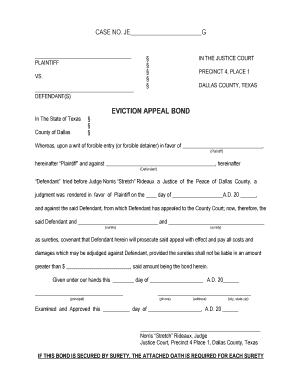
Get Eviction Appeal Bond - Dallascounty
How it works
-

Open form follow the instructions
-

Easily sign the form with your finger
-

Send filled & signed form or save
How to fill out the EVICTION APPEAL BOND - Dallas County online
Filling out the eviction appeal bond is an essential step for individuals seeking to appeal a judgment in an eviction case. This guide provides clear, step-by-step instructions to help users complete the form accurately and efficiently.
Follow the steps to successfully fill out the form
- Click ‘Get Form’ button to obtain the form and open it in the editor.
- Begin by entering the case number, which identifies your specific eviction case. This should be located at the top of the form.
- Fill in the names of the plaintiff and defendant in the appropriate sections. Ensure that the spelling of each name is accurate to avoid any delays in processing.
- Specify the date of the judgment rendered against the defendant. This should reflect the date when the initial ruling was made.
- Identify the amount of the bond, which serves as a guarantee for costs and damages the defendant may be liable for during the appeal process.
- List the names of sureties, who are individuals that back the bond. This is necessary if the bond is secured by sureties, as they will assume responsibility for the bond amount.
- The surety must complete the Oath of Surety section. This includes stating their worth and providing information about the property that secures the bond.
- Ensure all personal information, such as addresses and phone numbers, is accurately filled in for both the principal and surety.
- Finally, review the entire document for accuracy. Once satisfied, users can save changes, download or print the form as needed.
Complete your eviction appeal bond online today to ensure your rights are protected.
A supersedeas bond in Texas covers the cost of a money judgment and court fees, in order to stay a judgment during an appeal process. Without using a surety bond, a defendant is required to immediately settle the judgment with the plaintiff.