Loading

Open form follow the instructions

Easily sign the form with your finger

Send filled & signed form or save
How to fill out the Dr 501 online
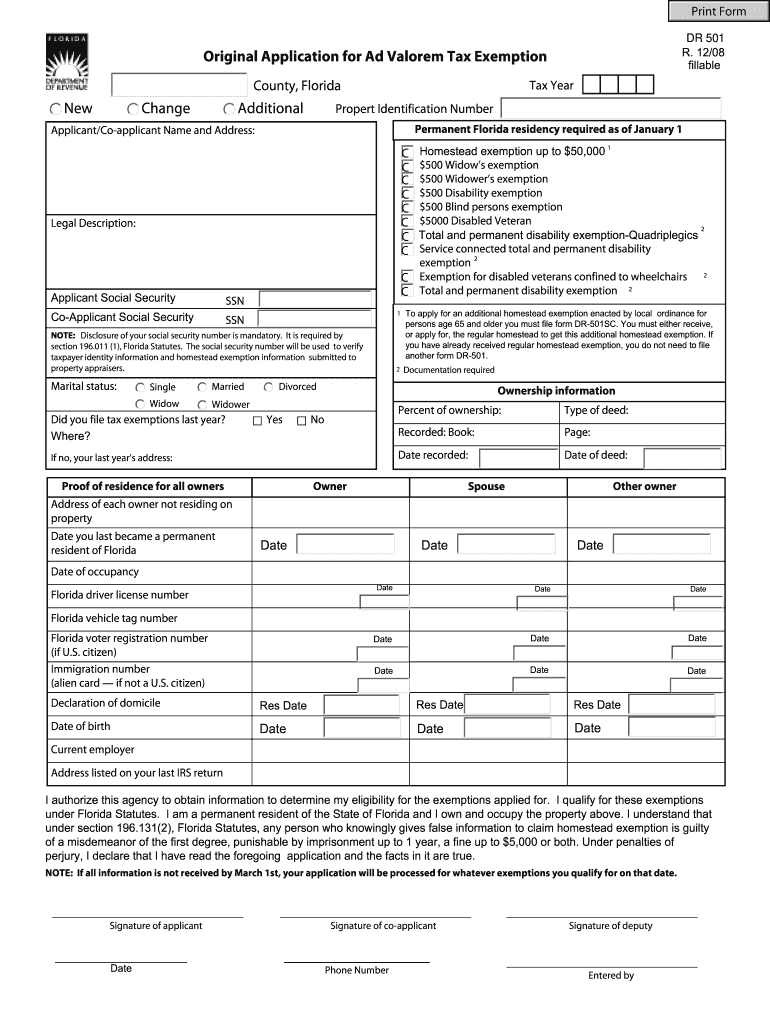
The Dr 501 form, known as the original application for ad valorem tax exemption, serves as a crucial document for residents of Florida seeking property tax exemptions. This guide provides a detailed, step-by-step approach to effectively complete the form online, ensuring that users—from those with little legal experience to more knowledgeable individuals—can navigate the process with ease.
Follow the steps to successfully complete your Dr 501 application.
- Press the ‘Get Form’ button to obtain the form and open it in your preferred browser.
- Indicate the type of application you are submitting by selecting 'New,' 'Change,' or 'Additional.' Make sure to provide the tax year for which you are applying.
- Enter your property identification number, ensuring that you meet the requirement for permanent Florida residency as of January 1.
- Fill in the applicant and co-applicant name and address fields accurately.
- Select the appropriate exemptions you qualify for, such as the homestead exemption, widow’s exemption, or disability exemption. Ensure you check only the boxes that apply to your situation.
- Provide the legal description of the property in the specified section.
- Enter social security numbers for the applicant and co-applicant as required by law for verification purposes.
- Indicate your marital status by selecting 'Single,' 'Married,' 'Widow,' or 'Widower.'
- Indicate whether you filed for tax exemptions last year and provide the necessary details.
- Complete the ownership information section, including percent of ownership and recording details.
- Compile the required documentation to prove residence for all owners and include the type of deed.
- Fill in other required fields such as the Florida driver license number, vehicle tag number, and voter registration number, if applicable.
- Review the declaration section and sign the form, ensuring all information is accurate, as false information may result in serious penalties.
- Once all fields are filled out, you can save changes, download, print, or share the completed form as necessary.
Complete your Dr 501 application online today for streamlined processing and submission.
Experience a faster way to fill out and sign forms on the web. Access the most extensive library of templates available.
Related content
If you have moved from one Florida homestead to another within the last three years, you...
By local ordinance only: Age 65 and older with limited income (amount determined by...
Sep 25, 2018 — The FDA investigator noted that drug products intended or expected to be...
Get answers to your most pressing questions about US Legal Forms API.
What age are you exempt from paying property taxes in Florida?
Florida does not set a blanket age at which all seniors are exempt from paying property taxes, but programs like the Dr 501 exemption offer substantial tax relief for homeowners aged 65 and older. Qualifications often depend on income and residency status. Engaging with your county property appraiser is crucial, as they can provide tailored information on available exemptions and help you understand how to benefit from them.
At what age do seniors stop paying property taxes in FL?
In Florida, there isn't a specific age at which seniors stop paying property taxes, but there are relief programs such as the Dr 501 exemption that can significantly reduce tax liabilities for those aged 65 and older. This exemption provides assistance based on the senior's income and financial status. It is essential to check eligibility and maintain communication with local property appraiser’s offices for updates and information on your tax responsibilities.
Does Florida have a property tax break for seniors?
Yes, Florida provides property tax breaks for seniors, primarily through exemptions like the Dr 501 exemption. This program is designed to support homeowners who are aged 65 and older by reducing their property tax burden. To qualify, you must meet specific requirements set by local authorities, and it’s advisable to explore your options through your county property appraiser's office. Being informed can help you secure these vital tax benefits.
How do I know if I have Homestead Exemption?
To find out if you have a Homestead Exemption, verify your status through your county property appraiser’s office, which maintains public records of all exemptions. You can also check your property tax bill, where exemptions are usually listed. If you qualify, the Dr 501 exemption could be applied to your property, ensuring you enjoy the associated benefits. Don't hesitate to ask local officials for assistance.
Do property taxes go down after age 65?
In Florida, property taxes can decrease for homeowners aged 65 and older through certain exemptions, including the Dr 501 exemption. This exemption provides significant tax savings for seniors, helping to ease financial burdens during retirement. It’s important to check with your local property appraiser to understand eligibility and application processes. Taking advantage of these benefits can make a significant difference.
How do I apply for property tax exemption in Florida?
Applying for property tax exemption in Florida starts with filling out the appropriate form for exemptions like Dr 501. Reach out to your county property appraiser’s office for details on the specific exemptions available. Be prepared to submit supporting documents that confirm your eligibility, such as identification and proof of residency. Completing the application accurately can help simplify the process.
How can I reduce my property taxes in Florida?
Reducing your property taxes in Florida often involves claiming exemptions available to you, such as the Dr 501 exemption. By fulfilling eligibility criteria and submitting the required application, you can potentially lower your tax burden. Additionally, consider appealing your property's assessed value if you believe it is too high. Local resources, including your county property appraiser’s office, can provide guidance.
How to get a 501?
To obtain a Dr 501 exemption, you must first determine your eligibility based on your property type and any applicable local regulations. Generally, you will need to submit an application through your county's property appraiser's office. Ensure to provide all necessary documentation, including identification and proof of ownership. Completing this process can secure vital tax benefits for you.
At what age do you stop paying property taxes in Florida?
In Florida, there is no specific age at which you stop paying property taxes; however, seniors may qualify for additional exemptions. Homeowners aged 65 and older can apply for a Senior Exemption, which can provide a significant reduction in taxes. It's essential to check with your local property appraiser regarding available benefits. Platforms such as US Legal Forms can help seniors navigate the requirements more easily.
How do I get a $50,000 homestead exemption in Florida?
To obtain a $50,000 homestead exemption in Florida, begin by confirming your eligibility as a permanent resident. Next, complete and submit the application to your local property appraiser's office by the deadline. Once approved, this exemption will directly reduce your home’s assessed value for tax purposes. For assistance in this process, refer to solutions like Dr 501 to guide you through the paperwork.
Use professional pre-built templates to fill in and sign documents online faster. Get access to thousands of forms.
If you believe that this page should be taken down, please follow our DMCA take down process here.
This form is available in several versions. Select the version you need from the drop-down list below.