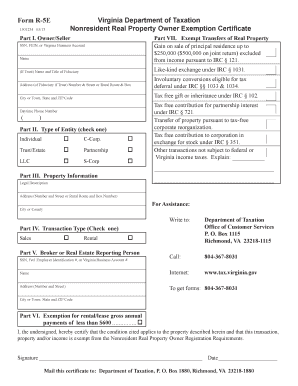
Form R-5E 1501234 05/13 Virginia Department of Taxation Nonresident Real Property Owner Exemption Certificate Part I. Owner/Seller SSN FEIN or Virginia Business Account Name Like-kind exchange under IRC 1031. If Trust Name and Title of Fiduciary Address of Fiduciary if Trust Number Street or Rural Route Box Involuntary conversions eligible for tax deferral under IRC 1033 1034. Tax free gift or inheritance under IRC 102. City or Town State and ZIP Code Daytime Phone Number Part VII. Exempt Transf.
Open form follow the instructions
Easily sign the form with your finger
Send filled & signed form or save
How to fill out the VA DoT R-5E online
The VA DoT R-5E form is an essential document for nonresident real property owners seeking exemption from certain tax obligations in Virginia. This guide will provide step-by-step instructions on how to effectively fill out the form online.
Follow the steps to complete your VA DoT R-5E form effortlessly.
- Click ‘Get Form’ button to access the VA DoT R-5E and open it in your preferred online editor.
- In Part I, provide the owner or seller's details by entering their SSN, FEIN, or Virginia Business Account number, alongside their name. If the owner is a trust, include the name and title of the fiduciary, along with their address.
- Indicate the type of exemption applicable in Part II by checking the box corresponding to the entity type: Individual, C-Corp, Trust/Estate, Partnership, LLC, or S-Corp. If other, provide an explanation.
- In Part III, fill out the property information. This includes the legal description of the property and its address, ensuring accuracy to prevent delays.
- Select the transaction type in Part IV by checking either the Sales or Rental option based on the nature of the transaction.
- Complete Part V by providing the broker or real estate reporting person’s identification number and their location details.
- In Part VI, check the exemption for rental or lease gross annual payments of less than $600, if applicable.
- Affirm the details by signing and dating the form at the bottom. This certifies the information provided signifies that the transaction is exempt.
- Once you have filled in all sections accurately, save the changes made to the document. You can then download, print, or share your completed form as necessary.
Complete your VA DoT R-5E form online today to ensure timely processing and compliance with tax regulations.
Experience a faster way to fill out and sign forms on the web. Access the most extensive library of templates available.
Related content
Form R-5. Virginia Department of Taxation. Nonresident Real Property Owner Registration...
The Virginia Department of Transportation (VDOT) submits this Request for Proposals. (RFP)...
Release History# ; v4.6.2 (2023-06-16)#. Bugfixes - 4.6.2# ; v4.6.0 (2023-06-05)#...
Get answers to your most pressing questions about US Legal Forms API.
What is the VA code 58.1 3017?
The VA code 58.1 3017 focuses on the assessment and collection of local taxes in Virginia. It outlines the processes through which local jurisdictions can manage tax collection effectively. Knowing how the VA DoT R-5E intersects with this code can help you understand local tax obligations and compliance strategies, supporting your financial planning.
What is Section 58.1 317 of the Code of Virginia?
Section 58.1 317 of the Code of Virginia concerns the taxation of certain retirement benefits and their tax implications. It provides clarity on how these benefits should be reported and taxed under state law. Utilizing the VA DoT R-5E can help you ensure that your retirement income is accurately accounted for, reducing potential tax liabilities.
What is Virginia State Code Section 58.1 3503 17?
Virginia State Code Section 58.1 3503 17 pertains to the establishment of guidelines for tax credits and exclusions related to income tax. This section addresses specific cases that impact individual and corporate taxpayers. Engaging with the VA DoT R-5E allows you to navigate these provisions effectively, optimizing your tax outcomes.
What is Section 58.1 803 of the Code of Virginia?
Section 58.1 803 of the Code of Virginia outlines the rules governing income tax withholding by employers. It details the responsibilities of businesses in remitting withheld amounts to the state. Learning about this section in the context of the VA DoT R-5E can guide you through compliance, ensuring that you meet all pertinent tax obligations.
What is being subject to Virginia withholding?
Virginia withholding involves deducting a portion of an employee's earnings for state income tax purposes. This deduction applies to various compensations, including wages, pensions, and certain business payments. Familiarizing yourself with the VA DoT R-5E can help you understand your responsibilities regarding withholding and ensure you meet state requirements.
What is the Virginia form R5 for?
The Virginia form R5 is essential for reporting certain types of income and withholding amounts. It specifically relates to the documentation required for businesses to comply with Virginia tax laws. By understanding the VA DoT R-5E, you can ensure accurate reporting and avoid potential penalties, making compliance straightforward.
What is Virginia Form VA 5?
Virginia Form VA 5 is designed for employers to report wage and tax information for employees. This form ensures compliance with Virginia tax laws and allows for accurate withholding of state taxes. Utilizing the VA DoT R-5E can assist employers in understanding their responsibilities when using Form VA 5.
Who must file a Virginia fiduciary tax return?
A Virginia fiduciary tax return must be filed by the fiduciary of any estate or trust that generates income in Virginia. This includes individuals managing estates, guardians, or trustees responsible for assets held in trust. If you are unsure about your obligations, consulting with resources like uslegalforms can clarify what is required for your specific situation.
How to fill out the form VA 4?
To fill out form VA 4 correctly, gather your personal information, including Social Security number and address, and follow the instructions provided. This form helps in determining withholding allowances for your Virginia state taxes. If you need additional support, consider utilizing tools offered by uslegalforms to simplify the process.
At what age do you stop paying property taxes in VA?
In Virginia, individuals who are 65 years or older may qualify for property tax exemptions, allowing them to stop paying property taxes. These exemptions can vary by locality, so it's essential to check with your local tax authorities. If you believe you qualify, consider consulting resources like uslegalforms for assistance in navigating the process.
Use professional pre-built templates to fill in and sign documents online faster. Get access to thousands of forms.
If you believe that this page should be taken down, please follow our DMCA take down process here.