R (ITIN), adoption taxpayer identification number (ATIN), or employer identification number (EIN)). However, the creditor has reported your complete TIN to the IRS. Account number. May show an account or other unique number the creditor assigned to distinguish your account. Box 1. Shows the date the earliest identifiable event occurred or, at the creditor's discretion, the date of an actual discharge that occurred before an identifiable event. See the code in box 6. Box 2. Shows the amount of de.

Open form follow the instructions

Easily sign the form with your finger

Send filled & signed form or save
How to fill out the IRS 1099-C online
Filling out the IRS 1099-C form is an essential process for reporting the cancellation of debt. This guide provides clear, step-by-step instructions to help users complete the form accurately online, ensuring compliance with IRS regulations.
Follow the steps to complete your IRS 1099-C online.
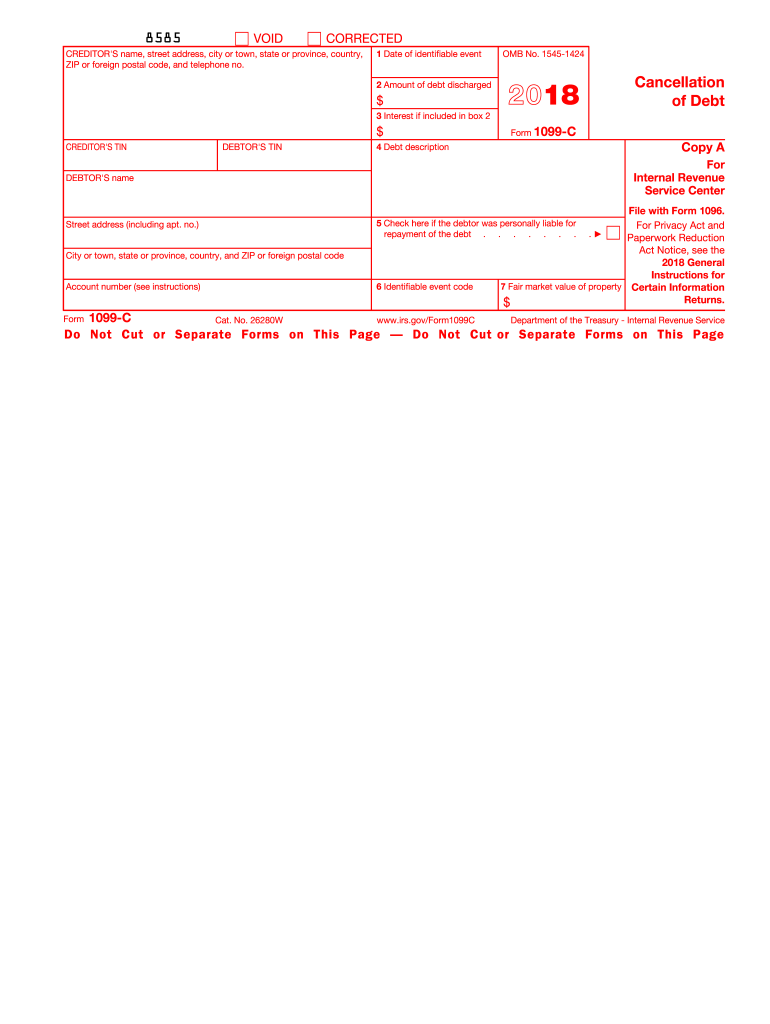
- Click 'Get Form' button to download the 1099-C form. This opens the document for you to begin filling it out.
- Enter the creditor's name, address, and telephone number in the designated fields at the top of the form. Ensure all details are accurate.
- In Box 1, input the date of the identifiable event that led to the cancellation of debt. This date marks the occurrence of the event.
- In Box 2, report the total amount of debt that has been discharged. This should reflect the actual amount forgiven by the creditor.
- If applicable, enter any interest amount included in the debt in Box 3. This may need reporting as part of your gross income.
- Provide a description of the debt in Box 4. This description should be clear to reflect the nature of the canceled debt.
- If the debtor was personally liable for repaying the debt, check the box in Box 5. This indicates personal responsibility.
- In Box 6, input the identifiable event code related to the cancellation of debt. Use the guide provided by IRS for the appropriate code.
- If applicable, indicate the fair market value of the property related to the debt in Box 7 if there was a foreclosure or abandonment. This value is important for tax considerations.
- Review all entries for accuracy. Once complete, you can save changes, download the filled form, print it, or share it as necessary.
Start filling out your IRS 1099-C form online today to ensure you're compliant with tax reporting requirements.
Experience a faster way to fill out and sign forms on the web. Access the most extensive library of templates available.
Related content
Feb 3, 2025 — File Form 1099-C for each debtor for whom you canceled $600 or more of a...
Form 1099-C reports debt cancellation income when a debt is reduced by at least $600, but...
Oct 18, 2023 — 1099-A reports acquired property; 1099-C reports canceled debt. Key...
Get answers to your most pressing questions about US Legal Forms API.
How do I report a 1099-C on my tax return?
To report your IRS 1099-C on your tax return, include the canceled debt amount on Schedule 1 of Form 1040. After entering the information, transfer the amount to your main tax form. This process ensures that you accurately reflect any income from canceled debt, helping you avoid any future IRS issues.
How do you record cancellation of debt?
To record cancellation of debt, first, you need to receive an IRS 1099-C from your lender. This form provides crucial information about the canceled amount. Make sure to report this amount on your tax return, as failing to do so could lead to complications with the IRS.
Do I still owe debt if I get a 1099-C?
Receiving an IRS 1099-C indicates your debt has been canceled, but this does not mean the debt is automatically forgiven. You may still owe the creditor under certain circumstances. It’s essential to review your specific situation to determine whether further action is needed.
Where do I enter 1099-C on the tax act?
To enter the IRS 1099-C in TaxAct, navigate to the 'Income' section and find 'Other Income.' Here, you can input the details from your 1099-C form. This method allows for clear reporting of canceled debt and ensures your tax return remains accurate.
Where do I put a 1099-C on my tax return?
You should report your IRS 1099-C form on your tax return by including it on Form 1040. Specifically, you'll enter the amount of canceled debt on Schedule 1, which is then transferred to your main Form 1040. This ensures that you accurately reflect any taxable income resulting from canceled debt.
Do I have to report a 1099-C on my taxes?
Yes, you must report the information on your IRS 1099-C when filing your taxes. The IRS requires individuals to include any canceled debt as income, which means it becomes part of your taxable earnings. Failing to report this income may lead to penalties or additional taxes owed. Ensure you have all necessary documents on hand, and consider using USLegalForms for assistance with proper tax reporting.
How much does a 1099-C affect my taxes?
The amount reported on your IRS 1099-C can dramatically affect your tax liability. Since canceled debt is classified as taxable income, it can increase your total taxable income and, subsequently, your overall tax bill. Depending on your financial circumstances, it might have a larger impact than you expect, which is why it's wise to be proactive in addressing this figure. Utilizing tools from USLegalForms can help clarify your obligations.
Does a 1099-C affect your credit?
Receiving an IRS 1099-C can negatively impact your credit score, as it typically indicates that you have failed to make payments. The cancellation of debt may be reported to credit bureaus, leading to a lower credit score. However, once the debt is canceled, you are no longer responsible for repaying it, which could improve your credit health over time. Monitoring your credit score is crucial after receiving a 1099-C.
What is the IRS Form 1099-C used for?
The IRS Form 1099-C is used to report the cancellation of debt. Creditors issue this form to individuals when a debt of $600 or more has been discharged. The form serves as a notice to the IRS that a portion of your debt has been forgiven, which qualifies as taxable income. Understanding the implications of receiving a 1099-C is essential, as it helps you prepare for tax season.
How do I avoid paying taxes on 1099-C?
To avoid paying taxes on a 1099-C, you may rely on certain exclusions available under IRS rules. For instance, if you were insolvent when the debt was canceled, you might not have to include some or all the canceled debt as taxable income. Additionally, if the canceled debt qualifies for other exemptions, you might also avoid tax liability. Consider using our platform, USLegalForms, to find resources that can help you navigate these specific tax laws.
Use professional pre-built templates to fill in and sign documents online faster. Get access to thousands of forms.
If you believe that this page should be taken down, please follow our DMCA take down process here.
This form is available in several versions. Select the version you need from the drop-down list below.