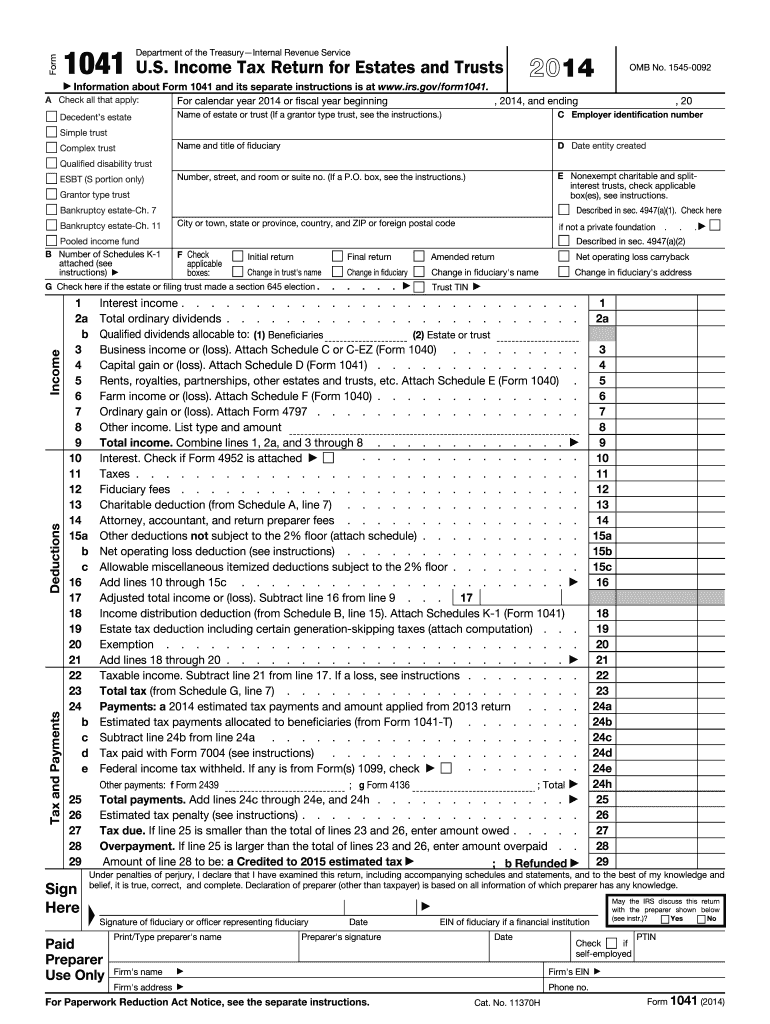
. . . . . . . . . . . . . . . . . Fiduciary fees . . . . . . . . . . . . . . . . . . . . . . . . . . Charitable deduction (from Schedule A, line 7) . . . . . . . . . . . . . . . Attorney, accountant, and return preparer fees . . . . . . . . . . . . . . . Other deductions not subject to the 2% floor (attach schedule) . . . . . . . . . . Net operating loss deduction (see instructions) . . . . . . . . . . . . . . . Allowable miscellaneous itemized deductions subject to the 2% floor . . . . . . .
Loading

Open form follow the instructions

Easily sign the form with your finger

Send filled & signed form or save
How to fill out the IRS 1041 online
The IRS 1041 form is essential for reporting income, deductions, and taxes owed for estates and trusts. This guide provides clear, step-by-step instructions tailored to users, ensuring a smooth process for completing this crucial document online.
Follow the steps to successfully complete the IRS 1041 form online.
- Press the ‘Get Form’ button to access the IRS 1041 form and open it in your preferred online editor.
- Complete the identification section by providing pertinent details. Include the name of the estate or trust, employer identification number, name and title of the fiduciary, and the date the entity was created.
- Select the appropriate checkboxes to indicate the type of entity reporting — whether it is a decedent’s estate, simple trust, complex trust, or another category.
- Fill in the address of the estate or trust, including the city, state, and ZIP code.
- Identify any required Schedules K-1 and check the respective box if applicable.
- Complete the income section by entering details about various income sources, ensuring to include any relevant forms and schedules as instructed.
- Report deductions accurately, as specified, which may include fiduciary fees, charitable deductions, and other allowable deductions.
- Calculate the taxable income by following the worksheet instructions, then proceed to calculate the total tax based on that amount.
- Review the payments section to account for any estimated tax payments made, federal income tax withheld, and other credits.
- Finally, after completing all sections of the form, review for accuracy before saving your changes, downloading, printing, or sharing the completed form as necessary.
Take the next step in managing your estate or trust by completing the IRS 1041 online today.
Experience a faster way to fill out and sign forms on the web. Access the most extensive library of templates available.
Related content
Feb 19, 2025 — Use Schedule D (Form 1041) to report gains and losses from the sale or...
26 U.S. Code § 1041 - Transfers of property between spouses or incident to divorce ; (a)...
Jan 4, 2017 — Otherwise, include the amount from line 7 in the total on Form 1040, line...
Get answers to your most pressing questions about US Legal Forms API.
Do I have to file a 1041 for an estate with no income?
If an estate has no income, filing IRS Form 1041 is typically unnecessary. However, if the estate has assets that are generating income in the future, you might need to file once that situation changes. It's advisable to keep records of the estate's financial activities and monitor any changes. For peace of mind, consulting a tax professional can provide clarity.
What is the minimum income for form 1041?
The minimum income threshold for filing IRS Form 1041 is typically $600 for most estates. If the gross income is below this amount, you may not need to file the form. However, specific circumstances, such as beneficiaries’ residency status, might require filing despite lower income. Being aware of these nuances can help in your decision-making process.
How do I know if I need to file a 1041?
To determine if you need to file IRS Form 1041, check if the estate has generated gross income above the IRS threshold. Additionally, if the estate’s income exceeds $600, or if there are any beneficiaries who are non-resident aliens, filing is required. It's crucial to evaluate the financial status of the estate regularly. If in doubt, consult with a tax professional for clarification.
Can I file IRS Form 1041 electronically?
Yes, you can file IRS Form 1041 electronically. The IRS encourages electronic filing for many tax forms, including the 1041, which can streamline the process and allow for faster processing. When you e-file, you also receive confirmation that the IRS has received your submission. Platforms like USLegalForms can also assist you in navigating electronic filing processes.
Who must file a 1041 form?
Any estate with gross income exceeding a specific threshold must file IRS Form 1041. Even if the estate generates little income, it may still require filing if it is a complex estate or if there are distributions to beneficiaries. Executors should review income levels and the specifics of the estate before deciding to file. Understanding these requirements can prevent unnecessary issues with the IRS.
Does TurboTax prepare form 1041?
Yes, TurboTax offers options to help users prepare IRS Form 1041. The software provides guidance through each step, making it easier for executors to file accurately. Users can benefit from its user-friendly interface while ensuring compliance with IRS regulations. This makes TurboTax a viable solution if you choose to file Form 1041 on your own.
Who prepares Form 1041?
Form 1041 can be prepared by the executor or administrator of the estate, but many choose to hire a tax professional for this task. A tax professional may better navigate the complexities of IRS 1041 and ensure all required information is accurately reported. Professionals bring expertise and reduce the risk of errors. If you are looking for assistance, consider platforms like USLegalForms that provide resources and templates.
Who is responsible for filing 1041?
The responsibility for filing IRS 1041 typically falls on the executor or administrator of the estate. This individual manages the estate’s finances and ensures that all necessary forms are filed timely. If an estate has multiple executors, one is usually indicated to handle the filing. Proper management is essential for compliance and to avoid any penalties.
Can an IRS form 1041 be filed electronically?
Yes, an IRS form 1041 can be filed electronically through approved e-filing services. Electronic filing offers a convenient way to submit your form and can speed up the processing time. If you're unsure about the e-filing process, various resources are available to help you navigate it smoothly. Uslegalforms provides tools and instructions to support you in your electronic filing journey.
What is a 1041 for dummies?
A 1041, or IRS form 1041, is a tax document used for estates and trusts to report their income. If you are a trustee or executor, this form helps track what your estate earns and the tax obligations that arise. Filing a 1041 ensures compliance with tax laws and potential tax liabilities. Many find that using platforms like uslegalforms can make filling out this form much easier.
Use professional pre-built templates to fill in and sign documents online faster. Get access to thousands of forms.
If you believe that this page should be taken down, please follow our DMCA take down process here.
This form is available in several versions. Select the version you need from the drop-down list below.