Complete the application. The instructions for that form assist you in completing the form. G.S. 28A-6-1(a) . Estate Procedures April 2016 1 (b) Qualified Persons I f the decedent did not name an executor in the will or dies intestate (without a will), the Clerk of Superior Court will grant letters of administration to a person(s) who applies and is qualified to serve, in the following order: (1) The surviving spouse of the decedent; (2) Anyone who is to receive property as.
Open form follow the instructions
Easily sign the form with your finger
Send filled & signed form or save
How to fill out the NC AOC-E-850 online
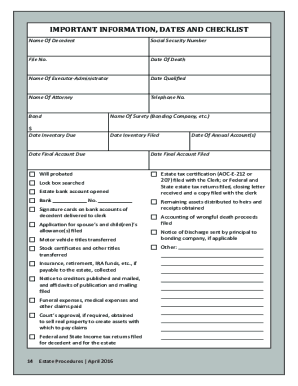
The NC AOC-E-850 form is essential for managing estate procedures for executors, administrators, collectors by affidavit, and summary administration. This guide provides detailed, step-by-step instructions to help users navigate the online filling process efficiently and accurately.
Follow the steps to complete the NC AOC-E-850 form online.
- Click the ‘Get Form’ button to obtain the NC AOC-E-850 form and open it in the online editor.
- Read the instructions carefully. Ensure you understand the requirements for completing each section of the form, particularly regarding the information needed about the decedent's estate.
- Fill in the decedent's name and Social Security number in the designated fields. Confirm this information is accurate to avoid any legal complications.
- Provide the date of death, ensuring that it matches official records to maintain consistency.
- Enter the name of the executor or administrator and the date they qualified for their role. This establishes their authority in managing the estate.
- Include the name and contact information of the attorney, if applicable, so that all legal parties are identifiable.
- Complete the bond section by indicating if a bond is required. If applicable, fill out the name of the surety or bonding company.
- Pay attention to sections requiring dates, such as when the inventory is due and when it was filed. Accurate record-keeping is crucial in probate matters.
- After filling out all relevant sections, review the form for any errors or omissions to ensure compliance with legal requirements.
- Once satisfied with the completed form, save your changes and choose to download, print, or share the form as necessary.
Begin your estate management process by filling out the NC AOC-E-850 form online today.
Experience a faster way to fill out and sign forms on the web. Access the most extensive library of templates available.
Related content
Jan 14, 2015 — MCSC-E-000 - Estate Procedures Pamphlet (AOC-E-850). PDF, 1,078 KB. These...
I hereby acknowledge receipt of the AOC-SP-850, "Responsibilities Of Guardians In North...
Description. The EUM-240SxxxLx series is a 240W, constant-current, NFC programmable and...
Get answers to your most pressing questions about US Legal Forms API.
How to prove executor of estate without will?
If you need to prove your status as executor of an estate without a will in North Carolina, you can apply for letters of administration through the probate court. The NC AOC-E-850 form is critical in this process, as it helps establish your role formally. Additionally, providing relevant documentation and understanding your legal obligations can reinforce your position. Seeking advice from a legal professional can help you navigate any complexities.
How do you become an executor of an estate in NC?
You can become an executor of an estate in North Carolina by being named in the will or appointed by the probate court if there's no will. If you are chosen, you must file the NC AOC-E-850 form with the court to secure your appointment. This form helps clarify your role in managing the estate's affairs. Remember, it is essential to understand the legal responsibilities that come with this position.
How to get a sales tax exemption certificate in North Carolina?
To obtain a sales tax exemption certificate in North Carolina, you need to complete the appropriate application form and provide supporting documentation. Businesses typically use the North Carolina AOC-E-850 form to verify their exempt status. Once approved, you will receive your certificate, which allows you to make tax-exempt purchases. You may want to consult the US Legal Forms platform for easily accessible forms and guidance.
Does real estate have to go through probate in North Carolina?
Yes, in North Carolina, real estate typically goes through probate unless it is held in a specific type of ownership, like joint tenancy. The probate process ensures that the estate's debts are settled and the property is properly transferred. Utilizing the NC AOC-E-850 form can streamline your filing process in court. Understanding these procedures can help you manage property matters more effectively.
How to become executor of estate without will in NC?
To become an executor of an estate without a will in North Carolina, you will need to file a petition for letters of administration with the probate court. The court may appoint you or another suitable person as the administrator of the estate. It's crucial to gather the necessary documents, including the NC AOC-E-850 form, which helps you in the appointment process. Consulting a legal expert can also provide clarity on your responsibilities as an administrator.
What triggers probate in North Carolina?
Probate in North Carolina is typically triggered when the deceased owned assets solely in their name or if the estate exceeds the small estate threshold. Events such as the death of an individual and the existence of a valid will often initiate the process. Utilizing the NC AOC-E-850 form can clarify whether probate is necessary for small estates, initiating efficient management of the estate.
What happens if you don't probate a will in North Carolina?
If you fail to probate a will in North Carolina, the estate may face complications regarding asset distribution. Beneficiaries might not receive their inheritances, and debts may remain unresolved. Opting to complete the NC AOC-E-850 form can streamline the probate process and help ensure that the will is honored, preventing potential disputes.
How do you file for executor of estate?
To file as the executor of an estate, gather necessary documents, including the will, and submit them to the local clerk of court. This process initiates your role as executor and enables you to manage the estate's affairs. You can efficiently navigate the requirements using the NC AOC-E-850 form to ensure all essential information is provided.
Do all wills in NC have to be probated?
Not all wills in North Carolina must undergo probate; it depends on the estate's value and asset types. If the estate is small, the personal representative might opt to use the NC AOC-E-850 form for an easier resolution. However, for larger estates or specific assets, probate may be necessary to validate the will and distribute assets accordingly.
How do I file an estate claim in NC?
To file an estate claim in North Carolina, you must submit your claim to the estate’s personal representative. This process often requires completing a claim form and providing documentation to support your claim. For efficiency, consider using the NC AOC-E-850 form, which can guide you through the necessary steps and help ensure your claim is filed correctly.
Use professional pre-built templates to fill in and sign documents online faster. Get access to thousands of forms.
If you believe that this page should be taken down, please follow our DMCA take down process here.