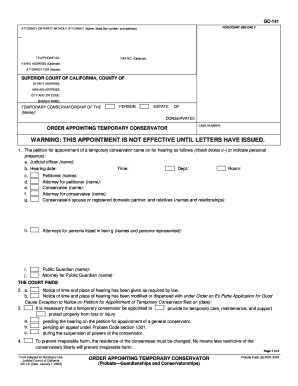
He Clear This Form button at the end of the form when finished. FAX NO. (Optional): E-MAIL ADDRESS (Optional): ATTORNEY FOR (Name): SUPERIOR COURT OF CALIFORNIA, COUNTY OF STREET ADDRESS: MAILING ADDRESS: CITY AND ZIP CODE: BRANCH NAME: TEMPORARY CONSERVATORSHIP OF THE (Name): PERSON ESTATE OF CONSERVATEE CASE NUMBER: ORDER APPOINTING TEMPORARY CONSERVATOR WARNING: THIS APPOINTMENT IS NOT EFFECTIVE UNTIL LETTERS HAVE ISSUED. 1. The petition for appointment of a temporary conservator ca.
Open form follow the instructions
Easily sign the form with your finger
Send filled & signed form or save
How to fill out the CA GC-141 online
The CA GC-141 is a crucial form for those seeking to establish a temporary conservatorship in California. This guide provides step-by-step instructions to help users effectively fill out the form online, ensuring all necessary information is accurately submitted.
Follow the steps to successfully complete the CA GC-141 form.
- Click the ‘Get Form’ button to access the CA GC-141 and open it in your web browser.
- In the section for court use only, enter the relevant contact information for the attorney or party without an attorney. This includes their name, state bar number, address, telephone number, and optional fax and email address.
- Complete the details regarding the Superior Court of California, including the county, street address, mailing address, city, zip code, and branch name.
- Fill out the case number and specify the conservatee's name. Indicate whether this conservatorship is for the person or the estate by checking the appropriate box.
- Proceed with the section on the petition for appointment of a temporary conservator. Provide details such as the name of the judicial officer, hearing date, time, and department. Check the boxes that indicate personal presence of each party listed.
- In the court findings section, indicate whether notice of the hearing was provided or if it was modified. This includes documenting the necessary circumstances for appointing a temporary conservator.
- Complete the orders section by specifying details about the temporary conservator's appointment, including their name, address, and telephone number. Note whether a bond is required and any specific financial arrangements.
- Ensure to detail the powers granted to the temporary conservator, including any additional orders. It is important to specify the conditions under which the conservatee's residence may be changed or if they will be removed from the state.
- Review the entire form to ensure all information is accurate and complete. Save changes to your document if prompted, and be sure to keep a copy for your records.
- If necessary, download, print, or share the completed form. Ensure to clear the form for your protection and privacy after finishing.
Start filling out your CA GC-141 online today to streamline your conservatorship application process.
Experience a faster way to fill out and sign forms on the web. Access the most extensive library of templates available.
Related content
GC-141 is an order appointing a temporary conservator, effective after letters issue, for...
Alternative Testing Methods Approved for Analyses Under the Safe Drinking Water Act. Only...
Feb 2, 2009 — Aviso! O meio do processo pode estar quente ou de outra maneira perigoso...
Get answers to your most pressing questions about US Legal Forms API.
How long does the guardianship process take in California?
The duration of the guardianship process in California can vary based on several factors, including court schedules and the complexity of the case. Generally, expect the process to take several months from the initial filing to the final decision. Being well-prepared with necessary forms like the CA GC-141 and following up regularly can help manage your timeline more effectively.
What forms do I need for guardianship in California?
When applying for guardianship in California, you will typically need to complete several forms, including the CA GC-141 form. Additionally, forms like the Notice of Hearing and the Guardianship Petition may also be required. Ensuring that you have all necessary paperwork ready will streamline your application process, making platforms like uslegalforms particularly useful for finding and completing these essential documents.
How to start the conservatorship process in California?
To initiate the conservatorship process in California, you should first gather the necessary documentation, including the CA GC-141 form. You will then file your petition with the local court and notify relevant parties of the proceedings. Understanding the steps involved can ultimately help you approach this process with confidence, and using uslegalforms will provide you with the right tools and guidance to get started.
Do I need an attorney to file for conservatorship in California?
While hiring an attorney for your conservatorship application is not mandatory, it is highly recommended, especially for forms like CA GC-141. An attorney can guide you through the legal jargon and ensure that your application meets all requirements. Having professional assistance can increase your chances of a successful outcome and help you avoid potential setbacks in the process.
How difficult is it to get conservatorship?
Obtaining conservatorship in California can be straightforward, but it often involves navigating legal processes and paperwork, including the CA GC-141 form. The requirement for court approval means you must demonstrate that the proposed conservatorship is necessary. Therefore, while not impossible, it does ask for careful preparation and understanding of the laws involved. Engaging with resources like uslegalforms can help simplify this process.
What are the benefits of a conservatorship in California?
The benefits of conservatorship in California include ensuring that individuals receive proper care and support when they're unable to do so themselves. By establishing a conservatorship, families can make crucial decisions on behalf of their loved ones, as outlined in CA GC-141. This legal framework fosters security and stability, making it easier for families to navigate complex health and financial issues.
What is the difference between a guardian and a conservator in California?
In California, the main difference between a guardian and a conservator lies in the focus of their responsibilities. A guardian generally oversees the personal and welfare needs of a minor, while a conservator, guided by CA GC-141, manages the financial and healthcare decisions for an adult who cannot make such choices. Understanding this distinction is crucial for families navigating the legal landscape of care.
What are the benefits of conservatorship in California?
Conservatorship offers several benefits for individuals who cannot manage their own affairs. It provides a structured way to ensure that the conservatee’s needs are met, from medical care to financial management, all under the framework of CA GC-141. This legal support can protect the rights and assets of the conservatee, offering peace of mind to families and caregivers.
What are the downsides of conservatorship?
While conservatorship provides necessary support, it can also have downsides. For instance, the conservatee may lose some personal autonomy, as major decisions are made by the conservator. Additionally, the process can be costly and time-consuming, and the conservator has to report to the court regularly, which adds a layer of oversight and complexity.
What are the powers of a conservator in California?
A conservator in California is empowered by CA GC-141 to handle various aspects of the conservatee’s life. This includes managing financial responsibilities, making healthcare decisions, and providing overall care. Additionally, the conservator can represent the conservatee in legal matters and protect their legal rights, which is vital for maintaining their quality of life.
Use professional pre-built templates to fill in and sign documents online faster. Get access to thousands of forms.
If you believe that this page should be taken down, please follow our DMCA take down process here.