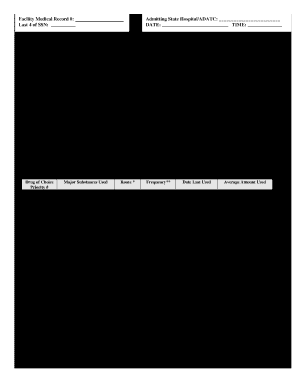
Facility Medical Record #: Last 4 of SSN: ___Admitting State Hospital/ADATC: ___ DATE: ___ TIME: ___NC DIVISION OF MENTAL HEALTH/DEVELOPMENTAL DISABILITIES/SUBSTANCE ABUSE SERVICESRegional Referral.
Open form follow the instructions
Easily sign the form with your finger
Send filled & signed form or save
How to fill out the NC DMH 1-73-00 online
The NC DMH 1-73-00 form is a crucial document for the admission referral to a state psychiatric hospital or an Alcohol and Drug Abuse Treatment Center (ADATC). This guide provides comprehensive, step-by-step instructions for filling out the form online, ensuring clarity and ease for all users.
Follow the steps to complete the NC DMH 1-73-00 online.
- Use the ‘Get Form’ button to access the NC DMH 1-73-00 form and open it for editing.
- Fill in the section for 'Facility Medical Record #' and 'Last 4 of SSN' with the relevant information for the consumer or patient. Ensure accuracy as this information is vital for identification purposes.
- Complete the 'Admitting State Hospital/ADATC' field by entering the name of the facility. Include the date and time of the referral.
- Indicate the referral source by selecting from options such as 'Provider', 'LME/MCO', 'Self-Referral', 'ED/Hospital', or 'Other', and provide the name and contact number of the referral source.
- Enter the consumer or patient’s personal details including their full name, date of birth, gender, and any other names used. This ensures accurate identification.
- Describe the consumer’s current mental status and any applicable withdrawal symptoms or substance use information. Be detailed in your descriptions.
- Specify the type of admission, whether voluntary or involuntary, and provide any pertinent information regarding suicidal or homicidal thoughts.
- Document the principal diagnosis along with behavioral health and medical diagnoses, any psychosocial stressors, and the assessment of functioning measures.
- Include current medication details such as psychiatric and medical drugs, along with any noted side effects, allergies, and history of compliance with medications.
- When all fields are completed, users can save the changes, download, print, or share the form as needed to complete the referral process.
Complete the NC DMH 1-73-00 online to ensure a timely admission process.
Experience a faster way to fill out and sign forms on the web. Access the most extensive library of templates available.
Related content
DMH 1-73-00 (Rev 10/2021). Page 1. Facility Medical Record #:. Admitting State...
Get answers to your most pressing questions about US Legal Forms API.
What is the NC General Statute careless and reckless driving?
The NC General Statute on careless and reckless driving covers unsafe driving behaviors that put others at risk. It defines behaviors such as speeding, aggressive driving, and driving without regard for traffic laws. Understanding this statute is important for anyone involved in the legal system in North Carolina. Utilizing resources like USLegalForms can offer you clear guidance on legal definitions and procedures related to the NC DMH 1-73-00 and other statutes.
What are the three types of involuntary commitment?
In North Carolina, the three types of involuntary commitment are short-term, long-term, and outpatient commitment. Short-term commitment is typically for emergency situations, while long-term commitment can extend for more significant periods if necessary. Outpatient commitment allows individuals to receive treatment while living in their community. The NC DMH 1-73-00 provides detailed information on these categories and their legal provisions.
What are the rules for involuntary commitment in NC?
The rules for involuntary commitment in North Carolina involve a series of steps designed to protect both individuals and the public. Generally, someone can be committed if they are deemed to be a danger to themselves or others due to a mental illness. The procedures must adhere to strict legal guidelines to ensure that individual rights are respected throughout the process. Familiarity with the NC DMH 1-73-00 code can help clarify these important aspects.
What does 302 mean?
In the context of NC mental health law, the term '302' refers to a specific section of the involuntary commitment statutes. It generally indicates the process for 'short-term involuntary commitment' for those who meet certain criteria due to mental illness. This is crucial for ensuring individuals receive timely treatment while also protecting their rights. Knowing about the NC DMH 1-73-00 can provide additional insights into the legalities surrounding this process.
What is the NC involuntary commitment code?
The NC involuntary commitment code refers to the legal framework that governs the process of involuntary commitment in North Carolina. This includes various statutes and regulations that aim to ensure the safety and well-being of individuals who may be a danger to themselves or others. The code outlines the procedures and rights involved, as well as the role of mental health professionals. Understanding the NC DMH 1-73-00 can help you navigate these complex regulations.
How do you write a demand letter for diminished value?
Writing a demand letter for diminished value involves outlining the details of your accident, the repairs done, and the decreased value of your vehicle. Be clear and concise, referencing any supporting documents like repair invoices and valuation reports. Referencing NC DMH 1-73-00 in your letter can strengthen your position.
What is the Consumer Protection Act in North Carolina?
The Consumer Protection Act in North Carolina protects consumers from unfair or deceptive business practices. It empowers individuals to take action against companies that engage in fraud or misrepresentation. Understanding this Act in relation to NC DMH 1-73-00 can enhance your consumer rights awareness.
How is diminished value calculated in North Carolina?
In North Carolina, diminished value is calculated based on the difference between your vehicle’s pre-accident value and its post-repair value. This involves factors like the type of damage and the repairs completed. Using the guidelines from NC DMH 1-73-00 can help you understand how to accurately assess your vehicle’s worth post-accident.
What damages qualify for diminished value?
Diminished value typically covers the loss of value that a vehicle experiences after an accident. This can include damage to the frame, engine, or interior, as well as the overall market value decrease. Familiarizing yourself with the specifics of NC DMH 1-73-00 can clarify your eligibility for these claims.
How to file a complaint against an insurance company in North Carolina?
To file a complaint against an insurance company in North Carolina, visit the North Carolina Department of Insurance website. Complete the complaint form, ensuring you include all necessary information and evidence. Using the framework of NC DMH 1-73-00 can help you understand your rights as a consumer.
Use professional pre-built templates to fill in and sign documents online faster. Get access to thousands of forms.
If you believe that this page should be taken down, please follow our DMCA take down process here.