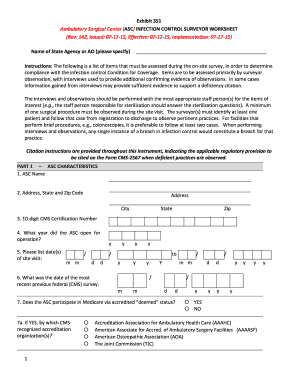
Exhibit 351 Ambulatory Surgical Center (ASC) INFECTION CONTROL SURVEYOR WORKSHEET (Rev: 142, Issued: 07-17-15, Effective: 07-17-15, Implementation: 07-17-15) Name of State Agency or AO (please specify).

How it works
  • Open form

    Open form follow the instructions

  • Easily sign form

    Easily sign the form with your finger

  • Share form

    Send filled & signed form or save

How to fill out the Exhibit 351 ASC Infection Control Surveyor Worksheet online

This guide provides clear and detailed instructions for completing the Exhibit 351 ASC Infection Control Surveyor Worksheet online. By following the outlined steps, users can ensure accurate and compliant documentation.

Follow the steps to successfully complete the worksheet.

  1. Click ‘Get Form’ button to obtain the form and open it in the designated editor.
  2. Begin by entering the name of the state agency or accreditation organization in the appropriate field.
  3. Provide the ASC name and address details, including city, state, and zip code. Ensure that all information is accurate and up to date.
  4. Enter the 10-digit CMS Certification Number as requested. This number is essential for identification purposes.
  5. Indicate the year when the ASC opened for operation and the dates of the site visits in the specified format.
  6. Record the date of the most recent previous federal CMS survey, including the day, month, and year.
  7. Answer whether the ASC participates in Medicare via accredited ‘deemed’ status and specify the accreditation organizations if applicable.
  8. Select the type of ownership of the facility by marking only one option from the provided choices.
  9. Identify who the ASC performs procedures on by selecting the appropriate option.
  10. Fill in the average number of procedures performed at the ASC per month, and indicate the number of operating rooms available.
  11. Complete the infection control program section by addressing whether the ASC has an explicit infection control program and record relevant details.
  12. Continue through the form, answering questions related to infection control practices and staff training, ensuring that each observation is documented accurately.
  13. When all fields are complete, save the changes made to the worksheet. Users can choose to download, print, or share the document as necessary.

Complete your documents online to ensure compliance and enhance your infection control procedures.

Get form

Experience a faster way to fill out and sign forms on the web. Access the most extensive library of templates available.

Related content

Exhibit 351 AMBULATORY SURGICAL CENTER (ASC) ...

Jun 21, 2022 — Exhibit 351. AMBULATORY SURGICAL CENTER (ASC) INFECTION CONTROL SURVEYOR...

Learn more
Exhibit 351 AMBULATORY SURGICAL CENTER (ASC) ...

Jun 21, 2022 — Exhibit 351. AMBULATORY SURGICAL CENTER (ASC) INFECTION CONTROL SURVEYOR...

Learn more
Questions & Answers

Get answers to your most pressing questions about US Legal Forms API.

Contact support

Which of the following statements can be used to describe standard precautions?

Standard precautions may be described as actions taken to prevent infection transmission in healthcare settings. They encompass procedures such as handwashing, wearing gloves, and using masks when necessary. These precautions apply to all patients regardless of their presumed infection status. To ensure these standards are consistently met, refer to the Exhibit 351 ASC Infection Control Surveyor Worksheet for detailed guidelines.

The standard procedure for infection control includes several key steps, such as assessing the environment, implementing proper hand hygiene, and using personal protective equipment when necessary. Continuous training and monitoring of staff compliance are also critical aspects. By following structured procedures like those detailed in the Exhibit 351 ASC Infection Control Surveyor Worksheet, facilities can enhance their infection control efforts successfully.

The standards of infection control involve a range of practices aimed at minimizing the risk of transmission of infectious agents. These standards include hand hygiene, use of appropriate personal protective equipment, and thorough sterilization and disinfection processes. Adopting these standards is crucial for patient safety and can be supported by utilizing the Exhibit 351 ASC Infection Control Surveyor Worksheet for effective implementation.

Surgical site infections can occur in approximately 1 to 3 percent of patients undergoing surgery, depending on various factors. Factors may include the type of surgery performed, the patient’s health status, and the infection control protocols in place. Understanding these rates can guide facilities in improving their infection control practices. For reference and tracking, the Exhibit 351 ASC Infection Control Surveyor Worksheet provides relevant data.

The standard infection control precautions are typically outlined in documents like the Centers for Disease Control and Prevention (CDC) guidelines. These guidelines provide detailed instructions on preventing infections through behavior and practices that must be implemented in medical facilities. You may find valuable insights and checklists in the Exhibit 351 ASC Infection Control Surveyor Worksheet to support adherence to these standards.

Standard precautions refer to the set of safety protocols designed to prevent the spread of infections in a healthcare setting. This includes the use of personal protective equipment, hand hygiene practices, and safe disposal of materials. By following these guidelines, healthcare workers can effectively reduce the risk of cross-contamination. Using resources such as the Exhibit 351 ASC Infection Control Surveyor Worksheet can help clarify these protocols.

These guidelines include organization of the infection control programme, management of hospital environment, care of high-risk areas and patients, surveillance and outbreak investigation, isolation procedures, standard precautions as well as care of hospital staff. Guidelines on Prevention and Control of Hospital Associated Infections who.int https://iris.who.int › rest › bitstreams › retrieve who.int https://iris.who.int › rest › bitstreams › retrieve

Either sterile disposable non-woven or sterile reusable woven drapes and surgical gowns can be used during surgical operations for the purpose of preventing SSI. Plastic adhesive incise drapes with or without antimicrobial properties should not be used for the purpose of preventing SSI. WHO global guidelines for the prevention of surgical site infection who.int https://cdn.who.int › default-source › ssi › ssi-outline who.int https://cdn.who.int › default-source › ssi › ssi-outline

Infection control refers to the policy and procedures implemented to control and minimize the dissemination of infections in hospitals and other healthcare settings with the main purpose of reducing infection rates. Infection control as a formal entity was established in the early 1950s in the United States.

Various methods of decontamination include. Physical cleaning. Water purification. Ultrasonic cleaning. Disinfection. Antisepsis. Sterilization. Operating Room Protocols and Infection Control - PMC - NCBI National Institutes of Health (NIH) (.gov) https://.ncbi.nlm.nih.gov › articles › PMC7882240 National Institutes of Health (NIH) (.gov) https://.ncbi.nlm.nih.gov › articles › PMC7882240

Get This Form Now!

Use professional pre-built templates to fill in and sign documents online faster. Get access to thousands of forms.

If you believe that this page should be taken down, please follow our DMCA take down process here.

Get Exhibit 351 ASC Infection Control Surveyor Worksheet