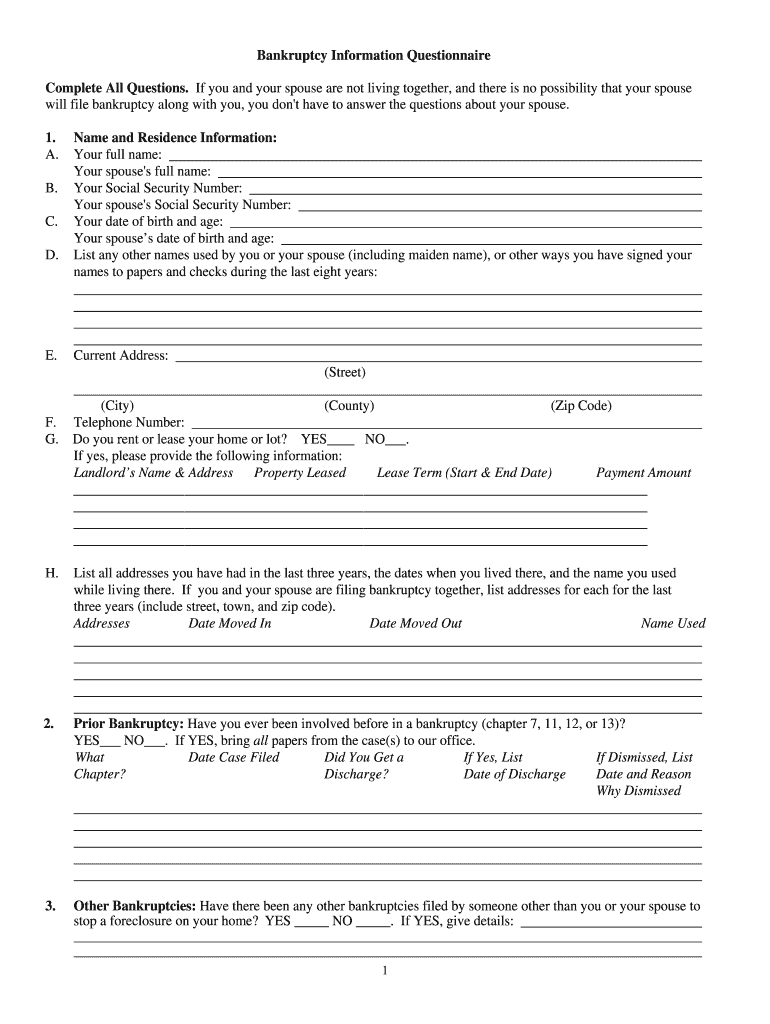
Have to answer the questions about your spouse. 1. A. B. C. D. E. Name and Residence Information: Your full name: Your spouse's full name: Your Social Security Number: Your spouse's Social Security Number: Your date of birth and age: Your spouse s date of birth and age: List any other names used by you or your spouse (including maiden name), or other ways you have signed your names to papers and checks during the last eight years: Current Address: (Street) F. G. (City) (County) (Zip Code.
Loading

Open form follow the instructions

Easily sign the form with your finger

Send filled & signed form or save
How to fill out the Bankruptcy Information Questionnaire online
Completing the Bankruptcy Information Questionnaire is an essential step in the bankruptcy filing process. This guide will walk users through each section of the form, offering clear and supportive instructions tailored for individuals with varying levels of legal experience.
Follow the steps to effectively complete the Bankruptcy Information Questionnaire online:
- Click the ‘Get Form’ button to access the Bankruptcy Information Questionnaire and open it in your preferred editor.
- Begin with the name and residence information section. Fill in your full name, your spouse's full name (if applicable), and both Social Security numbers. Have your date of birth and age ready, along with your spouse’s information if necessary.
- In the current address field, provide your complete street address, city, county, and zip code. Include your telephone number and indicate if you rent or lease your home by selecting YES or NO.
- If you rent, give the landlord’s name and address, details of the property leased, the lease term, and the payment amount.
- List all addresses you have lived at in the last three years, including the dates and the names used during those periods.
- Proceed to the section on prior bankruptcies. Indicate if you have previously filed a bankruptcy and provide details such as chapter type and dates.
- Next, report income and employment information. Fill out details about your occupation and that of your spouse, along with your respective employers' information.
- Document income received in the last six months for both you and your spouse, and make sure to list any additional income received this year or in the past two years.
- Continue through the form, answering questions about business ownership, debts, assets, and income sources comprehensively.
- Conclude by reviewing all your provided information for accuracy. At this stage, you can save changes, download, print, or share the completed form as necessary.
Complete your Bankruptcy Information Questionnaire online today to ensure a smooth filing process.
Experience a faster way to fill out and sign forms on the web. Access the most extensive library of templates available.
Related content
You should have an attorney review your decision to file for bankruptcy and the choice of...
Once we reach out to you after reviewing your response to the pre-clinic google form...
This Reporting and Disclosure Guide for Employee Benefit Plans has been prepared by the...
Get answers to your most pressing questions about US Legal Forms API.
What is the difference between Chapter 7 13 and 11?
Chapter 11 is the chapter used by large businesses to reorganize their debts and continue operating. Corporations, partnerships, and limited liability companies cannot use chapter 13 to reorganize and must cease business operations if a chapter 7 bankruptcy is filed.
What is the most common bankruptcy proceeding?
Chapter 7 Bankruptcy Also known as liquidation or straight bankruptcy, Chapter 7 is the most common type of bankruptcy for individuals. A court-appointed trustee oversees the liquidation (sale) of your assets (anything you own that has value) to pay off your creditors (the people you owe money to). What Are the Different Types of Bankruptcies? - Ramsey Solutions ramseysolutions.com https://.ramseysolutions.com › debt › types-of-bank... ramseysolutions.com https://.ramseysolutions.com › debt › types-of-bank...
What are the 4 steps of bankruptcy?
The Six Steps in a Bankruptcy Process Step 1: Pre-Bankruptcy Counseling. ... Step 2: Filing the Bankruptcy Petition. ... Step 3: Automatic Stay. ... Step 4:Creditor's Meeting. ... Step 5:Debtor Education Course. ... Step 6: Notice of Discharge. The 6 Stages of Bankruptcy clevelandbankruptcyattorney.com https://.clevelandbankruptcyattorney.com › six-stag... clevelandbankruptcyattorney.com https://.clevelandbankruptcyattorney.com › six-stag...
Which bankruptcy forgives most debts?
Chapter 7 Bankruptcy Discharge Wipes Out Most Debts Forever credit card debt. medical bills. personal loans and other unsecured debt. unpaid utilities. phone bills. your personal liability on secured debts, like car loans (if there's no reaffirmation agreement) deficiency balances after a repossession or foreclosure.
Does Chapter 11 wipe out all debt?
The discharge received by an individual debtor in a Chapter 11 case discharges the debtor from all pre-confirmation debts except those that would not be dischargeable in a Chapter 7 case filed by the same debtor.
What is the best chapter to file for bankruptcy?
Chapter 7 bankruptcy In many cases, Chapter 7 bankruptcy is a better fit than Chapter 13 bankruptcy. For instance, not only is Chapter 7 quicker, many people prefer the following two things as well: filers keep all or most of their property, and. Is It Better To File A Chapter 7 or 13 Bankruptcy? - Nolo nolo.com https://.nolo.com › legal-encyclopedia › is-it-better-... nolo.com https://.nolo.com › legal-encyclopedia › is-it-better-...
What is the most common bankruptcy chapter?
Also known as liquidation or straight bankruptcy, Chapter 7 is the most common type of bankruptcy for individuals. A court-appointed trustee oversees the liquidation (sale) of your assets (anything you own that has value) to pay off your creditors (the people you owe money to).
What is the good faith test bankruptcy?
Bankruptcy courts expect debtors to be open, honest, to cooperate with the bankruptcy trustee, and to deal fairly with creditors. Evidence of fraud, dishonesty, or concealed assets are all hallmarks that the debtor is not acting in “good faith.” The Good Faith Requirement in Chapter 13 actionadvocacy.com https://.actionadvocacy.com › chapter-13-bankruptcy actionadvocacy.com https://.actionadvocacy.com › chapter-13-bankruptcy
Use professional pre-built templates to fill in and sign documents online faster. Get access to thousands of forms.
If you believe that this page should be taken down, please follow our DMCA take down process here.