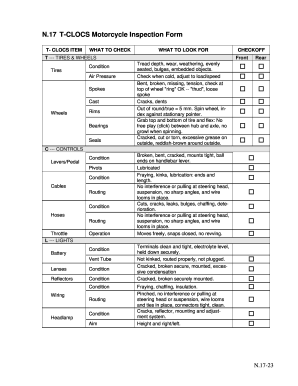
N.17 T-CLOCS Motorcycle Inspection Form T- CLOCS ITEM WHAT TO CHECK WHAT TO LOOK FOR T --- TIRES & WHEELS Tires Condition Air Pressure Spokes Cast Wheels Rims Bearings Seals CHECKOFF Front Rear.

How it works
  • Open form

    Open form follow the instructions

  • Easily sign form

    Easily sign the form with your finger

  • Share form

    Send filled & signed form or save

How to fill out the WA T-Clocs Motorcycle Inspection Form online

The WA T-Clocs Motorcycle Inspection Form is an essential document designed to assist users in evaluating the safety and condition of their motorcycle. This guide will provide you with a clear, step-by-step approach to completing the form efficiently and accurately online.

Follow the steps to successfully complete the form online.

  1. Click the 'Get Form' button to obtain the form and access it in your preferred editing interface.
  2. Begin by filling out the T - Tires & Wheels section. Check the condition of the tires, including tread depth and air pressure. Ensure to look for bulges or embedded objects.
  3. Proceed to the C - Controls section. Assess the levers, pedals, cables, and hoses. Check for any signs of wear, fraying, or loose fittings.
  4. Move to the L - Lights section. Verify the operation and condition of the battery, headlamp, and reflectors. Ensure that all wiring is intact and not pinched.
  5. Next, complete the O - Oil section. Review engine oil, hydraulic fluid, and coolant levels, checking for any leaks in the respective components.
  6. Address the C - Chassis section where you'll check the frame, suspension, chain or belt, and fasteners for any damage or wear.
  7. Finally, finalize your inspections and ensure all required checks are marked. You can then save your changes to the document, download it, print a copy, or share the form as needed.

Start filling out your WA T-Clocs Motorcycle Inspection Form online today to ensure your motorcycle is safe and ready for the road.

Get form

Experience a faster way to fill out and sign forms on the web. Access the most extensive library of templates available.

Related content

Motorcycle Operator Manual

MSF – T-CLOCS Inspection Checklist ... Keep in mind that a motorcycle's horn isn't as...

Learn more
Michigan Motorcycle Operator Manual (SOS-116)

MSF – T-CLOCS Inspection Checklist ... Compared to a car, you don't sit in a motorcycle...

Learn more
2018 Annual Report - Zero Deaths Maryland

The book shares advice on rider safety, training, apparel, motorcycle purchase, pre-ride...

Learn more
Questions & Answers

Get answers to your most pressing questions about US Legal Forms API.

Contact support

What does the acronym T clock stand for?

The acronym T clock stands for Tires, Controls, Lights, Oil, Chassis, and Stand. Each component plays a vital role in ensuring the performance and safety of your motorcycle. Using the WA T-Clocs Motorcycle Inspection Form will guide you in checking these elements properly.

'T clock' refers to the acronym used in the T-Clocs inspection method. It represents critical components of a motorcycle that must be checked before a ride. Understanding 't clock' is essential for riders concerned about safety, and using the WA T-Clocs Motorcycle Inspection Form can help streamline this process.

Clocs inspection is a comprehensive check designed to ensure that your motorcycle is safe for riding. This outline includes checks on the tires, controls, lights, oil, chassis, and stand. By completing the WClocs Motorcycle Inspection Form, you can identify potential issues that could affect your safety on the road.

The duration of a motorcycle inspection can vary, generally ranging from 30 minutes to an hour. Factors such as the condition of the motorcycle and the thoroughness of the inspection play a role. If you have your WA T-Clocs Motorcycle Inspection Form ready, the process can move more quickly, ensuring you are prepared for any issues.

During a motorcycle inspection, technicians typically check tires, controls, lights, oil, chassis, and stands. These components are crucial for ensuring the motorcycle's safe operation. Utilizing the WA T-Clocs Motorcycle Inspection Form allows for a thorough evaluation, giving you confidence in your motorcycle's readiness for the road.

For a motorcycle inspection, you need the right tools and the WA T-Clocs Motorcycle Inspection Form as your checklist. Basic tools may include a tire pressure gauge, a flashlight, and wrenches for minor adjustments. Following the T-Clocs system ensures you do not miss any critical components during your inspection.

The first letter C in T-Clocs stands for Controls. This area includes checking the functionality of the throttle, clutch, brakes, and other essential controls. A proper inspection of these controls is vital for safe riding, and you can effectively document this check using the WA T-Clocs Motorcycle Inspection Form.

CLOCS stands for ires, Controls, Lights, Oil, Chassis, and Stand. his acronym represents the key elements you should inspect on your motorcycle to ensure safe operations. By utilizing the WA Clocs Motorcycle Inspection Form, you can ensure a comprehensive evaluation of these critical components.

A motorcycle pre-trip inspection involves examining your motorcycle's essential systems and components prior to a ride. This practice enhances your safety and performance on the road. Using the WA T-Clocs Motorcycle Inspection Form is an excellent way to conduct this inspection thoroughly, allowing you to enjoy your ride with peace of mind.

Before riding a motorcycle, it is crucial to check the tires, controls, lights, oil levels, and the overall condition of the chassis. A methodical approach, such as using the WA T-Clocs Motorcycle Inspection Form, can simplify this task and ensure you don’t miss any important checks that could impact your safety.

Get This Form Now!

Use professional pre-built templates to fill in and sign documents online faster. Get access to thousands of forms.

If you believe that this page should be taken down, please follow our DMCA take down process here.

Get WA T-Clocs Motorcycle Inspection Form