Ind that although the proposed project could have a significant effect on the environment, there will not be a significant effect in this case because revisions in the project have been made by or agreed to by the project proponent. A MITIGATED NEGATIVE DECLARATION will be prepared. I find that the proposed project MAY have a significant effect on the environment, and an ENVIRONMENTAL IMPACT REPORT is required. I find that the proposed project MAY have a "potentially significant impact" or "pote.
Loading

Open form follow the instructions

Easily sign the form with your finger

Send filled & signed form or save
How to fill out the CEQA Appendix G online
The California Environmental Quality Act (CEQA) Appendix G is an essential tool for assessing potential environmental impacts associated with a proposed project. This guide provides clear, step-by-step instructions on how to efficiently complete this form online, making the process accessible to all users, regardless of their legal backgrounds.
Follow the steps to successfully complete the CEQA Appendix G form online.
- Use the ‘Get Form’ button to access the CEQA Appendix G and open it in your editor.
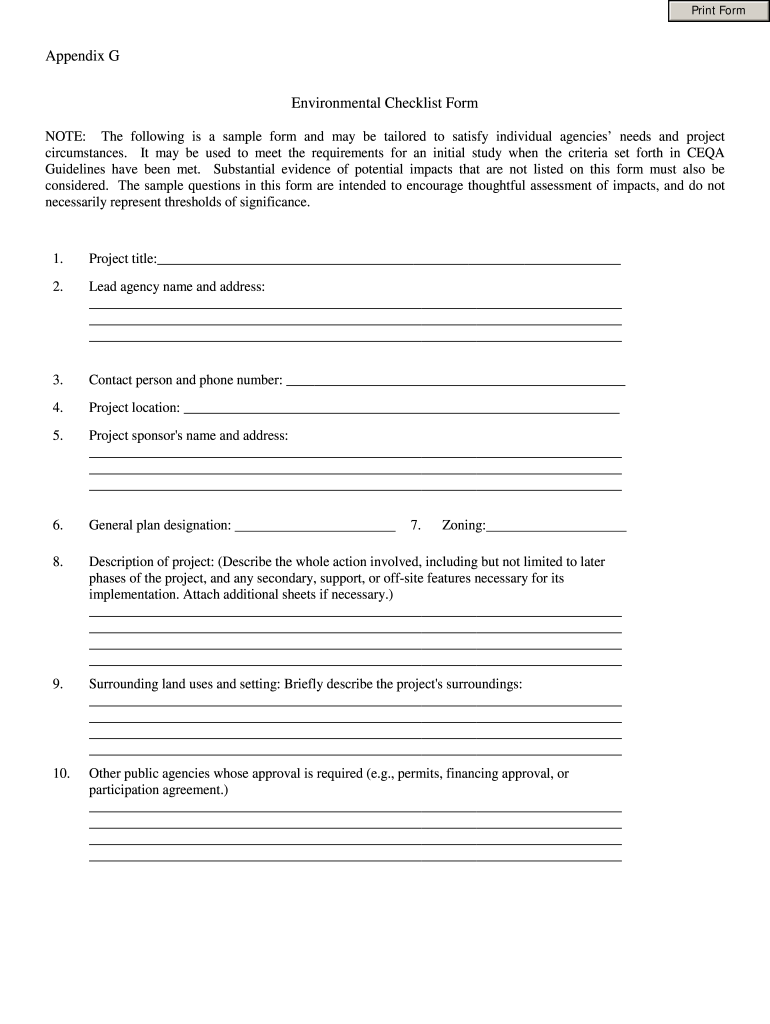
- Fill in the project title, including a concise name that accurately reflects the essence of the project.
- Enter the lead agency's name and address in the specified fields, ensuring the correct mailing details are provided.
- Provide the contact person's name and phone number for questions or follow-ups related to the project.
- Specify the project location by providing a complete address or geographical description.
- Input the project sponsor's name and address, ensuring all information is accurate for communications.
- Complete the general plan designation, which refers to the policy or document categorizing the project.
- Describe the project thoroughly; include any phases, supporting features, or off-site elements. You may attach additional sheets if necessary.
- Describe the surrounding land uses and settings to contextualize the project area clearly.
- List other public agencies whose approval might be required, ensuring to cover permits, financial approvals, or agreements.
- Review the environmental factors potentially affected by the project and check relevant boxes to indicate the factors you anticipate may have impacts.
- In the determination section, make a clear selection regarding the anticipated environmental effects, based on your evaluations.
- Complete any additional assessments as outlined in the evaluation section, explaining responses as necessary.
- Finally, ensure all fields are completed, and then save, download, print, or share the form as required.
Start filling out your CEQA Appendix G form online today to ensure your project moves forward smoothly.
Experience a faster way to fill out and sign forms on the web. Access the most extensive library of templates available.
Related content
CEQA APPENDIX G: ENVIRONMENTAL CHECKLIST FORM. NOTE: The following is a sample form and...
Jan 10, 2019 — The environmental checklist in Appendix G has also been updated with new...
Jan 4, 2021 — Pursuant to Appendix G, Environmental Checklist Form, of the CEQA...
Get answers to your most pressing questions about US Legal Forms API.
How long does the CEQA process take?
The duration of the CEQA process can vary greatly depending on the project's complexity. Simple projects may take a few months, while larger projects requiring EIRs could take over a year. Factors like public comments and agency reviews influence this timeline. Understanding timelines and requirements from CEQA Appendix G helps in planning your project effectively.
Who prepares EIR?
The Environmental Impact Report (EIR) is generally prepared by the lead agency or environmental consultants specializing in this area. It requires comprehensive analysis of potential environmental effects based on CEQA guidelines and the framework of CEQA Appendix G. Input from the public and other agencies may be solicited during this preparation. This promotes transparency and thoroughness in the assessment.
Who approves CEQA documents?
CEQA documents are approved by the lead agency, which is responsible for the project's oversight. Often, the agency will consider public feedback before making a decision. If significant environmental impact is anticipated, the agency may also involve other regulatory bodies. This process, guided by CEQA Appendix G, ensures community and environmental considerations are taken into account.
How to file a CEQA exemption?
To file a CEQA exemption, you must first determine the type of exemption that applies to your project. Complete the necessary documentation based on the applicable exemption guidelines. File this documentation with the lead agency, ensuring you include any required supporting materials. Understanding CEQA Appendix G can help clarify the criteria for exemptions.
Who prepares CEQA?
The preparation of CEQA documents is typically led by the lead agency for the proposed project. This agency may delegate the task to qualified environmental consultants. Their responsibility includes adhering to CEQA requirements and filling out the checklist provided in CEQA Appendix G. Collaboration with various stakeholders enriches the preparation process.
Who prepares CEQA documents?
CEQA documents are usually prepared by the lead agency or a consultant hired by the agency. These professionals have expertise in environmental analysis and planning. They follow guidelines set by CEQA, including those in Appendix G, to ensure compliance. Their work promotes thorough evaluations of potential environmental impacts.
What is CEQA Appendix G?
CEQA Appendix G is a key component of the California Environmental Quality Act (CEQA) that outlines the environmental checklist. It helps determine whether a project's impact may be significant. By using the checklist from CEQA Appendix G, project developers can assess various environmental factors before proceeding. This leads to better decision-making and planning.
Which agency prepares CEQA compliance documents?
In California, the lead agency is responsible for preparing CEQA compliance documents. This lead agency may vary based on the project type and location. They usually consult with other agencies and stakeholders during the process. It’s important to ensure that these documents meet the standards outlined in CEQA Appendix G.
How long does CEQA approval take?
CEQA approval also varies based on several factors, including project scope and public input. Generally, after the EIR is completed, the approval process may take several weeks to months. Engaging with knowledgeable consultants can help expedite this process and improve outcome efficiency.
What is the timeline for EIR?
The timeline for preparing an EIR can vary significantly based on project complexity and scope. Generally, an EIR should be completed within a few months, but it may take longer if extensive public involvement or additional studies are required. Knowing the timeline helps project sponsors plan accordingly.
Use professional pre-built templates to fill in and sign documents online faster. Get access to thousands of forms.
If you believe that this page should be taken down, please follow our DMCA take down process here.
This form is available in several versions. Select the version you need from the drop-down list below.