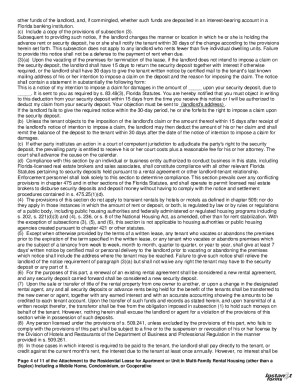
Of a structure that is furnished, with or without rent, as an incident of employment for use as a home, residence, or sleeping place by one or more persons. (3) "Landlord" means the owner or lessor of a dwelling unit. (4) "Tenant" means any person entitled to occupy a dwelling unit under a rental agreement. (5) "Premises" means a dwelling unit and the structure of which it is a part and a mobile home lot and the appurtenant facilities and grounds, areas, facilities, and property held out for the.
Loading
Open form follow the instructions
Easily sign the form with your finger
Send filled & signed form or save
How to fill out the FL Residential Landlord and Tenant Act online
Filling out the Florida Residential Landlord and Tenant Act online can be a streamlined process when you understand each component of the form. This guide is designed to provide clear and supportive instructions to help you successfully complete the necessary information.
Follow the steps to effectively complete the form online.
- Press the ‘Get Form’ button to access the FL Residential Landlord and Tenant Act form and open it in your preferred editor. This will allow you to start filling out the document online.
- Begin by entering your personal information at the top of the form. Include your full name, address, and contact information as the landlord or tenant, depending on your role in the agreement.
- Next, fill in the details of the rental property. Specify the address of the dwelling unit and include any pertinent information about the property that corresponds to the rental agreement.
- In the section regarding the terms of the rental agreement, indicate the duration of the agreement — whether it is a month-to-month, yearly lease, or another term. Ensure to specify the start date and, if applicable, the end date.
- Provide details regarding rent payments, including the amount, due dates, and any applicable fees. You should also note the method of payment accepted by the landlord.
- Complete the section about security deposits. Indicate the amount of the security deposit being held, how it will be managed, and any interest terms if applicable.
- Review the terms and obligations for both the landlord and tenant, making sure you both understand your responsibilities as outlined in the form.
- Lastly, finalize the document by signing and dating the form in the appropriate sections. Ensure that both parties sign the agreement to validate it.
- After completing all necessary fields and validating the information, you can choose to save your changes, download the form, print it for physical copies, or share it with involved parties.
Complete your FL Residential Landlord and Tenant Act form online today to ensure a clear and legally compliant rental agreement.
Experience a faster way to fill out and sign forms on the web. Access the most extensive library of templates available.
Related content
Florida law requires that notices to and from a landlord must be in writing and must be...
by RF Williams · 1973 · Cited by 15 — The Florida Residential Landlord and Tenant Act...
Florida law excuses performance of a contract, if performance is either impossible or the...
Get answers to your most pressing questions about US Legal Forms API.
What is the new tenant law in Florida?
Recently, the Florida Residential Landlord and Tenant Act has seen updates aimed at enhancing tenant protections, including rules around eviction processes and security deposits. These changes focus on providing tenants with a fair chance to resolve issues before facing eviction. It's essential for both landlords and tenants to familiarize themselves with these new regulations to ensure compliance and maintain a positive rental experience.
What repairs are tenants responsible for in Florida?
In Florida, tenants are generally responsible for minor repairs and maintaining the cleanliness of the rental property as outlined in the lease agreement. However, significant repairs, such as plumbing and electrical issues, fall under the landlord's responsibility. The Florida Residential Landlord and Tenant Act specifies these distinctions, promoting accountability from both parties. Understanding these responsibilities helps prevent disputes over who should handle repairs.
What are my legal rights as a tenant in Florida?
As a tenant in Florida, you have several legal rights protected by the Florida Residential Landlord and Tenant Act. These rights include the right to a habitable living space, protection against unlawful eviction, and the right to privacy. Knowing your rights helps you stand up for yourself and ensures that your landlord fulfills their obligations, creating a better living situation.
What is the purpose of the Florida Residential Landlord and Tenant Act?
The Florida Residential Landlord and Tenant Act was designed to protect the rights of both landlords and tenants, ensuring fair treatment throughout the rental process. It establishes clear responsibilities and expectations, which helps reduce conflicts and misunderstandings. By clarifying legal obligations, the Act promotes a harmonious rental environment and provides a framework for resolving disputes if they arise.
What can landlords not do in Florida?
Under the Florida Residential Landlord and Tenant Act, landlords cannot engage in practices such as self-help evictions, which means removing tenants or their belongings without a court order. Additionally, landlords are prohibited from retaliating against tenants for exercising their legal rights, such as reporting unsafe living conditions. Understanding these restrictions helps landlords maintain compliance and fosters a better landlord-tenant relationship.
What are the new rules for landlords in Florida?
The Florida Residential Landlord and Tenant Act has introduced several new rules aimed at protecting tenants and ensuring fair treatment. Landlords must now provide clear communication regarding lease agreements and follow stricter guidelines for security deposits. Moreover, any eviction proceedings must adhere to the enhanced notice requirements, allowing tenants more time to respond. As a landlord, staying informed about these rules is crucial to manage your properties effectively.
How long does a landlord have to give you to move out in Florida?
In Florida, the notice period a landlord must provide before asking a tenant to move out generally ranges from 3 to 30 days, depending on the lease terms and the reason for the eviction. If the tenant has violated the lease, a shorter notice may be applicable, while periodic leases usually require a 30-day notice. Familiarizing yourself with the FL Residential Landlord and Tenant Act can clarify these timelines, ensuring you are well-informed about your rights.
Which action by a landlord is permitted under the Florida Landlord and Tenant Act?
The Florida Landlord and Tenant Act allows landlords to collect rent on a timely basis and enforce lease agreements according to the terms outlined within them. Landlords can also enter a rental unit for necessary repairs, provided they give proper notice to tenants. Understanding these actions helps both parties maintain a professional and respectful rental relationship.
What can a landlord not do in Florida?
Under the FL Residential Landlord and Tenant Act, landlords cannot harass tenants, retaliate against tenants for asserting their rights, or enter a rental property without giving proper notice. Additionally, landlords are prohibited from withholding essential services, such as water or electricity, which can negatively impact the tenant's living conditions. It’s essential to know these restrictions to protect your rights as a tenant.
Do I need a license to be a landlord in Florida?
In Florida, you typically do not need a specific license to become a landlord. However, you should comply with local regulations and zoning laws, which may require permits or registrations. Familiarizing yourself with the FL Residential Landlord and Tenant Act can help you navigate these requirements and ensure your rental practices are lawful.
Use professional pre-built templates to fill in and sign documents online faster. Get access to thousands of forms.
If you believe that this page should be taken down, please follow our DMCA take down process here.